

Japan has more public live cameras than most people expect. Crossings, station plazas, airport approaches, harbor lights, mountain ridges, resort slopes and quiet beach edges all sit online somewhere, updating whether anyone is watching or not. You do not need a ticket, a hotel booking or a packed itinerary to look in. You need a short list of good streams, a little patience with weather, and a clear idea of what a webcam can actually give you.
This guide is a soft start. It is not a catalog dump and it is not a pretend travel brochure. It is about watching Japan live in a useful way: choosing a mood, reading the time of day, returning to the same corner more than once, and knowing when to leave a famous view alone because the mountain is hidden or the street is asleep.
What a live camera is actually good for
A live camera is not a tour guide. It will not narrate the neighborhood, translate signs for you, or promise a clear Mount Fuji every morning. It will not replace maps, transit apps or a good local article when you need logistics. What it does well is show the present tense of a place.
That present tense is the point. You can see weather moving across asphalt. You can watch trains arrive and people adjust their pace to the next light. You can notice evening screens come on, snow settle on a slope, umbrellas bloom after a sudden shower, or a harbor go from pale afternoon to blue-hour glow. These are small changes, but they are real. They are happening now, not in a stock photo from last spring.
Use cameras for atmosphere, timing and return visits. Open a stream when you want to feel a place without pretending you are standing there with a suitcase. Skip them when you want restaurant menus, reservation advice, exact walking directions or “is this area safe tonight” answers. Those questions belong elsewhere. A webcam can show you whether Shibuya looks busy at 9 p.m. your time. It cannot tell you which exit is best for your hotel.
It also helps to lower the expectation of drama. Many of the best watches are ordinary: a quiet platform between rushes, a lake under flat cloud, a street that looks almost empty until one wave of people arrives. If you only chase spectacle, you will close tabs too quickly and miss the slower pleasure of noticing how a place breathes.
Pick one mood, not twenty tabs
The fastest way to get overwhelmed is to open every famous Japan cam at once. Shibuya, Shinjuku, Fuji, Osaka, an airport, a beach, a volcano — all stacked in tiny players — turns into noise. Start with a mood instead of a checklist.
City pulse is for crossings, neon streets and station squares. You are watching denseness, screens, foot traffic and the way a city performs itself after dark.
Weather and landscape is for lakes, volcanoes, mountain passes and open ridges. Here the sky is the main character. Clear days feel generous. Fog and low cloud are not failures; they are the weather doing its job.
Transit watching is for airports, platforms, bridges and roadside views. Arrivals, departures, traffic rhythm and the small theater of people waiting are the draw.
Quiet evenings fit harbors, beaches and smaller town centers. These streams reward soft light and empty stretches more than constant action.
Choose one mood, open one stream, and stay with it long enough to notice a change. If the view is flat, fogged in or oddly quiet, switch then — not because the camera is “broken,” but because live watching always depends on the day. That dependence is the difference between a livestream and a highlight reel.
A useful habit is to keep a tiny personal shortlist rather than a giant folder. Three to five places is enough. Rotate them through the week. When you feel like expanding, add one regional cam that is less famous. Quiet prefecture views often teach you more about Japan’s texture than another identical neon corner.
When Japan looks best on camera
Timing matters more than people think, especially if you are watching from another country.
Morning often brings cleaner light and lighter crowds in business districts. Station plazas can look calm before the rush, and landscape cameras sometimes catch cooler air and sharper edges. Early hours are also when a “dead” street is usually just early, not empty forever.
Late afternoon into night is when Tokyo and Osaka streets earn their reputation. Screens brighten, shopfronts stack light into the frame, and foot traffic becomes easier to read even from a fixed angle. If you only ever open city cams at noon local time, you may wonder what the fuss is about.
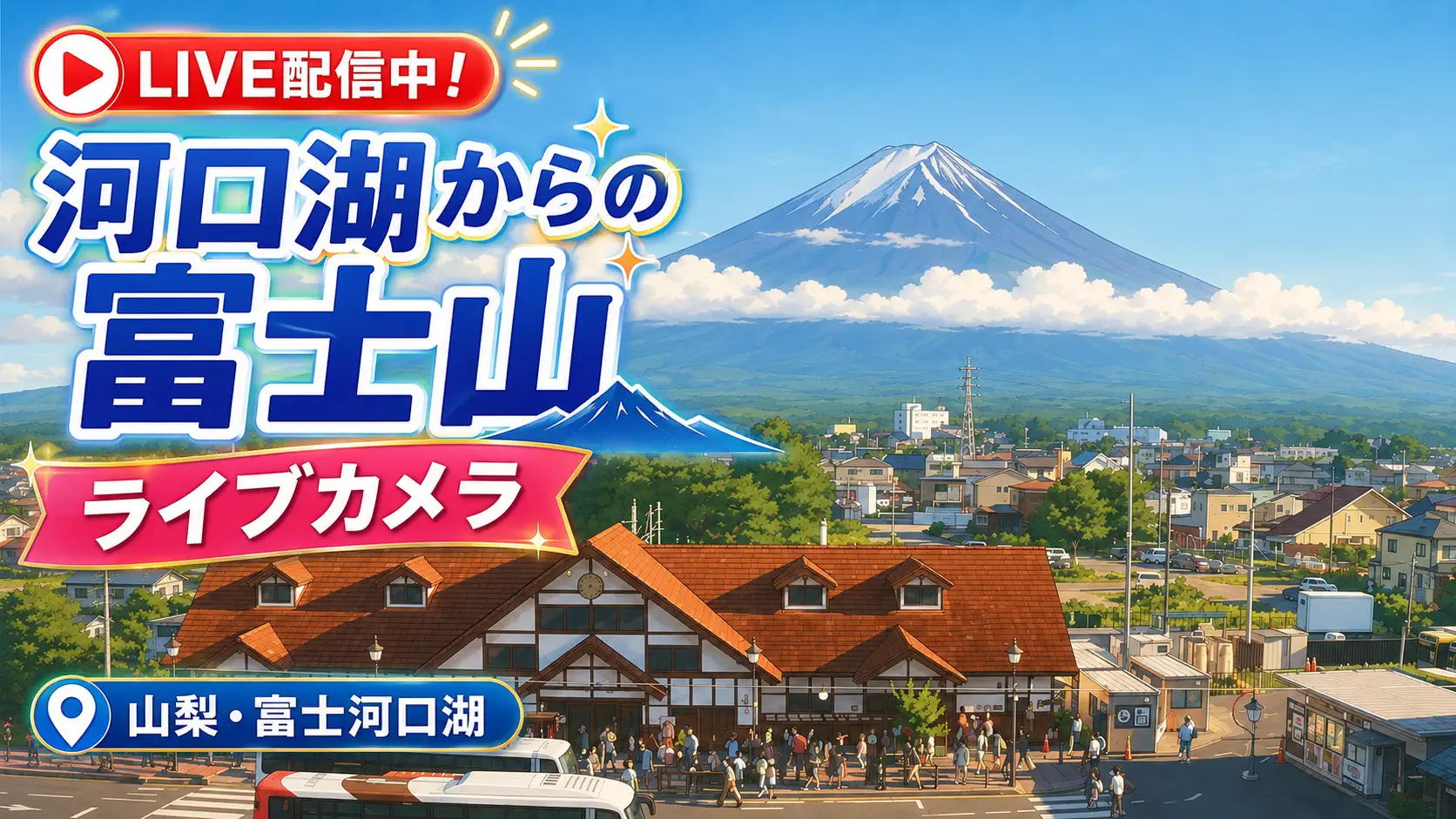
Clear winter mornings remain the classic window for Mount Fuji views from Kawaguchiko and nearby ridges. Cloud cover can erase the mountain for days. That is normal. A blank sky where Fuji should be does not mean the stream failed; it means the mountain is wearing weather. Come back tomorrow. Come back after rain. Come back when the forecast looks boringly clear.
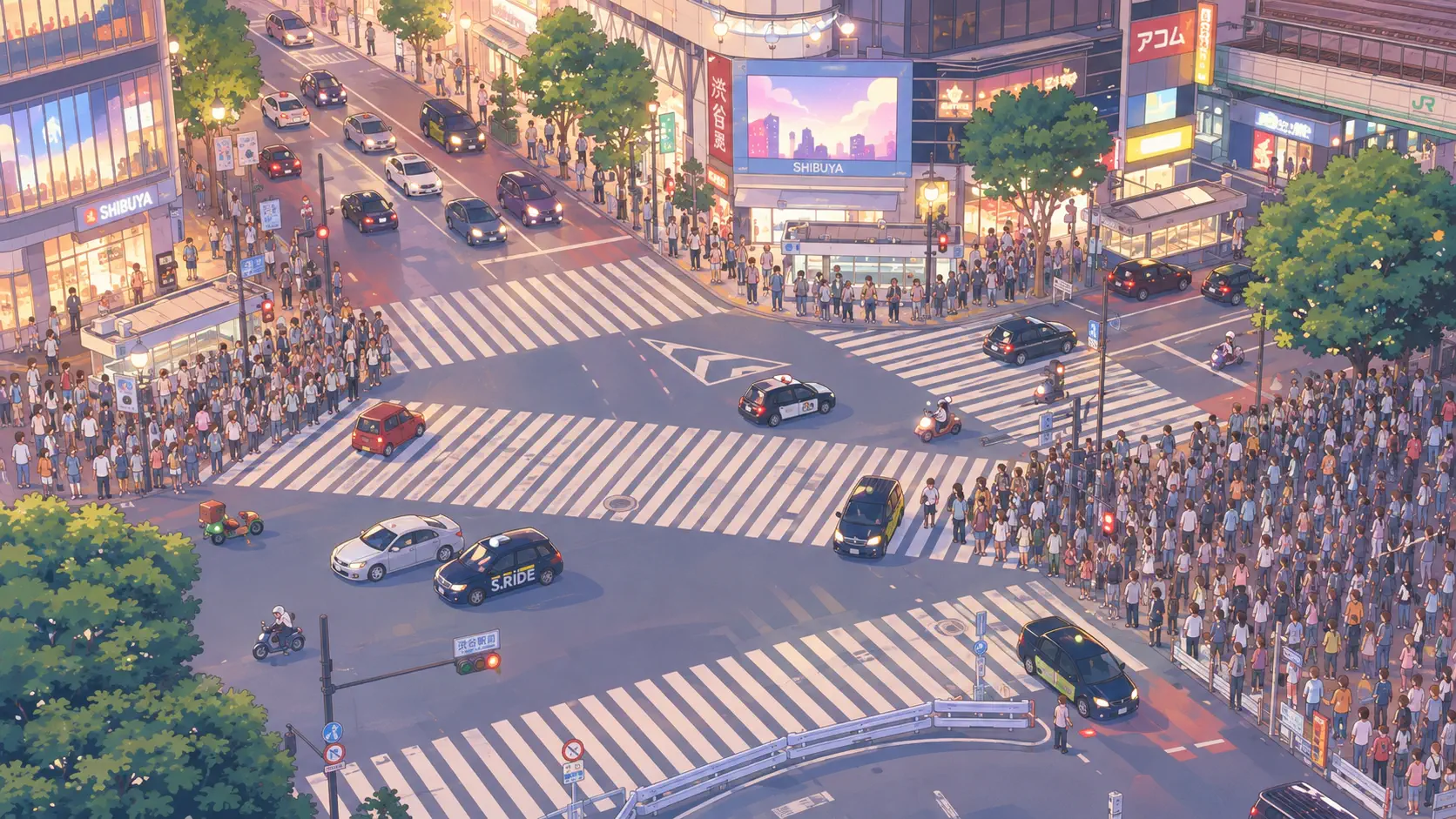
Rain is underrated on city cameras. Umbrellas change the geometry of a crowd. Pavement reflections double the lights. People walk differently. A wet Shibuya night can feel more cinematic than a dry one, even if fewer postcard hunters would choose it. If you are packing for a trip in June, the calendar version of that rain is how bad is rainy season in Japan.
If you are outside Japan, check local time before judging a quiet feed. A scramble crossing at 4 a.m. JST is supposed to look sparse. An airport cam before the morning bank of flights may look patient rather than lively. Treat stillness as information, not a defect.
Season also shapes what you get. Cherry blossom weeks make some streets denser and more decorative. Summer humidity can soften distant mountains. Autumn clear spells help long views. Winter snow transforms resort and northern cams into something else entirely. None of this needs a special event calendar. It only needs you to return to the same place across weeks.
Three easy places to keep nearby
If you want a starter trio that covers different kinds of watching, begin here.
Shibuya Crossing is the classic pulse check. Crowds, giant screens and the scramble rhythm make it readable even if you have never visited Tokyo. You can learn a lot by simply noticing interval and density: how long the wait feels, how the crossing fills, how the ads and building faces change the mood after dark. Eating while that physics is happening is a street rule, not a camera trick: things not to do in Japan. It is also a good place to practice time-zone humility. Watch it at lunch in Japan, then again late at night, then once near dawn. Same camera, three different cities.
Kawaguchiko / Mount Fuji is the landscape opposite. Open sky, lake weather and the chance of Fuji when the air is clear. This stream teaches patience. Some days the mountain is crisp enough to feel almost unreal. Other days it disappears into haze or cloud so completely that the frame becomes about water, trees and atmosphere instead. Both versions are worth watching. Landscape cams train you to accept that live beauty is conditional.
Shinjuku sits between those two moods. It offers dense urban texture without forcing you to stare only at one intersection. Stations, towers, traffic and neighborhood layering give the sense of a wider Tokyo day. If Shibuya is a heartbeat and Fuji is a horizon, Shinjuku is the city’s working fabric — busy, ordinary, endlessly watchable when you stop expecting a single iconic stunt.
Together, these three cover city energy, scenic weather and broader street feel. From there you can wander into airports, platforms, harbors or quieter regional cams without losing your bearings. Akihabara’s Central Street live camera is a specialty view: signs and foot traffic, not a café ranking. Capsule halls are japanese toy vending machines. A maid hour is japan maid cafe. A collab booking is anime themed cafe tokyo. Shinjuku rooms with cats are a different ticket: cat cafe tokyo.
The goal is not to “complete” Japan on a map. The goal is to build a small watching vocabulary: pulse, horizon, fabric — then add specialty views when you want them.
How to watch without turning it into homework
Live cameras become less fun when you treat them like a research assignment. You do not need notes, screenshots of every hour or a personal spreadsheet of weather conditions. A lighter ritual works better.
Leave one camera open while you make coffee. Glance back after a meeting. Compare the same corner at noon and at night. Let the stream sit in a second window during a slow afternoon. These tiny returns teach more than a single long binge, because your memory starts holding contrasts: denser, quieter, brighter, wetter, clearer.
It also helps to watch with sound off first, then try with ambient audio if the stream offers it. Some people prefer the visual only. Others like the soft wash of traffic or station noise. Neither is correct. The point is to notice what helps you stay present with the place.
When a famous view disappoints, do not immediately assume the site failed. Ask three quick questions: What time is it locally? What is the weather doing? Am I expecting postcard conditions from a live feed? Most “bad” watches are just honest watches. Honesty is the feature.
If you want variety without chaos, alternate scales. One day a crossing. One day a mountain. One day an airport approach or a harbor line. Scale-shifting keeps the habit fresh and prevents every session from competing with Shibuya’s intensity.
A calm way to explore from here
SIBCH.TV is built for this kind of watching: hand-picked Japan streams, short guides beside the player, and room to explore when you want something quieter than the famous postcard spots. The catalog is there when you are ready to wander. The blog is here when you want a little orientation first.
You do not have to start big. Open one stream that matches your mood. Stay long enough to see the light change or the crowd thin. Come back tomorrow. That is enough.
Whenever you are ready, begin with Japan live cameras, keep the three starter places nearby, and let the day decide what Japan looks like right now.