A japan maid cafe is a themed café with a cover charge, a time limit, a required drink, and staff in costume doing a service performance. It is not a quiet coffee bar and not a dating service. Treat it like a ticketed show with cake.
This page is the mechanics: money, photos, chants, English, and the touts at the station. For how maid rooms sit next to collabs and cat cafés, use best themed cafes in tokyo. For capsule toys on the same streets, use japanese toy vending machines. For animals instead of costumes, cat cafe tokyo.
Cafe maid japan: the format, not the meme
Cafe maid japan searches mix three things that are not the same: maid cafés, butler cafés, and host/hostess clubs. Maid cafés are daytime-to-evening cafés, often in Akihabara and Ikebukuro, with a menu of omurice, parfaits, and soft drinks. Host clubs are a different nightlife industry. Do not walk into one thinking it is a 1,000-yen cake.
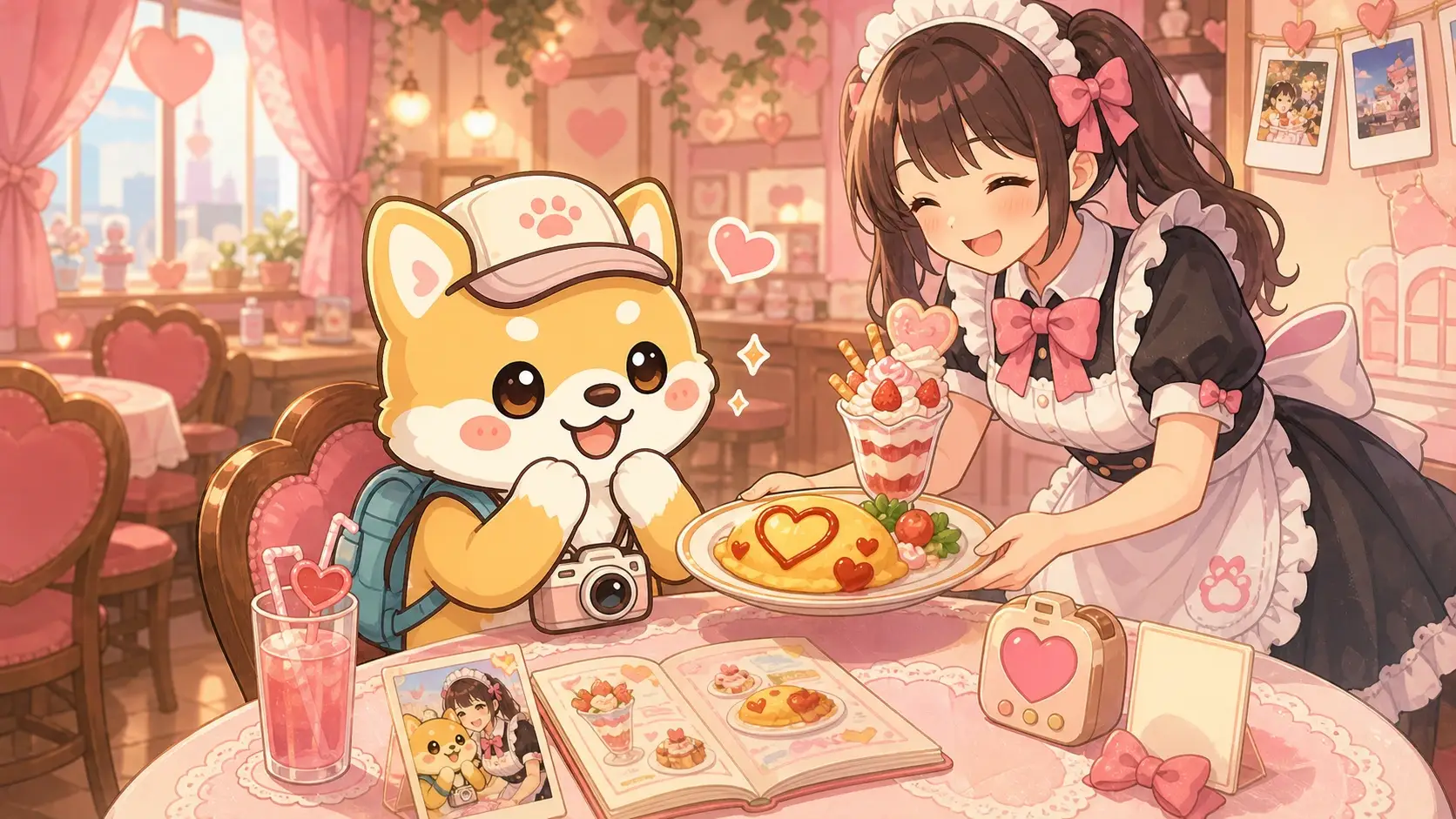
Maid cafe anime is the costume language: frills, a scripted greeting, a little theater at the table. The staff are doing a job with a clock. You are a customer with a timer. That is the whole social contract.
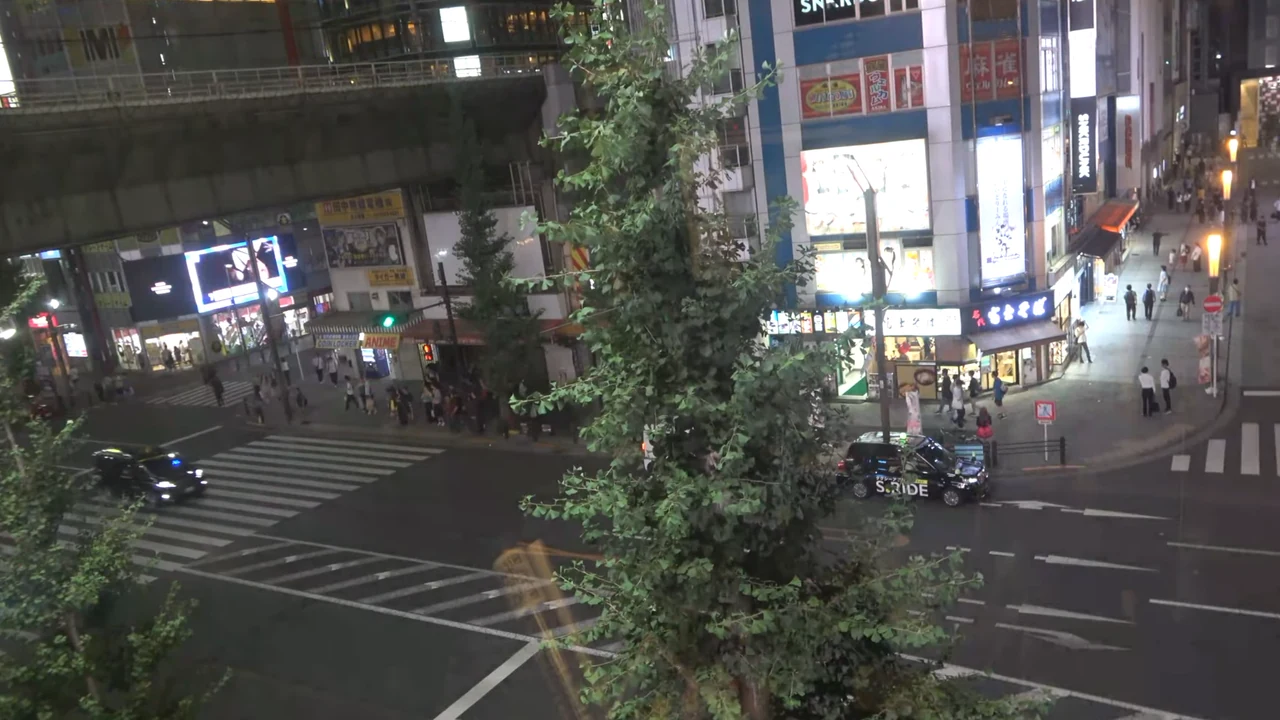
Walk Akihabara Central Street in the evening and the signs are as much of the street as electronics. You do not need a tout to find a shop. You need a posted price board.
Maid cafe akihabara japan: what you pay
Maid cafe akihabara japan math is usually:
- Cover / set fee for a block of time (often 50–60 minutes)
- Mandatory drink (sometimes food)
- Optional extra time, extra photos, extra “performances” on the menu
Add it before you sit. A cheap-looking parfait is not a 800-yen café. It is a 800-yen parfait on top of a 700-yen cover and a 600-yen drink. The honest total is the number that matters. If the board is only in Japanese and nobody will translate the cover, leave. That is how you avoid the trap, not by arguing after the cake.
Akihabara maid cafe shops near the station charge more for the same hour because rent and foot traffic. Walk a block. Read two boards. Sit at the third.
Ikebukuro’s otaku street has the same format with a different crowd. The Sunshine 60 Street live camera is the density, not a recommendation of a specific shop.
Akihabara maid cafe guide: inside the hour
An akihabara maid cafe guide that is useful is a sequence, not a ranking of “best moe.”
- Enter, pay or get a ticket, take the seat they point to.
- Order the required drink immediately.
- Food if you want it — omurice with ketchup art is the cliché because it photographs.
- If there is a chant or a “spell” over the food (moe moe kyun and cousins), it is optional theater. You can decline without a speech.
- Photos: usually extra, usually no flash, usually no touching, sometimes only with a staff camera.
- When the timer ends, pay extras, leave. Do not linger as if it were a kissaten.
You will be called goshujin-sama / ojō-sama or similar. That is the script. You do not have to answer in character. “Thank you” is enough.
Do not ask for a real name, a personal phone, or a meetup after work. That is how you make the job unsafe. The café is the venue. The person in costume is not a souvenir.
Maid bar cafe where they speak english in tokyo location
Searches for maid bar cafe where they speak english in tokyo location usually mean Akihabara (and sometimes Ikebukuro) shops that advertise English menus or English-speaking staff. They exist. They cost more. The English is for ordering and rules, not a private lesson.
A “bar” in the search does not make it alcohol-first. Many maid cafés are soft-drink rooms. If you want alcohol, read the license and the menu. If a tout says “English, cheap, photo free” on the sidewalk, assume the free photo is how the cover gets explained later.
Location rule: a shop with a physical menu in the window beats a person with a laminated flyer at the crossing. The flyer is not a contract.
Photos, rules, and not being the problem
- No photos of other customers.
- No photos of staff without the paid option.
- No touching.
- No pulling a costume.
- No filming secretly.
If you came to mock the concept, skip it. The staff still have to smile through your bit. Go to a regular café. Tokyo has thousands.
If you came because you like the theater, pay the board price, follow the photo menu, and tip nothing — tipping is not the format; see do you tip tour guides in Japan.
How not to get clipped at the station
Touts work the exits because first-timers look up at the neon. A clipped hour looks like this: unclear cover, “set” that was not on the flyer, photo fee that was “included” until it wasn’t, timer that started before you sat.
Fix: photograph the price board before you sit. Confirm cover + drink + time in numbers. If they will not confirm, there is another shop.
Women-only or mixed policies vary. Some rooms are fine for mixed groups; some skew male customers by habit. If you are a group of women, you still belong if the board does not say otherwise. If a shop feels like a different industry, it is. Leave.
What it costs in real life
Plan ¥2,000–¥4,000 per person for a basic hour with a drink in a mid-board Akihabara shop, more with food and photos, more in the most touristed rooms. That is a theme-park snack, not a meal strategy. Eat real food from the cheap eats list before or after so the parfait is theater, not dinner.
Children: some shops allow them, some do not. Check. The performance is cute; it is still an adult workplace.
Weeknight versus Saturday night changes the room. A weekday afternoon can feel like a slow café that happens to have a script. Saturday night in Akihabara is a queue, a timer, and a lot of other people’s phone cameras — even when phones are banned, the energy is still a crowd. If you want to hear the greeting, go early.
Birthday and “event” days add charges. If the chalkboard says a special set, read it as a second cover, not a free party.
You can leave at minute twelve if the room feels wrong. You still pay the set you agreed to. That is cheaper than sitting through forty minutes of discomfort to “get your money’s worth.”
FAQ
Is a maid cafe the same as a hostess club?
No. Different industry, different bill, different night.
Do I have to do the chant?
No. It is a menu extra in spirit even when it is free. Decline politely.
Can I go alone?
Yes. Solo customers are normal. You will still pay the cover.
Is English common?
In tourist-facing Akihabara shops, often enough to order. Do not assume fluency.
Are photos included?
Usually not. Assume a fee unless the board says otherwise.
Is this only Akihabara?
No. Ikebukuro and other cities have rooms. Akihabara is just the densest signage.