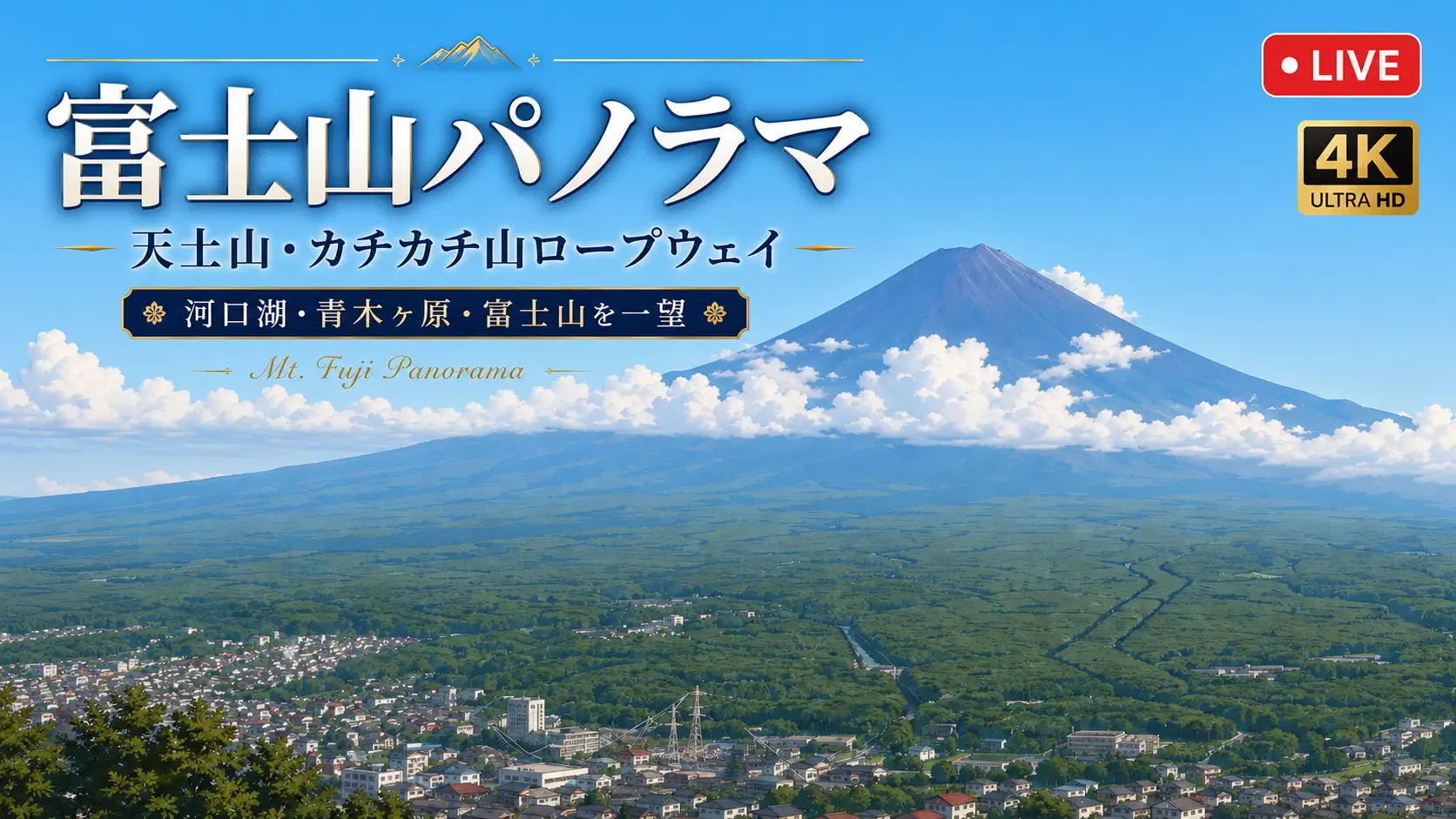

Some mountains are geography. Fuji is grammar. At 3,776.24 meters, Japan’s highest peak is also its most quoted silhouette — pilgrimage mountain, ukiyo-e muse, and since June 2013 a UNESCO World Cultural Heritage property as “Fujisan, Sacred Place and Source of Artistic Inspiration.” A live camera from the Kawaguchiko side in Fujikawaguchiko does not promise a clear view. It promises the truth about whether the icon is receiving visitors today or hiding in its own cloud cloak.
About This Live Camera
The stream is associated with views from the Kawaguchiko Station / Fujikawaguchiko resort area toward Mount Fuji across the northern Fuji Five Lakes approaches. Expect the volcano’s cone when weather allows, foreground town and travel infrastructure, and long stretches of white or grey when Fuji declines the appointment. That refusal is part of the culture. Locals joke that you have not really visited until the mountain ghosts you once.
Do not treat every white frame as an outage. Often the mountain is simply elsewhere in the sky’s opinion. Some of the best Kawaguchiko memories are actually cloud memories — a town glowing under a soft lid while everyone pretends they came for the peak. Honesty helps: Fuji is the headline, but the resort is the full article.
What You Can See in the Live View
On gift days: the near-symmetric stratovolcano, snow cap in season, and the psychological jolt of seeing a national symbol as a real object with weather on it. On partial days: a summit tip above a cloud sea, or a base with a truncated top — Fuji as puzzle. On socked-in days: atmosphere study. Lake Kawaguchi’s presence nearby means moisture and mist are frequent co-authors.
Fujikawaguchiko is a classic staging town for the Yoshida Trail climbing approach and for lakeside sightseeing that never requires a summit attempt. The camera sits in that tourist-logic zone: arrival by rail/bus, look up, decide if today is a photograph day or an onsen day.
Where Is Fujikawaguchiko?
In Yamanashi Prefecture on Honshu’s Fuji north side, where Lake Kawaguchi anchors one of the Fuji Five Lakes. The town is a resort hinge between Tokyo-region day trips and longer mountain stays. From Kawaguchiko Station, buses fan toward trailheads, caves, shrines, and viewpoint loops. The World Heritage inscription covers not only the peak but a constellation of 25 component sites — shrines, springs, lakes, and pilgrimage-related places — so “visiting Fuji” can mean never leaving the foothills.
History: Fear, Faith, Art, Heritage
Fuji was once a volcano to fear; eruptions wrote humility into surrounding provinces. Over centuries it became a center of ascetic practice and Fuji-ko pilgrimage culture, with Sengen shrines and climbing routes encoding sacred ascent. Artists — from classical poetry to Hokusai’s thirty-six views — exported the cone into global visual memory. UNESCO’s 2013 cultural listing recognized that blend of worship and artistic inspiration rather than treating Fuji as wilderness alone.
The live cam inherits all of that weight while showing something humble: a mountain that still controls its own publicity.
Why This Viewpoint Matters
Kawaguchiko angles are among the most loved because water, town lights, and cone can align into the postcard Japan sells itself. Station-adjacent cams matter because they match how visitors actually arrive — tired, hopeful, looking up before they unpack. When Fuji appears behind ordinary buses and vending machines, the sacred and the snack economy share one frame, which is the real country.
Daily Life Around the Frame
Morning clarity can vanish by afternoon as valley clouds build. Climbing season (official summer openings on Yoshida and other trails) thickens human traffic even when the summit is invisible from town. Off-season weekends still fill with photographers hunting reflection shots at the lake. Night views, when clear, turn the cone into a darker geometry above resort lights.
Winter often delivers the sharpest outlines; summer delivers the most theatrical cloud drama. Between those poles sits the long shoulder seasons when resort towns feel most themselves — open enough for visitors, quiet enough that a clear Fuji still feels like a private gift rather than a stadium event.
Best Time of Day to Watch
- Early morning: statistically kinder for clarity
- Late afternoon: warm light on snow and rock when visible
- After cold fronts: jackpot windows
- Night (clear): contemplative silhouette mode
If you are Fuji-hunting, check multiple mornings rather than one stubborn afternoon. Photographers speak of “Fuji luck” as if it were a personality trait. The livestream will either confirm your superstition or cure it with data. Both outcomes are useful.
Best Seasons and Weather
Autumn and winter frequently reward patience with hard-edged views. Spring brings haze battles and cherry-side tourism. Summer climbing season coincides with muggy cloud factories — ironic for summit seekers watching from town. Rainy season is a masterclass in soft greys. The mountain’s snow line becomes a calendar you can read without a widget.
Events and Celebrations
Trail opening and closing dates are the alpine calendar. Yoshida-area festivals, winter illuminations around the lakes, and holiday travel spikes rewrite foreground density. The deeper event remains geophysical and meteorological: a clear cone after three hidden days feels like a festival even without lanterns.
Getting There
Highway buses from Tokyo / Shinjuku are the common tourist path; Fujikyuko rail serves Kawaguchiko Station for those who prefer trains. From the station you are already in the view economy. Climbing requires separate planning, gear, and respect for regulations — the webcam is not a trail cam. For many travelers, seeing Fuji from town is the entire assignment, and that is valid.
Interesting Facts
- Height: 3,776.24 m — Japan’s highest peak.
- UNESCO World Cultural Heritage: 2013, as sacred place and artistic inspiration.
- Heritage property includes 25 related sites, not the cone alone.
- Active stratovolcano — beautiful and not a toy.
- Kawaguchiko / Fujikawaguchiko is a primary north-side resort and Yoshida Trail gateway.
- “Fuji-hidden” days are normal; clear days are gifts.
- Station-area cams match real visitor psychology: arrive, look up, decide the day.
- Snow line reading from town is a folk calendar older than smartphone widgets.
How to Watch Without Rage-Quitting Cloud
Make cloud the subject. Track how fast a whiteout thins. Note wind direction by plume or banner cloud on the summit when it shows. Keep a second tab with a weather chart if you enjoy prediction games. The mountain will not negotiate; you can only improve your timing.
A useful trick: glance once at dawn, once at mid-morning, once near sunset. Three samples beat one disappointed noon stare. Fuji rewards interval training.
Sacred Geometry for Desktop Humans
Leaving Fuji on a second monitor is a modern pilgrimage form: you do not climb, you attend. When the cone finally sharpens, the small jolt you feel is the same jolt ukiyo-e was selling — recognition. That is enough reason for a livestream to exist.
Professional photographers will tell you Kawaguchiko has “better” and “worse” hours; the cam will teach you the same lesson without a workshop fee. Watch how often a promising morning collapses into milk by 11:00. Watch how a boring grey noon cracks open at 15:40 for twelve perfect minutes. Those twelve minutes are why people become Fuji people. Everyone else checks once, shrugs, and goes to the convenience store. The livestream rewards the stubborn.
Remember also that Heritage listing made the foothills busier, not emptier. More buses, more languages on the platform, more hope aimed at the same cone. The mountain absorbed the attention the way it absorbs cloud — without comment.
Turn a clear morning into an itinerary with the Kawaguchiko day trip from Tokyo guide — bus versus train, loop order, and when to abort if the cone is a gray wall. Cold-season odds and backups live in winter day trips from Tokyo.
Nearby Live Cameras
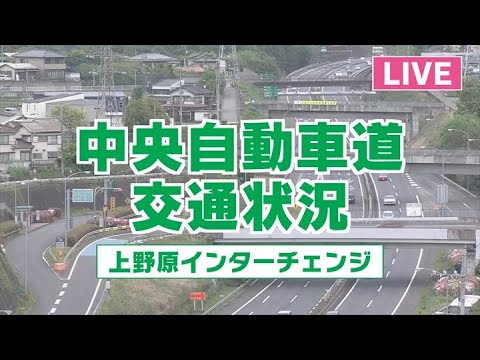
Compare angles with Mount Fuji Panorama and lake-level life on the Kawaguchiko Appare Boat Cam, or switch to road-level Fuji-region motion on the Uenohara Chuo Expressway cam.
Frequently Asked Questions
Why is Fuji often invisible?
Cloud, haze, and local upslope moisture hide it frequently. The cam is working; the mountain is shy.
Is this a climbing webcam on the summit?
No. It is a resort-town / station-area view toward the mountain.
When is climbing season?
Official summer trail seasons are limited and regulated — check current rules. Off-season climbing is dangerous and often restricted.
Is Mount Fuji still active?
Yes. It is an active volcano monitored by authorities.
What does UNESCO protect here?
A cultural landscape of faith and art across multiple component sites around Fujisan, inscribed in 2013.
Why do people say “Fuji-san”?
The -san honorific is customary respect in Japanese; English “Mount Fuji” and Japanese “Fujisan” point at the same peak with different manners.
Is Lake Kawaguchi in the shot?
Not always as a clear lake surface — depends on aim and foreground. The Kawaguchiko area identity still frames the cam even when water is only implied by mist and resort roofs.
What should I do if the mountain stays hidden all day?
That is a normal Fuji day. Walk the lake, visit caves or shrines, eat houto, and try dawn tomorrow. The livestream will tell you when to run outside with a camera.