
Some views you earn with altitude. Others you buy for ¥1,000 round trip and a three-minute gondola ride. The Mt. Fuji Panoramic Ropeway—better known locally as the Kachi Kachi Ropeway after the famous folktale—lifts visitors from the eastern shore of Lake Kawaguchiko to Mount Tenjo (天上山), roughly 1,075 metres above sea level, where a observation deck opens a 360-degree theatre: Mount Fuji when it chooses to appear, the full spread of Lake Kawaguchiko, the dark green sea of Aokigahara forest, and on the clearest days the southern Japan Alps far to the west. This live camera streams from that summit world—one of the Fuji Five Lakes region’s most popular paid viewpoints—without requiring you to check wind closures or queue for a cabin.
About This Live Camera
The feed originates at the Mount Tenjo observation area served by the ropeway’s upper station in Fujikawaguchiko Town, Yamanashi Prefecture. Expect a wide landscape frame: volcanic cone (or cloud where the cone should be), lake surface, lakeside town texture, ropeway cables occasionally visible, and seasonal colour shifts from cherry blossoms to snow caps.
Unlike street-level station cams, this view is weather-dependent entertainment. A “boring” grey frame may mean an outage—or it may mean Fuji is hiding, which is so common locals have proverbs about it. The operator (Fujikyu / official ropeway management) may suspend service for wind, lightning, or heavy snow without notice; the camera can go static or show empty decks when the ropeway closes.
Operating hours typically follow ropeway business (8:30 a.m.–5:00 p.m., last descent 5:20 p.m.; summer July 20–August 31 extended to 6:00 p.m. / last descent 6:20 p.m.). Outside those windows, expect offline or night darkness unless the stream differs—check the live embed before planning a virtual sunrise.
What You Can See
Mount Fuji (富士山, 3,776 m) dominates when visible—the symmetrical stratovolcano that is Japan’s highest peak, UNESCO World Cultural Heritage since 2013 as “Fujisan, Sacred Place and Source of Artistic Inspiration.” Morning and winter air improve odds; summer haze and afternoon cloud build are the usual enemies.
Lake Kawaguchiko (河口湖) spreads below—the most accessible of the Fuji Five Lakes, popular for photography, hot springs, and cycling. Boat wakes from sightseeing ships (see the Appare boat cam) sometimes appear as white lines on blue or grey water.
Aokigahara forest (青木ヶ原)—the lava-tree sea at Fuji’s northwestern foot—shows as a dark, flat-topped green blanket on the north side of the frame. The forest’s cultural reputation is heavy; from this distance it reads as geological texture and windbreak.
Summit facilities include rabbit and tanuki statues referencing the Kachi Kachi Yama folktale (a clever rabbit punishing a trickster tanuki on this mountain), a small shrine, souvenir shop, and the Kachi-Kachi Yama Swing—a social-media-famous swing projecting toward Fuji (¥500, seasonal hours). July 2026 saw new Fuji Fortune Terrace development with red torii stairs near the summit (~1,090 m), which may appear in the live view as construction stabilizes.
Location
The ropeway lower station stands at Asakawa 1163-1, Fujikawaguchiko, on the eastern shore of Lake Kawaguchiko in Yamanashi Prefecture, central Honshu. Fujikawaguchiko Town is the municipal centre of the northern Fuji resort area—distinct from Fujiyoshida City on the opposite lake side and Minobu farther west.
Kawaguchiko Station on the Fujikyu Railway lies roughly 10–15 minutes walk south along lakeside roads, or one stop on the Omni Bus Red Line (Kawaguchiko Sightseeing Bus) to the Sightseeing Boat / Ropeway stop. From Tokyo, Highway buses and the Fuji Excursion limited express train reach Kawaguchiko in about 2 hours when schedules align.
Mount Tenjo’s summit is not Fuji itself—it is a viewing mountain (220 m ascent from lakeshore by ropeway, ~400 m total elevation gain from lake level depending on measurement reference). The name Tenjo means “heavenly castle,” fitting the folktale stage setting.
History
Lake Kawaguchiko formed from Fuji volcanic activity; human settlement followed Edo-period travel routes toward the Yoshida climbing trail. The Kachi Kachi Yama story—published in modern form by Osamu Dazai and embedded in local tourism—gives the ropeway its nickname and its mascot characters.
The Mt. Fuji Panoramic Ropeway opened as a tourism lift (Showa-era development tied to postwar domestic travel boom), rebranded over decades while retaining the folk narrative theming inside gondolas (bilingual narration on ascent). Fujikawaguchiko grew as a lake resort with museums, music forest, and seasonal festivals—Mount Tenjo became the quickest “elevated Fuji view” for visitors without climbing gear.
UNESCO inscription (2013) intensified global interest, pressuring overtourism management across the Five Lakes. Ropeway upgrades, swing attractions, and 2026 terrace projects reflect competition among viewpoints—Chureito Pagoda, Lake Yamanakako panoramas, and lakeshore free spots all vie for the same icon.
Why Watch
Because Fuji is a lottery, and this cam sells tickets for free. Because the frame combines lake + volcano + forest—three Japanese landscape clichés that remain moving when real. Because ropeway-dependent views change with season: cherry lanes in April, snow on Fuji in winter, fire-red maples in November on Tenjo’s slopes.
Photographers use the stream to judge visibility before driving from Tokyo. Virtual travellers use it to feel altitude without hiking. Volcano watchers note cloud cap behaviour on an active stratovolcano (last eruption 1707, but status remains active).
Daily Life
Ropeway hours define summit life. Morning first cabins bring tour groups and serious photographers chasing akafuji (red Fuji dawn light). Midday mixes families, school trips, and swing-queue teenagers. Afternoon cloud build often erases Fuji first while the lake remains visible. Last descent rush is visible as deck crowding then sudden quiet.
Lower lakeshore life continues regardless—hotels, onsen, bicycle rentals, Kawaguchiko Music Forest, convenience stores serving climbers buying oxygen cans they may not need. Local residents coexist with seasonal tourism inflation—winter quieter except New Year and Chinese New Year travel peaks.
Best Time of Day
- Sunrise to 8 a.m.: best Fuji odds; ropeway may not yet open—check hours
- 9–11 a.m.: post-opening clarity before thermal haze
- Winter midday: cold, sharp air—excellent visibility when not snow-closed
- Sunset: dramatic colour if open during extended summer hours
- After ropeway close: stream may show darkness or offline state
Best Seasons
Winter (December–February) offers clearest Fuji views and snow-capped cone contrast; ropeway may suspend in storms. Spring (April–May) brings cherry blossoms on Tenjo slopes and comfortable temperatures. Summer (July–August) has extended hours but haze and afternoon clouds; Obon crowds peak. Autumn (October–November) is foliage season on Tenjo—maples compete with Fuji for attention. Typhoon remnants can bring extraordinary clarity the day after rain—or shut the ropeway entirely.
Events
Kawaguchiko Winter Fireworks (scheduled on winter weekends) reflect on the lake—sometimes glimpsed from elevation if timing aligns. Shibazakura (pink moss) Festival near Lake Motosu draws overflow tourism to the wider region. Fuji Shibazakura and cherry blossom festivals around the lakes increase ropeway queues. Local Kachi Kachi Night illuminations (when held) change summit lighting.
Climbing season (July–September) opens official Fuji trails elsewhere—Tenjo is not the climb route, but summit cams sometimes show ** lenticular clouds** on Fuji’s peak during serious mountaineering weather.
Getting There
From Kawaguchiko Station: walk ~15 minutes lakeside or take Omni Bus Red Line to ropeway stop. From Tokyo (Shinjuku): Fuji Excursion train or highway bus to Kawaguchiko, then local transfer. Car: parking near lower station; congested on autumn weekends.
One-way ropeway (¥600) plus hiking down (30 minutes on Tenjo nature trail) is popular for fit visitors; round trip ¥1,000 adult / ¥500 child (verify current fares). Ropeway + boat set tickets (¥1,700) pair with lake cruises.
Always check official ropeway status (wind closures) before travel—the live cam is your secondary check.
Interesting Facts
- The ropeway takes about 3 minutes each way—roughly 460 m horizontal and 220 m vertical rise to the observation deck.
- Kachi Kachi Yama means “burning mountain”—referring to the folktale’s fire punishment, not volcanic eruption.
- Aokigahara is a lava forest on Fuji’s northwest flank—trees rooted in porous volcanic rock.
- Mount Fuji last erupted in 1707 (Hōei eruption); it remains classified active.
- Chureito Pagoda in Fujiyoshida offers a competing iconic Fuji view with pagoda foreground—Tenjo competes with lake foreground instead.
- July 2026 opened Fuji Fortune Terrace with torii stairs—a new summit photo spot visible from the cam when operational.
The Cloud Lottery
Veteran Fuji watchers treat clear views as gifts, not guarantees. The Panorama cam documents refusal as honestly as success—when the cone vanishes into a single white wall, you are seeing the same disappointment that empty-ed souvenir postcards represent. That honesty makes the cam worth bookmarking: refresh after a cold front passes, after typhoon clearance, at dawn in December. The mountain does not perform on schedule.
Folktale at Altitude
Tanuki and rabbit statues at the summit are not kitsch—they anchor a story about wit and consequence tied to this specific slope. Children hear the tale in gondola speakers; adults photograph the swing pointing toward a volcano that outscaled any folktale imagination. Japan’s sacred mountain and its playful local story coexist in one frame, which is very Fuji Five Lakes: pilgrimage and theme-park proximity, separated by one ropeway ride.
Use this panorama as a go/no-go check before spending the day — then follow the Kawaguchiko day trip guide or the winter day trips from Tokyo playbook when cold air improves odds.
Nearby Live Cameras
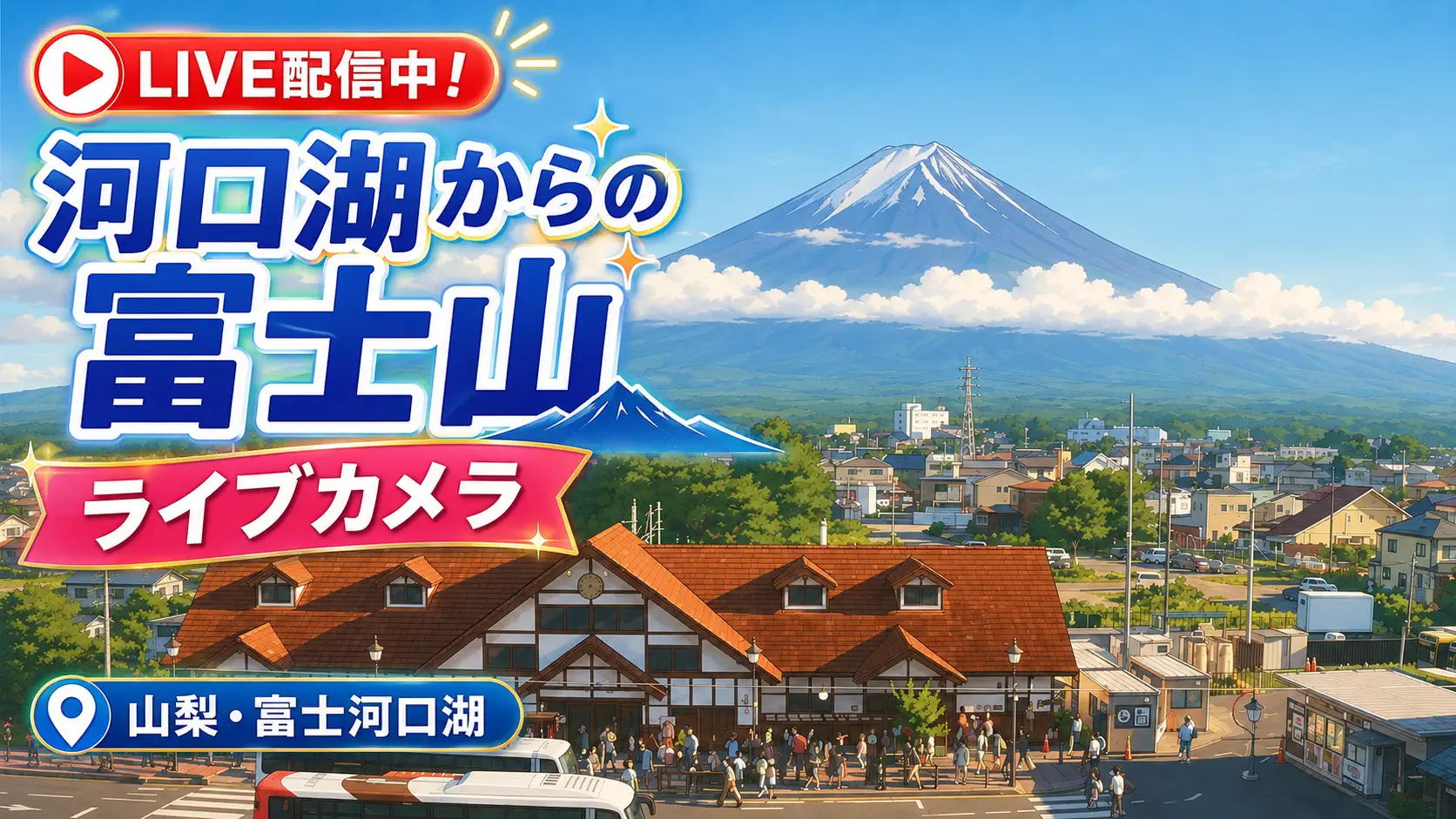
Compare angles around the lakes: Mount Fuji from Kawaguchiko Station, Lake Kawaguchiko aboard the Appare boat, and Chūō Expressway traffic toward Fuji.
Frequently Asked Questions
Is this camera on Mount Fuji itself?
No. It is on Mount Tenjo, a viewing mountain on Lake Kawaguchiko’s shore. Fuji appears in the distance when visible— you are not on the volcanic summit.
Why is it called Kachi Kachi Ropeway?
After the folktale Kachi Kachi Yama (Fire Mountain), set on this hill—a rabbit outwits a tanuki. Gondolas play narrated versions of the story.
When is the ropeway open?
Typically 8:30 a.m.–5:00 p.m. (last down 5:20 p.m.); July 20–August 31 extended to 6:00 p.m. (last down 6:20 p.m.). Closes without notice in high wind or lightning.
Why is Fuji sometimes not visible?
Cloud, haze, and cap cloud on Fuji itself frequently hide the peak—even when the lake is sunny. This is normal; try morning winter frames for best odds.
How much does the ropeway cost?
Round trip about ¥1,000 adults, ¥500 children; one-way ¥600. Confirm on the official mtfujiropeway.jp site before visiting.
Is the live stream always available?
No. It follows ropeway operations and weather suspensions—is24x7: false in metadata reflects this. Overnight and closed days may show offline video or darkness.