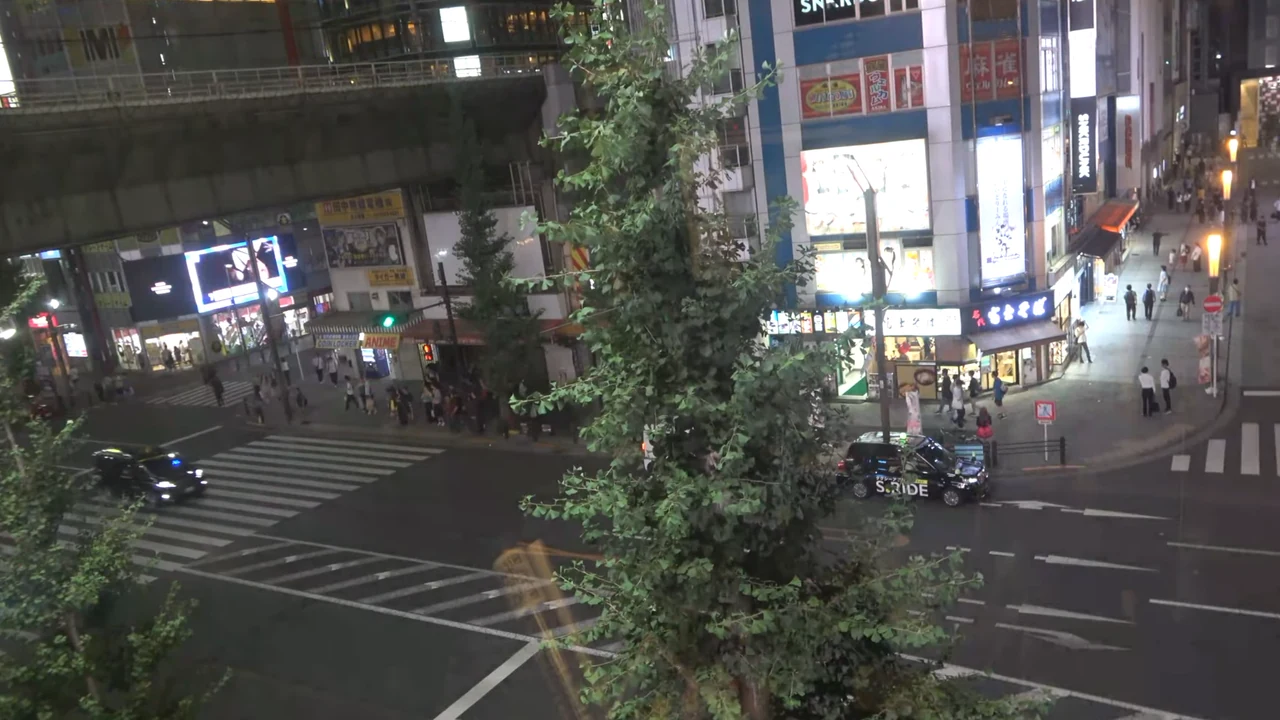

Kyoto sells itself as wood, moss, and tea — then you step north of Kyoto Station and meet a Buddhist monument so large it reads like a shipyard built for prayer. Higashi Honganji (東本願寺), affectionately Ohigashi-san, is the head temple of the Shinshū Ōtani-ha branch of Jōdo Shinshū (Shin Buddhism). The live camera watches the Founder’s Hall Gate (Goeidō Mon) — the entrance facade toward Shichijō street — with traffic, pilgrims, and delivery vans moving at the scale of a small city block. Inside that gate lies the Goeidō, one of the largest wooden buildings on Earth, housing an image of Shinran (1173–1262), the sect’s founder. This feed is where sacred mass meets sidewalk Kyoto.
About This Live Camera
The stream provides an HD view of Higashi Honganji’s main gate area and surrounding streetscape in Shimogyō Ward, Kyoto. The fixed or lightly adjusted angle captures the gate roofline, approaching pedestrians, cyclists, and road traffic along the temple’s southern edge. You will not see the full Goeidō interior or altar ceremonies — those require visiting in person — but you will see the threshold where thousands of followers and tourists enter daily.
Stream uptime follows the YouTube source; dawn and dusk offer dramatic roof silhouette light. Rain darkens the massive tile surfaces; summer heat shimmer rises off asphalt contrasted with cypress shadow under the gate.
What You Can See
The Founder’s Hall Gate — massive timber and tile architecture scaled to the Goeidō behind it. Monks and staff crossing the plaza. Tourists pausing to photograph roof curves. City buses and taxis on Shichijō corridor. Bicycle traffic — Kyoto’s preferred local speed. Seasonal flower arrangements near temple entrances when festivals occur. Occasional funeral or ceremony processions that alter pedestrian flow.
The Amidadō (Amida Hall) and other structures sit within the complex beyond the gate — not always visible depending on camera crop. Shōsei-en, the temple’s designated garden, lies separately across the street — a different visit, not this gate view.
Location
Higashi Honganji stands in central Kyoto, roughly 10 minutes on foot north of Kyoto Station’s Karasuma exit, between Shichijō and Gojō streets, west of the Kamogawa river terrace. Official address grammar places it in Shimogyō Ward. The temple occupies a full urban block — 76 m long, 58 m wide, 38 m tall for the Goeidō alone — making it a neighborhood landmark visible before you understand what it is.
Nishi Honganji, the western counterpart temple of the split Honganji lineage, lies about 1 km west — pair visits when comparing Ohigashi-san and Onishi-san (local nicknames).
History
Shinran’s ashes became a focus of devotion after his death in 1262. In 1272, his daughter Kakushinni moved the gravesite and built a memorial hall — seed of what became Honganji. The eighth head priest Rennyo (1415–1499) expanded Jōdo Shinshū into a mass movement, rebuilding after conflicts that repeatedly destroyed temple complexes.
Tokugawa Ieyasu split the powerful Honganji institution in 1602, granting land east of the original site to Kyōnyo — creating Higashi Honganji — while Junyo retained Nishi Honganji westward. The shogunate wanted diminished political concentration in one Buddhist center.
Fires consumed the Goeidō repeatedly during the Edo period. The Great Tenmei Fire (1788), an accidental blaze (1823), and conflict fires (1858, 1864 Kinmon Incident) each forced reconstruction. The current Goeidō and Amidadō rose between 1879 and 1895 after the Meiji Restoration settled enough for nationwide fundraising — followers transported timber through mountainous routes; some died in the effort. Earthquake reinforcement (2004–2009) modernized foundations while preserving the wooden mass.
The gate on camera is the face of that survival story.
Why Watch
Because the Goeidō is among the world’s largest wooden structures — 927 tatami mats floor the hall; 175,000 roof tiles cover double-layered irimoya roofing — and the gate cam conveys scale better than a thumbnail photo. Because Kyoto’s image is temples in forest, yet this one is urban Buddhism: traffic lights outside, nembutsu chanting inside. Because you can open Kyoto Station Bus Terminal in the next tab and watch pilgrims walk the same route you would walk.
Watch during Shinran memorial observances or New Year temple visits for crowd surges.
Daily Life
Morning opens temple grounds to visitors — free admission to main halls. Delivery trucks serve temple offices. School groups arrive mid-morning. Midday tourists mix with domestic pilgrims reciting Namu Amida Butsu. Afternoon light slants under the gate eaves. Evening closes inner halls (hours vary seasonally) while street traffic continues — Kyoto does not sleep with its temples. Homeless support and local residents use the broad plaza edges; the temple’s urban social role extends beyond tourism.
Event days — Hoonko (Shinran memorial in November), Obon, New Year Hatsumōde — rewrite foot traffic density visible on the feed.
Best Time of Day
- Early morning: cleaner plaza, softer light on tile, fewer tour buses
- Late afternoon: warm timber tone, long gate shadows
- Evening: illuminated facades when lighting is active — check season
- Ceremony mornings: larger clustered entrances — calendar dependent
Best Seasons and Weather
Spring cherry blossoms appear in Shōsei-en and along Kamogawa, not always in-frame here, but pollen haze softens distance. Summer Gion Matsuri season increases city mobility — buses grow scarce near station, foot traffic rises. Autumn crisp air improves roofline clarity. Winter is underrated — cold blue skies, occasional snow on tile, thinner crowds inside halls.
Kyoto humidity summer days show as haze on the cam; typhoon remnants bring sudden rain bursts.
Events
Hoonko (late November) commemorates Shinran — peak pilgrimage intensity. New Year first temple visits flood the plaza. Obon week shifts Kyoto’s emotional temperature. Periodic Buddhist lecture assemblies and funeral ceremonies for sect leadership appear as formal processions. The temple also hosts cultural exhibitions in subsidiary halls — less visible on street cam but affecting parking and bus stops nearby.
Getting There
Walk ~10 minutes from Kyoto Station Karasuma (north) exit — follow Shichijō street east or use temple signage from the station plaza. City buses stop along Shichijō; routes connect to Gion, Kiyomizu, and Nijō. Karasuma Line subway Gojō or Kyoto stations serve nearby depending on approach. Bicycle parking clusters around temple perimeters — Kyoto cycling culture applies.
Admission to main worship halls is free; Shōsei-en garden charges separate entry.
Interesting Facts
- Official name: Shinshū Honbyō (真宗本廟) — “main mausoleum of the True Sect.”
- Goeidō dimensions: 76 × 58 × 38 meters — among Earth’s largest wooden buildings.
- The sect counts 8,000+ branch temples in Japan and the Americas.
- Split from Nishi Honganji in 1602 by shogunal design to reduce political concentration.
- Current main halls date to 1895 reconstruction after 1864 fire destruction.
- Local nicknames: Ohigashi-san (Honorable Mr. East) vs. Onishi-san westward.
Scale Lessons from a Gate Cam
Standards of “big temple” from smaller cities fail here. Watch a city bus pass the gate — compare roof height to bus height. Notice pedestrians shrinking under the eaves. The Goeidō is not taller than a skyscraper, but its horizontal mass reads as civic infrastructure. That cognitive dissonance — ancient wooden megastructure beside asphalt — is Kyoto’s modern truth north of the station.
Urban Temple Rhythm
Unlike hillside temples where climb prepares the mind, Higashi Honganji arrives suddenly after convenience stores and hotel towers. The camera captures that unprepared encounter: tourists in rental kimono from unrelated photo studios crossing paths with sect elders in formal dress. Kyoto’s spirituality is not only forested — it is also this plaza democracy.
Notice delivery bicycles threading the plaza edge — temple institutions still receive mail, catering, and supplies like any civic block. Volunteer guides occasionally pause with flags; school groups sit on the stone apron for lectures before entering. None of this is secondary to the faith; it is how a living headquarters breathes beside Shichijō traffic.
Roof Tiles and Rain Lines
When rain falls, watch how water sheets off the gate’s layered eaves — the same irimoya roof grammar repeated on the Goeidō behind. 175,000 tiles mean thousands of mini waterfalls during storms. Dry-season dust on lower stone steps marks pilgrim volume without counting heads. These small readings reward long sessions more than a single screenshot.
Some mornings the better “day trip” is staying in Kyoto — our day trips from Kyoto Japan guide helps you decide when to leave town. Spring temple queues also argue for the Japan packing list spring layers before you stand still outdoors.
Nearby Live Cameras
Compare transit hub energy at Kyoto Station Bus Terminal, interior station architecture at Kyoto Station Grand Staircase, and south-side taxi flow at Kyoto Station Hachijō Taxi Stand.
Frequently Asked Questions
Is Higashi Honganji the same as Nishi Honganji?
No. They are sibling head temples of Jōdo Shinshū, split east (Higashi) and west (Nishi) in 1602. Both are in Kyoto, about 1 km apart.
Can I see inside the Founder Hall on this camera?
No. The feed shows the gate and exterior plaza. Interior Goeidō worship requires visiting in person; admission to main halls is free.
How far is this from Kyoto Station?
About 10 minutes on foot north to the temple gate area along Shichijō street.
Who was Shinran?
Founder of Jōdo Shinshū (Shin Buddhism, 1173–1262), emphasizing faith in Amida Buddha’s vow — the Goeidō enshrines his image.
When was the current building constructed?
The present Goeidō and Amidadō were completed in 1895 after fundraising reconstruction following 19th-century fires, especially the 1864 Kinmon Incident damage.
Is the temple active or museum-only?
Fully active — daily worship, ceremonies, and sect administration continue; it is not a deconsecrated heritage shell.