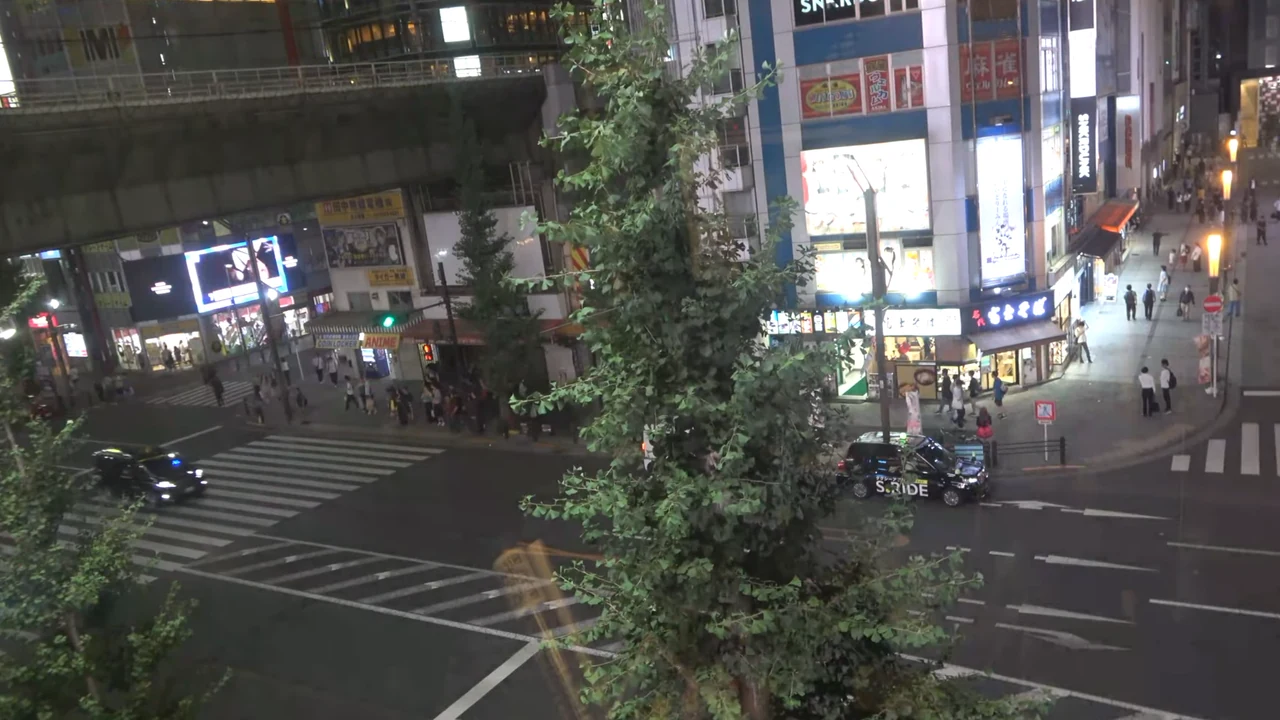

Kyoto greets millions of travelers through a station that looks more like a spaceship than a temple town — and the Hachijo Exit on the south side is where many of them first step into daylight after a bullet train. This live camera watches the taxi stands outside that exit: painted queue lanes on the pavement, rotating fleets of Kyoto cabs, passengers wrestling suitcases toward hotel addresses, and the steady pulse of a transport hub that never quite sleeps. It is not a postcard view of pagodas; it is the practical front door where journeys become street-level reality.
About This Live Camera
The stream is fixed on the Hachijo-side taxi ranks at JR Kyoto Station, one of two major ground-level exits from the sprawling station building (the other is the Central / Karasuma Exit on the north, where Kyoto Tower stands). The Hachijo side serves travelers arriving on the Tokaido–Sanyo Shinkansen, Kintetsu Railway, and many highway express buses — so the taxi queue here skews toward long-distance arrivals rather than casual city hops.
You will see separate lanes for regular taxis and Foreign Friendly TAXI vehicles, a program launched in 2016 to help visitors with language support and larger luggage capacity. Fares are the same as standard cabs; the difference is signage, training, and dedicated queue positions. The camera captures queue length, weather on the south plaza, and the rhythm of departures — a real-time stress gauge for anyone deciding whether to wait in line or take the subway instead.
What You Can See
On a typical afternoon the frame fills with white and cream Kyoto taxis inching forward in marked lanes. Passengers cluster under the station’s overhang with rolling bags; station staff occasionally direct traffic. You may spot highway coaches and hotel shuttle buses in the background, because the Hachijo area is also where many intercity and airport buses board — a different ecosystem from the city-loop buses at the Central Exit.
Look for painted guidance lines on the sidewalk that lead from the exit doors to the two taxi stand types. In peak tourist seasons the regular queue can stretch dozens of meters; the Foreign Friendly lane may move slower simply because fewer specially marked vehicles circulate. Rain transforms the plaza into a mirror of umbrella color; summer heat shimmer rises off asphalt; after dark the scene becomes headlight trails and illuminated station architecture above.
Location
The camera sits at the Hachijo Exit of Kyoto Station in Shimogyo Ward, Kyoto’s downtown transport core. Geographically this is the south face of the station complex designed by architect Hiroshi Hara, opened in 1997. To the north, across the building, lies the Karasuma/Central side with Kyoto Tower, the main city bus terminal, and Isetan department store. To the south and west spread hotel districts, the Kintetsu Kyoto Line platforms, and access toward Nara, Osaka, and western Kyoto neighborhoods.
Coordinates place the view near Hachijo-dori, the street that gives the exit its name. If you know Tokyo Station’s split personality — Marunouchi versus Yaesu — think of Hachijo as Kyoto’s “arrival side” for many shinkansen passengers, while Central is the classic tourist meeting point under the tower.
History
Kyoto Station’s current building replaced earlier structures and was timed for the 1,200th anniversary of Kyoto as Japan’s capital. Hara’s 15-story glass-and-steel monolith provoked fierce debate: many residents feared it would destroy the city’s traditional skyline. Love it or resist it, the station became a landmark — and the Hachijo Exit grew into the natural discharge point for bullet-train passengers heading to ryokan, temples, and business hotels across the Kansai region.
Taxi culture at major stations is decades old, but the Foreign Friendly TAXI system reflects 21st-century tourism pressure. Kyoto’s visitor numbers strain every mode of ground transport; watching this queue is watching how a heritage city absorbs modern mobility without surrendering its calmer image.
Why Watch
Because queue psychology is travel psychology. A five-minute glance tells you whether Kyoto taxis are saturated — invaluable if you are landing on a shinkansen and debating walk-subway versus cab. Because the Hachijo side is less photographed than the Grand Staircase illuminations or Kyoto Tower, yet it is where more bullet-train passengers actually emerge. Because comparing this south-side motion with the Central Exit bus terminal camera reveals how Kyoto Station splits its workload: buses north, shinkansen and highway coaches south.
Plane-spotters have runways; Kyoto watchers have taxi lines that predict whether you will reach Gion before check-in closes.
Daily Life
Morning peaks follow Tokaido Shinkansen arrival banks — Tokyo and Nagoya business travelers, tour groups, students. Midday softens; queues shorten and drivers idle. Late afternoon surges again as hotel check-ins converge with return trips to the station. Weekends and holiday seasons — cherry blossom, autumn foliage, New Year — can turn the plaza into a lesson in patience; the camera becomes a crowd thermometer.
Local life intersects at the edges: delivery trucks servicing station retailers, hotel staff meeting guests curbside, Kintetsu commuters cutting through toward their platforms. Kyoto’s famous geisha districts feel distant here; this is logistics, not lyricism — and that honesty is the feed’s charm.
Best Time of Day
- Weekday mid-morning (9:00–11:00): shinkansen arrival waves; longest queues
- Early evening (17:00–19:00): second surge as diners and hotel guests move
- Late night: sparse but atmospheric; fewer taxis, more empty plaza
- Just after typhoon or heavy rain clears: dramatic light and sudden queue spikes when trains catch up
For pure people-watching, aim for a Saturday late morning in spring or autumn when domestic tourism peaks.
Best Seasons
Spring (March–April) and autumn (October–November) stress the stand most — coinciding with Kyoto’s iconic seasons. Summer brings heat, festivals, and Gion Matsuri overflow; queues persist but move with sweaty urgency. Winter is calmer except around New Year travel. Obon and Golden Week create predictable chaos; the camera needs no calendar — you will see it in the line length.
Weather matters: Kyoto’s basin geography traps summer heat and winter cold; snow is rare but rain is common in tsuyu (rainy season, roughly June–July).
Events
Gion Matsuri (July) and Jidai Matsuri (October) inflate taxi demand citywide. Cherry blossom weekends in early April produce multi-hour waits at both station exits. New Year shinkansen reservations sell out; the camera shows the human aftermath. Station-building events — illuminations on the Grand Staircase, seasonal displays inside the atrium — indirectly swell evening taxi use when visitors stay late for light shows.
Getting There
By shinkansen: exit via Shinkansen Hachijo or follow signs to Hachijo East from inside the concourse. By Kintetsi: west-side gates lead naturally toward Hachijo. By subway: Karasuma Line Kyoto Station; use underground passages toward the Hachijo side (Exit 6 area connects toward south exits and bus/taxi zones). By city bus: most loop buses use the Central Exit on the north side — if your bus drops you at Kyoto Tower, you must cross the station interior (2nd-floor bridge is easiest) to reach Hachijo taxis.
From Kansai International Airport, the Haruka limited express arrives at Kyoto Station; follow Hachijo signs if you want the taxi ranks on this camera. Fares to central Kyoto hotels typically run ¥1,000–2,500 depending on distance; to Arashiyama or northern temples, expect more.
Interesting Facts
- Kyoto Station’s building is roughly 470 meters east–west and was among Japan’s largest station complexes when it opened in 1997.
- The Hachijo Exit name comes from Hachijo-dori, not from “eight cities” — a common misconception among first-time visitors.
- Foreign Friendly TAXI vehicles carry distinct stickers and roof lights but charge standard meter rates.
- Shinkansen passengers should not assume the Central Exit taxi stand is closest — after a bullet train, Hachijo is usually faster.
- Kyoto legally discourages hailing cabs mid-block; official stands like this one are the expected interface.
- The station’s 2nd-floor skyway connects Karasuma and Hachijo sides without street crossing — essential on rainy days.
Reading the Queue Like a Local
Treat line length as data. If the regular queue wraps past the first bend and Foreign Friendly is empty, a standard cab may still be faster — those vehicles outnumber specialized ones. If rain is falling, assume +10–20 minutes beyond what the line visually suggests because loading luggage slows everything. Watch for station attendants redirecting overflow; their appearance usually means peak saturation.
Compare weekday versus weekend texture: weekday lines pulse with single travelers and slim suitcases; weekends show family clusters, stroller logistics, and tour-group radios. None of that appears in a guidebook map — only a live lens reveals it.
Kyoto Station as Two Doors
Every great station is really two cities. North: Kyoto Tower, department stores, city buses, the classic “meet me at the fountain” energy. South: shinkansen gravity, Kintetsi, highway coaches, these taxi ranks. The live camera on Hachijo documents the south door — where Japan’s high-speed rail network hands passengers to Kyoto’s narrower streets. Understanding that split prevents the most common arrival mistake: exiting the wrong side and hauling luggage halfway around a building larger than some towns.
Stay ten minutes and you will see at least one confused pivot — someone scanning for Kyoto Tower on the wrong facade. The camera is a gentle lesson in orientation before you become that person.
Nearby Live Cameras
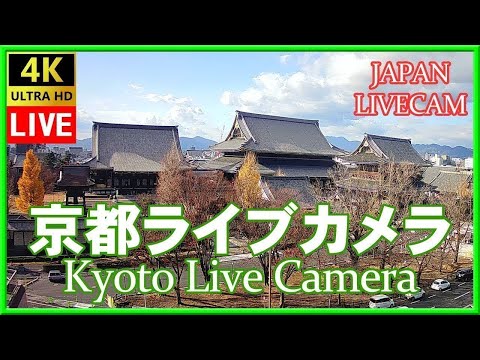
Pair this view with the Grand Staircase illumination cam for night-time architecture inside the same building, the Kyoto Station Bus Terminal cam for north-side city-bus motion, and Higashi Honganji Temple — a ten-minute walk north — for contrast between sacred wood and steel-and-glass modernity.
Frequently Asked Questions
Is this the same taxi stand as the Central Exit?
No. Kyoto Station has separate ranks on the north (Central/Karasuma) and south (Hachijo) sides. This camera shows Hachijo only.
Should shinkansen passengers use Hachijo taxis?
Usually yes. The bullet-train concourse exits most naturally toward Hachijo, avoiding a long indoor crossing to the north-side ranks.
What is Foreign Friendly TAXI?
A Kyoto program with English-capable drivers and luggage-friendly vehicles. Fares match regular taxis; dedicated queue lanes sit beside standard lanes at Hachijo.
Can I see Kyoto Tower from this camera?
Typically no — Kyoto Tower stands on the opposite (north) side of the station complex.
How long is the wait during peak season?
It varies from minutes to well over an hour during cherry blossom or major holidays. The live view is the most honest estimate.
Is the stream live 24/7?
The plaza operates around the clock, but the YouTube feed may pause or reset; treat availability as intermittent rather than guaranteed continuous broadcast.