
Kyoto arrives for most travelers as steel and glass before it arrives as moss. Kyoto Station — opened 1997, designed by Hiroshi Hara, built for the city’s 1,200th anniversary — is Japan’s second-largest station building after Nagoya, a 470-meter horizontal slab of department stores, hotel, theater, and the Matrix atrium whose exposed beams deliberately echo Kyoto’s grid street plan. Above and below that roof, trains never stop: Tokaido Shinkansen, JR local lines, Kintetsu, Karasuma Subway. But many visitors’ first Kyoto bus ride — to Gion, Kiyomizu, Arashiyama, or an overnight highway coach to Tokyo — begins at the bus terminal on the Karasuma (north) side. The live camera watches that ground-level choreography: pull-in bays, destination boards, luggage, and the organized impatience of a city that hosts 77 million station users a year.
About This Live Camera
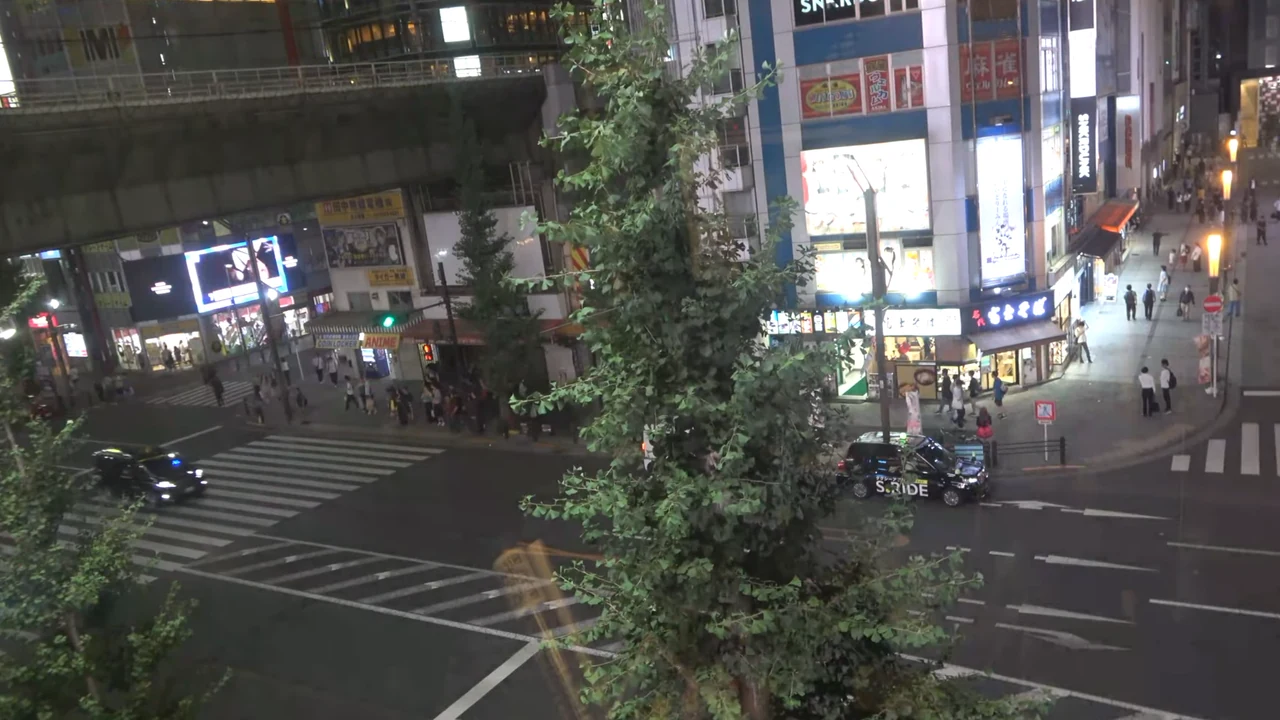
The feed faces the Kyoto Station Bus Terminal on the station’s Karasuma side, the busier north face oriented toward downtown Kyoto and Kyoto Tower. Expect views of city buses, highway coaches, taxis merging at the curb, and pedestrian flows between terminal shelters and the main station doors. Quality follows the YouTube source; rush hours compress more movement into the frame; late night thins to overnight coaches and stragglers.
This is not the Shinkansen platform cam — you will not see bullet trains. You will see how Kyoto moves once rails end and rubber begins.
What You Can See
City buses backing into numbered bays. Kyoto City Bus green/white livery and regional operators. Highway bus turn-in — large coaches with destination placards for Osaka, Tokyo, Nara. Taxi queues overlapping terminal edges. Travelers with coin lockers and roller bags navigating shelter pillars. Kyoto Tower glimpses when the angle includes north facade context. Rain turning bus lanes reflective; summer heat haze; occasional snow rare but memorable.
Digital departure information updates faster than the camera frame resolves — use the feed for atmosphere and crowding, not second-perfect schedule verification.
Location
The terminal sits on the Karasuma side of Kyoto Station in Shimogyō Ward, Kyoto Prefecture — the north-facing exit toward Shichijō and downtown, opposite the calmer Hachijō (south) side toward Toji Temple and more hotels. Underground Porta shopping connects station concourse to bus gates without crossing all traffic at once.
Major landmarks within walking distance: Kyoto Tower, Higashi Honganji, Nishiki Market (farther north by bus), Kamogawa river terraces. The station itself spans 238,000 m² floor area across 15 stories — a city-in-building whose bus apron is only the ground-level lung.
History
Rail reached Kyoto in 1877; the first station opened 1878. Rebuilt 1914 in Renaissance style for Emperor Taishō’s enthronement ceremonies, then lost to 1950 fire. Postwar concrete replacements held until the 1990s competition won by Hiroshi Hara’s futuristic glass-and-steel proposal — controversial locally for clashing with temple-city aesthetics, now largely accepted as Kyoto’s modern gate.
The 1997 opening coincided with Kyoto’s 1,200th founding anniversary and, coincidentally, the Kyoto Protocol climate conference months later — unrelated architecturally but forever linked in global memory. Bus infrastructure scaled with tourism growth: city routes to temples, airport limousine buses, and highway bus competition with Shinkansen on price-sensitive routes.
Why Watch
Because Kyoto’s temple map is bus-driven for many visitors — 100/101/102 series routes to east-side sights, 28 toward Arashiyama, and so on — and this terminal is where confusion becomes motion. Because watching 77 million annual station users starts with ground truth: is it raining, is Golden Week packing bays, is the last night bus boarding. Because pairing with Higashi Honganji shows the ten-minute walk pilgrims take after disembarking.
Use the cam before choosing hotel side — Karasuma vs. Hachijō — based on arrival exhaustion and bag weight.
Daily Life
Morning commute buses mix with tourists heading early to Fushimi Inari before crowds. Midday tour groups cluster at information pillars. Afternoon shopping returns — Isetan, Porta, The Cube — spill passengers outward. Evening peak is dense: restaurant districts, Gion geiko appointment traffic (discreet, not visible as such on cam), highway bus departures. Late night: Tokyo overnight coaches, red-eye arrivals, taxi surge.
Station staff coordinate bay assignments; cleaning crews between bus cycles; security managing curbside chaos during Gion Matsuri and Obon.
Best Time of Day
- 7:00–9:00: commute plus early temple departures
- 10:00–16:00: peak tourism bus churn
- 17:00–20:00: return traffic, dinner-hour departures, highway bus boarding
- After 22:00: overnight coach drama, thinner but interesting
- Rainy days: umbrella traffic and slower bay turnover — honest Kyoto
Best Seasons and Weather
Spring cherry season and Golden Week compress queues. Summer Gion Matsuri (July) and heat test patience — hydration lines at vending machines off-camera. Autumn leaf season (November) is the heaviest tourism bus load of the year. New Year shrine visits spike Hatsumōde routes. Winter is clearer visually, fewer buses per bay, occasional cold rain.
Typhoon remnants can suspend highway services — watch for sudden terminal quiet.
Events
Gion Matsuri July processions affect road closures near station approaches. Jidai Matsuri and Aoi Matsuri spring processions ripple bus detours. Obon and New Year rewrite schedules. Occasional political rallies or marathon finish logistics alter Shichijō corridor traffic visible at terminal edge.
Station itself hosts seasonal illuminations and commercial events in the Matrix atrium — not always in bus cam frame but affecting passenger volume.
Getting There
You are already there if you arrive by Shinkansen, JR, Kintetsu, or Karasuma Subway — follow Karasuma exit signage to bus gates. From Kansai International Airport, limousine bus terminates here. Nara, Osaka, and Tokyo highway buses use dedicated bays — ticket counters inside station.
Taxi stands alternate by side — compare Hachijō Taxi Stand if your hotel is south-side.
Interesting Facts
- Kyoto Station building is Japan’s second largest by floor area after Nagoya Station.
- Architect Hiroshi Hara also designed Umeda Sky Building in Osaka.
- The Matrix atrium roof evokes Kyoto’s street grid and station structural logic.
- ~77 million people use the station complex annually.
- 15 stories, 70 meters high, 470 meters east-west length.
- City buses use flat 230 yen segments (verify current fares) — IC cards (Suica, ICOCA) essential.
Reading Bay Chaos
Each bay number maps to a route family — learn to recognize green city bus versus highway coach silhouette. Watch backing maneuvers: Japanese bus drivers reverse into tight slots with ritual precision; one failed back-in blocks three bays. Luggage cart traffic tells airport arrival waves. If every bench is full and queues spill past shelters, assume leaf season or holiday — adjust temple expectations.
Kyoto’s Modern Gate vs. Temple City Myth
The terminal cam destroys romance deliberately — and that is useful. Kyoto is not only pagodas; it is logistics. Bullet train to bus to alley to temple — this feed is the middle link. Watching it lowers surprise when your Arashiyama bus is full and the next seat is twenty minutes away. Modern Kyoto includes that wait.
Platform Letter Logic
Kyoto Station bus gates group by compass and destination family — A through D bays on the Karasuma side serve different route clusters. Airport limousine services, 100-series east-hill temple loops, and highway coaches do not share identical queues even when they look adjacent on camera. If you are planning a trip, match bay letter to official diagram first, then use this live feed to see whether your bay is stacked three deep or moving smoothly.
Luggage as a Weather Vane
Roller bags cluster when Shinkansen arrivals sync with bus departures — the ten-minute transfer sprint visible as human rivers toward shelters. Giant tour-group flags appear autumn through spring; summer skews smaller family units. Wheelchair and stroller frequency tells accessibility reality better than brochure claims. None of that is scenic, but all of it is Kyoto arrival truth — the kind this terminal cam documents without filter.
Night coaches to Shinjuku or Osaka Umeda often board from dedicated bays — watch for passengers in neck pillows and convenience-store bags; that overnight rhythm is part of Japan’s domestic travel economy as much as any temple gate.
This terminal is where Kyoto day trips and shinkansen hops begin — see day trips from Kyoto Japan and the Tokyo-side day trips by train guide for timing honesty.
Nearby Live Cameras
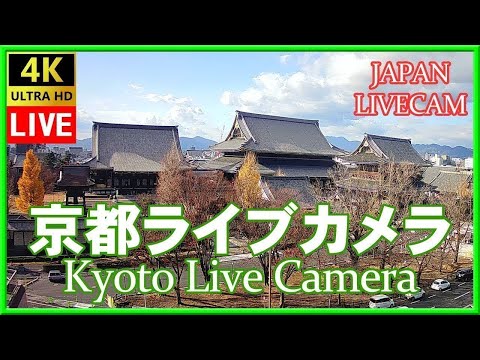
Walk north visually with Higashi Honganji Temple, compare interior station architecture at Kyoto Station Grand Staircase, and check south-side taxis at Kyoto Station Hachijō Taxi Stand.
Frequently Asked Questions
Which side of Kyoto Station is this camera?
The Karasuma (north) side — main bus terminal facing downtown and Kyoto Tower.
Can I see Shinkansen trains here?
No. This feed shows bus aprons and curb traffic. Shinkansen platforms are inside the station complex above/behind this ground view.
Is Kyoto Station really Japan’s second largest?
Yes by station building floor area — trailing Nagoya Station, ahead of most others in total enclosed space.
When did the current station open?
September 1997, commemorating Kyoto’s 1,200th anniversary, designed by Hiroshi Hara.
Are highway buses visible on this cam?
Often yes — large intercity coaches use terminal bays alongside Kyoto City Bus routes.
How do I reach Higashi Honganji from here?
Exit Karasuma side, walk roughly 10 minutes east along Shichijō street — or take a short bus hop if loaded with luggage.