
Inside Kyoto Station’s futuristic shell, the Grand Staircase has become a nightly stage. 171 steps climb from the 4th to the 11th floor of the station building; on 125 of those steps, roughly 15,000 full-color LEDs embedded in the risers transform the stairway into a canvas of seasonal color, animation, and — since 2017 — synchronized sound. This camera catches that spectacle: commuters becoming audience members, tourists pausing mid-climb, and a city famous for temples letting its main rail gateway glow like digital origami.
About This Live Camera
The feed looks across the 大階段 (Grand Staircase) inside the Kyoto Station Building, operated by Kyoto Station Building Development Co. Unlike street cams that watch traffic, this is an interior architectural view focused on the Graphical Illumination Plus installation (グラフィカルイルミネーションPlus). The display typically runs from 15:00 to 22:00, with enhanced “special” programs during evening hours; exact schedules shift by season.
Because the source stream availability is intermittent (no permanent YouTube embed was confirmed at catalog time), treat status as variable. When live, the camera excels after dusk when LED contrast peaks against the steel-and-glass atrium. Daytime views still show the staircase as public amphitheater — people sitting on steps, events, and the vertical circulation spine of one of Japan’s largest station complexes.
What You Can See
When illumination is active, the risers become bands of animated color: cherry blossoms for spring, maple motifs for autumn, Halloween pumpkins, Christmas trees, New Year greetings, Valentine hearts, and ticket-themed graphics that morph into Kyoto landmarks. The 2018 LED upgrade (iColor Flex MX gen2 nodes, about 14,750 fixtures) improved brightness and color depth; paired speakers added since 2017 mean some programs include music and sound effects timed to light motion.
Between shows you may see ordinary station life: shoppers crossing between Isetan and the hotel levels, performers during occasional events, cleaning staff, and the constant vertical traffic of a building that receives hundreds of thousands of passengers daily. The staircase’s scale — multiple stories of open air beneath a gridded glass roof — reads even in daylight as cinematic.
Location
The Grand Staircase sits in the central atrium of Kyoto Station (JR Kyoto Station Building), Shimogyo Ward, Kyoto Prefecture. It connects mid-level floors of the 15-story complex designed by Hiroshi Hara, adjacent to the Central/Karasuma Exit side where Kyoto Tower rises directly outside. The Hachijo (south/shinkansen) side lies across the same building, reachable via the 2nd-floor bridge.
If you stand at the foot of the stairs looking up, you are inside the station’s symbolic heart — the place guidebooks photograph when they want “modern Kyoto” rather than bamboo forests.
History
Kyoto Station’s current building opened in September 1997, commemorating 1,200 years since Kyoto became Japan’s capital. Hara won a 1990 international design competition against six other architects; his proposal survived largely intact despite controversy that the structure was too massive for a heritage city.
The illumination came later: launched 17 November 2012 for the station building’s 15th anniversary, the original Graphical Illumination used custom LEDs in step risers to project seasonal Kyoto imagery. 1 January 2017 brought Plus — added audio — aligning with the building’s 20th anniversary celebrations. Awards followed, including recognition from Japan’s display-industry associations and sign-design societies. What critics once called an eyesore now hosts one of Kansai’s most Instagrammed nightly rituals.
Why Watch
Because few live cameras document indoor public art at this scale. Because the staircase proves Kyoto is not frozen in the Edo period — it negotiates constantly with contemporary design. Because the LED programs offer a seasonal calendar you can enjoy from anywhere on Earth: watch autumn maple animations in October, then switch to the Hachijo taxi cam to see how arrivals look the same night.
Railfans and architecture fans overlap here: the staircase is both circulation infrastructure and media surface — a hybrid increasingly common in Asian megastations but rarely streamed live.
Daily Life
By day the stairs function as ** seating, meeting point, and shortcut**. Students cluster with bento boxes; travelers rest before shinkansen departures; occasional street-style performances echo off the atrium. Cleaning crews work between waves of foot traffic. Retail floors (Porta underground shopping, department stores, restaurant lanes) feed constant pedestrian supply.
After 15:00, mood shifts. Lights activate; phones rise; children sit on lower steps for the clearest sightlines. Special events — product launches, holiday ceremonies — may pause the regular illumination schedule, so the camera sometimes catches staff barriers or rehearsal darkness.
Best Time of Day
- 17:00–22:00: primary illumination window; best color saturation
- Special evening programs (often 17:00–22:00 subset): synchronized audio shows
- Weekday late afternoon: thinner crowds before commuter surge
- Weekend evenings: liveliest audience energy, harder to see detail through crowds
Arrive (or tune in) just before on-time activation at 15:00 to watch the transition from daylight grey steel to lit risers.
Best Seasons
Winter evenings deliver earliest darkness against crisp air — peak contrast for LEDs. Spring programs align with real cherry blossoms outside, doubling the seasonal poetry. Summer brings Gion Matsuri travelers and humid atrium haze; illumination still pops but crowds swell. Autumn maple themes mirror Kiyomizu-dera foliage tourism — the station participates in the same cultural season as the temples, ironically and sincerely at once.
Events
Illumination content rotates for New Year (1–15 January), Valentine’s (February), Hina Matsuri (March), Golden Week, Tanabata, Obon, Halloween, Christmas, and ad-hoc campaigns (travel motifs, ticket animations promoting rail tourism). Major station-building anniversaries trigger expanded programming. When the staircase hosts live concerts or TV shoots, the regular light show may stop — the camera captures those gaps too.
Getting There
JR Kyoto Station — any line; enter the main building and follow signs to the Grand Staircase / 大階段 in the central atrium. Subway Karasuma Line Kyoto Station: use underground exits toward the central hall. From Kintetsu Kyoto or Hachijo side, cross via the 2nd-floor pedestrian bridge rather than exiting to street level.
No ticket is required to view the stairs; the building is public space. Hotel Granvia Kyoto guests have elevator shortcuts to upper floors overlooking the atrium. For wheelchair access, elevators bypass the stairs — the camera’s vertical drama is sight-specific, but viewing areas exist on landings.
Interesting Facts
- 171 total steps; LEDs occupy 125 risers, not every step — the pattern creates rhythmic visual bands.
- The installation uses approximately 15,000 (14,750 in technical specs) individually controllable full-color LEDs.
- Graphical Illumination Plus added sound synchronization from 1 January 2017.
- Designer Hiroshi Hara also created notable works including the Umeda Sky Building in Osaka.
- Kyoto Station’s floor area exceeds 230,000 m² — the staircase is a tiny fraction by area but huge by social impact.
- Christmas programs have projected 21.5-meter-tall virtual tree patterns using the entire step canvas (media reported 2022 season).
- The building houses a theater, museum, sky garden, and one of Japan’s largest station concourses.
Watching Light as Calendar
Treat each month’s motif as a remote seasonal clock. You do not need to read Japanese: cherry petals, maple leaves, and Santa silhouettes translate visually. Notice how animation speed changes between programs — ticket-flip sequences are playful; autumn cascades slow and meditative. Audio-on nights add another layer: the atrium’s reverb makes even simple melodies feel cathedral-large.
If the feed shows darkness while Kyoto night has fallen, check the schedule — maintenance, private events, or power-saving pauses happen. Patience often rewards: the moment lights snap on transforms grey architecture into participatory art.
Architecture vs. Tradition
Kyoto’s cultural brand sells wood, moss, and restraint. This staircase sells scale, steel, and programmable pixels. Holding both truths is modern Kyoto literacy. The camera lets you watch visitors reconcile them in real time — kimono-clad guests photographing LEDs without irony, because the city has always layered new aesthetics onto old obligations.
That tension is the story: a station too big to hide, making beauty on its own terms rather than mimicking a temple gate.
Nearby Live Cameras
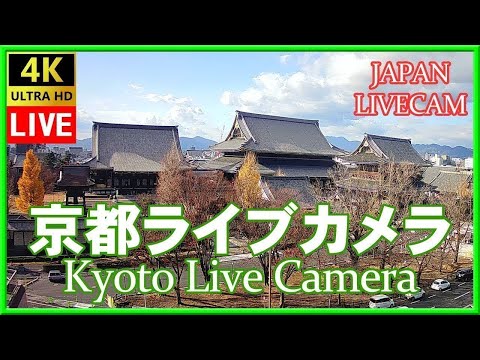
Continue your Kyoto Station triangle with the Hachijo Taxi Stand cam (south exit logistics), Bus Terminal view (north-side city buses), and nearby Higashi Honganji Temple for wooden monumental scale versus Hara’s glass grid.
Frequently Asked Questions
When does the illumination turn on?
Typically 15:00–22:00 daily, with special programs during part of the evening window. Hours vary seasonally — verify locally before visiting.
How many LEDs are on the stairs?
About 15,000 full-color LEDs on 125 of 171 steps.
Is there sound?
Graphical Illumination Plus includes synchronized audio on many programs since 2017. Event pauses may silence the system.
Can I watch this camera during the day?
Yes, but the spectacle is night-focused. Daytime shows circulation and architecture without LED programs.
Is the stream always live?
Availability is uncertain — no stable public embed was confirmed at import. Status may read offline even when on-site illumination runs.
Which station exit is closest?
The Central (Karasuma) side and main atrium — not the Hachijo shinkansen exit, though you can reach the stairs via indoor bridges from either side.