
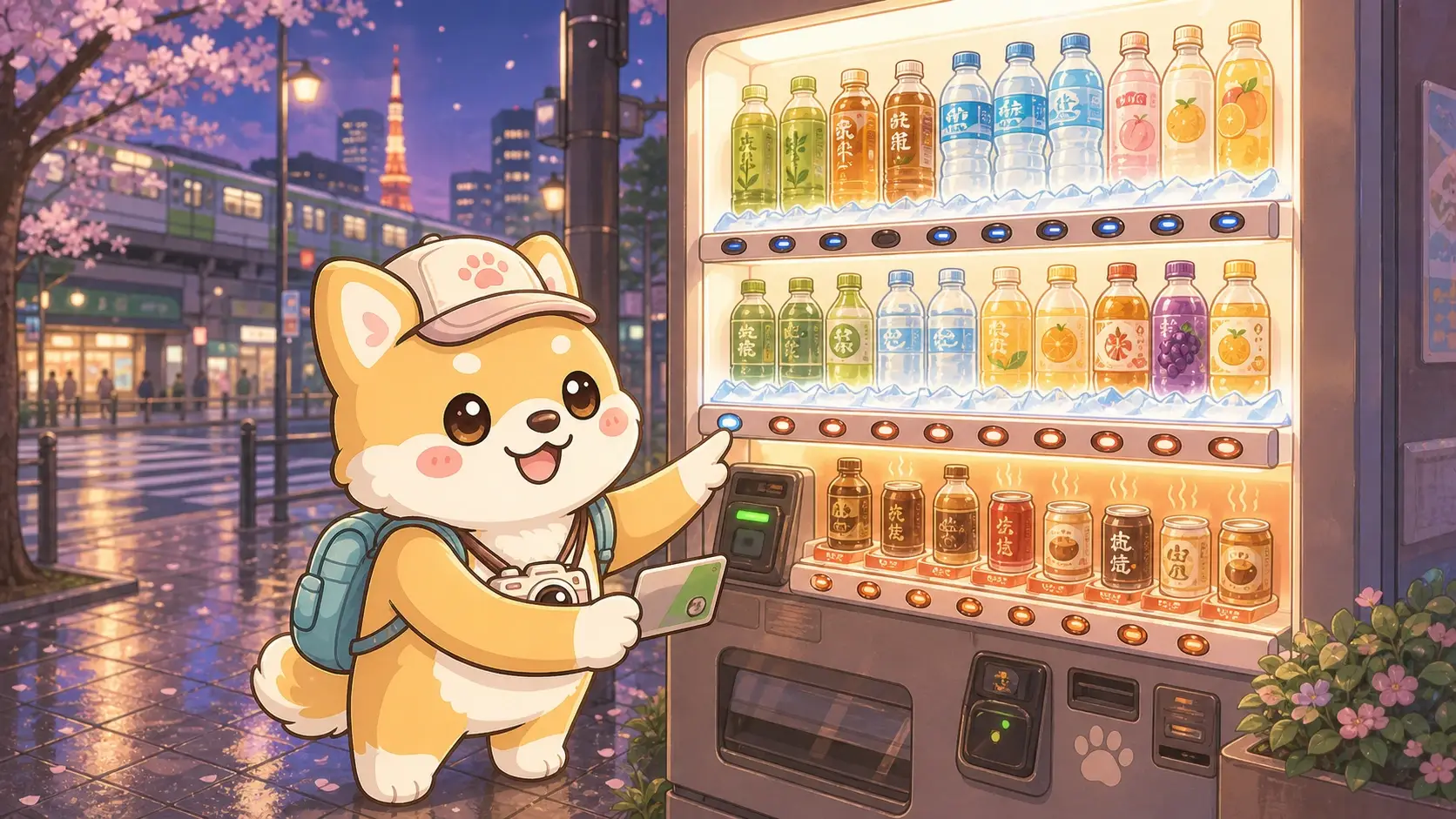
Most japanese vending machine drinks look like a wall of identical cans until you learn three codes: tea versus soda, hot versus cold, and whether you are paying with coins or an IC card. Japan has millions of machines. You do not need all of them. You need the ones on the way to a station, and a habit of choosing unsweetened tea unless you actually want sugar.
This is a field guide to the drink wall. It is not a catalog of novelty machines. For canned coffee as a winter ritual, use the coffee vending machine piece. For shop fridges and ice cream, see japanese convenience store drinks. For the food sequence inside the shop, stay with japanese convenience store food.
Drinks in japanese vending machines: the categories that matter
Drinks in japanese vending machines repeat a short list of jobs.
Unsweetened tea (the default adult buy)
Green tea, oolong, barley (mugicha), sometimes blended. Look for 茶 and for labels that do not scream cream. This is hydration that does not wreck a sugar budget.
Sweet tea and milk tea
Royal milk tea, peach tea, lemon tea. Dessert in a bottle. Fine. Not water.
Canned coffee (hot and cold)
Boss, Georgia, Fire, UCC — black versus sweet blend. Red panel often means hot; blue often means cold — confirm on the machine in front of you. Brands, button kanji, and the winter hand-warmer ritual are the japanese coffee vending machine article. Here it is one row on the wall, not a tasting flight.
Sports drinks
Pocari Sweat and Aquarius. Electrolytes, not a personality. Useful after a humid scramble, not as a sightseeing souvenir.
Calpis and other milky-sour drinks
Lactic, sweet, diluted. Kids like it. Adults can too. It is not yogurt for breakfast.
Soda and energy
Coke, local cream sodas, energy cans. Same role as anywhere else.
Seasonal
Sakura cans in spring, sweet potato or apple in autumn, extra hot coffee density in winter. If the wrap looks limited, it probably is.
Walk Koen Dori in Shibuya or Center Street and you will pass drink walls every few shopfronts. That density is the point of japanese drink vending machines: they sit where walking happens, not only inside shops.
Japanese drink vending machine: how to actually pay
A japanese drink vending machine usually accepts:
- Coins and 1000-yen notes (many machines)
- IC cards (Suica, Pasmo, and compatible) — tap the mark
- Sometimes QR; do not plan on it
If the panel is dark, it is empty or broken. If your bill is rejected, it is too wrinkled or the machine only wants coins. Do not pound it. Walk twenty meters to the next one.
Hot cans can be genuinely hot. Hold with the cardboard sleeve if there is one, or use a handkerchief. Cold cans sweat in summer and will wet your bag.
Japanese snacks commonly found in vending machines
Japanese snacks commonly found in vending machines are a smaller, weirder wall than drinks.
Typical:
- Chips and pretzels
- Chocolate bars
- Canned bread or sweet buns in some stations
- Cup soup in offices and hotels
- Ice cream machines in summer (separate freezer units)
Drink machines occasionally include a jelly pouch or a tiny snack hook, but the serious snack walls are their own cabinets. If you want a meal, a kombini still wins. The machine is for not entering a shop.
Skip the internet folklore about adult specialty cabinets. They are not how you learn to hydrate in Shinjuku.
How to choose without reading Japanese
- Look at the photo on the button.
- Prefer bottles with tea leaves or simple kanji 茶 if you want unsweetened.
- Avoid cream swirls on the label if you do not want milk tea.
- Match the colored price button to hot or cold.
- Start with one 150–200 yen tea. Recalibrate.
The photos are marketing. The small print is the drink. Cream swirls and “café au lait” lettering mean sugar. A dark button with a bright photo is sold out. Move on.
Cans hide temperature and crush smaller. PET bottles reseal. For a long train, unsweetened tea in a bottle beats three novelty cans. If a machine sits in direct sun, “cold” tea can still be warm — shade is worth ten extra steps.
Green plastic bottles of tea are a safe first language.
Where machines beat convenience stores
- Platform edges when you have ninety seconds
- Rural bus stops
- Temple parking lots
- 2 a.m. when the shop staff is restocking and you only need water-adjacent caffeine
Kombini still wins for food, bathrooms, and ATMs. Machines win for speed.
IC cards fail when the battery in a phone wallet is dead or the card is in a stack of too many chips. Keep a physical Suica accessible. Coins still finish the job.
If you buy a hot can before a long indoor museum, drink it first. Condensation from a cold bottle is kinder to a tote bag than a leaking heat-tab you forgot you pressed.
A simple buying rule for a week in Japan
Morning: canned coffee or machine café if you want the ritual.
Walking: unsweetened tea.
Heat: Pocari if you have been outside too long.
Treat: one Calpis or seasonal can, not four.
That pattern keeps japanese drink vending machines useful instead of turning every stroll into a sugar tour.
Rural versus city walls
City machines are a convenience layer on top of kombini density. Rural machines can be the only legal-feeling shop for an hour. That is why they stock coffee, tea, and a sports drink even when the next town is a single bus.
Do not depend on a mountain-road machine as your only water plan in summer. Bring a bottle. Use the machine as backup. Heatstroke is not a cute travel story.
Temple and shrine machines often sit near the parking lot, not the inner precinct. Buy before you go in; sipping in front of a hall looks worse than buying.
What not to learn from the internet
Vending-machine Japan is already strange enough without folklore lists. Capsule toys, eggs, umbrellas, and the cabinets that sit beside the drink wall are the japanese toy vending machines field guide. Treat those as extras. This page is hydration.
FAQ
Are vending machine drinks more expensive than kombini?
Often similar. Convenience has more choice. Machines have location.
Can I use a credit card?
Usually no. IC card or cash.
Is the tea really unsweetened?
Many are. Some “tea” is still sweet. If the label looks like a dessert, it is.
Why are some cans hot?
Heated coils. Winter commuting. Do not shake them like a soda.
Do machines sell beer everywhere?
Some do, with age restrictions and varying rules. Do not assume. Drink-walking laws and manners still apply.
Should I collect seasonal cans?
One is a souvenir. A suitcase of liquids is a leak.

