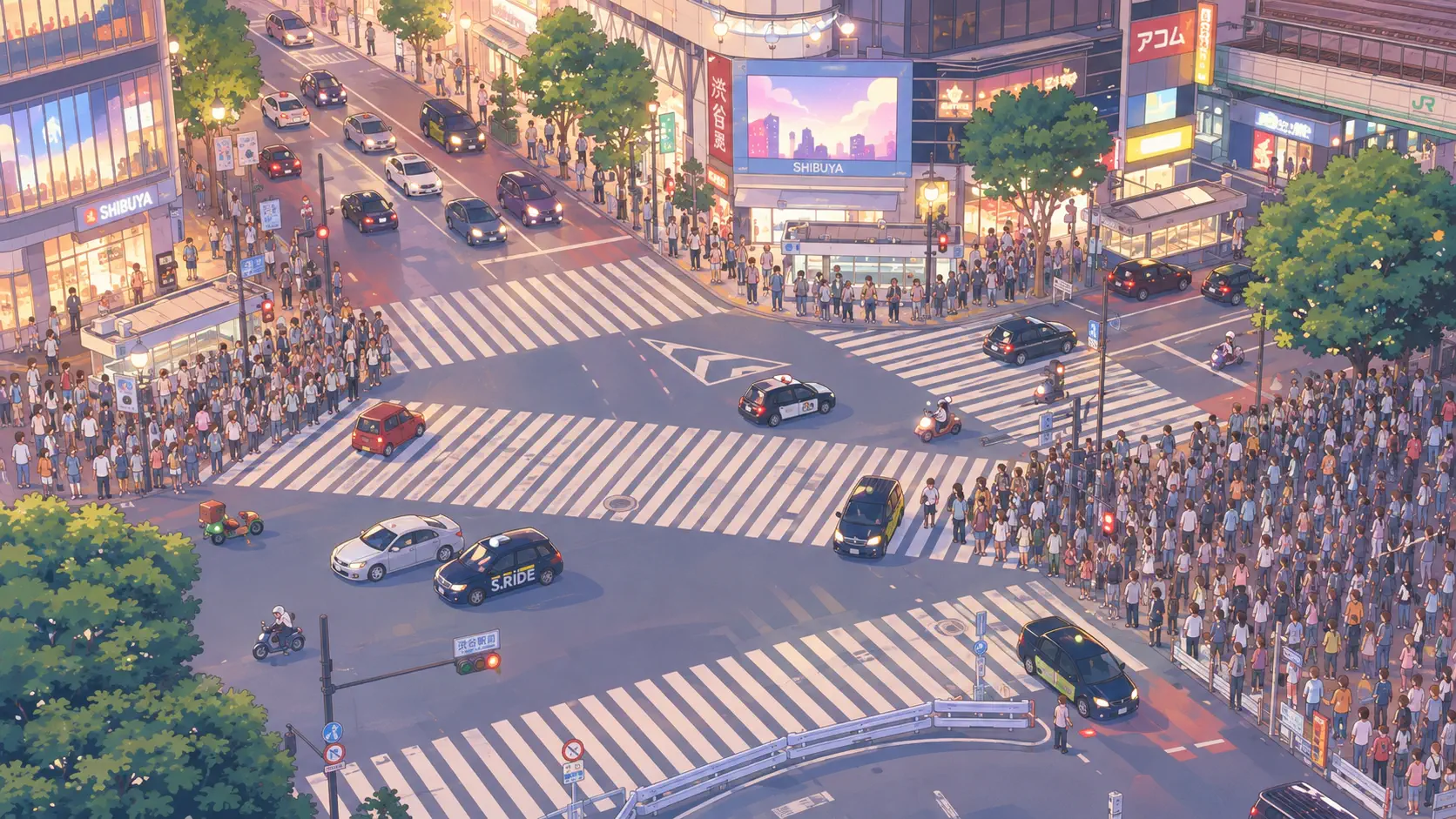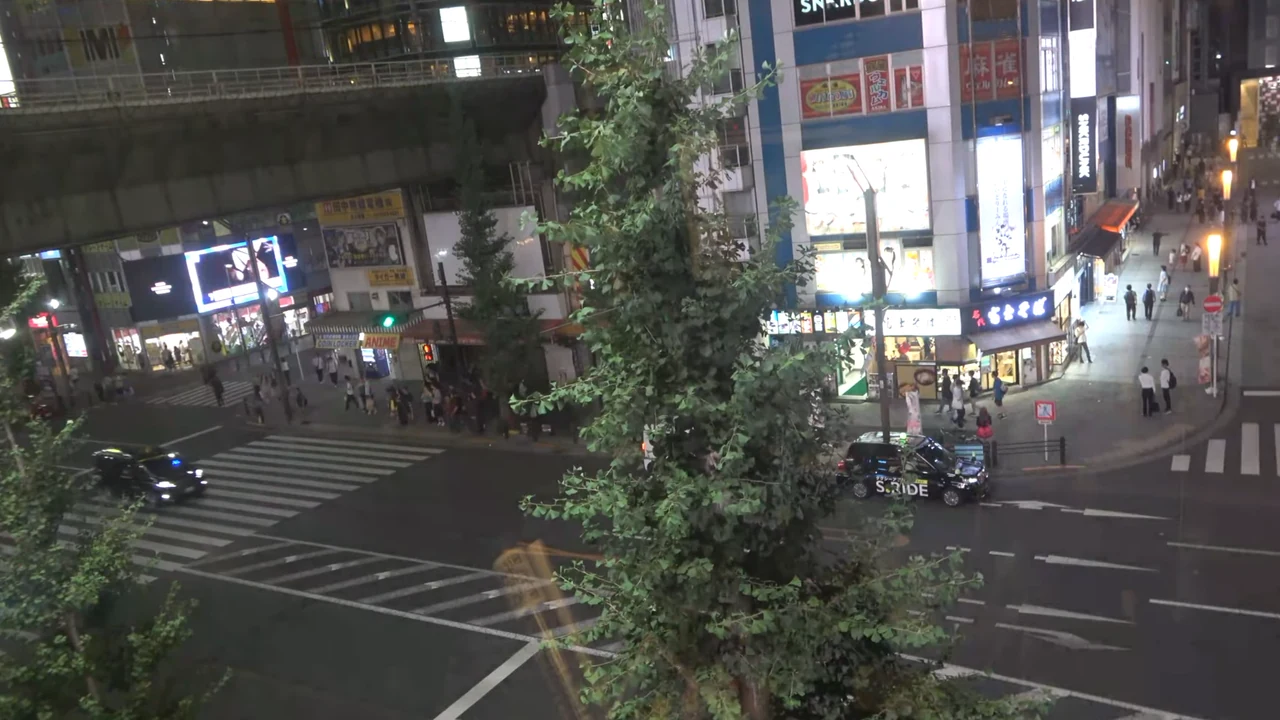

Before Shibuya became synonymous with scramble crossings and global streetwear drops, there was a slope. Koen-dori — Park Street — climbs northeast from the retail gravity of Shibuya MODI toward Yoyogi Park, passing Parco, Marui, Loft, and decades of youth culture storefronts. Renamed when Shibuya Parco opened in 1973, the avenue turned a quiet ward-office neighborhood into Tokyo’s runway. This live camera watches that half-kilometer of pavement where fashion students, tourists, office workers, and weekend cosplayers share the same uphill sidewalk energy.
About This Live Camera
The feed delivers a street-level or low-elevation view along Koen-dori’s commercial corridor — pedestrians, traffic, shopfronts, signage, and weather in real time. It is not the famous Scramble Crossing intersection cam; instead it shows the second act of Shibuya walking culture after you cross north from Hachiko and push toward Yoyogi.
Expect continuous foot traffic, delivery bicycles, taxis, and the visual noise of vertical Japanese retail signage. Stream availability follows the broadcaster; when live, the camera excels at showing how Shibuya breathes on an ordinary Tuesday versus a Saturday shopping surge.
What You Can See
Pedestrian flow dominates: shoppers with branded bags, groups heading to Parco, commuters cutting through toward NHK or Yoyogi Park, and street-fashion ensembles that explain Shibuya’s global reputation. Retail facades include Shibuya MODI, Marui buildings, Disney Store Shibuya, Loft, MUJI-adjacent zones, and the Parco complex that named the street.
Vehicles share the slope — taxis, buses, kei cars — on a road that is not pedestrian-only but feels pedestrian-led. Seasonal decorations, campaign banners, and umbrella weather add texture. Toward the park end, glimpses of Keyaki Namiki-dori (zelkova-lined approach) and NHK Broadcasting Center geometry may appear depending on lens aim.
Location
Koen-dori runs through Shibuya Ward, Tokyo, branching from Jingu-dori near the scramble and climbing toward Yoyogi Park and the NHK campus. Coordinates near 35.66°N, 139.70°E place the camera in the north Shibuya retail bowl — uphill from the valley-floor crossing, below the park’s forest edge.
The street length is roughly 500 meters from MODI-area convergence to the Yoyogi-side intersection — short on a map, dense in commercial intensity. Shibuya Station’s multi-operator hub (JR, Tokyo Metro Ginza/Hanzomon/Fukutoshin lines, Tokyu Toyoko/Den-en-toshi, Keio Inokashira) feeds the corridor within a five- to ten-minute walk.
History
Postwar Shibuya grew from valley-floor entertainment toward surrounding hills. Washington Heights — U.S. military housing — occupied what became Yoyogi Park until the 1964 Tokyo Olympics Athletes Village transformation. NHK Broadcasting Center (1964), Shibuya Ward Office (1965), Seibu Department Store (1968), and Marui (1971) drew foot traffic along what was then called Shibuya Ward Office Shopping Street (区役所通り).
In 1973, Shibuya Parco opened as a youth-focused fashion and culture complex. Operator Seibu’s creative marketing renamed the street Koen-dori — “Park Street” — linking Parco (parco = park in Italian) with the avenue’s termination at Yoyogi Park. Sidewalks were widened twice in the 1970s–80s to accommodate see-and-be-seen promenading. Parco posters, limited events, and designer floors turned the slope into ground zero for Japanese youth fashion — later exporting influence across Asia.
The 1980s–90s saw back-street boutiques (United Arrows era neighbors, Spain-zaka spinoffs) deepen “hidden shop” culture. Koen-dori became not only shopping but spatial drama — a hillside stage where Tokyo’s consumer avant-garde tested looks before they hit mainstream magazines.
Why Watch
Because Shibuya tourism fixates on the scramble while Koen-dori carries the fashion story. Street-style photographers, trend forecasters, and culture writers study this incline for early signals — hair, silhouette, subculture markers — absent from aerial crossing cams.
Urban sociologists note how a topographical handicap (uphill from station) was flipped into exclusivity by Parco’s magnetism. Remote viewers get unfiltered weather (rain on slope = umbrella choreography), event spillover from park festivals, and the daily proof that Shibuya remains a production studio for visible youth identity.
Daily Life
Weekday afternoons mix students, creative-industry freelancers, and early evening office workers grabbing fast fashion or gifts. Weekends swell toward Parco drops, pop-up queues, and park-bound leisure groups. Weeknights stay lively near bars and izakaya side streets feeding off Koen-dori traffic.
Delivery culture is visible — couriers navigating crowded sidewalks politely. Campaign staff handing flyers appear seasonally. Street musicians and small promo events occupy corners legally or semi-legally depending on ward enforcement moods.
Best Time of Day
- Late afternoon–evening: peak fashion visibility and neon/sign illumination
- Saturday midday: maximum shopping density
- Weekday morning: commuters cutting through; cleaner sightlines for architecture
- After rain: reflective pavement and umbrella color fields
Golden hour on the slope sidelights faces and storefront glass — why magazine shoots love this axis.
Best Seasons
Spring brings cherry contexts near Yoyogi Park and comfortable promenade weather. Summer adds humidity, festival spillover from park events, and lighter clothing displays — street-style heaven. Autumn fashion weeks and clear October skies boost photo tourism. Winter layers — coats, scarves, subculture outerwear — rewrite silhouettes; illuminations nearby add night bokeh.
Obon and New Year reduce some youth traffic but never fully empty the corridor. Golden Week mixes domestic tourists with locals; school break periods (late July–August, late December–early January) skew younger during daylight hours. Each season rewrites the same pavement with different wardrobe grammar — the reason fashion archivists treat this street as longitudinal study material rather than a one-time visit checklist.
Events
- Yoyogi Park events (festivals, flea markets, cosplay gatherings on adjacent weekends) flood Koen-dori approach paths
- Parco floor openings, fashion brand collaborations, and limited pop-ups — check Parco Shibuya schedules
- Halloween (nearby Shibuya crossing security managed in recent years) still influences costume traffic on connecting streets
- Tokyo Marathon and major city marathons ripple through Shibuya ward routing some years
Seasonal Disney Store campaigns and Loft stationery frenzies create queue culture visible from the street cam when angles align.
Getting There
Shibuya Station is the anchor — exit toward Hachiko / Scramble, cross north, angle onto Koen-dori via MODI/Marui intersection rather than staying on flat Center Gai valley entertainment. Tokyo Metro Ginza, Hanzomon, Fukutoshin lines; JR Yamanote/Saikyo/Shonan-Shinjuku; Tokyu Toyoko & Den-en-toshi; Keio Inokashira — all converge.
Walking uphill is mild exercise; accessibility varies by shop entrances. Buses traverse Jingu-dori parallel. Taxis common for park-to-station hops with shopping bags.
Interesting Facts
- Koen-dori was formerly Shibuya Ward Office Shopping Street until the 1973 Parco rebranding.
- Parco means park in Italian — street name links retail branding to Yoyogi Park geography.
- Sidewalks were widened twice to handle promenade culture — rare infrastructure admitting fashion’s power.
- 1986 Parco men’s designer floor reportedly caused Japan’s first male fashion queue phenomenon.
- The slope connects occupation-era Yoyogi history to 1970s–90s youth revolutions — a compressed cultural timeline.
- Koen-dori is shorter than Center Gai fame suggests but denser in flagship retail per meter.
Fashion Weather on a Fixed Street Cam
Use the feed to study micro-trends: sneaker rotation, bag scale, hair color cycles. Notice group choreography — Shibuya friends walk staggered to chat uphill. Compare rainy-day umbrella ethics (Japanese compact umbrella culture) with Western poncho chaos elsewhere on earth.
When foot traffic thins after midnight, the street still speaks through lit signage and cleaning trucks — the maintenance shift that resets Shibuya for tomorrow’s drops.
Reading the Slope as Cultural Data
Tokyo planners often treat hills as problems; Parco treated Koen-dori’s incline as theatre. Watch how pedestrians lean forward slightly, how couples switch sides to share the view downhill, how street photographers back toward MODI to frame someone ascending. The camera captures a unidirectional energy — unlike the scramble’s omnidirectional chaos, Koen-dori has a narrative direction: up toward park green or down toward station gravity.
Notice bag size as economic indicator: weekday evening briefcases yield to Saturday shopping totes; campaign-season freebies add plastic bulk. Staff uniforms from nearby department stores sometimes appear in clusters during shift changes along Jingu-dori connectors. Even without audio, the feed communicates Shibuya’s role as a testing market — brands trial window concepts here before rolling to Osaka or Fukuoka branches.
Shibuya’s Second Main Stage
Pair this view with Shibuya Scramble Crossing for intersection physics versus slope promenade, Shibuya Center Street for valley-floor nightlife contrast, and the broader Shibuya city cam for skyline context — four tabs, one ward’s identity stack. On rainy evenings, open both Koen-dori and Crossing cams side by side: umbrella density differs — slope shoppers move with purpose, scramble tourists pause for photos. That contrast alone explains why Shibuya needs multiple live cameras to tell one ward’s story.
Nearby Live Cameras
Continue in Shibuya with Shibuya Scramble Crossing, Shibuya Center Street, and the ward overview at Shibuya.
Frequently Asked Questions
Is Koen-dori the same as Shibuya Crossing?
No. The crossing is downhill on Jingu-dori; Koen-dori is the uphill Park Street branch toward Yoyogi Park and Parco.
Why is it called Koen-dori?
Koen means park; the street leads toward Yoyogi Park and was renamed when Parco (parco = park) opened in 1973.
What shops are on Koen-dori?
Major anchors include Shibuya Parco, MODI, Marui, Loft, MUJI-area stores, and Disney Store Shibuya nearby.
When is the street busiest?
Weekend afternoons and evening shopping hours; weekday late afternoons also see heavy youth and commuter-traveler mix.
Can I walk from Shibuya Station?
Yes — about 5–10 minutes to the MODI/Parco end; the full slope to Yoyogi Park takes a bit longer uphill.
Does this camera show cosplay or park events?
When adjacent Yoyogi Park hosts gatherings, spillover foot traffic and costumes may appear — especially weekends, though framing varies by broadcast angle.