

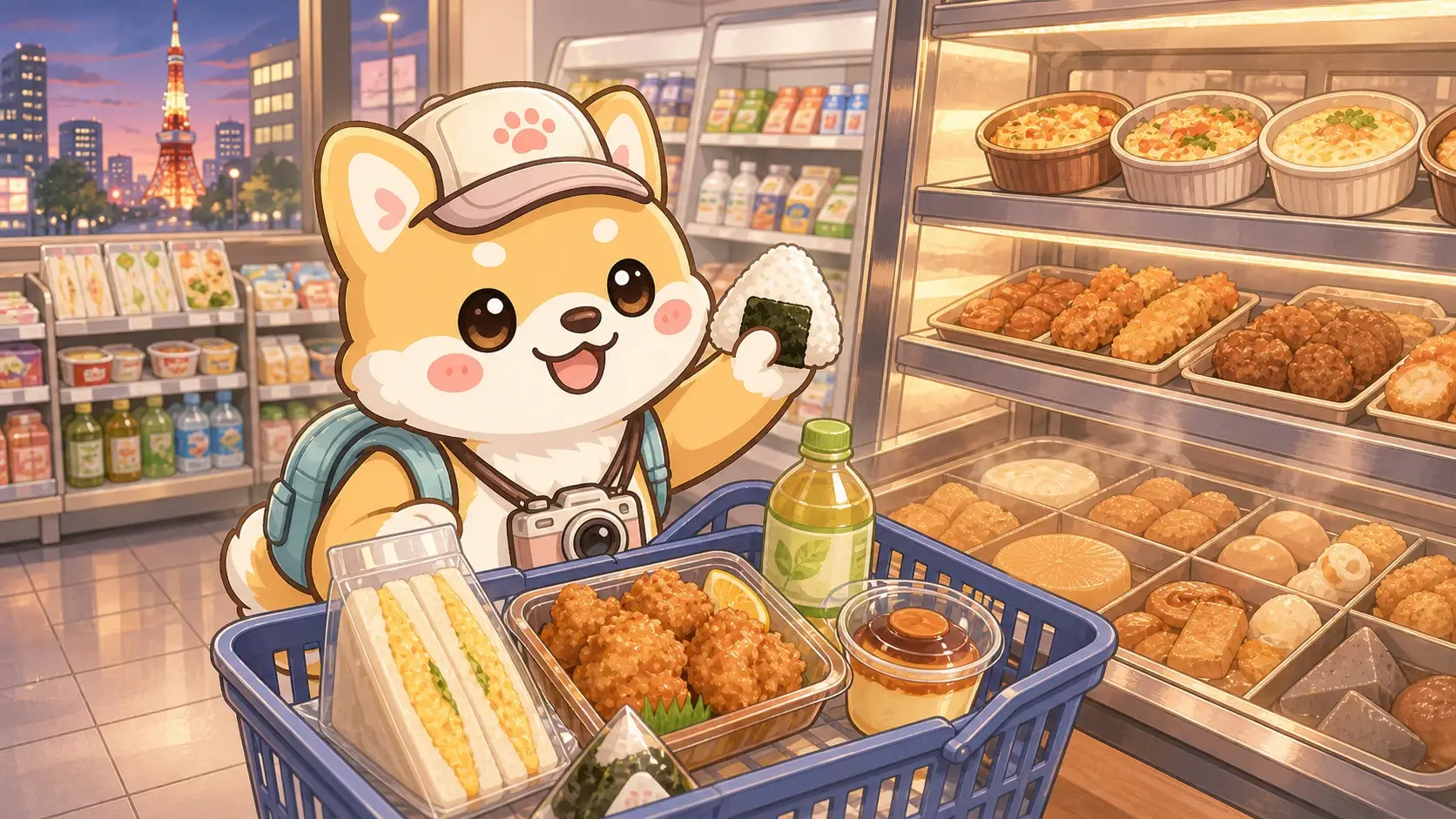
A first pass through japanese convenience store food should not be a dare to eat the weirdest thing in the fridge. It should be a sequence: rice, protein, hot counter, sweet, drink. Kombini (convenience stores) are built for commuters who already know the map. You do not. This is the map.
Prices below are typical city ranges, not a promise. Night discount stickers change the math. For fillings inside the rice balls, use the onigiri fillings guide. For vegetarian traps, use vegetarian onigiri fillings.
Food in japanese convenience stores: how the shop is laid out
Food in japanese convenience stores is zoned so regulars never think.
- Front / till: cigarettes, umbrellas, copier — ignore on day one.
- Open fridge, eye level: onigiri, sandwiches, salads.
- Lower fridge: noodles, desserts, yogurt.
- Hot case: fried chicken, steamed buns, oden in winter.
- Shelves: chips, chocolate, cup noodles.
- Drink fridges + coffee machine: the caffeine layer.
The Umineko Shouten in-store camera is a rural shop floor, not a Tokyo 7-Eleven, but the same idea holds: packaged food facing the aisle, staff moving stock, customers grabbing and leaving. Convenience is a choreography.
Japanese convenience store foods to buy in this order
Japanese convenience store foods worth a first bag, in a useful sequence:
1. Onigiri
¥120–¥250. Pull-tab nori. Two make a lunch. This is the staple, not a snack pretending to be a meal.
2. Tamago sando (egg sandwich)
Soft milk bread, sweet-savory egg. Often better than you expect. Same-day.
3. Karaage or fried chicken from the hot case
Ask for a piece; they bag it. Juicier than the fridge chicken. Eat while walking.
4. Oden (winter, and some shops year-round)
Simmered daikon, egg, fish cakes in broth. Pay by item. Broth is often fish-based.
5. Nikuman / pork bun from the steamer
Soft, hot, filling. Vegetarian versions exist; check.
6. Pasta or gratin in the fridge
Microwave behind the counter or at the machine. Hit-or-miss; good when you need a fork meal in a hotel.
7. Cup noodles only if you have hot water
Hotels and many shops have a kettle corner. Do not buy these as your only plan without checking.
That sequence is the best japanese convenience store food strategy for a tired arrival day: salt, protein, heat, then dessert if you still care.
Japanese convenience store snacks (the shelf, not the fridge)
Japanese convenience store snacks are where budgets dissolve.
- Potato chips with regional flavors (soy, mayo, consome)
- Tiny chocolates and kit-kats that are actually just kit-kats
- Rice crackers (senbei)
- Jelly cups
- Chocolate-covered pretzels
Buy one. Eat it. Decide if you need a second. The snack wall is designed like an airport.
Japanese convenience store drinks
Japanese convenience store drinks are the fridge door after the rice case: unsweetened tea first, then coffee if you want the ritual. The full fridge, ice cream freezer, and chain-by-chain drink wall live in cheap japanese convenience store drinks. Street machines — hot/cold buttons, IC tap — are the vending machine drinks field guide. Heated cans as a winter object are the japanese coffee vending machine page.
On this map, drinks are step five, not a second article. Grab tea. Keep walking.
Japanese convenience store ice cream
Japanese convenience store ice cream is a heat strategy, not a food group. Garigari-kun, mochi ice, matcha bars: details and which chain’s freezer is worth a detour sit with the drinks article above. Eat outside. Melt is instant on asphalt.
7-Eleven vs Lawson vs FamilyMart (what actually differs)
All three will feed you. Food differences that actually change a first bag:
- 7-Eleven: coffee machine, ATMs, dense in cities.
- Lawson: sweets and some deli.
- FamilyMart: fried-chicken reputation.
Fridge brands and ice cream SKUs overlap 80%; the remaining 20% is the drinks article. Do not tour all three on day one. Pick the nearest, run the sequence, notice differences on day four.
A working kitchen lunch rush on the Kitchen DIVE live camera is the sit-down cousin of this system: people want food that is already decided. Kombini is that decision, pre-packaged.
Is japanese convenience store food healthy?
Is japanese convenience store food healthy depends which shelf you shop.
Healthier pattern: unsweetened tea, onigiri with pickle or salmon, salad you inspect, fruit, edamame, yogurt.
Less healthy pattern: fried hot-case everything, cream buns, sweet coffee, chips as dinner.
Labels list calories. Portions are honest. The problem is stacking three “small” items that are each a dessert. It is more labeled and less greasy than a lot of airport food. It is not a farmer’s market.
Best food at japanese convenience stores for a balanced day is boring: two onigiri, a salad, tea, one treat. That is still a real meal.
Payment, microwaves, and not blocking the aisle
Pay at the till; many shops take cards and IC. Say nothing fancy. If you need a microwave, hold up the item; staff will zap it.
Do not assemble a picnic in front of the rice case at 8:00 a.m. commuter peak. Grab, pay, step outside.
Night stickers (often 20:00 onward, store-dependent) mark down sushi packs and sandwiches. That is when kombini becomes a budget tool, same idea as the evening supermarket trick in cheap eats in Tokyo.
Arrival day versus day five
Arrival day: buy the sequence, eat in the hotel, sleep. Do not hunt a “real restaurant” when you have been awake twenty hours.
Day five: you will know which chain’s coffee machine you like, which fried chicken is actually dry, and whether you can live on egg sandwiches. That is when kombini becomes a tool instead of a theme park.
Use it for:
- Early station mornings before anything sits down
- Rain when you refuse to hunt with a wet map
- One cheap meal so dinner can be the expensive one
Do not use it for:
- Your only vegetable for a week (add supermarket fruit)
- Alcohol as a meal plan
- Every souvenir snack in one basket
Microwaves, chopsticks, and trash
Chopsticks are at the till. Napkins too. Trash sorting is real: burnable versus plastic. If there is no bin inside, carry the wrapper to the hotel. Leaving a tray on a utility pole is how you look like a problem.
Microwave items say so on the sleeve. Cream puffs do not want a microwave. Onigiri does not need one.
If you are sharing a room, kombini breakfast is quieter than a café meetup at 6:40 for a Fuji bus. Pair that logistics with the Kawaguchiko day trip timing: the shop is open when the mountain is still a maybe.
FAQ
Can I eat only convenience stores for a week?
You can. You will get tired of fridge pasta. Mix in a gyudon shop.
Is the egg sandwich breakfast?
Yes. It is also an emergency lunch.
Do I need cash?
Less than before, but a little yen still helps.
Why is the nori separate in the onigiri pack?
So it stays crisp. Follow the arrows. Pull, fold, eat.
Are there vegetarian options?
Some. Start with ume and the vegetarian onigiri fillings label habit. Restaurant dashi is a different problem: what to eat in Japan as a vegetarian.
Is kombini cheaper than restaurants?
Often for one person. A sit-down teishoku can still win on vegetables and heat.

