
Tokyo has two Shinjuku stations — and this camera watches the quieter, stranger one. Seibu-Shinjuku Station is the Seibu Shinjuku Line terminus tucked into Kabukicho, north of the JR megacomplex everyone photographs. The HD live feed frames PePe Square (ペペスクエア), the Yasukuni-dōri intersection, and the elevated rail bridge marching south toward JR Shinjuku — a 420-metre walk through neon, pachinko glare, and the City of Flowers ward motto that Shinjuku insists on despite its grittier reputation. When trains pulse on the bridge and taxis stack at the light, you are watching suburban Saitama commuters enter Tokyo’s densest entertainment grid.
About This Live Camera
The stream looks down on Seibu Shinjuku Station’s southern entrance zone from a building along Yasukuni-dōri Avenue — Tokyo Metropolitan Road 302, the arterial separating Kabukicho from Shinjuku Station’s west-side chaos. YouTube video ID lA6TaaMGgDo carries the embed per source catalog; confirm live status before assuming 24/7 uptime.
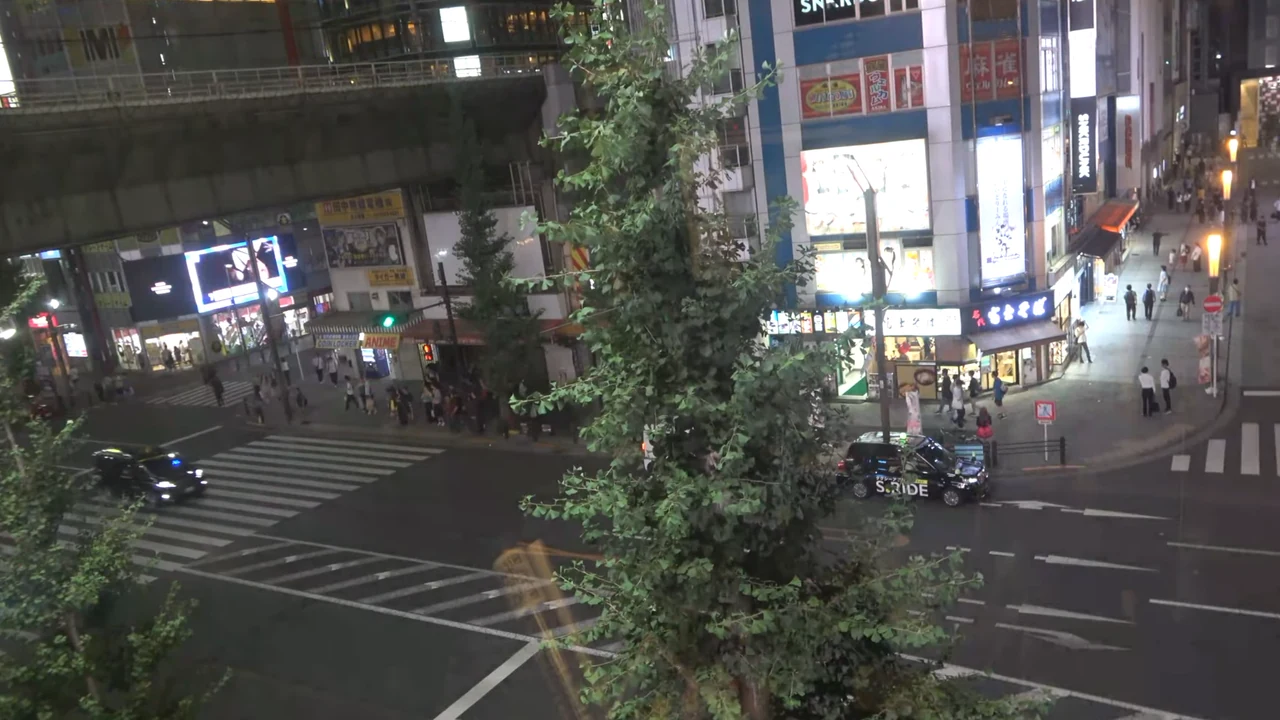
Foreground elements: PePe department store signage, pedestrian crossings, taxi lanes, and evening crowd density. Mid-frame: Seibu Railway viaduct and trainsets (3000 series, 9000 series liveries common). Background hints: rail alignment toward JR Shinjuku, office towers, and the perpetual glow of entertainment district billboards. This is traffic + trains genre — not platform-close railfanning like Shinjuku JR Livecam but street-level Tokyo kineticism.
What You Can See
Seibu trains departing and arriving the elevated terminus — short formations turning quickly because the line ends here. Pedestrians crossing PePe Square toward Kabukicho 1-chome nightlife or Shinjuku-nishiguchi subway access. Taxis and Toei buses on Yasukuni-dōri; occasional delivery trucks at off-peak hours.
Rail bridge on the image right carries Seibu tracks toward the JR connection zone — watch for synchronized train gaps when platform dwell times align. Night brings neon dominance: PePe facade lighting, pachinko hall fronts, smartphone-lit crosswalks. Rain turns asphalt mirror-bright — classic Tokyo noir without cinema filters.
Location
Seibu-Shinjuku Station (35.694°N, 139.698°E) occupies Kabukicho 1-30-1, Shinjuku-ku, Tokyo — integrated with Seibu Shinjuku PePe shopping center and Shinjuku Prince Hotel. The station sits ~420 m northwest of JR Shinjuku Station by foot — closer via Omoide Yokocho alleys if you know the shortcuts.
Yasukuni-dōri runs east-west, visually dividing Kabukicho from Shinjuku-nishiguchi (Oedo Line E01). PePe Square is the plaza branding at the station’s southern face — meeting point for suburban arrivals who have not yet entered JR’s underground labyrinth.
History
Seibu Railway developed the Shinjuku Line (originally Shinjuku–Haijima corridor extensions) to feed Kawagoe and western Tokyo/Saitama suburbs. Seibu-Shinjuku Station opened as a dedicated terminus separate from JR to avoid platform sharing conflicts and to anchor Seibu retail — the PePe complex (opened 1970s era department-store culture) binds station and shopping as one property strategy.
Kabukicho evolved postwar from entertainment licensing to Asia-famous nightlife district — love hotels, cinemas, host clubs, and recently tourism-facing signage. Seibu-Shinjuku remained the “local commuter” face while JR Shinjuku absorbed Shinkansen and intercity glory. Shinjuku Prince Hotel (1984) verticalized the block — hotel guests descending into PePe exemplify Japanese station-building typology.
PePe branding persists though retail mix shifted — MUJI, Can Do ¥100 shops, Shimamura Music — reflecting 2010s lifestyle diversification. The camera’s view is therefore Showa retail DNA with Reiwa signage overlays.
Why Watch
Because Seibu-Shinjuku is the threshold where Saitama bedroom communities pour into Kabukicho — social geography in one intersection. Because the rail bridge toward JR Shinjuku visualizes Tokyo’s stacked railway competition — private vs JR vs subway within footsteps. Because night energy here differs from Shibuya Crossing youth culture or Kabukicho Crossing close-ups — a mid-distance ward-scale read.
Commute researchers, urbanists, and jet-lagged travelers use this feed to feel Shinjuku before arriving.
Daily Life
Morning: Limited Express Red Arrow and Express trains discharge office workers who walk or transfer toward JR lines. Afternoon: shopping traffic in PePe — tourists staying at Prince Hotel, musical instrument buyers at Shimamura Music. Evening: nightlife staff arriving for Kabukicho shifts; Golden Gai and Omoide Yokocho-bound diners crossing Yasukuni-dōri.
Weekends: suburban leisure riders heading inbound; foreign tourists confusing this station for JR Shinjuku until maps recalibrate. Late night: taxis dominate; trains thin but never fully stop on Seibu’s schedule.
Best Time of Day
- 07:00–09:00: inbound commuter peak; train frequency maximum
- 12:00–14:00: calmer plaza; good for reading signage and architecture
- 17:00–19:00: outbound surge; crosswalk density peaks
- 21:00–02:00: Kabukicho neon fully awake; trains less frequent but crowd still flows
Friday midnight captures the entertainment district’s weekly inhale.
Best Seasons
Spring: mild evenings; cherry sparse here but Shinjuku Gyoen nearby draws overflow pedestrians. Rainy season: umbrella forests at crossings — visually dense. Summer: humidity haze and festival weekends (Tanabata decor sometimes on PePe facade). Autumn: crisp night air sharpens neon contrast. Winter: rare snow becomes viral webcam moment; heating steam from street grates.
Events
Halloween Kabukicho crowds spill toward Yasukuni-dōri — camera catches costume rivers. New Year shrine visits route through Shinjuku hubs — pedestrian surges visible though not shrine-close. Golden Week and Obon alter commuter ratios — more luggage, fewer suits.
Seibu occasional station events (stamp rallies, livery reveals) happen platform-side — may not fill the frame but boost train watcher interest. Tokyo Marathon route variants affect east Shinjuku road closures indirectly.
Getting There
Seibu Shinjuku Line — terminus, no transfer needed if originating on Seibu network (Hon-Kawagoe, Tokorozawa, Haijima branches). JR Shinjuku — walk ~5–7 minutes northwest via Yasukuni-dōri or alley shortcuts. Oedo Line Shinjuku-nishiguchi (E01) — ~2 minutes’ walk. Keio, Odakyu, and Marunouchi/ Shinjuku Line subways via JR Shinjuku underground passages — allow 15+ minutes if unfamiliar.
From Narita (NRT): N’EX or Skyliner+JR to Shinjuku, then walk north. From Haneda (HND): Keikyu+JR or Tokyo Monorail+JR combinations.
Interesting Facts
- Seibu-Shinjuku Station is ~420 m from JR Shinjuku — yet serves entirely separate track networks.
- Seibu Shinjuku Line length ~47.5 km to Hon-Kawagoe — deep Saitama penetration.
- PePe name derives from “People’s Paradise” marketing — Showa-era optimistic retail branding.
- Shinjuku Prince Hotel shares the block — 2F PePe connects directly to ticket gates.
- JR Shinjuku handles ~3.5+ million daily passengers — world’s busiest station complex; Seibu terminus is a tributary, not the main river.
- Kabukicho name references unbuilt kabuki theater plans — history as unrealized cultural ambition.
- Yasukuni-dōri shares its name with Yasukuni Shrine elsewhere — here, purely road nomenclature, not the shrine itself.
- Coin lockers live inside station ticket areas, not PePe mall — luggage planning matters for hotel guests.
PePe Square as Commuter Funnel
PePe Square is not a grand European plaza — it is a functional confluence where suburban train riders meet urban nightlife geography. Watch how pedestrians split at the light: suits toward JR, youth toward Kabukicho arcades, hotel guests upward to Prince elevators. The camera documents decision-point choreography invisible on platform cams.
Retail hours (~11:00–21:30) mean evening station activity continues after shop shutters — nightlife is the extended business.
Private Railway in the JR Shadow
Seibu exemplifies Tokyo’s private railway ecosystem — commuter lines built by developers who also sold suburban land. Watching Seibu trains beside the JR bridge reminds you Tokyo rail is competition plus interchange, not a unified metro. Liveries, platform heights, and ticketing remain separate — integration is pedestrian, not corporate.
Seibu Railway traces to 1912 origins in Ikebukuro-side development — the Shinjuku Line later extended west toward Kawagoe, a Edo-period castle town now a commuter magnet. Red Arrow limited expresses use dedicated interior seating — spot them by shorter platforms dwell and distinct front cab markers. When a Red Arrow departs during your watch session, note how quickly the viaduct clears — terminus efficiency keeps suburban headways tight.
Omoide Yokocho from a Distance
Omoide Yokocho (Memory Lane) — the smoky yakitori alleys west of JR Shinjuku — lies a short walk south across Yasukuni-dōri from this camera’s axis. You will not see the alleys themselves, but evening smoke plumes and salaryman rivers drifting toward the crossing sometimes hint at their pull. The webcam documents the feeder corridor between Seibu arrivals and Showa-era dining nostalgia — two Shinjuku time periods linked by one avenue crossing.
Golden Gai micro-bars sit farther south — another post-watch pilgrimage. Use this feed to gauge rain intensity before committing to alley seating with no awnings.
Nearby Live Cameras
Contrast Kabukicho’s Seibu terminus with Kabukicho Crossing for entertainment-district intersection close-ups, Shinjuku City for broader ward context, and Shinjuku JR Livecam for world’s-busiest-station platform energy.
Frequently Asked Questions
Is Seibu-Shinjuku the same as JR Shinjuku Station?
No. Seibu-Shinjuku is a separate Seibu Railway terminus ~420 m northwest of JR Shinjuku — different lines, tickets, and platforms.
What is PePe Square?
The plaza and retail frontage at Seibu Shinjuku PePe — a shopping center (fashion, MUJI, restaurants) directly connected to the station’s 2F gates.
Which trains serve Seibu-Shinjuku Station?
Seibu Shinjuku Line locals and expresses to western Tokyo and Saitama, including Hon-Kawagoe, Tokorozawa, and Haijima branches.
Can I see JR Shinkansen from this camera?
No direct platform view — but the rail bridge toward JR Shinjuku shows connecting infrastructure; Shinkansen use JR tracks, not Seibu.
Is this camera in Kabukicho?
Yes — the station address is Kabukicho 1-chome, Shinjuku’s famous entertainment district north of Yasukuni-dōri.
Why is Shinjuku called the City of Flowers?
Shinjuku-ku uses floral branding in municipal messaging — ironic given Kabukicho’s neon reputation, but official ward identity nonetheless.
Does the stream run 24/7?
YouTube source lA6TaaMGgDo — verify live status; upstream resets and maintenance happen.