
Shinjuku has a surface city — buses, department stores, neon — and a subsurface city of platforms where trains exhale commuters every two minutes. This Tokyo Shinjuku JR Live camera belongs to the second world. It looks over JR East tracks at Shinjuku Station with Omoide Yokocho (思い出横丁) — Memory Lane — creeping into frame on the margin: narrow alleys, charcoal smoke, and the last Showa atmosphere wedged against the world’s busiest rail hub. If the South Exit Koshu Kaido cam shows shopping boulevards, and Cross Space Shinjuku shows the East Exit cat billboard, this feed is steel wheels, schedule pressure, and yakitori at midnight.
About This Live Camera
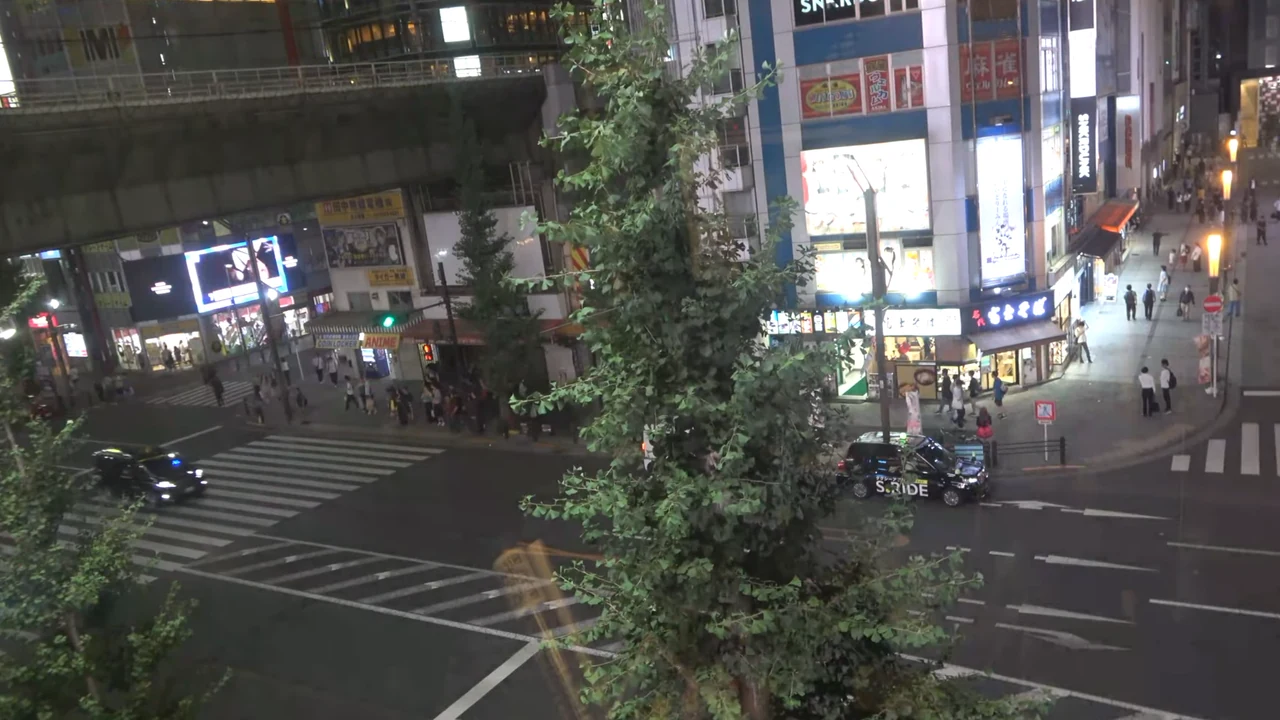
The stream captures frequent train movements on JR lines serving Shinjuku — notably Yamanote Loop, Chuo Rapid / Chuo-Sobu, Saikyo, and Shonan-Shinjuku traffic patterns depending on hour and direction. On the right side of the image, a narrow alley segment of Omoide Yokocho appears — tiny restaurants, vertical signage, and the human-scale counterweight to overhead power lines and platform canopies.
Coordinates near 35.6934°N, 139.6971°E place the camera on the west/northwest station edge where rail infrastructure meets postwar dining history. Uptime varies; trains may pause during service disruptions. Night brings headlight streaks and alley lantern glow.
What You Can See
Trains dominate motion: silver Yamanote sets, Chuo line rapid services, freight-adjacent timing gaps, occasional special liveries. Watch departure rhythm — weekday peaks compress intervals; late night spacing widens. Platform edges and overhead catenary frame the industrial aesthetic.
Omoide Yokocho supplies static texture: low roofs, stacked signboards, salarymen silhouettes entering stalls. You will not see the full alley network — it is too narrow for a wide rail cam — but the adjacency matters. Smoke on cold evenings hints at yakitori and motsuyaki (grilled offal) traditions rooted in postwar black-market food culture.
You will not see Kabukichō’s red arch or Cross Shinjuku Vision’s 3D cat from this angle — those are different exits, different stories.
Location
Shinjuku Ward, Tokyo, at the JR Shinjuku Station complex near the West Exit / Omoide Yokocho side. The alley sits by Shinjuku Nishiguchi (西口), historically the west gate commercial zone rebuilt after wartime destruction.
Walking distances: Kabukichō northeast, Shinjuku Gyoen south, Metropolitan Government Building west. The station serves as a border machine between entertainment, office towers, and residential west Shinjuku.
History
Omoide Yokocho began around 1946 as “Lucky Street” — a black market of plank-separated stalls in burned-out ruins near the west exit. Vendors sold clothing, daily goods, and food under rationing constraints. When flour-based foods faced crackdowns, beef and pork offal from occupation-force supply chains became staple menu items — still reflected today in yakitori and motsuyaki shops.
The 1960s station reconstruction eliminated hundreds of stalls; survivors consolidated into today’s roughly 60–80 tiny bars and eateries across about 2,000 m². A 1999 fire destroyed many structures; rebuilt versions kept Showa density and smoke-traced atmosphere. Nicknames like “Piss Alley” referenced pre-modern sanitation — officially rebranded to the warmer Memory Lane, yet the cramped charm persists.
Meanwhile JR Shinjuku grew into the Guinness-record busiest station, stacking platforms until rail motion became the district’s background heartbeat.
Why Watch
Because train people and city people overlap here like nowhere else. Because Omoide Yokocho is Tokyo time travel — two meters from a Yamanote line. Because comparing this feed with Shinjuku Station South Exit and Cross Space cameras maps how one name hides parallel urban films.
Remote viewing helps rail fans clock interval patterns, helps travelers feel Shinjuku’s pulse before navigating underground, and helps nostalgia seekers watch alley smoke rise beside electric trains.
Daily Life
Morning: commuters cutting through west-side paths, coffee-and-onigiri routines. Lunch: office workers squeezing into six-seat yakitori counters. Evening: alley saturation, train frequency peaks, tourist discovery tours. After 22:00, trains thin slightly but never stop; alley lanterns burn until late.
Weekends mix locals with international visitors filming “hidden Tokyo” segments — the alley is famous precisely because it refuses to upscale completely. Obon and Golden Week bring suitcase drag through west exits; train consists grow longer in frame edges as holiday travelers pack platforms beyond what the alley itself can show. Even on quiet Monday mornings, a single Chuo Rapid passing frame reminds you this alley survived because commuters always return.
Best Time of Day
- Weekday rush (07:30–09:30, 17:30–19:30): maximum train frequency and commuter overlay.
- Evening (19:00–22:00): best combo of trains + Omoide Yokocho atmosphere.
- Late night (after 23:00): fewer trains, more alley intimacy — still active on weekends.
- Midday weekday: easier to isolate train types without rush crush.
Rain adds platform reflection and umbrella streams along alley entrances.
Best Seasons
Spring and autumn bring comfortable alley dining weather visible as open shutter density. Summer heat pushes crowds into air-conditioned stalls and late-night activity. Winter cold makes charcoal smoke visible and appetizing. Year-end parties spike both train luggage and alley revelry.
Events
Shinjuku festival periods may affect west-side foot traffic. Golden Week and Obon alter train consist lengths and tourist mix. Rail enthusiasts track holidays when special trains run — occasional rare liveries cross the frame. Omoide Yokocho itself hosts small seasonal events and media shoots that tighten alley passage.
Getting There
Exit Shinjuku Station West Exit (Nishiguchi), follow signs to Omoide Yokocho — a two-minute walk under the station overpass geometry. JR lines, Keio, Odakyu, and subways all reach Shinjuku; west exit navigation starts underground signage toward Yasukuni-dori side.
Alley seating is limited; expect standing counters and smoke. Trains audible from every stall — the live camera reproduces that sensory overlap.
Interesting Facts
- Omoide Yokocho roots trace to 1946 black-market stalls separated by single door boards.
- More than half of today’s alley eateries remain yakitori or motsuyaki specialists — edible history of rationing economics.
- A 1999 fire rebuilt the district while preserving Showa visual density.
- Shinjuku Station averaged 2.7 million daily passengers in Guinness’s 2022 measurement.
- The alley occupies roughly 2,000 m² with ~60–80 premises — intimacy at metropolitan scale.
- Official name: Shinjuku Nishiguchi Omoide Yokocho — west exit memory lane, not Kabukichō.
Train-Watching Tips From a Fixed Angle
Identify train types by door count, color stripe, and speed. Yamanote loops feel rhythmic — predictable cadence, frequent stops implied by braking patterns. Chuo Rapid cuts faster, longer consists. Late-night gaps may indicate last-service windows on certain lines.
Count seconds between departures for five minutes; you will internalize Shinjuku’s pulse better than any timetable PDF. When two trains overlap in frame, you are seeing why Guinness cares. Saikyo Line and Shonan-Shinjuku through-services add variety — longer formations, different platform dwell times, occasional express overtakes implied by speed differences even when platforms sit out of view. Enthusiasts screenshot rare liveries; casual watchers need only notice that Shinjuku never fully sleeps: the 01:00 frame still flickers with headlight pairs.
Pair audio-on viewing with alley smoke when possible. The sensory overlap — electric arcing, brakes, sizzling yakitori — is why travel writers call this corner “compressed Tokyo.” The camera cannot transmit smell, but it hints at why locals still choose six-seat counters beside million-passenger infrastructure.
Alley Smoke Versus Neon Districts
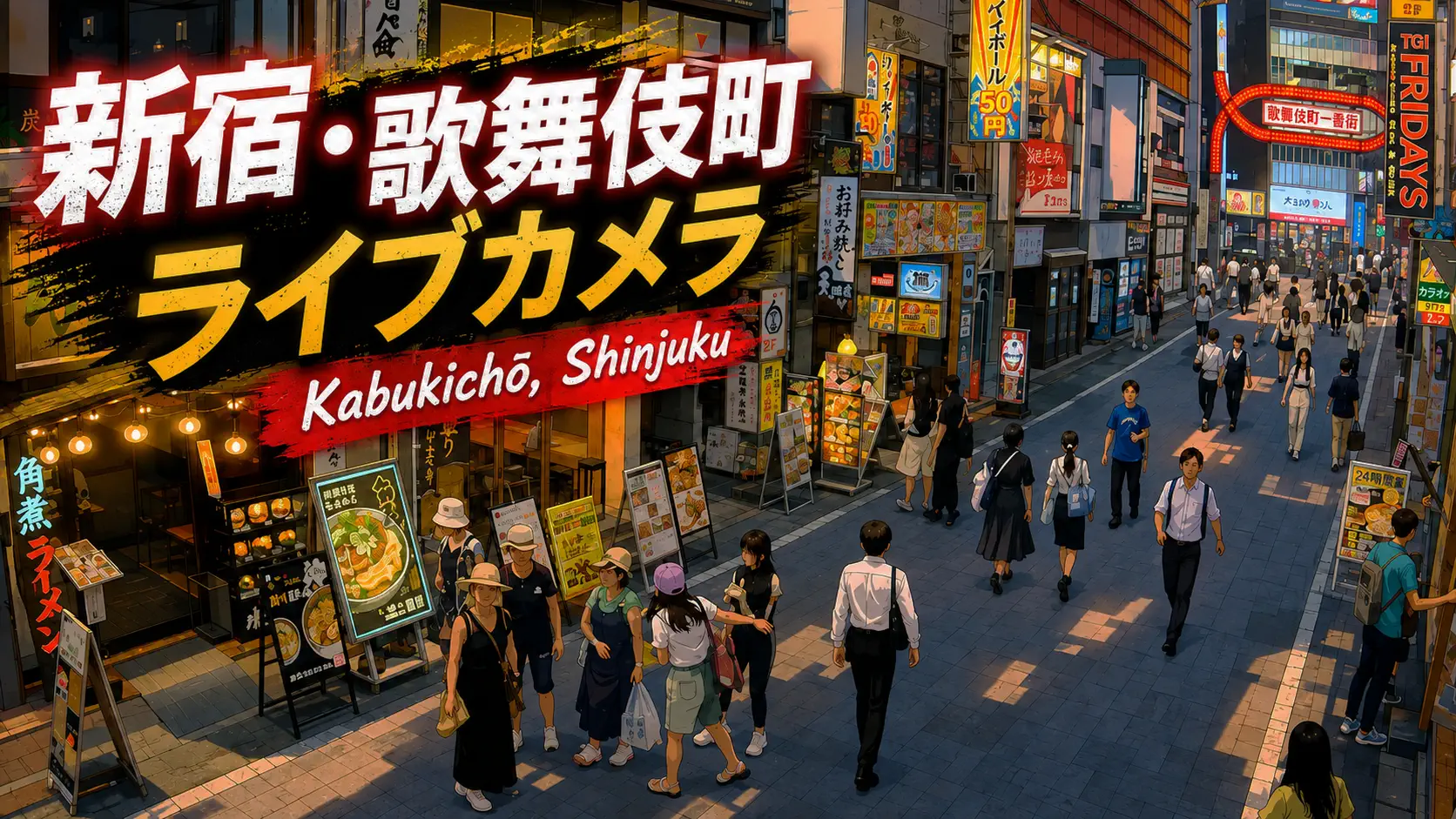
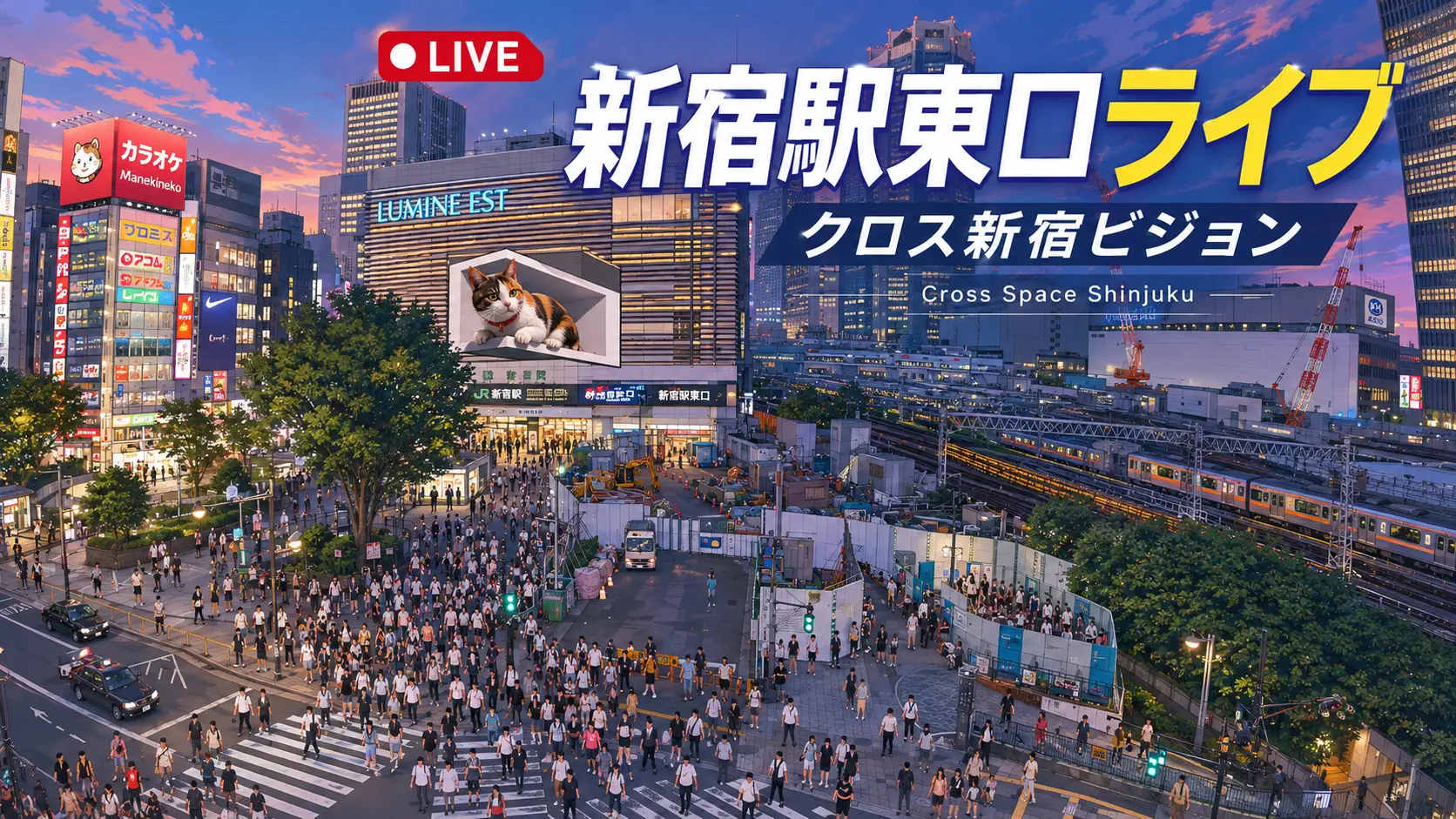
Kabukichō sells vertical neon and entertainment signage. Cross Space Shinjuku sells giant cat media architecture. Omoide Yokocho sells charcoal, beer steam, and horizontal intimacy. This camera is the only one of the three that pairs JR motion with Showa dining texture — use it when your question is “what does busy sound like if you remove the billboard?” Golden Gai adds micro-bar legend nearby, but its camera story is separate; do not expect Golden Gai’s tight vertical signage here. When JR publishes service notices for typhoons or holiday timetables, this feed is a quick visual sanity check that trains still breathe — even if your platform is underground and invisible.
Nearby Live Cameras
Compare Koshu Kaido retail flows at Shinjuku Station Cam, Tokyo, watch East Exit spectacle at Cross Space Shinjuku, or follow Kabukichō neon at Kabukichō, Shinjuku.
Frequently Asked Questions
Is this camera inside Omoide Yokocho?
No. It overlooks JR tracks beside the alley. You see alley edges and signage, not the full interior lane perspective.
Which Shinjuku exit is closest?
West Exit (Nishiguchi) toward Omoide Yokocho — different from South Exit (Koshu Kaido cam) or East Exit (Cross Space cat).
How is this different from the Shinjuku Station South Exit camera?
South Exit cam shows street-level Koshu Kaido buses and department stores. This JR cam shows trains and the Omoide Yokocho margin.
Can I hear the trains on the stream?
Audio depends on the YouTube feed configuration — many rail cams include ambient station sound; verify locally with playback.
Is Omoide Yokocho the same as Golden Gai?
No. Golden Gai is a separate tiny bar district nearby with its own history. Both are small-alley Shinjuku icons, but different locations and vibes.
Is the YouTube video ID stable?
Source catalog lists GLQhbRGv5qU. Re-check if playback fails; broadcasters occasionally rotate embeds.