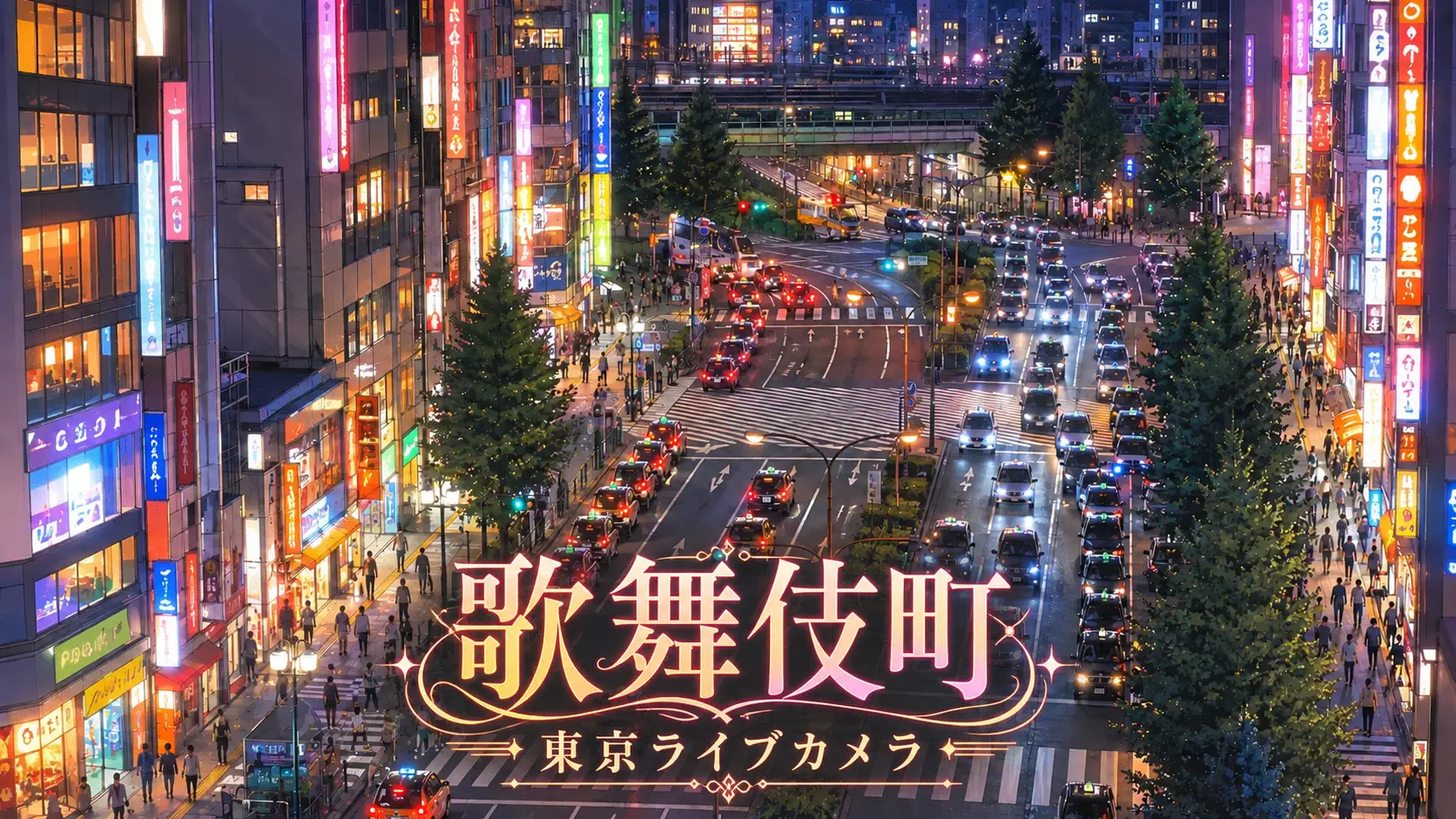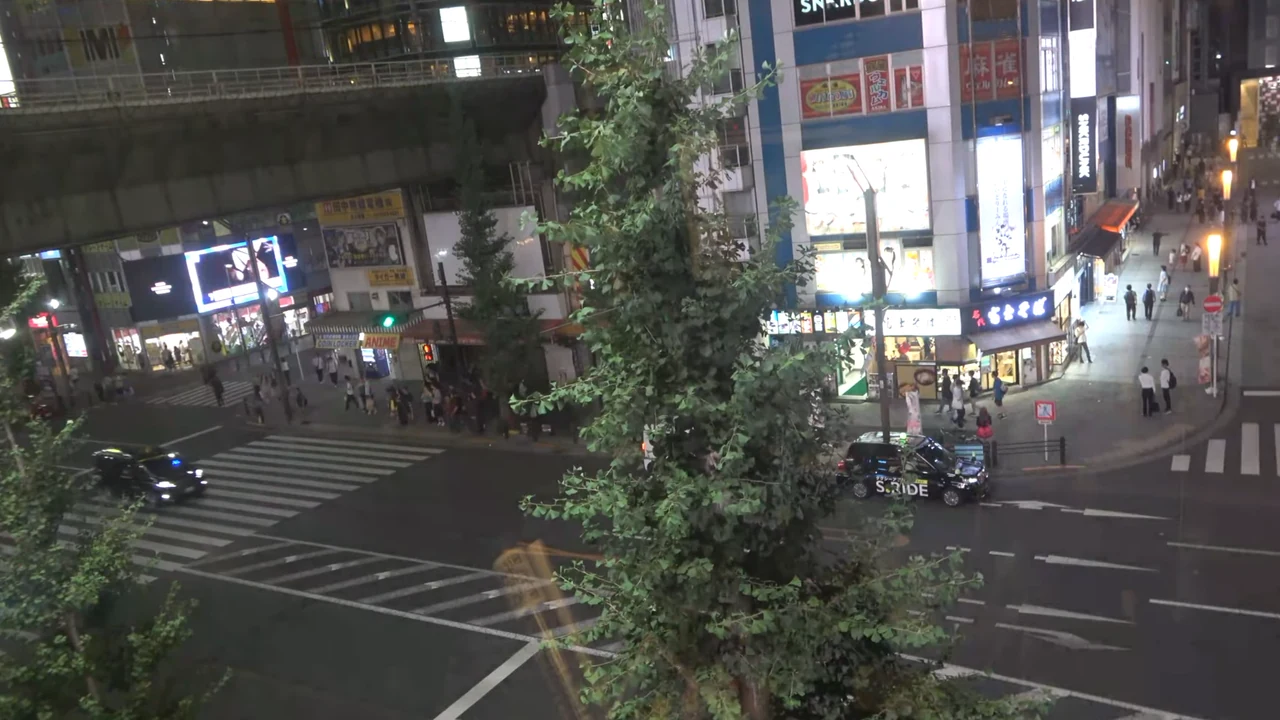

Step under the famous red arch and you are inside one of Tokyo’s most talked-about streets. This live camera watches Kabukichō Ichiban-gai—the “Number One Street” of Kabukichō—where narrow lanes, stacked signage, and a constant flow of people turn an ordinary evening into theatre. It is not a polished tourist plaza; it is a working nightlife corridor where ramen counters, karaoke boxes, cinemas, and clubs share walls with convenience stores and game centres. The picture carries sound in many setups: distant music, street chatter, the rhythmic pulse of a district that earned the nickname Nemuranai Machi, the Sleepless Town.
About This Live Camera
The stream frames Ichiban-gai from street level, giving you a front-row seat to pedestrian movement and the layered neon that defines Kabukichō after dark. Weather overlays for Shinjuku sometimes appear on-screen, which helps explain why the crowd thins in heavy rain or swells on crisp autumn nights. Unlike wide intersection cams elsewhere in Shinjuku, this view stays intimate—you watch people choose which doorway to enter, how staff greet passers-by, and how the street breathes between rush peaks. Treat it as ambient Tokyo: half documentary, half invitation to imagine the smells of yakitori smoke and frying garlic drifting from kitchens you cannot see.
What You Can See
Expect a dense canyon of vertical signs in Japanese and English, often advertising karaoke, bars, restaurants, and discount shops. Foot traffic dominates; private cars are limited in the heart of the district, so the human flow is the main event. By day the same lane can look almost ordinary—delivery bikes, shop staff wiping menus, tourists photographing the red gate. After sunset the palette shifts to electric pinks, blues, and golds. You may notice touts near side alleys; they are part of the district’s street economy, though the Ichiban-gai strip itself is among the more visitor-friendly stretches. Seasonal decorations appear around New Year and Halloween; summer festivals elsewhere in Shinjuku sometimes spill extra foot traffic this way.
Location
Kabukichō sits northeast of JR Shinjuku Station, in Shinjuku Ward, Tokyo. Ichiban-gai runs east from the iconic red Kabukichō Ichiban-gai gate along Yasukuni-dōri, one of the ward’s major arteries. Within a few minutes’ walk lie Shinjuku Golden Gai (a maze of tiny bars), the Shinjuku Toho Building with its rooftop Godzilla head, Seibu-Shinjuku Station, and the newer Tokyu Kabukichō Tower complex that added cinemas, hotels, and entertainment when it opened in 2023. Okubo and Shin-Okubo—Tokyo’s multicultural restaurant zones—begin just north-west. The camera’s coordinates place you deep inside the entertainment grid, not on the station concourse.
History
The name Kabukichō dates to April 1, 1948, when planner Hideaki Ishikawa proposed it for a theatre district centred on a kabuki venue called Kiku-za. The theatre was never built, but the name stuck as Shinjuku rebuilt from wartime bombing. The 1950s brought landmarks—the Tokyu Milano-za cinema, ice rink, and Shinjuku Koma Theatre—cementing the area as a pleasure quarter. Ichiban-gai’s red gate became the photographed symbol of entry. Postwar decades saw host and hostess clubs, love hotels, and pachinko parlours multiply alongside legitimate cinemas and restaurants. Today’s Kabukichō is layered history: Showa-era facades beside LED towers, traditional izakayas beside global chains, and ongoing civic efforts to improve safety and reduce exploitative nightlife practices—including industry reforms around credit systems in 2024.
Why Watch
Because Kabukichō is Tokyo unfiltered. Guidebooks often split Shinjuku between “business” west and “fun” east; this camera lives entirely in the fun side, where culture is negotiated on the sidewalk. It complements wider views like the Kabukichō Crossing cam by staying inside the district’s emotional core. For viewers abroad, it answers a simple question: what does midnight in Tokyo actually look like when locals, office workers, and tourists share the same ten-metre-wide lane? For Japan watchers, it is a mood barometer—rainy Tuesday quiet versus Saturday neon saturation.
Daily Life
Morning is maintenance hour: cardboard recycling, beer crates stacked outside basements, staff airing noren curtains. Lunch brings office workers hunting cheap set meals. Late afternoon is transition—lights flicker on, speakers wake up, part-time staff arrive in uniforms. Evening peak runs roughly 8 p.m. to midnight, when groups move between karaoke and izakaya blocks. After 1 a.m. the crowd skews younger and the street’s character sharpens; still, Ichiban-gai retains a tourist-friendly tone compared with deeper side alleys. Weekdays feel quicker and more purposeful; Fridays and Saturdays stretch the night longer. Typhoon nights can empty the frame within minutes—a useful reminder that even Sleepless Town respects a red weather warning.
Best Time of Day to Watch
- Sunset to midnight: maximum neon contrast and foot traffic
- Just after rain: wet pavement doubles reflections; umbrellas add colour
- Late morning: see the street’s “day face” before signage fully dominates
- Weekday vs weekend: compare density without leaving your tab open all week
If you want the classic Kabukichō postcard, aim for a clear evening in autumn or early winter when air quality sharpens the lights.
Best Seasons and Weather
Spring brings mild evenings and cherry blossoms in nearby parks like Shinjuku Gyoen, though the camera itself stays urban. Summer humidity softens neon into haze but extends late-night activity—festivals and fireworks elsewhere in Tokyo can bump visitor numbers. Autumn is often the crispest season for colour and clarity. Winter cold drives people indoors faster after last trains, yet December illuminations across Shinjuku make December nights surprisingly photogenic. Snow is rare but memorable: a white dusting on the red gate is a coveted frame for photographers.
Events and Celebrations
Halloween in Shinjuku draws elaborate costumes; Kabukichō participates with heightened street energy (and heavy police presence). New Year mixes countdown crowds with quieter first-light walks. Film premieres at Toho Cinemas sometimes queue fans visible if they spill toward Yasukuni-dōri. Local summer festivals more often happen in parks, but you may still see yukata groups passing through toward stations. Major sporting nights—national team matches—can empty or fill bars depending on kick-off time in Japan.
Getting There
JR Shinjuku Station (Yamanote, Chūō, Saikyō, and many others) is the main gateway—exit east toward Kabukichō signage. Seibu-Shinjuku Station serves private-rail commuters from the west. Tokyo Metro Marunouchi and Shinjuku-sanchōme stations approach from the south. Ichiban-gai is walkable from any of these within 5–10 minutes if you follow the red gate on maps. Taxis drop along Yasukuni-dōri; cycling is possible but crowded at night. From Narita or Haneda, airport trains to Shinjuku put you one neighbourhood away from this camera’s world.
Interesting Facts
- Kabukichō’s name references kabuki theatre that was planned but never constructed.
- The red Ichiban-gai gate is among Tokyo’s most photographed nightlife entrances.
- Golden Gai—hundreds of micro-bars—is technically part of the broader Kabukichō area.
- Shinjuku Station handles more passengers daily than any other station on Earth.
- Godzilla watches Kabukichō from atop the Toho building—a pop-culture guard tower.
- The 2023 Tokyu Kabukichō Tower added a major mixed-use anchor to the district’s north edge.
Reading the Street Like a Local
Watch how people pause at the arch: tourists snap photos; regulars barely glance up. Notice delivery timing—late-night beer and food restocks tell you which venues stay open past standard hours. Compare touts’ zones with family-friendly ramen shops that stay busy at 6 p.m. If two visitors hesitate at a menu photo, they are probably choosing between cheap set dinner and karaoke entry—the district’s fork-in-the-road moment. Sound matters: when the stream carries audio, listen for train announcements echoing from distant speakers—a subtle link back to Shinjuku’s rail empire.
Neon as Weather Report
Kabukichō’s lights compete with fog, rain, and summer haze. On perfect nights every sign reads crisp; on humid August evenings bloom into soft halos. That visual “weather report” is half the appeal. Refresh after a front passes—you may see the same street transform from grey afternoon to razor neon in twenty minutes. It is Tokyo teaching contrast without words.
Last Train Psychology
Around midnight, the street’s tempo changes again—groups rush toward Shinjuku’s final trains or commit to staying until dawn. You can sometimes read that decision in body language: hurried strides versus relaxed cigarette pauses outside arcades. Understanding last-train culture explains why Ichiban-gai stays commercially alive when residential Tokyo sleeps; the district sells time as much as food or karaoke.
Nearby Live Cameras
Pair this intimate lane with the wider Kabukichō Crossing view for intersection scale, Shinjuku JR Livecam for station-adjacent crowds, and Seibu-Shinjuku Station to watch rail threads feeding the district.
Frequently Asked Questions
Is Kabukichō safe for tourists?
The Ichiban-gai strip is heavily walked and generally manageable with normal big-city awareness—avoid aggressive touts, ignore illegal solicitation, and stick to well-lit main lanes at night.
What is the red gate?
It marks Kabukichō Ichiban-gai, the district’s famous “Number One Street” entrance along Yasukuni-dōri.
Does the camera show Golden Gai?
No—Golden Gai’s micro-bars sit in adjacent alleys; this view stays on Ichiban-gai itself.
Why is it called Kabukichō if there is no kabuki theatre?
The name was chosen in 1948 for a planned theatre that was never built; the label remained as the entertainment zone grew.
Is the stream always nighttime?
No—daytime frames show delivery traffic and calmer pacing; evenings deliver the classic neon scene.
How far is Shinjuku Station?
About five to ten minutes on foot east of the station complex, depending on which exit you use.