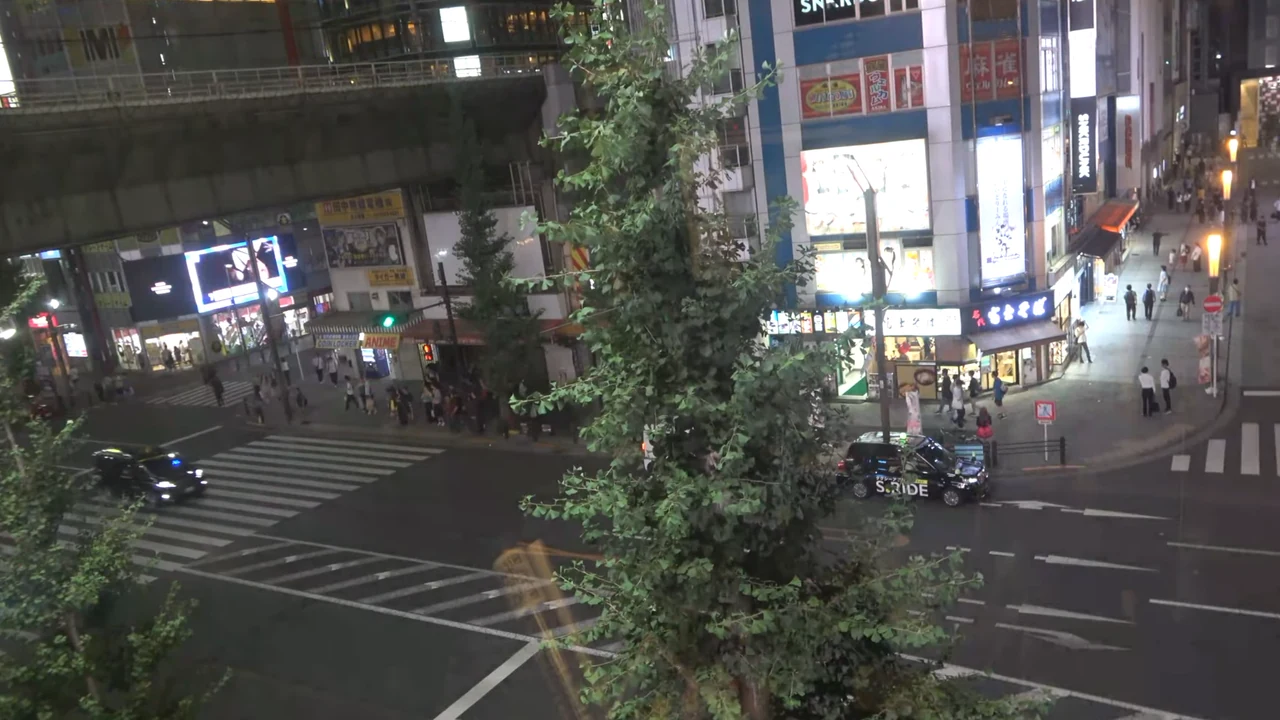

Between Ōdōri’s park dignity and Susukino’s neon appetite runs a covered street where Hokkaido has shopped for more than a century. Tanukikoji (狸小路) — “raccoon dog alley” — is a 900-metre, seven-block arcade of roughly 200 shops stretching east–west through Chūō-ku, Sapporo. This live camera sits at 4-chōme in front of Tanukiya (たぬきや), a souvenir institution streaming 24-hour footage via the Tanukiya LIVE YouTube channel. You are not getting a polished tourism advert. You are getting arcade weather — pedestrians in July yukata, February down coats, rain on the roof panels, snow squeaking at entries — and the honest pulse of a marketplace that predates skyscrapers yet still sells keychains beside craft gin.
About This Live Camera
The stream is operated by Tanukiya, a Hokkaido souvenir shop at Minami 3-jō Nishi 4-chōme (南3条西4丁目) in the 4-chōme block of Tanukikoji. The YouTube channel (UCRZplV8vE67bgCI6_3sm3mQ, branded @TANUKIYA) broadcasts a near-real-time view of the arcade interior/exterior threshold — foot traffic, weather glimpses through open ends, evening lighting, and seasonal decorations. Latency is low (~2–3 seconds in low-latency mode per operator notes) — closer to true live than many municipal still-image cams.
Because it uses YouTube’s live_stream channel embed, the exact video ID rotates with the broadcaster’s session — the stable identifier is the channel, not a single archived video. Maintenance or stream resets may briefly interrupt; the shop promotes subscribing for return alerts.
What You Can See
Pedestrians — locals, tourists, tour groups, delivery staff — move under the arcade roof: translucent panels in older sections, modernized stretches near Don Quijote and Vega Vega entertainment complex at 4-chōme. Shopfronts display Hokkaido omiyage (gifts): Shiroi Koibito, Jaga Pokkuru, lavender goods, seafood snacks. Signage mixes Japanese and increasing English/Chinese/Korean for inbound tourism.
Lighting shifts from daylight panels to warm shop spill at dusk; night reveals izakaya lanterns, karaoke facades, and Susukino-bound crowds cutting through the arcade as a weather shield. Rain drums on roofing — the whole point of arcades. Snow at entrances shows removal mats and bucket brigades; interior stays dry, proving 1950s–60s roofing investments still earn their keep.
You may glimpse street performers or festival stalls during Tanuki Matsuri and summer events — not nightly, but memorable when caught live.
Location
Tanukikoji runs Minami 2-jō and Minami 3-jō between Nishi 1-chōme (near Sosei River) and Nishi 7-chōme, parallel to and one block south of Ōdōri Park. The camera’s 4-chōme position sits mid-arcade — west of Susukino, east of the Sosei crossing — near Don Quijote, Tanukikoji 4-chōme Vega Vega, and the Honjin Tanuki Daimyō Jinsha shrine (relocated over decades; raccoon-dog deity folklore for prosperity).
Access:
- Ōdōri Station (Namboku, Tōhō, Tōzai lines) ~3–5 minutes walk north
- Susukino Station ~5 minutes south
- Sapporo Streetcar Shiseikan-mae or Tanukikoji stops nearby
- JR Sapporo Station ~15 minutes walk north-west via heated underground paths in winter
Geographically you are in the Susukino–Ōdōri entertainment-shopping belt — Sapporo’s densest pedestrian economy outside station malls.
History
Merchant houses gathered here in 1869 when the Meiji government’s Hokkaido Development Commission (Kaitakushi) established Sapporo as a planned colonial capital. Shops clustered around today’s 2-chōme and 3-chōme; by 1873 the lane had a name — Tanukikoji — possibly referencing tanuki (raccoon dogs) once common nearby, or wordplay linked to Susukino nightlife stories.
The arcade weatherproofed incrementally: 1958 roof work began at 3-chōme, expanding block by block until the full covered experience defined modern Tanukikoji. War, postwar recovery (1949 lighting restoration), and 1980s–90s tourism growth layered pachinko, karaoke, and drugstores onto traditional misogi cloth sellers and fishmongers.
Tanukiya itself belongs to the souvenir layer that boomed with ski tourism and domestic travel — streaming added 2020s visibility when travel paused and remote window-shopping surged. Tanuki Shrine and Tanuki Daimyō Jinsha preserve playful commerce religion — touch the tanuki statue’s ledger for business luck, belly for easy childbirth folklore.
Why Watch
Because covered arcades are Japan’s original weather apps — watch rain hammer the roof while shoppers stroll dry. Because Tanukikoji is the pedestrian bridge between daytime Ōdōri and midnight Susukino — the cam catches costume changes hour by hour. Because pairing with Sapporo cityscape (rooftop grid) and Minami 1-jō traffic (vehicle grammar) triangulates how Sapporo walks vs drives.
Remote viewers shop vicariously, check crowd before dinner reservations, or nostalgia-trip former student years in Hokkaido universities.
Daily Life
Daytime: Older residents buy daily goods; tourists hunt omiyage; office workers cut through as shortcut. Afternoon: Café breaks, soft-serve lavender or melon variants, pharmacy errands. Evening: Izakaya smoke smells (off-cam but implied), karaoke touts subtly absent on live feed yet present in person, couples heading Susukino-ward. Late night: Stragglers, cleaners, delivery bikes dismounted to walk.
Monday rhythms differ from Friday; Snow Festival weeks inflate foreign luggage tags; Yosakoi festival weekends add youth in team jerseys. Tanukikoji is commute corridor and playground simultaneously — salaryman in one frame, cosplay group in the next during event seasons.
Best Time of Day
- 11:00–15:00: Peak shopping clarity; natural light through roof panels.
- 17:00–20:00: Transition to night lighting; highest pedestrian diversity.
- After 22:00: Thinner crowds; Susukino spillover; neon ambience.
- Early morning: Delivery setups; shop shutters rising — rare quiet poetry.
Rainy hours showcase the arcade’s core value proposition — dry passage with amplified sound design.
Best Seasons
Winter: Boots, steam from food vents at arcade mouths, White Illumination spill from nearby streets. Spring: Lighter coats, first beer-garden posters. Summer: Tanuki Matsuri (mid-July–August), yukata, festival stalls, heat trapped mildly under roof — still better than open sun. Autumn: Sapporo Autumn Fest overflow walkers; crisp air before snow returns.
Sapporo Snow Festival (February) drives omiyage spending even when streets are icy — indoor arcade becomes refuge between outdoor sculpture viewing.
Events
Tanuki Matsuri (狸まつり) — part of Sapporo Summer Festival — brings performances, food stalls, and sales mid-July to mid-August. Tanuki Shrine rituals include Hatsutanuki-sai (2 January) and Tanuki Hattoku Reitaisai (first Saturday of August). Winter illuminations along adjacent streets reflect in wet pavement at arcade exits.
Individual shops run point-card campaigns, Hokkaido Fair product weeks, and collaboration anime pop-ups — micro-events invisible globally unless you catch banner installs on stream.
Getting There
From JR Sapporo Station: walk south via Apia–Pole Town underground to Tanukikoji exits, or surface walk ~15 minutes. Subway Ōdōri → exit south into arcade north end. From New Chitose Airport: train to Sapporo, then as above.
Bus Center-mae and Minami 1-jō traffic cam corridors lie north-east — useful drive/park context. Most visitors walk — parking is scarce and expensive in Chūō-ku.
Interesting Facts
- Tanukikoji dates to 1869 merchant beginnings — among Hokkaido’s oldest shopping streets.
- Roughly 200 shops along 900 m divided into 7 chōme blocks.
- Tanuki statues across Japan invite prosperity; Tanukikoji leans into raccoon-dog branding heavily.
- Don Quijote at 4-chōme brings discount chaos adjacent to traditional misogi shops.
- The arcade survived war, redevelopment pressure, and online retail by mixing tourism + locals + nightlife conduit.
- Tanukiya LIVE claims 24H streaming — uncommon dedication for a single-shop camera.
- Shiseikan (former Hokkaido Girls’ School) historic building sits near the arcade’s eastern culture zone.
- Walking the full length takes 15–20 minutes without shopping — impossible in practice.
Arcade Weather Without a Forecast App
Listen visually: roof glare means sun; pedestrian umbrella clusters mean open-end rain entry; sudden empty frame may mean stream glitch OR typhoon caution keeping people home. Compare coat thickness to JR Sapporo Station platform coats — same city, different microclimate exposure.
Night foot traffic rising while rain falls proves the arcade’s 1900s engineering still solves 2020s problems — reason alone to watch five minutes during a downpour.
Shopping Street as Social Film
Tanukikoji is edited by pedestrians — each person a cut in a continuous tracking shot. Watch tour leaders’ flags pivot at 4-chōme because Vega Vega lights pull attention. Watch locals bypass slow groups with polite sidesteps — choreography no director blocks. Festival days add yukata colour grading; winter adds down-jacket monochrome with neon accents from Susukino bleed.
The camera is fixed; the street is not. That tension is the show.
Nearby Live Cameras
Round out central Sapporo live views: JR Sapporo Station for rail hub energy, Sapporo Cityscape for Ōdōri and TV Tower panorama, and Minami 1-jō Avenue for traffic and snow conditions near Sapporo Factory.
Frequently Asked Questions
Why is youtubeVideoId “live_stream”?
The feed uses YouTube’s channel live embed — the active broadcast ID changes; the stable reference is channel UCRZplV8vE67bgCI6_3sm3mQ (@TANUKIYA).
Where exactly is the camera?
In front of Tanukiya souvenir shop at Tanukikoji 4-chōme, Minami 3-jō Nishi 4-chōme, Chūō-ku, Sapporo.
Is Tanukikoji always covered?
Nearly the entire shopping length has roofed arcade — carry umbrella only for open ends and cross streets.
How far from Ōdōri Park?
About one block south — 3–5 minutes walk from Ōdōri Station area.
When is Tanuki Matsuri?
Typically mid-July through mid-August as part of Sapporo Summer Festival — check current year schedules.
Can I see Susukino nightlife from this cam?
You see foot traffic heading south and lighting hints; full neon Susukino requires walking a few minutes further or other cameras — but evening energy is visible here first.