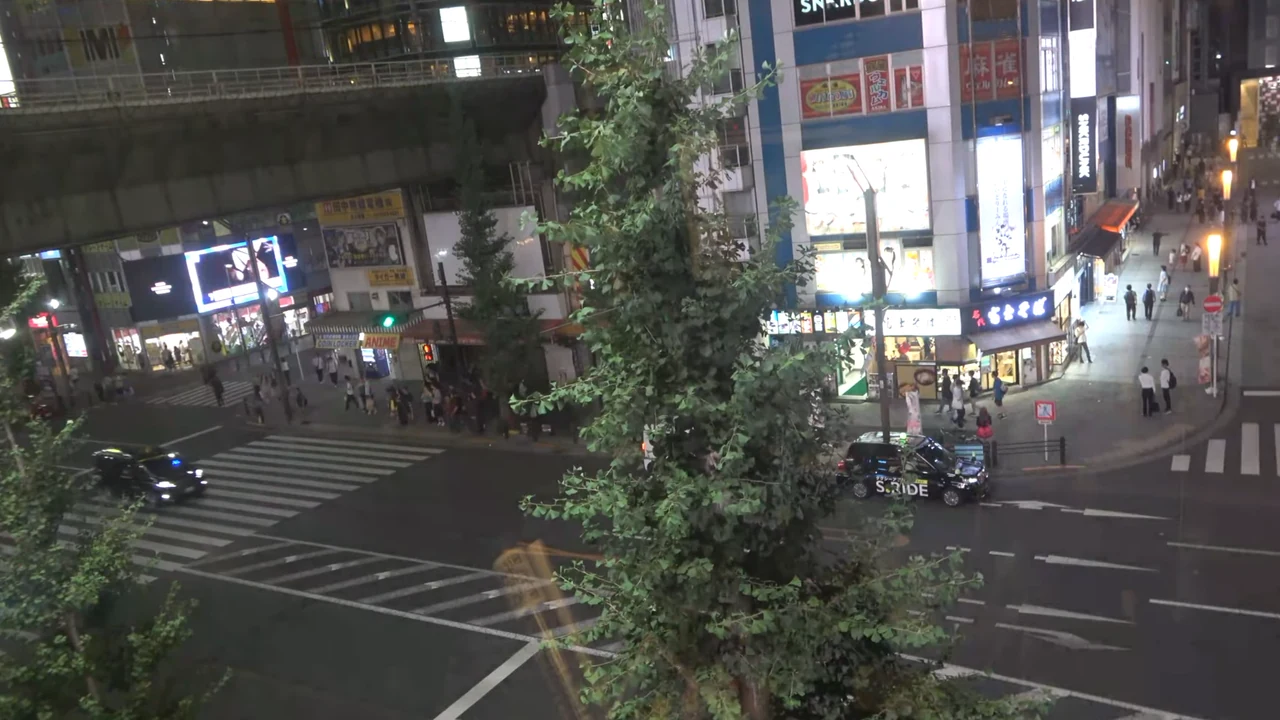

Every northern city has a street that tells the truth about weather and hurry at the same time. In Sapporo, Minami 1-jō-dōri — “South 1st Avenue” — is one of those truth-tellers: a wide east–west artery through Chūō-ku where buses, taxis, delivery vans, and pedestrians negotiate snow, green lights, and the simple fact that downtown was drawn on a grid and expects you to obey it. This live camera watches the intersection with Higashi 4-chōme (East 4th Street), operated by Giken Kōbō from their building near Minami 1-jō Higashi 3-chōme. It is practical infrastructure streaming — a window for commuters checking road surface before leaving, and for remote viewers who find poetry in orderly traffic under Hokkaido sky.
About This Live Camera
The YouTube feed is a fixed street-level traffic camera showing Minami 1-jō-dōri and the Minami 1-jō · Higashi 4-chōme intersection in central Sapporo. Giken Kōbō (技研工房), a local technology firm, installs and maintains the stream from the Hokkaido Nichi-Italia Bunka Kaikan building area at Minami 1-jō Higashi 3-chōme. The angle typically captures multiple approaches: traffic along Minami 1-jō, movements on Higashi 4-chōme, and glimpses toward Sapporo Factory retail complex and Asobube park directions.
The camera serves road condition monitoring — snow accumulation, wet pavement, rush-hour density — more than scenic tourism. That utilitarian purpose is exactly why it feels authentic: no filters, just a city deciding whether today is a two-wheel-drive day or not.
What You Can See
Vehicles dominate: city buses with route numbers on LED foreheads, taxis in Hokkaido livery, private cars on studless tires in winter, occasional delivery trucks. Pedestrians cross on signal phases — fewer than Shibuya, but steady in office hours. Road surface tells seasons: dry asphalt, rain sheen, packed snow, fresh powder being churned to slush by bus tires.
Surrounding buildings include mid-rise offices and commercial facades typical of Chūō-ku’s mixed business district. Traffic signals cycle with Japanese precision; left-turn phases and bus priority intervals create repeating choreography worth timing for relaxation. Night views show sodium-orange or white LED street lighting reflecting on ice — visually colder than the numbers suggest.
You may not see famous landmarks head-on; instead you read urban grammar: lane widths, snow berm heights, windshield wiper frequency on waiting cars — data a tourist brochure will never include.
Location
The intersection sits in Sapporo’s Chūō Ward, one block south of the Ōdōri park corridor and near the eastern side of downtown’s grid core. Minami 1-jō parallels Ōdōri one block south — a common naming pattern where “Minami 1” means the first street south of the park baseline. Higashi 4-chōme runs north–south, numbering east from the Sosei River baseline.
Nearby anchors within walking distance:
- Sapporo Factory — mall and event hall in a renovated brewery complex
- Bus Center-mae Station on the Tōzai Subway Line
- Ōdōri Park and Sapporo TV Tower (~5–10 minutes on foot)
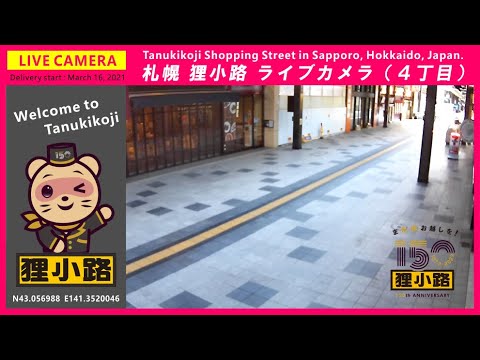
- Tanukikoji shopping arcade (~10 minutes south-west)
JR Sapporo Station lies roughly 1.2 km north-west — reachable via subway or winter walk through heated underground passages if snow is heavy.
History
Sapporo’s grid is a Meiji-era planning artifact: the Kaitakushi laid out jō and chōme to impose rational order on frontier settlement. Minami 1-jō became a commercial spine as the city matured — not as ceremonial as Ōdōri, but essential for bus routes and lateral movement across blocks.
Sapporo Factory (opened 1993) repurposed the former Hokkaido Development Commission brewery site — historical irony where beer built the city and later became a shopping atrium. The camera’s modern era belongs to citizen and corporate live streaming culture: local firms broadcasting intersections for transparency and brand community, aggregated globally on webcam portals.
Traffic engineering here reflects postwar motorization tempered by Hokkaido winter: aggressive snow removal schedules, bus lane priorities, and seasonal tire laws that shape the very motion you watch.
Why Watch
Because snow driving is a skill with visuals. Watching buses navigate a green light with wet snow spray beats any driver-education slide deck. Because this intersection connects office Sapporo (north toward station) with leisure Sapporo (south toward Tanukikoji and Susukino). Because pairing the feed with Sapporo cityscape and JR Sapporo Station triangulates the same commute from rooftop, rail, and asphalt.
Traffic cams also calibrate expectations: if Minami 1-jō is whiteout, your Tanukikoji stroll may wait.
Daily Life
Morning rush (07:00–09:00) brings office workers via bus and subway connections at Bus Center-mae. Midday softens — shoppers heading to Sapporo Factory, tourists crossing between hotel belts and arcade shopping. Afternoon school release adds uniform clusters briefly. Evening reverses commute vectors; Susukino-bound taxis increase after dark.
Delivery culture visible: konbini supply trucks, Seicomart — Hokkaido’s beloved convenience chain — restock runs, snow-clearing equipment when forecasts threaten. Weekends see event traffic toward Factory hall concerts and weekend markets.
Winter snow removal often happens overnight; dawn may reveal fresh berms and narrowed lanes until loaders finish — watch for orange flashing lights as morning theatre.
Best Time of Day
- 07:00–09:00: Peak commute density; best for studying bus frequency.
- 11:00–14:00: Moderate flow; clearer view of pavement conditions.
- 17:00–19:00: Evening rush; headlights and wet snow combo in shoulder seasons.
- 22:00–05:00: Quieter; occasional taxis; snowplows after storms.
Snowfall itself — whenever it falls — is the most narratively rich hour.
Best Seasons
Winter (December–March) is the camera’s identity season: slush waves, rooster tails behind buses, pedestrians in down coats. Late March–April melt creates splash zones and revealed litter — less pretty, more honest. Summer shows green tree canopies on side streets and tourist foot traffic without ice fear. October–November first snowfalls are social media events locally — the cam catches maiden snow sticking or melting on warm pavement.
Sapporo Snow Festival weeks increase background traffic even if this intersection is not a primary festival site — hotel shuttles and tour buses ripple outward.
Events
No single festival owns this intersection, but citywide events rewrite traffic:
- Sapporo Snow Festival (February) — increased downtown circulation
- Yosakoi Soran Festival (June) — street closures elsewhere, detours possible
- Sapporo Marathon (autumn) — road restrictions on some corridors
- White Illumination season — evening leisure traffic toward Ōdōri
Sapporo Factory hosts concerts, trade shows, and holiday markets — parking and bus pressure visible as turning-lane queues.
Getting There
From JR Sapporo Station: walk south-east ~15 minutes, or take Tōzai Line one stop to Bus Center-mae. From Ōdōri Station: walk east along Minami 1-jō ~8 minutes. From Tanukikoji: walk north to Minami 1-jō, then east.
Air arrivals: New Chitose Airport → JR Rapid to Sapporo Station → subway or walk. Winter visitors should prefer underground segments when available — Pole Town and Apia link station to downtown without full outdoor exposure.
Interesting Facts
- Sapporo addresses read as direction + number + chōme — once learned, the grid is self-explanatory.
- Giken Kōbō operates multiple Hokkaido live traffic cameras beyond this intersection.
- Bus Center-mae subway stop name literally means “in front of bus center” — regional coaches depart nearby.
- Sapporo Factory atrium contains a microbrewery echoing Hokkaido’s beer history.
- Studless winter tires are legally required on Hokkaido vehicles in season — traffic behavior reflects that mandate.
- Minami 1-jō is one block south of Ōdōri, the city’s primary park firebreak axis.
- Clear-day views from taller nearby buildings can see Mount Moiwa — not from this street-level cam, but geographically close.
Decoding Intersection Body Language
When buses queue through two signal cycles, something upstream failed — event, accident, or snow snarl. When pedestrians hug the curb despite green walk signals, wind chill or ice patches are teaching caution. Taxi density spikes after 22:00 hint at Susukino nightlife release. A sudden empty frame at rush hour? Signal outage or camera freeze — refresh before diagnosing apocalypse.
Snow height on lane dividers acts as informal depth gauge — when berms exceed car door height, Sapporo is having a day.
Why a Traffic Cam Belongs on a Travel Site
Tourism blogs sell peaks; traffic cams sell truth. Minami 1-jō shows whether your romantic Ōdōri walk needs spikes. It shows how Sapporo respects signals even in blizzard — cultural data. It shows delivery economies keeping konbini shelves full at -8°C. That is travel literacy: not only where the clock tower is, but how the city moves when nobody is performing for your camera.
Leave it open while packing — if buses still run smoothly on screen, your flight-delay panic may ease. If plows own the frame, embrace hot soup tourism indoors at Factory atrium instead.
Nearby Live Cameras
Continue downtown Sapporo live viewing: Sapporo Cityscape for Ōdōri and TV Tower panorama, JR Sapporo Station for platform winter operations, and Tanukikoji Shopping Street for covered arcade foot traffic a few blocks south.
Frequently Asked Questions
Who operates this traffic camera?
Giken Kōbō (技研工房), from their office near Minami 1-jō Higashi 3-chōme in Chūō-ku, Sapporo.
What intersection is shown?
Minami 1-jō-dōri and Higashi 4-chōme (East 4th Street), with views along Minami 1-jō toward Sapporo Factory direction.
Can I check snow conditions here?
Yes — this is one of the feed’s primary local uses. Road surface, active snowfall, and plow activity are usually readable.
How far is this from Ōdōri Park?
About one block south and several blocks east — roughly 5–10 minutes on foot depending on snow.
Is the stream always live?
Not guaranteed 24/7; technical and maintenance interruptions occur. Retry if the player stalls.
Why watch a generic intersection?
Because generic intersections reveal daily Sapporo — winter driving, bus culture, and grid-city rhythm — without festival filters or landmark zoom.