
Sapporo is Japan’s northern capital of comfort food, snow sculpture, and surprisingly elegant urban planning — a city of nearly two million where winter is not an apology but a brand. At the center of that brand’s mobility stands JR Sapporo Station, the Hokkaido Railway Company (JR Hokkaido) hub that terminates and launches main lines across Japan’s largest prefecture. The live camera overlooking the station lets you watch trains arrive and depart, platforms breathe through rush hours, and — depending on broadcast schedule — occasional morning and evening switches to TV information programs instead of the rail view. When the track picture is live, you are seeing Hokkaido’s front door for rail travelers: commuters, skiers, festival visitors, and residents who treat ekiben shopping as pre-departure ritual.
Above the platforms rises Sapporo JR Tower, a 173-meter, 38-story landmark of retail, offices, observation deck, and the vertical punctuation that tells you this is not a village terminus — it is a capital station.
About This Live Camera
The YouTube stream typically frames JR Sapporo Station platforms and train movements in Chūō-ku, Sapporo, at roughly 43.071°N, 141.344°E. JR Hokkaido operates the scene: Hakodate Main Line logic, Chitose Line departures toward New Chitose Airport, Gakuen-Tōzai Line suburban flows, and seasonal specials that swell during Sapporo Snow Festival and ski weekends.
Important viewer note: the feed may switch to television information programming in morning and evening blocks — a Japanese local broadcaster habit shared with other regional livecams. If you see anchors instead of railcars, check back later; the station view usually returns for daytime and peak travel windows.
When active, the cam delivers platform-level drama without Tokyo Station’s underground maze — Hokkaido scale, clearer air, and in winter the unmistakable presence of snow on edges, roofs, and sometimes platform surfaces.
What You Can See in the Live View
Trains are the headline: limited expresses, locals, airport-bound services, and occasional special livery units during events. Passengers cluster at marked doors, queue with Hokkaido politeness, and board in weather appropriate to season — down coats and scarves in January, lighter layers in August. Station architecture mixes functional modern platform canopies with the looming JR Tower mass above the concourse level (exact framing varies).
Snow in winter transforms the aesthetic: grey sky, white platform accents, breath visible on platform staff, de-icing diligence as choreography. Summer brings green glimpses beyond the rail corridor and festival-season luggage. Night views show platform lighting and the steady pulse of last trains — Hokkaido nights arrive early in winter.
You may not see the famous underground malls (Apia, Pole Town, Sapporo Esta) directly, but their human output appears as shopping-bag density and meal-box carriers heading to gates.
Where Is JR Sapporo Station?
The station sits in downtown Sapporo, Chūō-ku, integrated with Sapporo Subway Namboku, Tōhō, and Tōzai lines at Sapporo Station subway stops — one of Japan’s cleaner intermodal stacks. Ōdōri Park, Sapporo TV Tower, and Tanukikoji shopping arcades lie within walking radius; Susukino nightlife district slides southward.
Hokkaido geography radiates from here: Otaru north along the coast, Niseko and ski country westward by bus and rail connections, Furano and interior farmland via seasonal services, Hakodate south along the Hakodate Main Line, and New Chitose Airport southeast on the Chitose Line — the air-rail handshake for most visitors.
History: From Frontier Terminus to Capital Hub
Sapporo’s rail story tracks Hokkaido’s modern settlement: Hakodate Main Line extension northward, city planning on an American-style grid, and postwar growth that made Sapporo Japan’s fifth-largest city. JR Sapporo Station evolved through expansions, underground shopping excavation, and the 2003 opening of JR Tower — vertical commerce stacked atop horizontal mobility.
Privatization-era JR Hokkaido faced unique challenges: vast territory, harsh winter maintenance costs, and demographic headwinds — yet Sapporo Station remained the psychological center where mainland Japanese arrive by air or shinkansen connector and switch to Hokkaido time. The Hokkaido Shinkansen currently terminates at Shin-Hakodate-Hokuto, with future Sapporo extension planned — when completed, this station’s role will intensify further.
Snow Festival history (1950 origins, massive sculpture eras) and 1972 Winter Olympics legacy cemented Sapporo as a winter capital; the station is where that capital meets rolling stock.
Why Watch Sapporo Station Live
Because Hokkaido winter on a platform cam is educationally beautiful — snow operations without Narita’s distance blur. Because airport–rail coordination visible on Chitose Line departures mirrors real trip planning from New Chitose. Because comparing Sapporo with Hakodate Station teaches north–south Hokkaido temperament: capital throughput vs port-city romance.
Remote viewers watch for weather mood, commute density, and the calm satisfaction of trains running on time in conditions that would stall lesser networks.
Daily Life Around the Station
Morning salaryman and student flows into Chūō-ku offices and campuses. Tourists with rolling luggage navigate between subway, bus terminal, and hotel belts. Ekiben counters inside linked malls sell Hokkaido crab, melons, and jingu specialties — culinary marketing at departure speed. Department stores (Daimaru, Stellar Place in JR Tower) blur retail and station life.
Evening return waves and Susukino-bound young adults share platforms politely. Winter adds ski gear clusters on weekends; summer adds festival goers with lighter packs but heavier sunblock.
Best Time of Day to Watch
- Morning rush (07:00–09:00 JST): Commute clarity; winter dark-yet-busy atmosphere.
- Midday: Tourism and shopping-base movements; lighter commuter tone.
- Afternoon (15:00–18:00): Airport-bound Chitose Line upticks; golden winter light rare but prized.
- Evening: Last-train energy; check if feed switched to TV info instead of platforms.
If your goal is pure rail viewing, favor weekday daylight hours and avoid known broadcaster switch windows.
Best Seasons and Weather
Winter (December–March) is signature Sapporo — snow, Snow Festival logistics (late January/early February peak), ski holiday surges. Spring thaws and lingering slush on platform edges. Summer mild by mainland standards, beer garden season, Yosakoi Soran festival crowds. Autumn crisp air and foliage trips toward interior hot springs.
Blizzards may reduce visibility on the cam to white abstraction; following days often show heroic clearing operations.
Events and Celebrations
Sapporo Snow Festival reshapes city movement — extra trains, packed platforms, international cameras everywhere. Sapporo Marathon, Yosakoi Soran, Autumn Fest food events, and Christmas illumination at White Illumination sites increase downtown traffic even when the cam shows only rails. Ski opening weekends and Golden Week behave like predictable stress tests for JR Hokkaido capacity.
Getting There and Transport
Already at the hub if you are viewing — but for travelers: New Chitose Airport → JR Rapid Airport ~37 minutes to Sapporo; subway lines radiate; bus terminal beside station for regional coaches (Niseko, Furano, Asahikawa). Streetcar heritage exists elsewhere in city history, but subway dominates center mobility.
Walk to Tanukikoji arcade, Ōdōri, Hokkaido University campus edges, and Nakajima Park depending on energy and snow depth.
Compare air arrival with New Chitose Airport cam and southern Hokkaido port energy at Hakodate Station.
Quick Facts
- Station operator: JR Hokkaido — major Hokkaido rail hub.
- Landmark: Sapporo JR Tower — ~173 m, 38 floors, shops, offices, observation deck.
- Key lines: Hakodate Main Line, Chitose Line (airport), Gakuen-Tōzai Line, others.
- Subway: Direct Sapporo Station interchange — Namboku, Tōhō, Tōzai lines.
- Population context: Sapporo ~1.9 million — Hokkaido’s capital.
- Camera caveat: May show TV info programs mornings/evenings instead of trains.
When the Feed Switches to TV
Japanese regional streams sometimes prioritize local broadcaster obligations over 24/7 scenic consistency. Treat switches as cultural metadata: you are seeing what Sapporo residents encounter when checking “the station cam” and getting news instead. Note switch times if you are building a personal timetable — patterns often repeat weekly.
Return visits reward patience; rail seasons are long, broadcaster segments finite.
Platform Winter Literacy
Watch footing colors on platforms after snow — yellow tactile strips, staff with shovels, de-icer trails. Train lengths vary by service; airport rapids may use longer formations than late-night locals. Delay announcements may not be audible on stream, but cluster behavior telegraphs disruption — lingering crowds, phones raised, doors held.
Pair visual study with a hot miso ramen fantasy — Sapporo station exists partly to justify that meal after arrival.
Underground City Beneath the Rails
Sapporo Station is not only platforms — Apia and linked subterranean malls form a underground city where winter pedestrians live without surfacing. The cam shows the spine; imagination fills the lateral world: gift shops, bookstores, Hokkaido souvenir tax-free counters, and heated corridors that make -5°C irrelevant. Stellar Place and JR Tower verticality stack commerce above rails — rare worldwide density of retail-on-station.
Understanding this helps interpret luggage-heavy crowds at seemingly off-peak hours — they are shopping between trains, not missing them.
Nearby Live Cameras
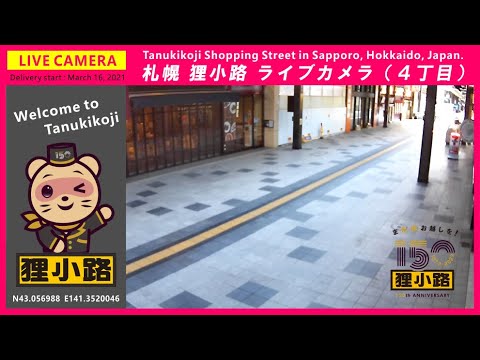
Continue Hokkaido touring via livestream: New Chitose Airport for arrival runways, Hakodate Station for southern port-station romance, and Tanukikoji Shopping Street for covered arcade life a short walk from the hub.
FAQ
Why do I sometimes see TV instead of the station?
The stream occasionally switches to local TV information programs in morning and evening slots. The rail view typically returns during other hours.
Is this Sapporo’s shinkansen station?
The Hokkaido Shinkansen currently terminates at Shin-Hakodate-Hokuto, not Sapporo — extension to Sapporo is planned. JR Sapporo remains the main conventional limited express hub.
How do I reach New Chitose Airport from here?
JR Rapid Airport on the Chitose Line — about 37 minutes to New Chitose Airport station under the terminals.
What is JR Tower?
A 173-meter, 38-story building atop/adjacent to the station with shopping (Stellar Place), offices, dining, and an observation deck.
Is Sapporo Station good for snow watching?
Excellent in winter — platform snow, heavy coats, and Hokkaido operational calm make compelling viewing.
Can I see the Snow Festival from this cam?
Festival sculptures sit mainly at Ōdōri and Satoland sites — not this frame — but festival-period platform crowds may appear on trains serving event visitors.