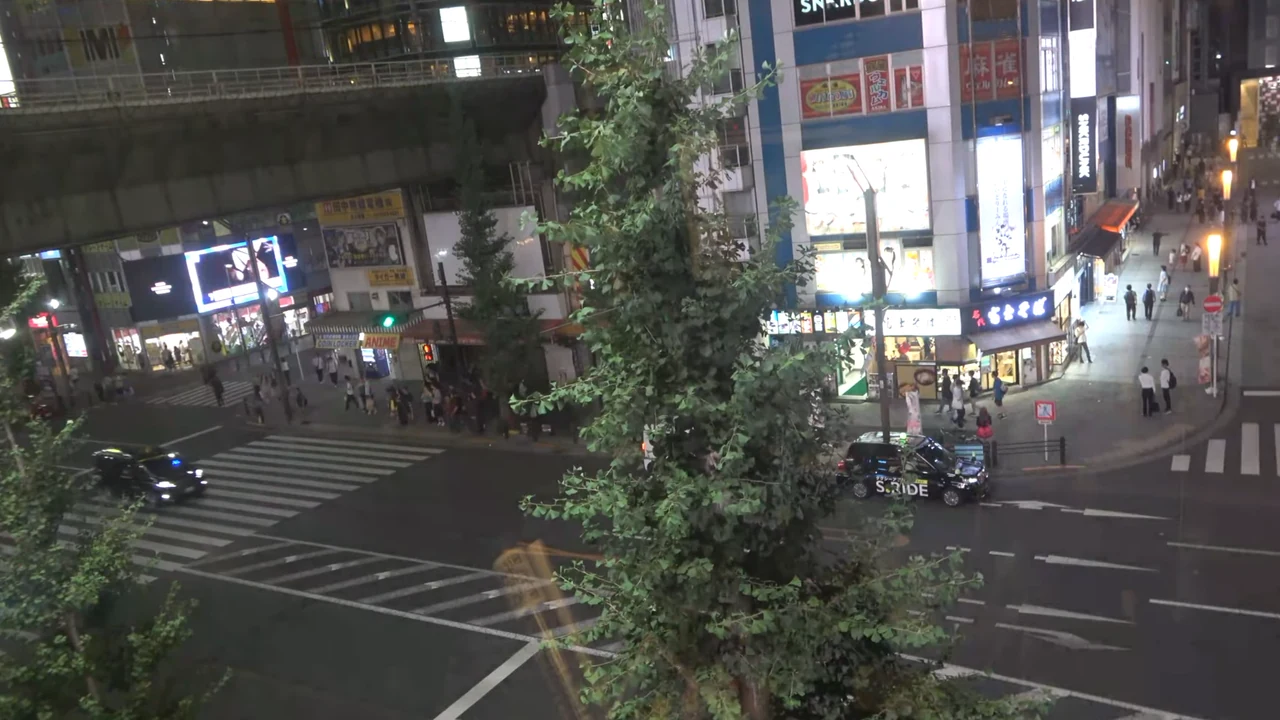

Hakodate sits on a sandbar between waters, a port city that learned early how to face the world. The live camera toward Hakodate Station square and the bayfront watches that geography at ground level: buses, taxis, the station building’s commercial belly, and harbour light that hints why people ride ropeways at dusk for one of Japan’s three great night views. This is not only a train cam. It is a port city’s front porch.
About This Live Camera
The feed overlooks station-square energy and waterfront direction — bus terminal and taxi stand activity on one side of the mental map, bay and bridge silhouettes when visibility cooperates. Hakodate Station (JR Hokkaido, Hakodate Main Line terminus logic, code H75) opened originally in 1902; the current building dates to 2003. Inside: Hokkaido food souvenirs that turn arrivals into snack negotiations. Outside: the square as transfer machine toward Motomachi, Goryokaku, and Mount Hakodate.
Since 2016, shinkansen travelers use Shin-Hakodate-Hokuto (~18 km away) with relay trains into Hakodate Station — so the square still greets many “I came by bullet, then local” stories.
What You Can See in the Live View
Transit choreography in cold-air clarity or sea fog. Tourists with ropeway plans. Locals with grocery bags. Ferries and bay craft as background grammar when the frame allows. Night turns the square into a warmer pool of light under a city famous for looking spectacular from above — here you see the bulbs being people.
Tomoe Big Bridge and far-shore landscapes appear on clearer chapters; fog chapters are pure harbour mood.
Where Is Hakodate?
Southern Hokkaido, facing the Tsugaru Strait toward Aomori. The city’s pinched landform — sea on more than one side — is exactly why the Mount Hakodate night panorama works: lights seem to float between dark waters. Station square is the practical lowland start before Motomachi’s slopes and the ropeway base.
History: Open Port, Rail Terminus, Night-View Myth
Hakodate was among the ports opened in the 19th-century encounter with foreign trade — Motomachi’s churches and western facades still advertise that chapter. Rail reached the city in 1902, stitching Hokkaido’s south into national movement. The modern station rebuild (2003) kept the terminus useful as tourism scaled. Mount Hakodate’s night view — Michelin Green Guide three-star fame, counted among Japan’s top three nightscapes with Nagasaki’s Inasa and Kobe’s Rokko — made sunset logistics a civic industry. Buses and ropeway queues are the upstairs sequel to what this cam shows downstairs.
Why Watch the Station Square
Because night-view pilgrims all pass through ordinary asphalt first. Because harbour cities reveal weather honestly. Because Hokkaido food culture starts at the ekiben and melt counters before it becomes a seafood bowl by the morning market. The square is where romance buys a bus ticket.
Daily Life Around the Frame
Morning can be crisp and purposeful. Midday tourist pulses rise in summer and holiday seasons. Evening is when night-view traffic begins to organize — you may not see the mountain, but you see people dressing for wind at the summit. Winter snow turns the square into a careful ballet of boots and tire tracks.
Streetcars at Hakodate Ekimae adjacency remind you this city kept rails in the street as well as the station.
Best Time of Day to Watch
- Late afternoon into evening: pre-night-view human weather
- Morning clear: bay and bridge detail
- Snow days: regional character test
- Summer midday: maximum tourist transfer density
If you are timing a real Mount Hakodate visit, watch how early the evening bags appear — locals know blue hour waits for no one.
Best Seasons and Weather
Summer tourism peaks. Autumn clarity is superb for bay views. Winter is cold, photogenic, and occasionally brutal with wind. Spring can mix fog and soft light. Strait weather changes fast; the cam is a briefing before you commit to outdoor plans.
Events and Celebrations
Night-view seasons are year-round in ambition, weather permitting. Port festivals, winter illuminations, and holiday travel rewrite square density. Squid and seafood fame peaks in visitor minds year-round; the morning market story often begins with a station arrival the evening before.
Getting There
Fly into Hakodate Airport or arrive via Shin-Hakodate-Hokuto + relay, or long-distance JR/bus. From the station: streetcar toward Jujigai for ropeway approaches, buses up the mountain in season, taxis when wind makes queues wise. Motomachi is walkable-uphill for the willing. The station building’s shopping floors are the indoor warm-up.
Interesting Facts
- Station opened 10 December 1902; current building 21 June 2003.
- Shinkansen hub is Shin-Hakodate-Hokuto with relay service since 2016.
- Mount Hakodate night view: among Japan’s top three; summit area ~334 m.
- City form between waters creates the famous light-ribbon effect from above.
- Square cam shows the practical city that the postcard night view depends on.
- Hokkaido specialty retail inside the station is part of arrival ritual.
How to Watch a Port Terminus
Note wind evidence in people’s coats. Count tour-group flags. Watch taxi scarcity after a big arrival bank. Imagine the same lights later from the ropeway — this square is a pixel in that famous glitter. The emotional trick of Hakodate is learning both scales.
Between Bay Day and Mountain Night
Daytime Hakodate is history slopes, fort parks, and seafood. Nighttime Hakodate is a viewpoint economy. The station square is the hinge sentence between them. Leave the cam open from 15:00 to 19:00 on a clear day and you will watch the city change missions without a narrator.
Snow hush is a special episode. When flakes thicken, the square softens and every headlight becomes a small lighthouse. That is when you understand why people romanticize northern termini. Even without snow, dusk turns bus destination blinds into a string of tiny theatres — each route a different promise toward ropeway, market, or motel sleep.
Reading a Southern Hokkaido Gateway
Hakodate Station is a terminus personality — trains end, people decide. Morning market pilgrims head one way; Motomachi slope walkers another; night-view buses form their own weather system by late afternoon. The cam’s right-hand grammar of bus terminal and taxi stand is the practical city; bay and Tomoe Big Bridge hints are the postcard leaking into the frame. Fog is not failure. Strait cities earn their mystique by hiding and revealing shores.
Inside the 2003 station building, Hokkaido food souvenirs perform arrival theatre: melons in season, seafood packs, dairy sweets. Outside, streetcar adjacency at Ekimae keeps older urban rail manners alive. Since 2016, many long-distance guests arrive emotionally via shinkansen to Shin-Hakodate-Hokuto, then by relay into this square — so the livestream often watches the second landing of a two-stage journey.
Winter demands respect. Wind off the water turns waiting into endurance; summer cruise and ferry seasons thicken tourist English and camera straps. If you are timing Mount Hakodate, watch coat thickness and group clustering after 16:00 — the mountain economy announces itself downstairs first.
Why This Cam Beats Another Fuji Clone
Because Hakodate’s fame is night geography, not a single cone. Because port history (open-port Motomachi churches, foreign trade memory) still shapes how the city faces water. Because watching taxis in snow teaches more about northern travel than a brochure sunset. Leave the feed on across a weather flip: clear bay to white-out square in one afternoon is a Hokkaido seminar.
Nearby Live Cameras
Compare Hokkaido hubs with JR Sapporo Station and New Chitose, keeping this Hakodate square as the southern-port chapter.
One More Reason to Leave It Open
Hakodate asks you to hold two scales at once: bay-level errands and mountain-level glory. The station square is where those scales shake hands. Leave the stream running while you make tea and you may catch the exact minute when night-view costumes outnumber daytime market bags. That minute is the city’s daily plot twist — and it is easier to notice on video than when you are already inside the plot carrying your own suitcase. Squid-ink evenings and ropeway queues begin as ordinary asphalt decisions right here.
Frequently Asked Questions
Can I see Mount Hakodate from this camera?
Usually not as a summit postcard — this is station/bay level. The mountain is the evening destination many people leave this square to reach.
Where do shinkansen trains stop?
Shin-Hakodate-Hokuto; transfer onward to Hakodate Station.
Is the night view worth it in bad weather?
Fog and cloud can erase it. Use forecasts — and this cam’s bay clarity — as hints.
What’s in the station building?
Transport plus Hokkaido food shopping and services — a warm indoor layer of the trip.
Why is Hakodate’s night view special?
The city’s landform between waters makes lights appear to float — geography as spectacle.
What detail proves you are in a port terminus?
Watch coats and scarves even when the square looks merely “cool.” Strait wind is a local dialect. When tour groups suddenly thicken with ropeway timing, you are seeing the night-view economy assemble in real time.