
Nagoya does not beg for tourist attention the way Kyoto does. It builds cars, trains, and taciturn confidence — then houses them inside a station complex so large it once held a Guinness World Records title for floor area. Nagoya Station, locally Meieki (名駅), is that complex: twin JR Central Towers, underground malls, a Golden Clock meeting point, Tokaido Shinkansen platforms, and enough daily passengers to qualify as a small city. This page tracks a 4K live camera aimed at that gravity well. When the embed is connected, you watch Japan’s industrial capital move at rail speed.
About This Live Camera
The source advertises 4K resolution toward Nagoya Station in Nakamura Ward — platform approaches, train arrivals and departures, and the architectural mass of one of Honshu’s defining transit nodes. Stream availability has been intermittent in our catalog: verify the player before assuming live signal. When online, expect crisp rolling stock — N700 series and related Tokaido Shinkansen sets, JR local and limited express trains, and the visual rhythm of a terminus that never fully sleeps.
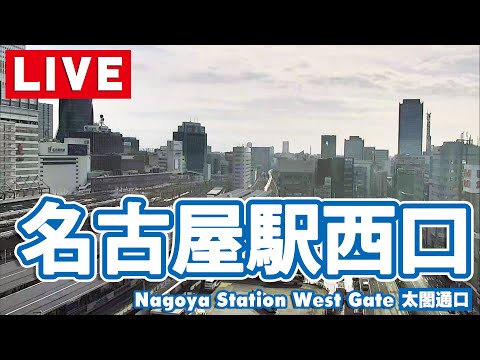
Unlike the West Gate Nagoya Station camera on Taikō-dōri with street traffic, this feed prioritizes railway theater — the reason Meieki appears on railfan maps beside Tokyo and Osaka.
What You Can See
Shinkansen nose cones sliding along platforms. Commuter crowds pulsing during weekday peaks. Limited express liveries bound for Takayama, Matsumoto, or coastal lines depending on camera aim and time. The JR Central Towers glass facade may frame the upper image — 245 m office tower and 226 m hotel tower completed 1999, defining Nagoya’s skyline from the station upward.
Night views turn the complex into a lit canyon: platform edge lights, train headlights, and the glow of JR Nagoya Takashimaya retail levels. Rainy evenings add reflection drama on canopies and paving.
Location
Nagoya Station sits in Nakamura-ku, Nagoya, Aichi Prefecture, at the heart of the Chūkyō metropolitan area (~10 million people). Adjacent terminals include Meitetsu Nagoya Station and Kintetsu Nagoya Station — three operators’ hubs stitched by underground passages. Subway Higashiyama and Sakura-dōri lines meet here (station numbers H08 / S02); the Aonami Line to Kinjō-futō (Port of Nagoya side) uses AN01.
Address grammar centers on Meieki 1-chome — Japan’s commercial addressing for “meet me at the station” culture.
History
Rail arrived in Nagoya in the Meiji era, but the contemporary story is vertical. JR Central invested roughly ¥200 billion in the JR Central Towers project, opening December 1999 with ~420,000 m² of floor area — once listed as the world’s largest station building (Guinness, 2002; the category was later retired). Platforms expanded underground; the Tokaido Shinkansen gained fuller Nagoya stop patterns after years when some Nozomi services skipped the city.
JR Gate Tower followed in 2017, extending the “station city” concept with Bic Camera, Uniqlo, and the Takashimaya Gate Tower Mall (~170 shops). The SCMaglev and Railway Park in nearby Minato Ward — reachable via Aonami Line — contextualizes why JR Central builds world-record infrastructure: this company is prototyping maglev Chūō Shinkansen service toward Tokyo in under 40 minutes.
Meieki became not just a stop but Nagoya’s default downtown — rival office districts exist, but the station wins meetings.
Why Watch
Because Nagoya Station is among Japan’s busiest passenger nodes (~200,000+ daily JR entries/exits scale; higher including subways and private railways). Because Tokaido Shinkansen frequency here connects Tokyo, Nagoya, Kyoto, Osaka in a corridor that defines Japanese business life. Because the camera lets remote viewers feel commute seasons, holiday surges, and typhoon-disrupted timetables without riding the Higashiyama Line at 08:00.
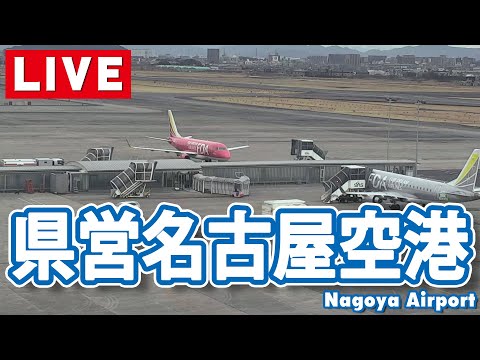
Compare with Nagoya Airport Cam — air spokes versus rail spine — to see how Chūkyō moves.
Daily Life
Salarymen and factory engineers share platforms with university students and tourists bound for Nagoya Castle or Toyota Commemorative Museum. Ekiben culture thrives — local tenmusu and misokatsu boxes sell before shinkansen departures. Underground malls blur commute and shopping; the 15th-floor Sky Street restaurant layer in Central Towers is a weekday lunch empire.
Weekends bring leisure travelers, Cosplay de Hobby event crowds, and families using Meieki as gateway to Legoland Japan (Kinjō-futō Aonami access) or Ghibli Park ( farther rail/bus combo). The station absorbs all flows without pretending to be quaint.
Best Time of Day
- 07:00–09:00: peak commute; maximum train frequency visible
- 12:00–14:00: slightly calmer; good for architecture appreciation
- 17:00–19:00: evening return wave; human density peaks
- 22:00+: last shinkansen banks; platform cleaning ballet
Holiday eves (Obon, Golden Week, New Year) rewrite all rules — treat those streams as sociological data.
Best Seasons
Spring and autumn offer pleasant platform viewing weather. Rainy season makes umbrella forests on concourses — less visible on rail cams but affects train pacing. Summer humidity tests air conditioning and patience. Winter is mild; occasional snow delays become news events worth watching live.
Events
Station-adjacent events include product launches in Gate Tower, seasonal illuminations, and World Cosplay Summit overflow when international cosplayers mob Meieki. Nagoya Matsuri (October) increases downtown costumes and foot traffic. JR Central occasionally runs historic train displays or SCMaglev publicity cycles — rare but memorable on camera.
Typhoon approaches trigger timetable collapse patterns visible as crowd accumulation under canopies even when trains still run reduced.
Getting There
You are likely already here if you arrive by Tokaido Shinkansen, JR Chūō Main Line, Kansai Main Line, Meitetsu, or Kintetsu. From Chubu Centrair (NGO), Meitetsu μ-SKY reaches Meieki in ~28 minutes. From Komaki Airfield (NKM), Meitetsu Komaki Line connections take longer — most travelers use Centrair.
Inside the complex, navigate by Golden Clock, Sakura-dōri Exit, and Taikō-dōri Exit — getting lost is a rite of passage.
Interesting Facts
- Floor area ~410,000–420,000 m² including towers — among the world’s largest station complexes.
- JR Central Towers: 51- and 53-floor twins; headquarters of Central Japan Railway Company.
- Nagoya Marriott Associa Hotel occupies the taller tower — rooms with platform views.
- Tokaido Shinkansen Nozomi stops here; corridor links ~3 hours Tokyo–Nagoya scale.
- Station numbering: JR Central assigned CF00 (Chūō), CJ00 (Kansai), CA68 (Tōkaidō Main).
- Legoland Japan and Port of Nagoya Aquarium connect via Aonami Line.
- KPF architects describe the project as a turning point in transit-oriented development globally.
- Meieki commercial rents rank among Japan’s highest — the camera watches expensive real estate move.
Meieki as Machine
Watch platform occupancy, not only trains. Japanese termini run on implicit choreography: cleaning crews between shinkansen turns, uniformed guides during holiday peaks, station staff bowing to departing conductors. Nagoya’s industrial culture shows in punctuality obsession — a two-minute delay ripple visible as crowd refractory waves on concourses.
If you never see train noses, you may still read delay boards and human acceleration patterns — Meieki teaches that infrastructure is half steel, half social contract.
Towers and the Sky Street Economy
The 15th-floor Sky Street in JR Central Towers concentrates restaurants above retail chaos — a vertical zoning lesson. Office workers lunch above commuters who shop below who transfer below that. JR Gate Tower duplicated the mixed-use recipe eighteen years later, proving Meieki’s model was exportable within its own footprint.
Night shots that catch tower lighting changes see Nagoya asserting skyline identity against Osaka and Tokyo — quietly, without fireworks.
Ekiben and the Platform Economy
Meieki’s concourses sell Aichi Prefecture ekiben that tell an honest food story: tenmusu (shrimp tempura rice balls), Ogura toast adjacent sweets culture, hitsumabushi eel adjacent boxes from regional suppliers. Watch passengers buying before Nozomi departures — the station is a lunch market that happens to move trains.
Holiday limited wrappers appear seasonally; collectors and railfans document them even when the camera never zooms close enough to read labels. The platform economy supports bakeries and bento factories across Chūkyō — Meieki is their flagship showroom.
Platform Numbers and Lost Tourists
First-time visitors underestimate vertical complexity: Shinkansen gates, Meitetsu, Kintetsu, and subway each have distinct ticket rules. Confused circles near the Golden Clock are a human comedy visible on any station-adjacent cam — Meieki rewards people-watching even when train metal dominates.
Signage in Japanese, English, Korean, and simplified Chinese reflects inbound tourism growth tied to Ghibli Park and Legoland — watch luggage types shift from briefcases to stroller density on weekends.
Nagoya is the honest shinkansen day-trip scale check from Tokyo — our day trips from Tokyo by train guide and the 10-day trip cost breakdown both use this hub as transfer reality, not a blank map line.
Nearby Live Cameras
Pair rail hub energy with West Gate Nagoya Station street/shinkansen views, Nagoya Airport Cam for Komaki regional flights, and Sasashima Live Cam for expressway approach context.
Frequently Asked Questions
Is Nagoya Station really the world’s largest?
It once held the Guinness “largest station building” record (~420,000 m²); that category was retired, but Meieki remains among the largest globally by floor area.
Why is it called Meieki?
Meieki (名駅) abbreviates Nagoya Station in local speech — also names the surrounding commercial district.
Can I see shinkansen on this camera?
When the stream is live and aimed at platforms, yes — Tokaido Shinkansen traffic is the main draw. Framing varies by source.
Is there a YouTube video ID?
Our catalog lists no verified embed ID yet; the player may show “stream pending” until a source is confirmed.
How does this differ from West Gate Nagoya Station?
West Gate emphasizes Taikō-dōri Exit street traffic and partial shinkansen glimpses; this feed focuses on 4K railway station views per source metadata.
How far is Centrair Airport?
~28 minutes by Meitetsu μ-SKY to Meieki — Chūkyō’s air-rail link is straightforward compared with many world cities.