
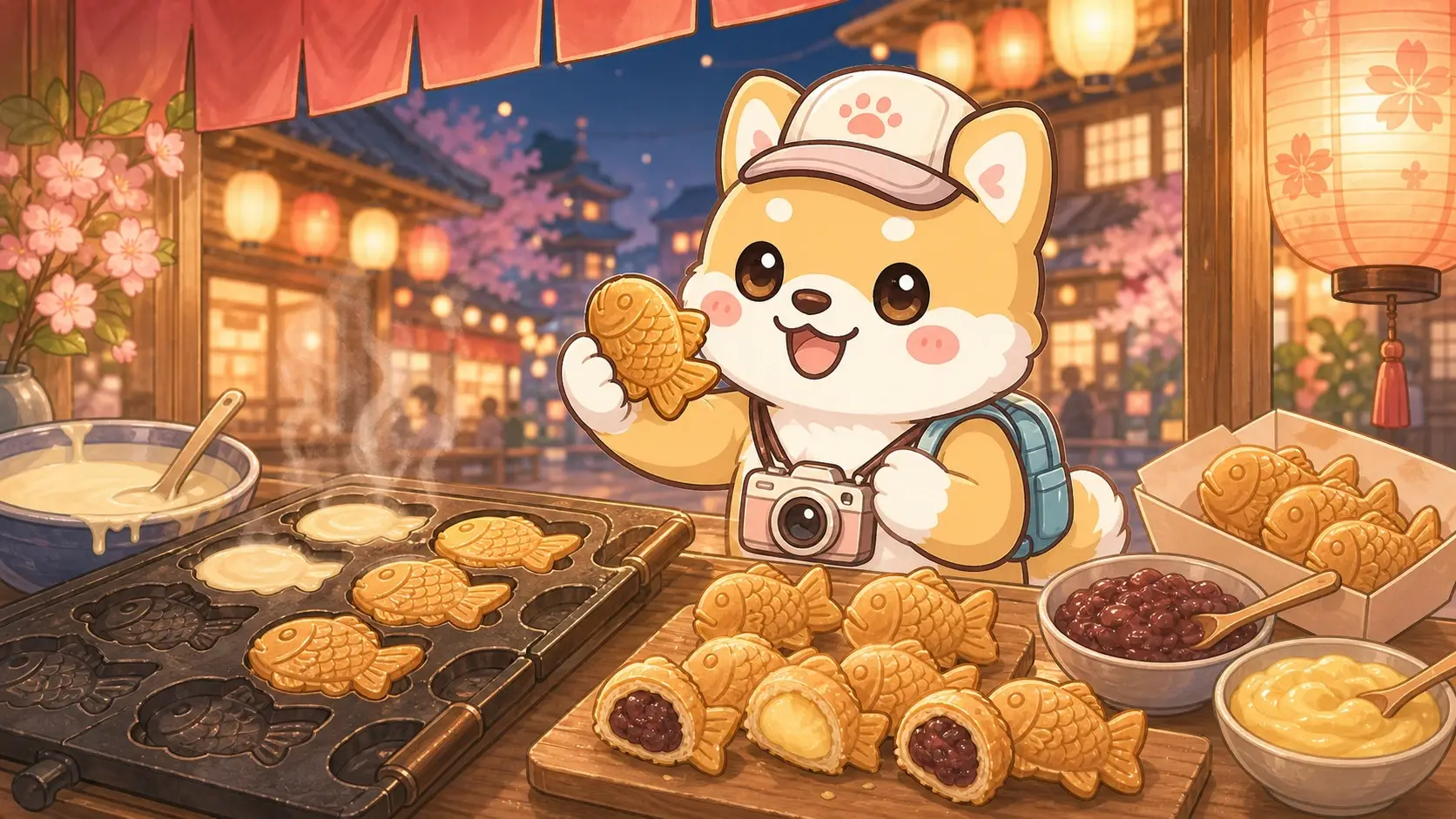
Japanese mini taiyaki is the same sea bream shape as the full-size street cake, shrunk so you can eat three and call it a snack. The fish is lucky (tai), the batter is closer to a waffle than a pancake, and the filling is the argument: bean, custard, or something the tourist line did not ask for.
This is not a guide to American dessert shops. It is the Japanese street and home format: hot, cheap, gone in two bites if mini.
Taiyaki red bean versus taiyaki custard
Taiyaki red bean (anko) is the default in Japan. Smooth koshian or chunky tsubuan, sweet but not frosting-sweet. It is why the fish still feels like a snack instead of a cupcake.
Taiyaki custard (custard cream) is the other national option. Softer, richer, easier to burn your tongue on. Kids point at it. Adults pretend they chose it ironically.
Modern extras exist: chocolate, cheese, sweet potato, matcha. Try one. Do not build a personality around it.
Taiyaki sweet as a search is just this category: the fish is a dessert. Savory fish-shaped snacks are a different object.
Asakusa and other temple edges sell them to people who already bought melon pan. The Hozomon Gate live camera is the crowd that fuels those griddles. Walk one street off if the first stall is only posing for phones.
If you hate sweet bean, start with custard. Do not decide Japan’s desserts are “too beany” based on one anko bite you were not ready for. Smooth koshian versus chunky tsubuan is a real preference. Chunky has bean skins; some visitors think that means undercooked. It does not.
Batter should taste like a light waffle, not a doughnut. If the outside is oily and thick, the stall is frying too rich or the iron is dirty. Good taiyaki has a thin crisp shell and a steam burst when you tear it.
Japanese mini taiyaki on the griddle
Mini means:
- Faster cook
- Higher crust-to-filling ratio
- Easier to overfill and leak
- Better for sharing without a knife
Vendors use a dedicated pan with many small fish. You hear the batter hit iron. You smell sugar. You wait ninety seconds that feel like four minutes because you are hungry.
Street price is usually a bag, not a single museum piece. Eat them hot. Mini goes sad faster than large. A single regular fish is cheaper if you only wanted one. Mini wins if two people argue about filling.
The filling is lava for the first two minutes. Bite the tail first — less filling, more cake. Mini pieces cool faster, which is why bags work in summer. Open the bag so steam does not wilt the shell. Eat standing near the stall. Walking through a scramble with a leaking fish is how you decorate strangers.
Shibuya will hide a stall inside a depachika or a festival pop-up. Center Street is more drink-and-walk than griddle. Osaka’s canal strip is the other postcard: watch the Dotonbori Glico sign live camera for the evening crush, then buy from an iron that is still cooking, not a pile under a lamp. Taiyaki at 4 p.m. is easier than 8 p.m. on a festival Saturday.
Convenience stores sell a refrigerated pack. Street mini is the smell. Kombini mini is the emergency — pair it with the convenience store food map if that is already the day’s tool.
Taiyaki batter recipe (home, not a lab)
A working taiyaki batter recipe is pancake-adjacent and waffle-adjacent:
- Cake flour or a mix with a little bread flour
- Egg
- Milk
- Sugar
- A spoon of honey or mirin for brown
- Baking powder
- A little oil
Rest the batter 20–30 minutes if you can. Thin batter leaks. Thick batter makes a dumpling with a fish outline.
This is enough to how to make taiyaki without buying a restaurant’s secret. The secret is the iron and the patience not to flip early.
Ratios that work in a home kitchen: about 100 g flour, one egg, 150 ml milk, a tablespoon of sugar, a teaspoon of baking powder. Adjust milk until the batter ribbons off a spoon and then disappears into itself. Too thick and the tail is raw in the middle. Too thin and the filling drowns.
Taiyaki mold: what to buy if you insist
A taiyaki mold is two hinged fish. Mini molds are whole trays. Cast iron holds heat; cheap aluminum cools and sticks.
Grease lightly. Fill halfway, add filling, cap with batter, close, cook, flip if your mold needs a flip. If bean paste spills, you made a fossil. Eat the fossil.
Do not hunt a US mall chain’s pan. Any Japanese-style fish iron is the tool. Season cast iron the way you would a skillet. Water plus a cold mold is how you glue the first fish to the metal forever.
Frozen taiyaki: the honest freezer version
Frozen taiyaki exists in Japanese supermarkets and some export aisles: heat in a toaster oven, not a death microwave if you can help it. Microwaves make the batter rubber and the custard lava.
Frozen is for a hotel with a toaster, not for a first-day Tokyo story. Street hot is the point. Do not put a fresh street fish in a backpack next to a laptop. Bean paste plus heat is a leak.
How to make taiyaki without wrecking the kitchen
How to make taiyaki in a normal kitchen:
- Preheat the mold until a drop of batter sizzles.
- Batter, filling, batter.
- Do not peek for a minute.
- Deep gold, not blonde.
- Cool ten seconds so custard does not file a lawsuit.
Filling amounts: a teaspoon for mini, a tablespoon for full-size. Anko is easier than custard for beginners because it stays put.
Serve with unsweetened tea from the japanese convenience store drinks fridge or a street machine. You already have enough sugar in the fish.
Mini versus full-size: which to buy on the street
Mini: festival, kids, three flavors in one bag. Full-size: you are actually hungry. Both: same batter.
If the line is only tourists and the fish are pale, keep walking. A good stall has a local eating without photographing.
Imagawayaki (or obanyaki) is the round cousin — same batter, not fish-shaped. Dorayaki is pancake sandwiches with anko from a shop, not a street iron. If you like anko, try them on different days. Melon pan is the bakery cousin if you want crunch without filling lava: Melon pan turtle.
FAQ
Is the fish fried?
Usually baked in an iron mold, not deep-fried. Some regional cousins differ.
Anko or custard?
Anko if you want Japan. Custard if you want dessert. Both if mini.
Can I fill with Nutella?
You can. It will leak. You will still eat it.
Are they only in Asakusa?
No. Festivals, depachika, stations, winter stalls nationwide.
How long do they keep?
Hours, not days. The crust is the clock.
Is this the same as imagawayaki?
Cousin: round, not fish. Same filling family.