
Lake Biwa supplies water to millions and imagination to everyone else — Japan’s largest freshwater lake, older than the mountains that frame it, cradled by Shiga Prefecture with Otsu as its port city. Off Otsu Port, on a breakwater 180 meters from shore, the Biwako Flower Fountain (びわこ花噴水) throws 440-meter-wide arcs of water skyward, peaking at 40 meters — roughly a ten-story building. This live camera catches the spectacle by day (cool mist, lake breeze) and by night (green, orange, and white lights turning spray into jewelry).
About This Live Camera
The HD / 4K-capable YouTube stream (sM2IjSRBwnY) points from the Otsu waterfront toward the fountain structure on its offshore pier. You see programmed water shapes — radiating fans, vertical jets, cascading tiers — controlled by computers adjusting flow rate and nozzle angle. Shows run on a published schedule (commonly midday and evening blocks; hours shift seasonally). Maintenance closes the fountain on the second and fourth Wednesdays each month (following holiday adjustment rules).
When not performing, the frame still offers Lake Biwa horizon, pleasure boats, and weather drama — valuable even in idle minutes.
What You Can See
Active programs display 66 nozzle clusters (grouped as 22 sets of three) shooting water in synchronized patterns. Upper jets reach about 30 m, mid tiers 22 m, lower 15 m, with two vertical “straight-up” jets hitting 40 m. Daytime shows emphasize refreshment — rainbow mist, sun glitter, wind shear bending plumes. Night shows add tri-color lighting (transparent/white, orange, green) for romantic contrast against dark water.
Background includes Otsu Port facilities, Biwako Kisen excursion boats, and distant western mountains. Clear days may reveal the far shore; haze common in summer softens the panorama into monochrome calm.
Location
The fountain sits in Otsu City, Shiga Prefecture, on Honshu, at the southern tip of Lake Biwa where the lake drains toward Kyoto via the Uji River system. Hama-Otsu and Biwako-Hama-Otsu stations anchor the shoreline; JR Otsu Station lies slightly inland. Coordinates mark the viewer side of the port — the fountain itself stands on engineered breakwater infrastructure extending into the lake.
Kyoto is one stop away by JR — many visitors treat Otsu as a day-trip appendage to Kyoto tourism, missing that Shiga is its own prefecture with distinct identity tied to the lake.
History
Lake Biwa is ancient — a tectonic basin millions of years old, referenced in Manyoshu poetry and Heian court literature when Otsu linked Kyoto to eastern provinces. Modern Otsu Port developed as the gateway for Biwako cruise tourism and freight. The Biwako Flower Fountain completed in March 1995 (Heisei 7) as a prefectural symbol project, celebrating the lake’s cultural and ecological role.
Since then it has become a free public spectacle — rare for infrastructure of this scale — reinforcing Shiga’s motto logic: the lake is not backdrop; it is the main character. Lighting upgrades and program refinements evolved across the Heisei and Reiwa eras, but the core promise remains: water choreography you can enjoy without a ticket.
Why Watch
Because the fountain ranks among the longest in the world (~440 m span) — not tallest single geyser, but horizontal ambition few cities replicate. Because Otsu is undertouristed relative to Kyoto, yet this cam delivers iconic scale. Because lake weather — sudden thunderstorms, biwa trout fishing boats cutting spray — adds unpredictability no theme park can script.
Remote viewers use the feed to time visits around show blocks; locals check wind before waterfront dates.
Daily Life
Morning fishermen and commuter boats share the port with school groups boarding Biwako cruise ships. Office workers in Otsu’s prefectural government district walk the promenade at lunch. Cyclists on the Biwaichi loop route (circumnavigating the lake, ~200 km) pass Hama-Otsu as a milestone. Evening brings couples, runners, and photographers with tripods awaiting the first jet pulse.
When the fountain rests, the promenade stays alive — this is daily Otsu, not only showtime Otsu.
Best Time of Day
- Scheduled show windows (check official prefecture pages — commonly 12:00–12:30 midday block and 18:00–19:00 evening; summer weekends may add 15:00–15:30)
- Ten minutes before start: watch nozzles pressurize
- Blue hour after evening show: lit spray against navy sky
- Windy afternoons: sculptural plumes bend dramatically — photographer’s reward
Outside show hours, the cam is atmospheric, not spectacular.
Best Seasons
Summer maximizes cool mist appeal and extended tourist hours. Winter shows can feel austere but crowd-free — lake winds bite. Spring pairs fountain visits with cherry blossoms along the shore. Autumn brings crisp visibility for mountain backdrops and Biwaichi cycling color. Obon and Golden Week swell promenade foot traffic; typhoon remnants may cancel shows for safety.
Events
Lake Biwa Fireworks Festival (summer, various shore points — some years visible distantly), Biwaichi cycling events, and Otsu Matsuri (early August) amplify waterfront energy. Prefecture-led environmental campaigns for lake water quality occasionally coincide with fountain lighting themes. Maintenance Wednesdays (2nd & 4th) are mini-events for planners — know before you travel.
Getting There
Train: Keihan Ishiyama-Sakamoto Line to Biwako-Hama-Otsu (~3 min walk); JR Tokaido/Biwako Line to Otsu Station (~15 min walk). Car: Meishin Expressway Otsu IC ~5 min; lakeside parking varies by season. Boat: Biwako Kisen cruises depart near the fountain viewpoint — combine water-level perspective with cam planning.
From Kyoto Station, JR reaches Otsu in about 10 minutes — faster than many Kyoto intra-city bus rides.
Interesting Facts
- Lake Biwa is Japan’s largest freshwater lake (~670 km²).
- Fountain length ≈440 m; tallest vertical jets ≈40 m (~10 stories).
- 66 nozzle units in 22 triple clusters create radial “flower” patterns.
- Completed March 1995; operated by Shiga Prefecture with Biwako Kisen as harbor administrator contact.
- Closed 2nd & 4th Wednesdays monthly for maintenance (holiday rules adjust dates).
- Admission free — paid experiences are optional cruises, not the fountain itself.
- Lake supplies drinking water to Kansai region — the fountain is symbolic stewardship as much as entertainment.
Reading Wind on Water
Fountain aesthetics obey meteorology. Strong breeze shears plumes into horizontal fog; calm air stacks vertical columns. Watch the live feed before dressing for a lakeside dinner — mist downwind can soak sidewalks. Photographers prefer partial wind: movement without collapse.
Sound is absent on many streams; imagine the white noise of 66 clusters — a sonic blanket locals use as meditation background.
Otsu vs. Kyoto Mindset
Kyoto sells temples; Otsu sells water depth — literal and geographic. The fountain is prefectural pride asserting: stay one stop longer. Remote viewers can adopt that mindset too — pair this cam with Kyoto feeds and notice how Shiga’s horizon widens when city canyon vanishes.
Lake Biwa predates every machiya wooden facade; watching jets rise before that horizon is watching geologic time meet 1990s hydraulic engineering.
Lake Ecology Behind the Spectacle
The fountain is celebration, but Lake Biwa is also drinking water for the Kansai region — a dual role Shiga Prefecture guards carefully. Biwa trout (ビワマス) restoration, ** reed bed** protection, and algal bloom monitoring shape policy tourists rarely see. When shows cancel for electrical supply or high wind, reasons sometimes tie to stewardship rather than mechanical failure.
Birdlife punctuates the cam: cormorants, gulls, ducks crossing between port walls and open water. Sunset silhouettes them against spray when shows run late. Winter brings clearer Fuji-distance visibility on exceptional days — not Fuji itself, but the lesson that Biwa’s horizon is vast when haze lifts.
Show Scheduling for Remote Viewers
Official schedules shift with seasonal tourism and energy-saving campaigns. Midday blocks suit family lunch stops; evening blocks align with Hama-Otsu dinner plans. Weekend-only afternoon additions (where offered) target day-trippers from Kyoto. Bookmark the prefecture maintenance calendar before planning a proposal or photo mission — the 2nd and 4th Wednesday closures are predictable heartbreak for unprepared visitors.
If the stream shows idle water during a posted show window, wait five minutes — pumps sometimes stagger start for crowd buildup along the promenade.
Nearby Live Cameras
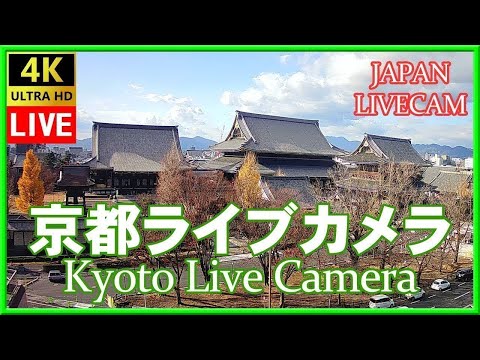
Kyoto is minutes away by rail — extend viewing with Higashi Honganji Temple, Kyoto Hachijo Taxi Stand for station logistics contrast, and Osaka International Airport (Itami) for Kansai aviation context (Shiga sits between Kyoto and Osaka).
Frequently Asked Questions
Is this the tallest fountain in the world?
It is among the longest horizontally (~440 m); vertical height (~40 m) is impressive but not a world record for single-jet height.
When does the fountain operate?
On a fixed daily schedule with midday and evening blocks — hours vary by season. It rests on 2nd & 4th Wednesdays and in severe weather.
Is the city Otsu or Shiga?
Otsu is the city; Shiga is the prefecture. The camera location is Otsu City, Shiga Prefecture.
Can I see the show from this camera 24/7?
The live stream runs, but water shows happen only during scheduled windows — outside those times you see the lake, not active jets.
How do I get there from Kyoto?
JR Biwako Line to Otsu Station (~10 min) or Keihan lines to Hama-Otsu — short walk to the port.
Does admission cost money?
No — the Biwako Flower Fountain viewing from shore is free; only boat cruises charge fares.