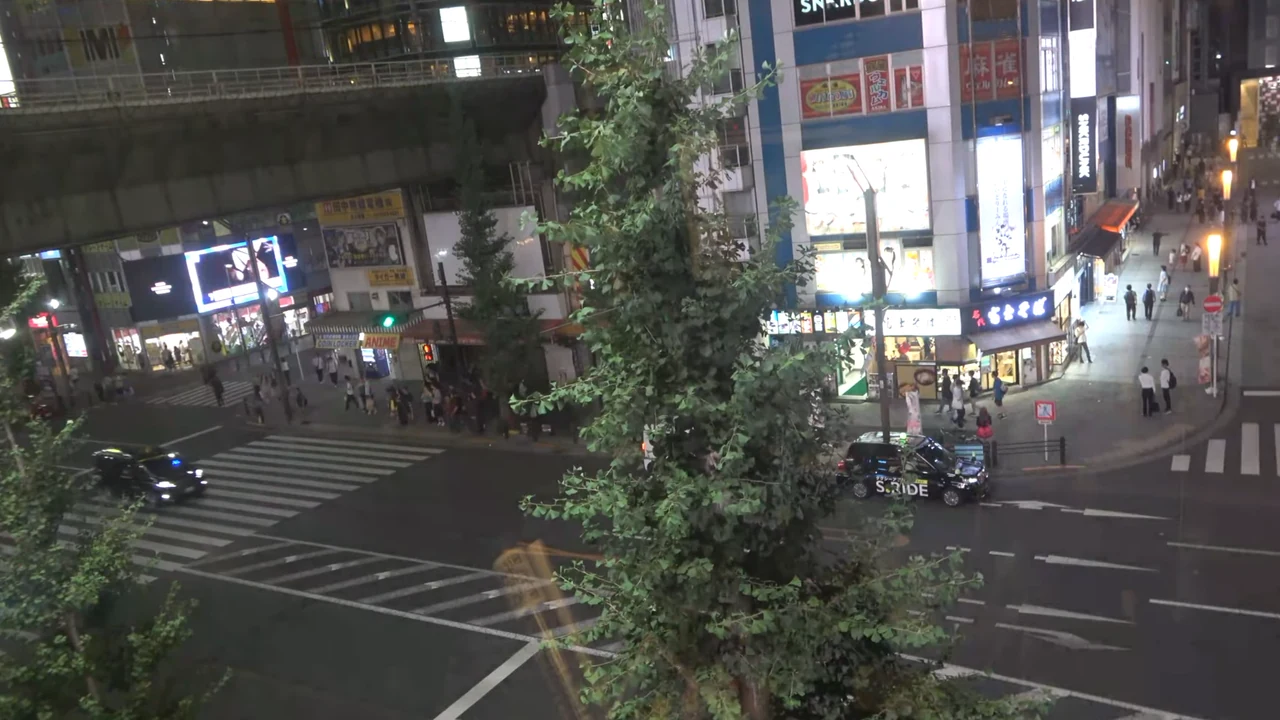

Kanazawa keeps one of Japan’s most patient masterpieces on public display. Kenrokuen — the Garden of Six Attributes — spreads across roughly eleven hectares beside Kanazawa Castle, shaped over generations by the Maeda lords of Kaga. This live camera lets you watch that landscape breathe in real time: pond reflections, stone lanterns, pruned pines, and the seasonal costume changes that have made the garden a pilgrimage site for centuries. It is less a decorative backdrop and more a living textbook of Edo-period landscape ambition on the Sea of Japan coast.
About This Live Camera
The stream frames a portion of Kenrokuen from within or near the garden grounds, offering a fixed vantage on trees, water, paths, and sky rather than a sweeping tour. Because the camera stays put, the drama comes from light, weather, and maintenance rhythms — gardeners at work, morning mist lifting off Kasumiga-ike pond, or the first snow settling on branches before yukitsuri ropes appear.
Kenrokuen is a kaiyu-shiki strolling garden: designed to reveal new compositions as you move. Even a single locked angle captures that philosophy indirectly — clouds drift, leaves turn, and the same pine reads differently at dawn and dusk. Treat the feed as a seasonal diary you can bookmark between trips to Ishikawa Prefecture.
What You Can See
Depending on the lens position and season, expect layered green canopies, glimpses of pond surface, stone lanterns including the iconic Kotoji-tōrō (the two-legged lantern shaped like a koto bridge), and carefully trained pine trees whose silhouettes define the garden’s winter identity. Spring may bring plum and cherry accents; summer deepens the palette toward irises and lush lawn; autumn fires maples and zelkova gold; winter turns the scene monochrome until yukitsuri — conical rope-and-bamboo supports — transform pines into sculptural installations.
You may also catch visitors as small moving figures on paths, maintenance crews, or occasional event setups. Castle rooftops and wooded hills sometimes appear at the frame edge, reminding you that Kenrokuen was conceived as the outer garden of Kanazawa Castle, not an isolated park.
Location
Kenrokuen sits in central Kanazawa, Ishikawa Prefecture, on Honshu’s Hokuriku coast facing the Sea of Japan. The garden borders Kanazawa Castle Park; major gates include Katsurazaka, Mayumizaka, and Ishikawamon approaches. Within walking distance lie the 21st Century Museum of Contemporary Art, the Higashi Chaya geisha district, and Nagamachi samurai residences — all part of the same compact historic core that makes Kanazawa feel like an intact Edo city shrunk to pedestrian scale.
The live camera coordinates place you at roughly 36.56°N, 136.66°E — squarely in the garden district that locals treat as everyday backyard, not only tourist trophy.
History
Kenrokuen’s roots reach to the 1620s, when Maeda clan rulers began shaping pleasure grounds beside their castle. Development continued across the Edo period (1603–1868) as successive lords expanded ponds, islands, and teahouses. The name Kenrokuen — “combined six” — was formalized in 1822 by Matsudaira Sadanobu, referencing a classical Chinese ideal of six contrasting landscape qualities: spaciousness and seclusion; artifice and antiquity; waterways and panoramas. Achieving all six in one garden was considered nearly impossible; Kenrokuen is celebrated for coming close.
Major features evolved over time: Kasumiga-ike pond and its islands, the Hisago-ike area, fountains powered by natural pressure (among Japan’s oldest surviving examples), and teahouses such as Shigure-tei. The garden opened to the public in 1871 after the Meiji transformation ended feudal rule. It became a National Site of Scenic Beauty in 1922 and a National Site of Special Scenic Beauty in 1985 — rare air for a landscape still used daily by citizens.
Why Watch
Because Kenrokuen is famous precisely for seasonal transformation, and a live feed compresses that story into something you can check weekly. Watch snow accumulate on pine needles before ropes go up. Catch a rainstorm flattening cherry petals into the pond. Compare a humid summer afternoon with a crisp November morning without booking a flight.
Garden lovers use the camera as a remote scouting tool before visiting Kanazawa. Photographers study how flat Hokuriku light behaves at different hours. Japan travelers who missed Ishikawa on an earlier trip keep the tab open as gentle pressure to return. And anyone curious about how a feudal lord’s garden still functions as civic green space gets an honest, unscripted view — no brochure retouching.
Daily Life
Kenrokuen is not a museum diorama. Local residents walk dogs along outer paths, jog near castle grounds, and meet friends at nearby cafés before or after a garden loop. Inside paid admission hours, you’ll see school groups, overseas tour clusters, solo sketchers, and elderly regulars who treat the benches as outdoor living rooms.
Maintenance is part of the spectacle: pine pruning teams, leaf clearing in autumn, ice monitoring in winter, and the elaborate autumn-through-spring schedule for yukitsuri installation. The camera sometimes catches those craftspeople at work — the human layer that keeps a 400-year design language alive.
Best Time of Day
- Early morning: soft light, fewer crowds, mist on water
- Late afternoon: warm sidelight on maples in autumn; long shadows on snow in winter
- Midday overcast: even exposure for studying tree structure without harsh contrast
- Just after a weather front: washed air and saturated greens — common on the Sea of Japan side
Night views depend on illumination schedules; most garden watching online favors daylight hours when color and depth read clearly.
Best Seasons
Spring (plum late February–March, cherry late March–April) delivers the classic hanami palette. Early summer brings irises and fresh lawn. Late autumn (mid-November) is peak foliage and among the busiest in-person weeks. Winter is the connoisseur’s season: snow scenes plus yukitsuri from roughly November through March make Kenrokuen arguably more photogenic than in cherry season — if you accept cold.
Hokuriku snow is heavy; the camera may show whiteout days that explain why those rope supports exist. Rainy season (June–July) adds moody pond reflections even when skies disappoint hikers elsewhere.
Events
Kenrokuen hosts seasonal highlights including plum blossom viewing, cherry blossom peaks, autumn leaf illumination evenings (check current year schedules), and New Year visits when Japanese families crowd shrine-adjacent routes. Castle park festivals, Kanazawa Hyakumangoku Festival (early June, citywide), and tea ceremony demonstrations in adjacent cultural sites ripple into garden traffic even when the event is not inside the gates.
Winter yukitsuri itself functions as a slow event — installation begins before the heaviest snow, turning the garden into an outdoor installation art piece for months.
Getting There
From Kanazawa Station: the Kanazawa Loop Bus (Right Loop) stops at Kenrokuen-shita / Kenrokuen-guchi; journey about 15–20 minutes. Taxis are plentiful from the station’s impressive Tsuzumi Gate plaza. Many visitors walk from the station in 30–40 minutes through city streets, though buses save time in rain or snow.
From Komatsu Airport (KMQ): airport buses reach Kanazawa Station in about 40–50 minutes. The Hokuriku Shinkansen connects Tokyo to Kanazawa in roughly 2.5–3 hours, making weekend garden trips feasible.
Admission to Kenrokuen is paid at gatehouses; hours vary seasonally (typically early morning to evening, with extended hours during special illuminations). The live camera complements but does not replace walking the paths — the garden’s six attributes reveal themselves through movement.
Interesting Facts
- Kenrokuen is one of Japan’s Three Great Gardens alongside Korakuen (Okayama) and Kairakuen (Mito).
- The Maeda clan ruled Kaga Domain, one of the wealthiest han in Edo Japan — wealth visible in stone, water engineering, and rare tree cultivars.
- Yukitsuri uses hundreds of ropes from tall poles to protect pine branches from snow weight — a technique synonymous with Kanazawa winter.
- The Kotoji lantern is so emblematic it appears in countless tourism logos; its asymmetrical legs mirror a koto bridge.
- Kenrokuen’s Kasumiga-ike pond includes Horai Island, referencing immortal-realm mythology — a wish for long clan prosperity cast in earth and water.
- Kanazawa escaped heavy World War II bombing, preserving not only the garden but surrounding teahouse and samurai districts — rare among major Japanese cities.
Reading the Garden Through a Fixed Lens
A single webcam angle teaches you to notice micro-seasons (kō): not just “spring” but the week when plum gives way to cherry; not just “winter” but the day ropes first appear. Watch how pond color shifts from steel grey in storm to jade after sun returns. Count how many pine silhouettes remain legible during snowfall — yukitsuri turns each tree into a geometry lesson.
When visitors appear, observe pacing: strolling gardens train you to walk slowly. Even online, resist treating the feed as background noise for one hour and you’ll start seeing compositional choices — a lantern placed to frame a distant island, a pruned gap opening a borrowed view toward castle timber.
Kanazawa Beyond the Frame
Kenrokuen sits inside a city that rewards pairing. Combine this stream with a look at Kanazawa Station for arrival-day architecture, or Kanazawa Port for Sea-of-Japan horizon contrast. The Ishikawa Prefectural Office cam shows expressway and skyline context — useful on storm days when you want to know if snow is reaching the city from the mountains.
Nearby Live Cameras
Continue exploring Ishikawa with Kanazawa Station, the harbour view at Kanazawa Port, and the elevated city panorama from the Ishikawa Prefectural Office cam.
Frequently Asked Questions
Is Kenrokuen free to watch on this camera?
The live stream shows exterior or garden-area views available through the broadcast; entering the garden in person requires paid admission at gatehouses during opening hours.
When is yukitsuri visible?
Rope supports are typically installed from November through March to protect pines from Hokuriku snow. Exact timing varies by year and weather.
What does “Kenrokuen” mean?
The name refers to six traditional landscape attributes — spaciousness, seclusion, artifice, antiquity, waterways, and panoramas — combined in one garden.
How far is Kenrokuen from Kanazawa Station?
About 2 km; loop buses take 15–20 minutes, taxis are faster, walking is possible in 30–40 minutes.
Is Kenrokuen good in winter?
Many enthusiasts consider winter the finest season because of snow scenes and yukitsuri, though paths can be icy and crowds still appear on peak weekends.
Can I see Kanazawa Castle on this feed?
Castle rooftops and adjacent parkland may appear at the frame edge depending on camera aim; dedicated castle views are best in person from Kanazawa Castle Park.