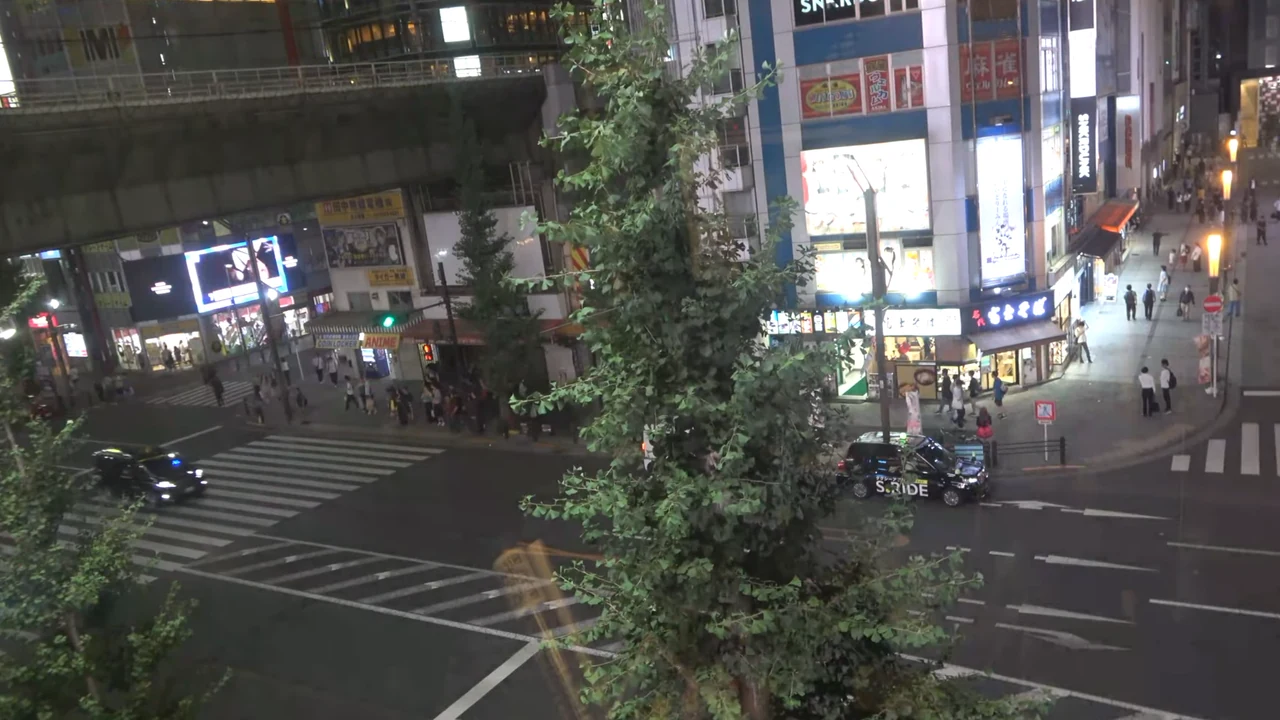

Most cities greet you with signage. Kanazawa greets you with architecture that bows. Kanazawa Station — terminus of the Hokuriku Shinkansen since March 2015 — is famous before you buy a ticket: the wooden Tsuzumi Gate (Tsuzumi-mon) and the glass Motenashi Dome turn a commute hub into a statement about rain, snow, Noh drums, and hospitality. The live camera catches that statement in real time — umbrellas blooming under glass, luggage wheels clicking across stone, and the steady pulse of trains that now link Tokyo in about two and a half hours.
About This Live Camera
The feed focuses on the east plaza — the Kenrokuen Exit side — where the Motenashi Dome spans the forecourt and the Tsuzumi Gate frames the approach. This is the face Kanazawa shows the world post-Shinkansen. You will see pedestrian flow, taxi queues, bus turns, seasonal decorations, and — at night — the gate’s illumination program.
It is not a platform-level train spotter cam; it is a city gate cam. That makes it ideal for atmosphere, weather checks, and watching how a historic city absorbs modern rail volume without losing its choreographed calm.
What You Can See
Daytime: travelers photographing the Tsuzumi Gate (about 13.7 meters tall), the 3,019-pane glass canopy of the Motenashi Dome, and the mixed traffic of local buses, sightseeing loops, and taxis. You may catch glimpses of JR West signage, event tents during festivals, and snow accumulation on the dome’s frame in winter.
Nighttime: the gate lights up on the hour — two minutes of color tied to Kaga-gosai traditional hues on weekdays (crimson Monday, indigo Tuesday, grass green Wednesday, ocher Thursday, ancient purple Friday), with all five colors rotating on weekends and holidays. The dome glows from within like a lantern made of geometry.
When Shinkansen peak windows align, you will feel — even if you cannot always see platforms — the ebb and surge of bullet-train tourism: group flags, roller bags, and the quiet rush of people who came for gold leaf, kaiseki, and gardens.
Location
Kanazawa Station sits at 1-1 Kinoshinbo-machi, Kanazawa, Ishikawa Prefecture, on the Sea of Japan side of central Honshu. It is the primary rail hub for the prefecture, serving JR West lines including the Hokuriku Shinkansen, Hokuriku Main Line, Nanao Line, and the IR Ishikawa Railway connector toward the Noto Peninsula.
Kenroku-en Garden lies roughly 2 km east — walkable via the Kanazawa Loop Bus or a pleasant 30-minute stroll through city streets. The station is the practical center of gravity for nearly every visitor itinerary.
History
Rail reached Kanazawa in 1898, linking the city to Fukui and the wider Meiji network. For decades the station was a competent but plain rectangle — function over poetry. By the late 1990s, the planned Hokuriku Shinkansen extension forced a rethink: Kanazawa would become a bullet-train terminus, and the building needed to carry that responsibility.
Reconstruction ran from 1998 to 2005. Architect Ryuzo Shirae’s east façade replaced utilitarian bulk with the Motenashi Dome — “motenashi” meaning hospitality — a shelter against Kanazawa’s heavy rain and winter snow, built from aluminum and glass by designers including TODEC and Hakue Architectural Laboratory. The Tsuzumi Gate beside it evokes tsuzumi hand drums used in Noh and Kaga hōshō performance traditions native to the region.
The station won international attention — Travel + Leisure has cited it among the world’s most beautiful stations — even before the Shinkansen arrived. When the Hokuriku Shinkansen opened to Kanazawa on March 14, 2015, the dome and gate became symbols of arrival, not just renovation. Tourism surged; the city’s UNESCO Creative Cities crafts identity met a faster Tokyo pipeline.
Inside, the station integrates commercial zones, underground passages, and connections toward Forus Kanazawa and bus terminals — a small city under one roof.
Why Watch
This is one of Japan’s rare station cams where architecture is the event. You watch hospitality infrastructure working: the dome shedding snow, glass filtering grey Hokuriku light into something gallery-soft. Rail fans still get value — timing Shinkansen waves by crowd density — but the deeper draw is cultural: a city that chose to say welcome in wood and glass instead of steel alone.
Daily Life
Morning: commuters, school groups, early tourists heading to Kenroku-en. Midday: lunch traffic to station malls and bento counters — ekiben boxes featuring Noto seafood and Kaga vegetables disappear fast from convenience shelves inside the station complex. Afternoon: Shinkansen arrivals from Tokyo, Osaka connections via Kanazawa–Kyoto timing, and tour buses spinning up for 21st Century Museum visits. Evening: illumination crowds, dinner departures toward Katamachi dining alleys, last-minute gold-leaf craft shopping at station-adjacent malls. Winter: snow boots and cleared paths under the dome; staff scatter de-icing granules along stone approaches; June rainy season: the structure doing exactly what it was built for while umbrellas bloom like sudden mushrooms.
The Kanazawa Station Tourist Information Center on the ground floor anchors human flow — maps, craft brochures, Hokuriku Arch Pass guidance, and multilingual help for first-time Shinkansen transfers. Taxi marshals coordinate queues during peak slots; Loop Bus drivers know photographers blocking the Tsuzumi Gate shot and wait with practiced patience.
Best Time of Day
- Early morning: lowest crowds; clean shots of gate and dome lines
- Late afternoon: warm sidelight on wooden gate pillars
- On the hour after sunset: gate color illumination sequence
- Shinkansen arrival windows: peak human energy (check typical Tokyo-bound schedules in reverse for inbound surges)
Snowy nights under the dome are a mood worth scheduling.
Best Seasons
Winter showcases the dome’s purpose — watch snow load and clearing rhythms. Spring brings tour groups and occasional blossom reports inland. Rainy season (June–July) turns the cam into an umbrella ballet. Autumn adds crisp air and foliage traffic toward Kenroku-en. Golden Week and New Year push density to festival levels.
Events
Major arrivals coincide with national holidays, Kanazawa craft fairs, and Kenroku-en seasonal illuminations when station foot traffic spikes. The gate lighting itself is a daily micro-event — photographers sync watches to the hour. When the city hosts Hyakumangoku Festival commemorations of Maeda lordship, costumed processions and cultural programming can increase nearby activity.
Getting There
You are already there if you ride the Hokuriku Shinkansen from Tokyo, Toyama, or connecting points. Komatsu Airport links by bus in about an hour. Local Kanazawa Loop Bus and Kenrokuen Shuttle stop at the east plaza. Taxis queue under the dome side; bicycles rent nearby for garden runs.
Interesting Facts
- Hokuriku Shinkansen reached Kanazawa in 2015 — about 2 hr 30 min from Tokyo.
- The Motenashi Dome uses 3,019 glass panes and opened 2005.
- Tsuzumi Gate stands 13.7 m tall, referencing Noh tsuzumi drums.
- Kanazawa Station reconstruction ran 1998–2005.
- Travel + Leisure has ranked it among the world’s most beautiful stations.
- Kanazawa is a UNESCO City of Crafts and Folk Art (since 2009).
- Kenroku-en is one of Japan’s Three Great Gardens.
- The Maeda clan ruled Kaga Domain, one of Edo Japan’s wealthiest han — roughly 1 million koku rice revenue at peak.
- The east plaza design won international architecture praise for Ryuzo Shirae.
- Illumination uses Kaga-gosai colors on a weekday rotation.
- The station connects IR Ishikawa Railway toward the Noto Peninsula — a different tourism axis from the garden core.
- Forus Kanazawa and underground malls make the station a retail destination, not only a transit node.
- Kanazawa escaped WWII firebombing — traditional districts survive partly because the city layout stayed intact.
Watching Arrival Psychology
Bullet-train tourism has a tell: the moment the plaza inhales a double-decker Shinkansen load, speed drops to photography speed. Watch how the dome converts panic rain into orderly queues — that is motenashi as engineering, not marketing copy.
Night Shift on the Plaza
After 22:00, the station never fully sleeps — cleaning crews, late hotel arrivals, early freight of tomorrow’s bento — but the cam enters contemplative mode. Hourly gate color washes become the main character. Compare weekday single-hue discipline to weekend rainbow rotation; it is a small lesson in Kanazawa’s taste for scheduled beauty.
Nearby Live Cameras
Compare sea and river commerce on the Kanazawa Port cam, watch seasonal garden shifts at Kenrokuen Garden, or pull back to prefectural scale on the Ishikawa Prefectural Office feed.
Frequently Asked Questions
When did the Hokuriku Shinkansen reach Kanazawa?
March 14, 2015, making Kanazawa the terminus from Tokyo in roughly 2.5 hours.
What are the Tsuzumi Gate and Motenashi Dome?
The Tsuzumi Gate is a wooden drum-inspired gate; the Motenashi Dome is a glass hospitality canopy sheltering the east plaza from rain and snow. Both completed 2005.
Can I see Shinkansen trains on this camera?
The feed emphasizes the east plaza, not platform close-ups. Train presence is often inferred through crowd surges rather than locomotive detail.
When is the gate illuminated?
From sunset to midnight, two minutes on each hour — weekday Kaga color themes; weekends cycle all five colors.
How do I walk to Kenroku-en from here?
About 30 minutes on foot or a short loop bus ride from the station’s east side.
Is Kanazawa Station accessible?
Yes — elevators, tactile paving, and accessible restrooms are documented by the city tourism office; the dome provides weather shelter across the open plaza.