
Hokkaido’s east does not perform for tourists the way Sapporo performs for snow festivals. It works — fields, livestock, freight schedules, and a rail line that still matters because distances are honest. Obihiro is the capital of that working east: a city of roughly 170,000 on the vast Tokachi Plain, and JR Obihiro Station is where the plain learns what time it is. This live camera looks across the Nemuro Main Line toward the city’s rebuilt station building — brown-roofed, elevated, calmly busy — with urban density and Hokkaido sky stacked behind it.
About This Live Camera
The feed offers a fixed overview of Obihiro Station and surrounding streets — not a platform-level tripod, but an elevated vantage that lets you read train arrivals, road traffic, and weather in one glance. Associated with a YouTube embed (nvtohNsjbY4), the stream behaves like a regional traffic-and-rail cam common on Japanese local media pages: useful, unpretentious, occasionally offline for maintenance.
Use it to watch JR Hokkaido regional services — Tokachi and Ōzora limited expresses when in frame, local Nemuro Line trains, and seasonal variation in snow cover on platforms and rooftops. Exact framing may include the 1996 station structure prominently, with hints of older track alignment visible north of the current platforms — a subtle historical layer for viewers who know what to look for.
What You Can See
Trains are the heartbeat: diesel and electric multiple units sliding along Nemuro Main Line tracks, station dwell times just long enough for passengers to board, then departure toward Kushiro eastward or Takikawa / Sapporo westward. You may catch freight or maintenance movements less frequently than passenger services but they matter to Tokachi’s economy.
Road traffic crosses near the station front — buses linking to Tokachi-Obihiro Airport, taxis, agricultural service vehicles, and winter snow-clearing trucks. Pedestrian flow peaks around train times; Obihiro is compact enough that many residents treat the station as a downtown anchor rather than a distant commuter shell.
Seasonally: summer green on distant fields, autumn haze, winter snow on platforms and station roof — Obihiro is cold continental Hokkaido, not mild Sapporo-coastal. Spring brings muddy melt and early field work visible as distant colour shifts.
Location
Obihiro Station sits at 12-chōme, Ōdōri Minami, Obihiro City, Hokkaido — station code K31, 180.1 km from Takikawa on the Nemuro Main Line. The city spreads across the Tokachi Plain, bounded by mountains that collect Hokkaido’s inland weather drama.
Tokachi subprefecture is Japan’s breadbasket aesthetic made literal: sugar beets, beans, dairy, beef (Obihiro is famous for Butadon pork bowls and quality Tokachi beef), and wide horizons. Unlike mountain-hugging Hokkaido cities, Obihiro feels flat, grid-planned, and pragmatic — a child of Meiji-era reclamation and rail.
Nearby landmarks include Obihiro Park, the Kita-Ōdōri shopping axis, and institutions like Obihiro University of Agriculture and Veterinary Medicine — reinforcing the city’s academic-agricultural identity. Tokachi-Obihiro Airport (OBO) lies northwest for links to Honshu.
History
Obihiro’s modern story begins with Hokkaido reclamation. The Banseisha pioneer group led by Benzo Yoda arrived in 1883, proving agriculture could work on the Tokachi Plain. Obihiro gained city status in 1933 and became the administrative centre of Tokachi. The Nemuro Main Line reached Obihiro in 1905, connecting to Kushiro and unlocking export paths for beet and bean crops — the same rail you watch now.
The original Obihiro Station served through Japan’s rail nationalization, war years, and postwar boom. JR Hokkaido inherited the station at privatization in 1987. The current elevated station opened in 1996, modernizing accessibility and retail integration while leaving traces of older track beds north of the platforms — ghost geometry of a rail network that once hosted more branch lines.
The Hiroo Line and Shihoro Line once radiated from Obihiro’s orbit; both closed in 1987 amid JNR restructuring — a familiar Hokkaido story of shrinking rural branches. What remains is the main line lifeline: passenger expresses for people, freight for food.
Today Obihiro balances aging rural demographics with premium agriculture branding — Tokachi cheese, wine, lavender farms — and tourism that sells open skies to burnt-out urban visitors.
Why Watch
Because regional Japan deserves cameras too — not every live feed needs Shibuya crossing energy. Obihiro’s rhythm is train-schedule honesty: life organized around arrivals, not hype cycles.
Because Hokkaido winter from a safe distance fascinates — watch snow accumulate on platforms without standing in wind chill.
Because railfans can study JR Hokkaido liveries and train types less common in Tokyo — KiHa series diesels, limited express consists, seasonal ski trains farther afield on the network.
Because Obihiro connects to Tokachi’s food story — knowing the station helps you imagine where ingredients board trains for Sapporo and beyond.
Daily Life
Morning: commuters, students, farmers’ market runs near the station arcades. Midday: quieter platforms, buses on synchronized loops. Afternoon: limited expresses pulse through — watch for timed meets. Evening: dinner-bound traffic, Butadon queues in nearby shops (off-camera but culturally adjacent). Night: last locals, fewer expresses, orange platform lighting.
Weekends: shopping families, event passengers heading to Tokachi venues, cyclists in warmer months. Winter: snow boots, platform ice management, delayed trains when Hokkaido weather closes mountain segments westward — Obihiro feels the ripple even when local snow is manageable.
Best Time of Day
- Morning peak: best for train frequency and commuter energy.
- Midday: calmer — good for studying weather and static architecture.
- Late afternoon: express trains and golden light on the Tokachi sky.
- Winter evening: platform lights on snow — quietly cinematic.
Best Seasons
Winter (Dec–Mar): snow scenes, cold clarity, occasional delays industry watchers note. Spring: melt, muddy fields, renewal. Summer: green plain, festivals, warmer platform waits. Autumn: harvest colour in distant fields, crisp air — Tokachi photography season.
Events
Obihiro Bansei Festival and local matsuri draw crowds through downtown and the station. Agricultural expos and livestock events peak in summer and autumn — extra passengers with boots and hats. Snow festivals locally are modest compared to Sapporo but winter still shapes station life. Marathon and cycling events on the plain can increase weekend traffic.
When JR Hokkaido announces timetable revisions or weather suspensions, this camera becomes a ground-truth feed for whether life is still moving.
Getting There
Rail: Limited express Ōzora / Tokachi from Sapporo (roughly three hours — schedule-dependent). Local trains west toward Takikawa connect to the wider network. Air: Tokachi-Obihiro Airport with flights to Tokyo Haneda and other hubs — bus to station. Road: Doto Expressway links for drivers.
Station exits lead to Ōdōri commercial spine — walkable hotels and Butadon shops within minutes.
Interesting Facts
- Obihiro Station opened 21 October 1905 — early Tokachi rail history.
- Rebuilt 1996 — elevated modern station; old track traces remain visible north side.
- Station number K31 on the Nemuro Main Line.
- Obihiro is a Tokachi agricultural capital — sugar beet history shaped the economy.
- Benzo Yoda and the Banseisha pioneers founded the settlement in 1883.
- Butadon (pork rice bowl) is the city’s signature casual dish — dozens of shops compete.
- Closed Hiroo and Shihoro lines once branched from the wider Obihiro rail story (1987 closures).
Tokachi Plain from the Platform Edge
Even when the camera does not show infinite fields, the horizontal sky gives away Tokachi — big dome, big weather. Summer cumulus pile high; winter high pressure clears the air until you see distant windbreak tree lines. Trains look small against that sky, which is honest scale for eastern Hokkaido.
Watch freight timing if visible — agricultural logistics do not sleep only at night. A long freight crawl may mean beet or pulp products heading to port connections far away — the plain exporting itself.
Reading a Regional Hub
Regional hubs look quieter than Tokyo Station but perform similar coordination: bus loops timed to trains, taxi queues pulsing per arrival, convenience stores absorbing late-night hunger. Obihiro’s hub dignity is agricultural metropolitan — not skyscrapers, but institutions that matter to a subprefecture.
When delays happen, platform dwell times stretch — the camera lets you feel patience culture without standing in cold wind. When on-time, Obihiro proves that sparse density can still feel precise.
Nearby Live Cameras
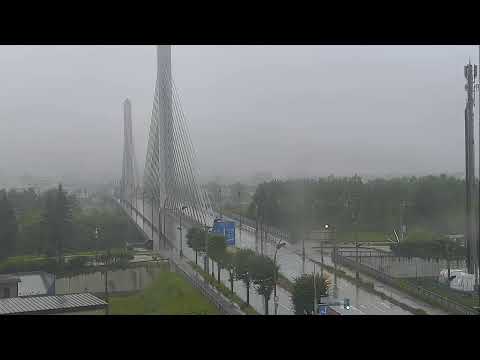
Stay in Tokachi with Tokachi-Obihiro Airport, Tokachichuoo Bridge, and Tokachi Ohashi Bridge — air and river crossings that complete the regional map.
Frequently Asked Questions
Which trains serve Obihiro Station?
JR Hokkaido Nemuro Main Line — including Tokachi and Ōzora limited expresses and local services.
When was the current station built?
The elevated station opened in 1996, replacing the earlier structure dating to 1905 origins.
Can I see trains clearly on this camera?
Yes — the overview includes tracks and platforms near the 1996 station building when framing aligns.
Is Obihiro near Sapporo?
About three hours by train — Obihiro is eastern Hokkaido, not a suburb of Sapporo.
What is Tokachi famous for?
Agriculture — dairy, beef, beets, beans, and wide plain landscapes — plus Butadon pork bowls in Obihiro.
Does the stream work in winter?
Usually, yes — snow is common; outages happen during severe maintenance or connectivity issues.
What closed lines once connected here?
The Hiroo Line and Shihoro Line closed in 1987 — part of rural branch retrenchment.