
Western Honshu’s bullet-train spine bends through a city that the world knows for one terrible morning — and for how it answered that morning with memory, rebuilding, and an insistence on peace. Hiroshima Station is where that story meets everyday Japan: shinkansen banks, commuter tides, hotel buses heading toward Miyajima, and a station district that keeps reinventing its commercial skin while the tram line finally learns to live inside the building again. A live camera here is not a platform pole; it is a window onto a gateway where grief, tourism, and ordinary Tuesday commuting share the same pavement.
About This Live Camera
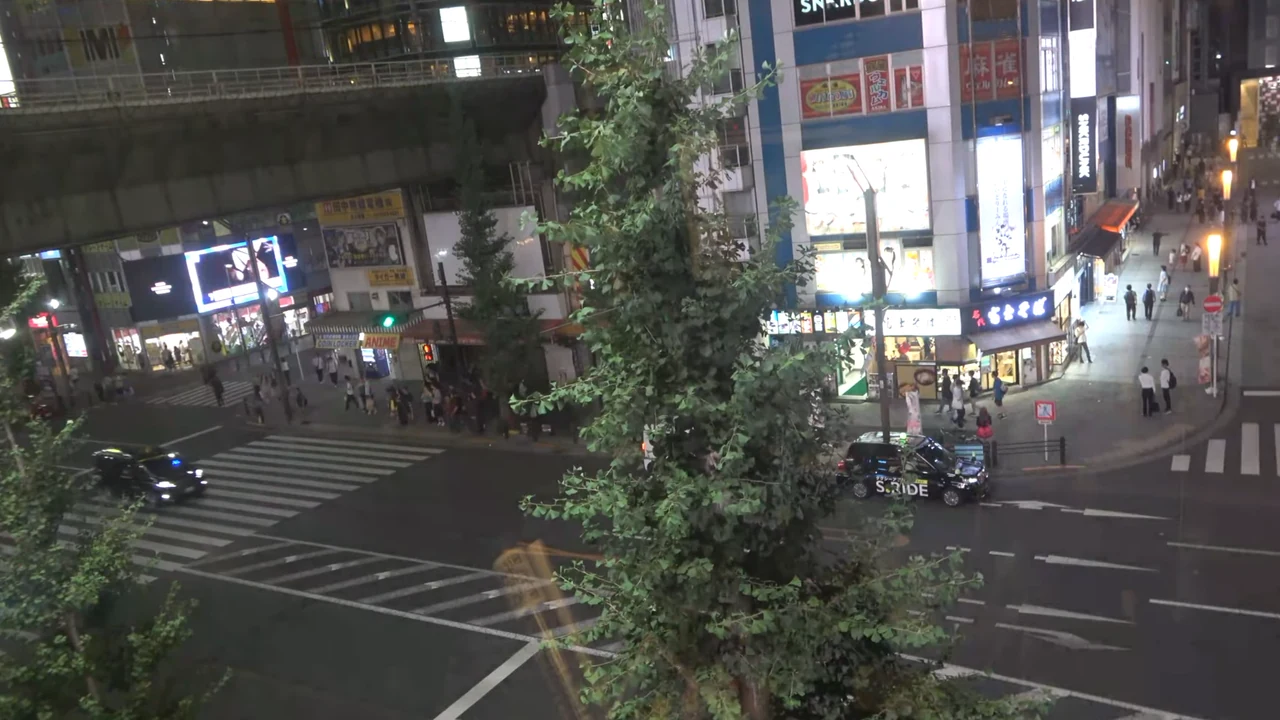
The stream looks out over Hiroshima Station’s public face in Minami-ku — the sort of wide-angle urban view where taxis queue, pedestrians cross toward ekie and the newer minamoa commercial stack, and the rhythm of arrivals from Osaka, Okayama, and Hakata becomes visible as human motion rather than timetable numbers. You will not always see nose cones or platform announcements; you will see what a major Sanyo Shinkansen hub feels like from the outside: suitcases, school groups, peace-pilgrim backpacks, and locals who treat the station as their neighborhood’s living room.
Treat the feed as a documentary lens on station-city life during one of the most consequential rebuild cycles in Hiroshima’s postwar history — the transition from the ekie era toward minamoa, which opened 24 March 2025, and the Hiroden streetcar integration into the station building from August 2025.
What You Can See in the Live View
Expect a mix of pedestrian flow, road traffic at the station’s edges, bus and taxi movement, and the architectural backdrop of a major JR West terminal. Morning peaks show commuters streaming toward the Shinkansen concourse; midday brings tour groups with lanyards and rolling luggage; evening returns students, office workers, and visitors who spent the day at the Atomic Bomb Dome or Peace Memorial Park. Weather writes the mood quickly — summer heat haze, typhoon-season umbrellas, winter clarity that makes glass façades sharp.
When major travel days hit — Golden Week, Obon, New Year — the frame fills with family clusters and long taxi lines. After rain, wet paving reflects neon from retail signage; on clear evenings the station glow becomes a soft beacon for anyone navigating Hiroshima for the first time.
Where Is Hiroshima Station?
The station sits in Minami-ku, Hiroshima City, at the heart of Hiroshima Prefecture on the Seto Inland Sea side of western Honshu. Geographically it anchors the urban south of the prefecture, with the Ōta River basin nearby and Miyajima (Itsukushima) reachable by train and ferry combinations that many visitors treat as a second-day ritual after the peace sites.
On the rail map, Hiroshima is the hinge between east — Tokyo, Nagoya, Kyoto, Shin-Osaka, Okayama along the Sanyo Shinkansen — and west — Yamaguchi, Kokura, and Hakata in Fukuoka. Local JR lines, the Geibi and Kabe branches, and the Hiroshima Electric Railway (Hiroden) streetcar network all converge here, which is why the station feels less like a single building and more like a small district.
History: From Ruins to a “People’s Station”
Rail arrived in Hiroshima in the late nineteenth century, and the city’s station grew with Japan’s modernization. The atomic bombing of 6 August 1945 destroyed the earlier station infrastructure along with much of the city center. Reconstruction was not only about tracks and roofs; it was about proving that a devastated city could move again.
The current station building’s lineage is often discussed in the 1965 “people’s station” era — a postwar architectural statement meant to feel open and civic rather than merely functional. For decades that identity carried Hiroshima through Japan’s high-growth decades, the shinkansen age, and the rise of peace tourism as a moral and economic fact of the city’s global image.
Commercial layers stacked on top: shopping and dining complexes turned arrival into retail. ekie (opened in the 2017 era) became the familiar name for much of that station-city energy. ASSE, an older adjacent commercial identity, closed in 2020, marking the end of one retail chapter and the beginning of planning for what would become minamoa — the new south-side station building that opened 24 March 2025, reshaping façades, flows, and the visual grammar this camera captures.
From August 2025, Hiroden trams began integrating into the station building itself — a long-awaited stitching of streetcar culture into the JR hub. For watchers who remember older Hiroshima visits, that change is as symbolic as it is practical: the tram is no longer something you walk far to find; it becomes part of the same breath as the shinkansen.
Why Hiroshima Station Is Worth Watching
Because it is one of western Japan’s great rail crossroads — the mirror image of Hakata Station Square at the Kyushu end of the same bullet spine. Because peace tourism makes this station unlike any other gateway in Japan: a significant share of passengers are not rushing to a meeting; they are walking toward history with deliberate slowness. Because the 2025 minamoa opening means the live view may show scaffolding one month and polished new retail the next — urban change in real time.
Compare with Tokyo Station Marunouchi for the eastern capital’s shinkansen theater, or Hankyu Osaka-Umeda for Kansai’s private-rail retail gravity. Hiroshima’s story is shinkansen efficiency plus moral geography.
Daily Life Around the Camera
Weekday mornings belong to commuters and students. Midday shifts toward tourists shuttling between the station, streetcar lines, and the peace park. Evening brings return traffic — office workers, hotel check-ins, and groups planning Miyajima for tomorrow. Hiroshima’s food culture (okonomiyaki debates, oysters in season, local sake from nearby breweries) means many people exit the station already discussing where to eat.
The Hiroden integration changes daily micro-routines: locals who once transferred outside now move through shared concourse logic. Delivery trucks, tour buses, and hotel shuttles compete for curb space in predictable waves tied to shinkansen banks.
Best Time of Day to Watch
- Morning rush (7:00–9:00 JST): commuter documentary energy
- Mid-morning (10:00–11:30): tour groups and cleaner architectural reads
- Late afternoon (16:00–18:00): return peaks and softer light
- Evening (19:00–21:00): neon, hotel traffic, post-sightseeing calm
If you want to feel peace-tourism weight, watch mid-morning on a clear weekday when group travelers move with map apps and quiet purpose.
Best Seasons and Weather
Spring cherry season around Hiroshima is beautiful, though the cam reads it mostly as lighter clothing and longer daylight. Summer is hot and humid — umbrella season overlaps with typhoon approaches that can empty the frame into urgent efficiency. Autumn often brings the kindest light for glass and paving reflections. Winter is milder than Tohoku but can show crisp air after cold fronts; rare snow becomes instant local event energy on the stream.
Seto Inland Sea weather can flip faster than inland basins; a single hour of sun after rain transforms the station district’s mood.
Events and Celebrations
Golden Week, Obon, and New Year rewrite passenger volumes. Peace-related anniversaries — especially early August — bring solemn pilgrimage traffic even when no official ceremony appears in the camera frame. Local festivals, sports travel, and school trip season (spring and autumn) produce recognizable waves of matching backpacks and flags.
When the station hosts promotional events, seasonal décor, or disaster-preparedness drills, the public space in view can temporarily become a stage. The livestream is how remote viewers notice “something is different today” without a press release.
Getting There
By shinkansen: Sanyo Shinkansen services stop at Hiroshima — from Shin-Osaka roughly 90 minutes, from Hakata roughly 65 minutes on the fastest trains (times vary by service). By air: Hiroshima Airport connects by bus to the station area. By streetcar: Hiroden lines radiate across the city; post-2025 integration puts trams inside the station building’s logic. On foot: the Atomic Bomb Dome and Peace Memorial Park lie within a walk or short tram ride — many visitors intentionally choose Hiroshima Station as their base camp.
Inside the complex, follow signage carefully: shinkansen, local JR, Hiroden, and commercial floors stack vertically; the camera’s outdoor face is only one layer of a deep facility.
Interesting Facts
- Major Sanyo Shinkansen hub connecting east (Tokyo/Osaka direction) and west (Fukuoka/Hakata).
- Earlier station destroyed in the 1945 atomic bombing; the 1965 era building is tied to “people’s station” postwar identity.
- ekie commercial complex defined much of the 2017-era station retail face.
- ASSE closed 2020; minamoa new south station building opened 24 March 2025.
- Hiroden tram integration into the station building from August 2025.
- Gateway for Peace Memorial Park, Atomic Bomb Dome, and Miyajima tourism.
- One of JR West’s busiest passenger environments in the Chugoku region.
How to Watch a Peace Gateway Station
Track luggage type: rolling suitcases with lanyards often mean international peace tourism; briefcases and commuter bags mean local rhythm. Notice taxi queue length after shinkansen banks — a rough indicator of arrival intensity. Compare weekday morning density with Sunday afternoon; the same architecture tells two different Hiroshima stories.
When new façades appear near the minamoa opening era, watch how pedestrians reroute — urban design audits itself in live video. Typhoon approaches show honest emptying of open space; recovery after storms shows Hiroshima’s practiced resilience.
Shinkansen Geography in One Frame
Hiroshima sits midway on the Sanyo spine — close enough to day-trip Osaka, far enough from Hakata to feel like a distinct Chugoku capital. The camera will not show train numbers, but you can infer service waves: early Hakata-bound business traffic, midday tour groups, evening returns from same-day Miyajima loops. Pair mentally with Hakata’s square cam for westbound end-of-line energy and with Tokyo Station for the eastern bookend.
Peace tourism adds a emotional layer no timetable encodes. Watch for groups moving slowly toward tram stops — they may be heading to the dome before they have spoken a word on camera.
Retail Rebuild Watching
The ekie-to-minamoa transition is a rare chance to watch station-city rebranding live. Signage changes, new tenant openings, and construction barriers appear and disappear on weeks-long cycles. ASSE’s closure in 2020 left a commercial gap; minamoa’s 2025 opening fills it with a new architectural voice. If you visited Hiroshima years ago, the stream may look unfamiliar — that unfamiliarity is the story.
Nearby Live Cameras
Pair with Hakata Station Square for the Kyushu end of the Sanyo Shinkansen, Hankyu Osaka-Umeda for Kansai rail-retail gravity, and Tokyo Station Marunouchi for the eastern capital hub contrast.
One More Reason to Leave It Open
Hiroshima Station proves that infrastructure can carry memory without stopping motion. Commuters still rush; tourists still pause; trams still ding — all in a city that asks the world to remember. An hour on this feed teaches more about contemporary Hiroshima than a sterile platform photo: you see how peace, commerce, and ordinary life negotiate the same sidewalk.
Frequently Asked Questions
Is Hiroshima Station the same as the Peace Park?
No. The park and Atomic Bomb Dome lie north of the station area — reachable by tram, bus, or walk. The station is the transport gateway many visitors use first.
Can I see shinkansen trains from this camera?
Usually not on platforms. The stream shows the station’s outdoor public and traffic face rather than track-level views.
What is minamoa?
The new south-side station building and commercial complex that opened 24 March 2025, succeeding much of the ekie-era south retail story.
When did Hiroden trams enter the station building?
Integration into the station building began from August 2025 — check current local signage if you are planning a visit.
How far is Miyajima from the station?
Typically 25–40 minutes depending on train and ferry connections — a common second-day itinerary after peace sites.
Why compare Hiroshima with Hakata on live cams?
Both anchor the same Sanyo Shinkansen corridor — Hiroshima faces the Seto Inland Sea and peace tourism; Hakata faces Kyushu and ramen-city energy. Watching both explains western Japan’s bullet-train personality.