
Osaka’s north gate is not a single building — it is a knot. Hankyu Osaka-Umeda Station sits inside that knot with JR Osaka, Hanshin, subways, and enough retail floor area to qualify as a weather system. A live camera here catches decks and bridges where commuters become shoppers: the Hankyu–Hanshin connecting deck, Umeda New Pedestrian Bridge grammar, National Route 176 running below, bus stops, and the commercial gravity of Hankyu’s flagship department-store world. If Dotonbori is Osaka’s night grin, Umeda is Osaka’s daily engine.
About This Live Camera
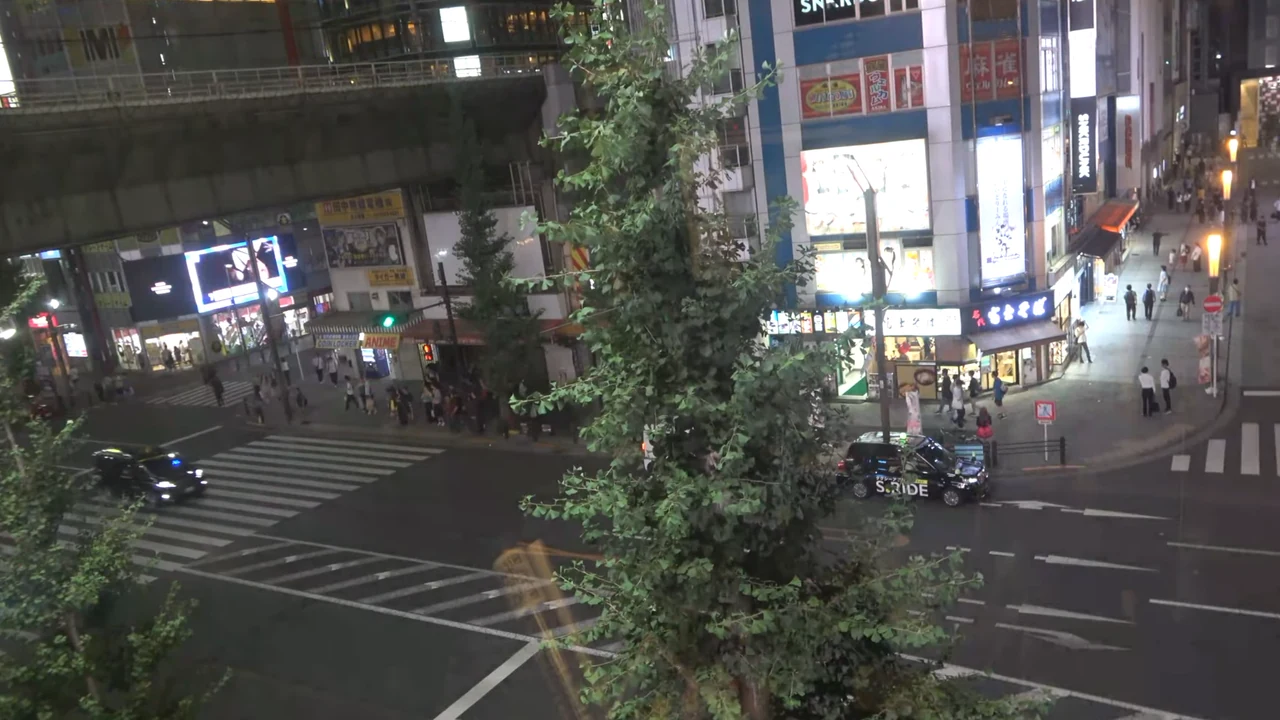
The stream overlooks Hankyu’s Umeda face and the elevated pedestrian / road sandwich typical of the district — rails and platforms implied nearby, people and vehicles explicit in frame. Expect transfer crowds, taxi and bus motion, shopping bags as seasonal flags, and the vertical signage of a terminus that helped invent Japan’s railway–department store model. Uptime depends on the source; rain turns decks into mirror theatres.
This is a traffic-and-people cam more than a platform-spotting cam. The trains are the reason; the street-deck ballet is the show.
What You Can See in the Live View
Pedestrian flows across connecting structures. Vehicles on Route 176 beneath. Buses at Osaka Eki-mae style stops. Umbrella blooms in rainy season. Lunchtime suit density. Evening date outfits heading toward restaurants and halls. Department-store carrier bags that quietly announce which floor won. Construction skins and temporary signage — Umeda is forever mid-renovation somewhere.
Night brightens advertising and softens faces. New Year eve can look like a human river with destinations.
Where Is Hankyu Osaka-Umeda?
Kita Ward, Osaka City — the Umeda business and shopping pole at the city’s north, distinct from Minami’s Namba/Dotonbori theatre. Hankyu lines radiate toward Kobe, Takarazuka, and Kyoto directions depending on route, feeding suburbs that were co-developed with the railway’s twentieth-century growth model. JR Osaka Station and Osaka Station City complex sit as siblings in the same transfer jungle; getting “slightly lost in Umeda” is a local rite of passage.
History: Asia’s Terminal Department Store Idea
Hankyu’s Umeda story begins with early twentieth-century rail (roots in the Minoo-Arima Electric Tramway era, station lineage from 1910). The company pioneered pairing terminus and retail: Hankyu Mart in the 1920s, then a full Hankyu Department Store by 1929 — often cited among Asia’s first major terminal department stores — under the entrepreneurial mythology of Ichizo Kobayashi. The station itself moved and rebuilt across decades (notably toward today’s elevated configuration completed in phases around 1971) while the department store kept occupying the historic commercial site logic. A major flagship rebuild culminated in a reopening era around 2012, reinforcing Umeda as western Japan’s fashion and lifestyle billboard.
Hanshin rivalry next door eventually folded into group history; connecting decks make that corporate peace visible as foot traffic.
Why Watch Umeda Live
Because you can see Japan’s commute-retail hybrid in pure form. Because Osaka’s humour and hurry look different from Tokyo’s Ginza polish or Shibuya youth surge. Because Route 176 under a pedestrian city is a diagram of layered infrastructure. Because before a real trip, the cam teaches how dense “station” can mean.
Daily Life Around the Frame
Morning inbound waves. Mid-morning business appointments. Lunch battles for seats you cannot see. After-school uniforms. Payday evenings. Department-store bargain weeks that thicken carrier bags. Last-train anxiety faces after 23:00. Typhoon days that turn decks into wind tunnels and empty the bravado from short skirts and thin suits alike.
Office towers feed the sidewalks; halls and theatres feed the nights; suburbs feed everything via Hankyu’s network.
Best Time of Day to Watch
- Weekday 8:00–9:30: commute crescendo
- Friday 18:00–20:00: outing energy
- Weekend midday: shopping-first choreography
- Rainy evenings: reflections and umbrella choreography
Golden Week and year-end are special episodes of luggage and patience testing.
Best Seasons and Weather
Osaka summers are humid and bright; winter is milder than Tohoku but still coat weather. Cherry season softens nearby parks more than this asphalt deck, yet spring outfits change the crowd palette. Autumn is comfortable walking weather — denser leisure pedestrians. Typhoon season is honest cinema.
Events and Celebrations
Hankyu / Umeda commercial events, Christmas illuminations in the wider Kita area, New Year first-shopping, and concert nights at nearby halls all rewrite density. Sports victory evenings can spill unexpected joy into north Osaka streets. Department-store anniversary campaigns are visible as banner weather.
Getting There
Arrive via Hankyu, JR, Hanshin, or municipal subway — then follow deck signs with humility. Osaka Station City, Lucua, Hankyu, Hanshin, and underground malls form a three-dimensional puzzle. For visitors, picking one landmark meeting point (a specific bridge, a BIG MAN-adjacent myth, a department-store entrance) prevents Umeda from eating an hour of chat messages. Airport access via Itami or Kansai depends on your flight; Umeda remains the northern urban reset either way.
Interesting Facts
- Hankyu helped popularize the railway + department store business model in Japan.
- Department store roots at Umeda date to the 1920s–1929 terminal retail breakthrough.
- Station facilities shifted over the twentieth century; major elevated moves completed around 1971.
- Flagship rebuild energy peaked with a 2012-era reopening narrative.
- Route 176 below the decks is a reminder that cars still thread the pedestrian city.
- Umeda and Minami are complementary Osakas — work/shop north, nightlife theatre south.
How to Watch a Deck City
Track directionality: which way do bags flow at 11:00 vs 19:00? Note when bridging structures clog. Use bus-stop pulses as a metronome. When the frame feels chaotic, remember locals are navigating by muscle memory you do not have — the cam is their ordinary Tuesday.
Between Hankyu Pride and Osaka Appetite
Umeda sells fashion and transfer tickets; a short train later, Dotonbori sells grilled chaos. Watching this cam before a food pilgrimage clarifies why Osaka itineraries start with “survive the station” as step one. The city’s kindness often appears as a stranger pointing you toward the correct underground fork.
Stay through a full evening peak if you can. You will see office Japan loosen its tie without anyone announcing it.
Surviving Umeda Before You Arrive
First-time visitors underestimate vertical distance. “I’m at Umeda” can mean JR concourse, Hankyu platforms, Hanshin underground, or a department-store basement that feels like another prefecture. Watch the cam to learn outdoor deck weather — wind, rain splash, crowd compression — then accept that half your real journey will be air-conditioned corridors the lens never shows. Meeting friends? Agree on a named bridge or store entrance, not “the station.”
Hankyu’s historical flex — terminus as department store — still shapes bag traffic. Fashion floors and basement foods create exit waves that have nothing to do with train timetables. When carrier bags suddenly dominate, you are watching retail timetable overtake rail timetable. That is the Kobayashi model still running a century later.
Compare this feed with Dotonbori’s grin on the same night. North Osaka sells transfer and tasteful consumption; south Osaka sells spectacle appetite. The city’s charm is needing both without pretending they are the same neighbourhood.
Nearby Live Cameras
Jump south for neon appetite at Dotonbori Glico, or compare arrival scales with Osaka / Itami airport cams and Itami Airport.
One More Reason to Leave It Open
Umeda is where Osaka proves it is a machine that still has a sense of humour — mostly in how cheerfully it confuses newcomers. Watching decks compress at 18:10 teaches more than another takoyaki photo. If you are building an Osaka itinerary, use this cam to respect Kita’s gravity before you sprint to Minami’s neon. Arrive oriented, eat better, miss fewer trains. The livestream is rehearsal; the station will still test you, but at least you will recognize the weather on the bridge. Bring curiosity, not only a map pin. Osaka forgives lost tourists who look hungry and slightly amused. Follow the bags; they know the exits.
Deck Light, City Character
Umeda’s glow is commercial, not carnival. Signage sells fashion and transfers more than street theatre. If the deck looks almost calm at 15:00, believe it — Kita saves its crush for rails and retail peaks. That restraint is part of Osaka’s northern face.
Frequently Asked Questions
Is Hankyu Umeda the same as JR Osaka Station?
Adjacent pieces of the same mega-node, different companies and platforms. Follow signs; do not assume one exit fits all.
Can I see trains clearly?
Often you see the urban deck and road interface more than platform noses — people and cars are the reliable subjects.
Why is Hankyu historically important here?
It pioneered major terminus department-store retailing that other railways copied across Japan.
Umeda or Namba for first-timers?
Umeda for transport and shopping scale; Namba/Dotonbori for classic visitor nightlife images. Many do both.
Is Route 176 visible?
Yes in the classic framing — the road layer under pedestrian infrastructure.