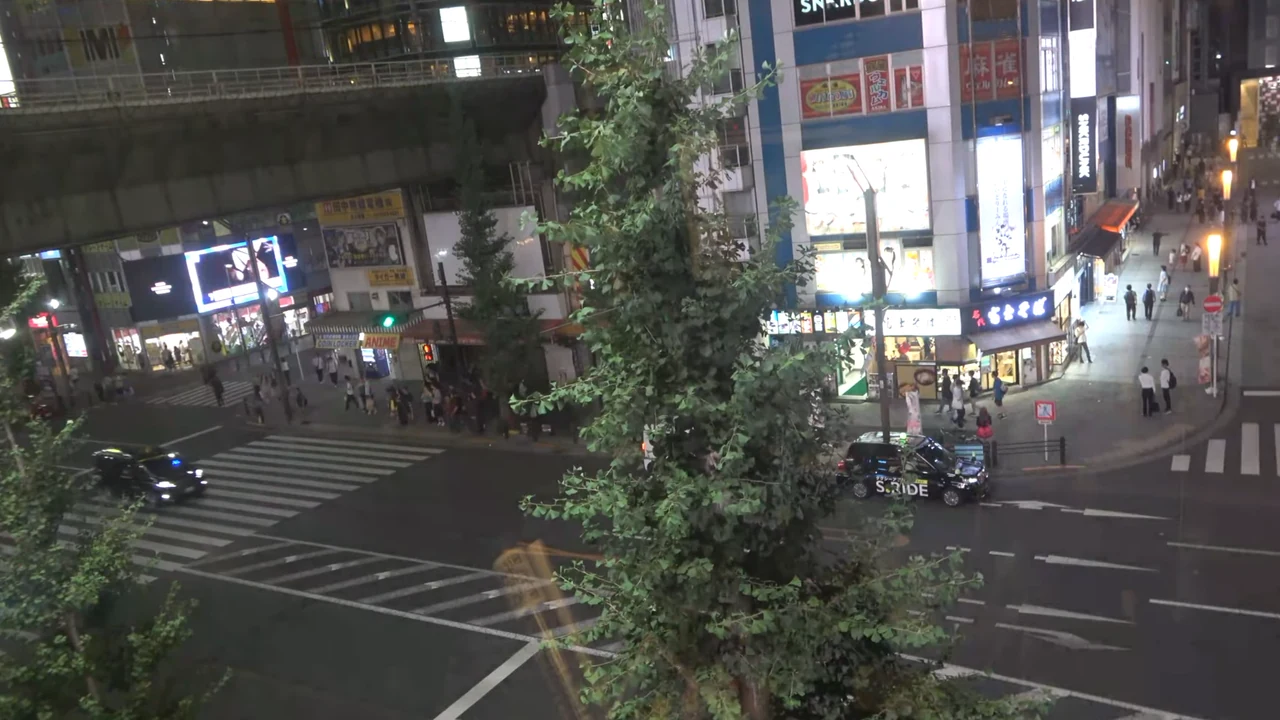

Fukuoka greets Japan and Asia through Hakata Station — Kyushu’s largest and busiest rail hub, shinkansen terminus logic, and a commercial complex that treats arrival as shopping. The station square is not leftover asphalt; it is a designed public room that won recognition (including Good Design Award attention around 2011) for making calm possible inside urban hurry. A live camera on that square watches Kyushu’s front door breathe.
About This Live Camera
The stream overlooks Hakata Station’s plaza / commercial façade world in Hakata Ward, Fukuoka City, with movement toward Sumiyoshi-dori in the southern street grammar. Expect buses, taxis, event setups, suitcase tides, and the glass-and-deck language of the modern station city built up especially around the 2011 Kyushu Shinkansen full-connection era and JR Hakata City commercial expansion.
Hakata has two psychological faces: the busier Hakata Exit toward Tenjin/Nakasu, and the often quieter Chikushi Exit nearer some shinkansen practicalities. The livestream’s “square” identity is the public outdoor stage where those flows become visible.
What You Can See in the Live View
People as weather. Morning commute out; evening return; midday tourists negotiating ekiben and hotel buses. When the square hosts concerts, promotions, or seasonal events, the furniture of daily transit becomes a temporary amphitheater. Rain produces umbrella fields; clear evenings turn the façade into a soft beacon.
You are watching infrastructure that doubled as urban design thesis: station as destination, not only portal.
Where Is Hakata Station?
In Hakata-ku, Fukuoka, on northern Kyushu — about two kilometers from Tenjin’s commercial core, with subway links and a famously short hop toward Fukuoka Airport compared with many world cities. Sanyo/Kyushu shinkansen services make Hakata the hinge between Honshu’s bullet spine and southern Kyushu. Local and limited express rails fan across the island. Streetcars and buses complete the last mile into ramen arguments and canal nights.
History: Gateway Remade
Hakata’s rail importance grew with Kyushu’s modernization; the contemporary explosion of station-city retail and plaza quality accelerated with shinkansen connectivity and the Hakata City complex openings around 2011. Awards for landscape and design followed because Fukuoka bet that a station square could feel humane. Ongoing Hakata Connected urban policy keeps pushing vitality from the station outward into a ~500 m radius of redevelopment — Hakata side and Chikushi side both in long conversation about balance.
Watching the square live is watching that bet’s daily audit.
Why Hakata’s Square Matters
Because first impressions of Kyushu often happen here. Because the plaza hosts community programming unusual for pure transfer factories. Because Fukuoka’s food fame (tonkotsu ramen wars, mentaiko, yatai culture nearby) means arrivals frequently exit hungry and oriented. The cam cannot smell tonkotsu; it can show the body language of people who are about to go find it.
Daily Life Around the Camera
Weekday peaks are sharp. Weekend leisure bags replace briefcases. Golden Week suitcase armies appear. After major concerts or SoftBank Hawks-adjacent city energy, night flows thicken. Typhoon approaches empty the square into tense competence — Kyushu knows weather has opinions.
Compare a quiet Tuesday 11:00 with a Friday 18:30: same paving, different novel.
Best Time of Day to Watch
- Morning rush: documentary Kyushu commute
- Evening peak: maximum human theater
- Event afternoons: plaza as stage
- Late night: residual neon and last transfers
If you want design appreciation, watch a clear mid-morning when event clutter is low and architecture reads.
Best Seasons and Weather
Spring and autumn are kind. Summer humidity is a character; evening light can still flatter glass. Winter is milder than Tohoku but clear air helps long street views down Sumiyoshi-dori. Rainy season greys the square into soft focus; the flow continues.
Events and Celebrations
Official and pop-up plaza events are the calendar. New Year travel, Obon, and university rhythms rewrite volumes. When Hakata hosts big city festivals, the station square becomes a spill valve. The livestream is how remote viewers catch whether “something is on” without a press release.
Getting There
Arrive by shinkansen, JR, subway, highway bus, or the quick airport link that makes Fukuoka unfairly convenient. Inside the complex, follow signs to the square / bus terminal decks carefully — Hakata is large enough to punish complacency. For Tenjin, subway or walk/bus; for Canal City and old Hakata streets, follow pedestrian networks the city keeps improving.
Interesting Facts
- Largest / busiest station character on Kyushu.
- Plaza design recognized around the 2011 station-city era (Good Design Award mentions in public materials).
- Shinkansen hinge between Honshu and southern Kyushu.
- Hakata vs Chikushi exits have different urban personalities.
- Hakata Connected policy aims to spread station vitality into surrounding blocks.
- Airport proximity is a Fukuoka superpower vs many peer cities.
- Station retail makes “I just arrived” and “I’m already shopping” the same sentence.
How to Watch a Gateway Square
Track suitcase-to-briefcase ratios. Note when stages appear. Watch taxi queue length as an economic indicator of arrival banks. Over days you will feel Fukuoka’s tempo — often cited as more open and faster-social than some Kansai/Kanto stereotypes — without leaving your chair.
Ramen Gravity Field
Every Hakata cam eventually becomes a food story. People do not only transfer here; they hunt bowls. The square’s outdoor calm is the deep breath before subterranean and side-street hunger. If the evening crowd looks purposeful in a non-commute way, they may be navigating toward tonkotsu destiny. That is not a joke analysis. It is Fukuoka.
Stay through a weather change if you can. Kyushu light flips quickly; the square’s mood flips with it. One hour of sun after rain can turn glass into celebration. Listen with your eyes for suitcase wheels after shinkansen banks — the plaza’s soundtrack you cannot hear still shapes how people cluster near edges and exits.
Gateway Economics You Can See
Hakata is where Kyushu’s shinkansen story becomes sidewalk. Full line connection era energy (around 2011) and the JR Hakata City commercial stack turned arrival into retail gravity. Watch how many people exit the building already holding bags — the station is a mall that happens to move trains. Event stages on the square convert transit leftover space into civic living room: product launches, seasonal décor, occasional performances. When barriers and tents appear, the cam becomes an events channel.
Bus bays and taxi ranks along the edges are the square’s working frame. Tour groups cluster under flags; solo travelers triangulate convenience-store caffeine. Late evening thins the plaza into something almost gentle — neon from the complex, fewer suitcases, the city inhaling. Typhoon approach days empty the open space with honest urgency; Kyushu weather is not a metaphor here.
Compare Hakata Exit hustle in your mind with Chikushi Exit’s different practical mood even when the lens only shows one face. Fukuoka’s polycentric life — Tenjin shopping, Nakasu night, airport closeness — all funnel through this concrete welcome mat.
Watching Tips for Rail Fans and Food Pilgrims
Rail fans may never see nose cones, but they can time human pulses to timetable banks and holiday peaks. Food pilgrims should treat the square as a staging area: note when evening purposeful walking replaces commute shuffle — that is often ramen o’clock. If you are planning a real trip, use the cam to judge umbrella necessity and crowd patience before you commit to a same-day airport-to-bowl itinerary. Fukuoka rewards speed; the square shows whether speed will feel joyful or bruised.
Nearby Live Cameras
Pair with Fukuoka Airport and Tenjin Watanabe-dori, or jump to Nagasaki Port for another Kyushu waterfront grammar.
One More Reason to Leave It Open
Hakata’s square is a rare livestream where “nothing happening” still teaches urban design. Empty paving after a rain shower shows how the plaza drains and gleams; a single musician or promo tent reveals how quickly the space can switch from transit leftover to stage. If you are choosing Fukuoka over other Kyushu entries, watch one weekday commute and one Sunday noon — the difference explains why locals defend this gateway as livable, not merely large.
Frequently Asked Questions
Is Hakata Station in a different city from Fukuoka?
Hakata is a ward of Fukuoka City — station name preserves the historic place name.
Which exit should visitors use?
Hakata Exit for Tenjin/Nakasu energy; Chikushi Exit for certain shinkansen/practical approaches. Follow your hotel’s advice.
Why does the square sometimes look empty of cars but full of people?
It is designed as pedestrian-priority public space with transit edges — events amplify that.
Can I see shinkansen from this cam?
Usually the plaza/commercial face, not platform noses. The station’s bullet identity is felt as people flow.
Is Fukuoka Airport really close?
Yes by Japanese big-city standards — subway/road links are a major convenience.
What should I notice first on the stream?
Look for how the plaza holds people without choking them — benches, open paving, event kit. Then watch the edges where buses and taxis remind you this calm is engineered, not accidental. That double read is Hakata’s design lesson.