
Yamanashi Prefecture is Japan’s fruit bowl seen from a train window — vineyards on terraces, peach orchards in neat rows, hot-spring steam above river towns, and the Kofu basin holding all of it in a ring of mountains. This live camera does not show Mount Fuji head-on; it shows something rarer for rail fans: an honest level crossing on the JR Chuo Main Line between Kasugaichō and Isawa-Onsen, where locals, express services, and freight share tracks through Fuefuki city. Tokujo crossing No.83 is the star — barriers down, JST clock ticking in the corner, and Japan’s interior freight-and-passenger grammar passing at eye level.
About This Live Camera
The stream is a fixed HD view of railroad activity on the Chuo Main Line in Fuefuki, focused on Tokujo level crossing No.83 (often labeled No.83 in Japanese crossing numbering) on the stretch between Kasugaichō Station and Isawa-Onsen Station. A Japan Standard Time overlay sometimes appears in the lower right — useful for correlating trains with public timetables. Expect a rural-suburban crossing aesthetic: road, barriers, signal posts, occasional farm trucks waiting, and the mountains of the Kofu basin as backdrop.
This is not Tokyo’s Chuo rapid chaos; it is the main line’s Yamanashi personality — wine country, onsen town access, and the slower pulse of a prefecture that feeds Japan peaches and grapes.
What You Can See in the Live View
When barriers lower, watch for local trains stopping pattern logic, limited express services moving at higher speed, and freight consists that remind you the Chuo Main Line is still a logistics artery into the interior. Seasonal light changes vineyard and orchard colours on the margins of the frame. Summer haze softens mountains; winter can bring crisp air and occasional snow on distant peaks.
Pedestrians and cyclists occasionally wait at the crossing — daily Fuefuki life intersecting national rail infrastructure. Agricultural vehicles appear during harvest windows; tour buses are rarer here than at Fuji-facing stations but still possible in onsen season.
Where Is This Crossing?
Fuefuki city lies in eastern Yamanashi Prefecture in the Kofu basin — the same broad valley that holds prefectural capital Kofu and famous hot-spring town Isawa Onsen. The camera sits on the JR Chuo Main Line segment between Kasugaichō (north/east along the line toward Kofu) and Isawa-Onsen (south/west toward the onsen district and onward toward Kōfu Station and eventually the Nagano/Matsumoto direction).
Geographically you are inland on Honshu, south of the high Fuji approaches that Fujikawaguchiko cameras celebrate, but still within Yamanashi’s fruit-and-wine identity. The Kofu basin is a classic intermontane plain — hot in summer, cold in winter, with viticulture on slopes that photographs beautifully even when this cam stays locked on rails.
History: The Chuo Main Line Through Wine Country
The Chuo Main Line is one of Japan’s great cross-island projects — conceptually linking Tokyo and Nagoya through the Japanese Alps’ southern approaches, with the Yamanashi section serving Kofu and the industrial and agricultural heart of the prefecture. The line’s history is one of gradual completion, tunnel engineering, and the elevation of Isawa Onsen as a classic Meiji-and-after resort destination.
Fuefuki itself was formed in modern municipal mergers and is now known nationally for peaches, grapes, and wine — Koshu wine country branding appears in station posters and roadside signs you cannot read on the cam but can infer from harvest-season traffic. Level crossings like Tokujo No.83 are remnants of an era when road and rail were woven tightly through farmland; they remain because rerouting every crossing in a basin plain is slower than living with barriers and bells.
Why This Camera Is Worth Watching
Because level-crossing cams are Japan’s unscripted rail television — no platform announcements, just motion and timing. Because Fuefuki is not the Fuji postcard; it is the working agricultural Chuo that tourists skip when they chase lakes. Because freight plus passenger on the same line teaches how JR East/JR Central operational territories feel in the interior (this section is JR East network grammar east of Shiojiri, but the whole Chuo story spans multiple regions — watchers learn geography by accident).
Pair with Chuo Line Hino, Tokyo for the metropolitan rapid end of the name “Chuo,” and with Fujikawaguchiko Mount Fuji for the tourism face of the same prefecture.
Daily Life Around the Crossing
Morning school commutes and farm supply runs share the road with rail. Midday quiets down — heat shimmer in summer. Afternoon brings occasional express passes that compress waiting time into a wind rush. Evening returns locals from Kofu jobs; onsen guests shuffle toward ryokan check-ins at Isawa. Freight often runs at hours passenger tourists forget — night watchers sometimes catch illuminated consists.
The JST overlay makes it easy to log sightings if you maintain a notebook of train types — a hobby subculture this cam feeds directly.
Best Time of Day to Watch
- Early morning: freight and first commuter locals; cooler light
- Midday: fewer trains but clearer mountain backdrop
- Late afternoon: express services and golden-hour colour on fields
- Night: freight potential; crossing signals as primary light source
Weekends can differ subtly from weekdays — less commuter rhythm, more leisure traffic toward onsen.
Best Seasons and Weather
Spring brings blossom lines along roadsides and soft mountain colour — peach bloom season is a cultural event in Yamanashi even if this frame stays rail-centric. Summer is hot in the basin; thunderstorms can pause video or reduce visibility. Autumn is harvest season — grapes and peaches move by truck; rail freight sometimes feels busier. Winter snow is more common on surrounding peaks than on the crossing itself, but cold fronts sharpen the air and improve long sightlines.
Typhoons that clip Honshu may disrupt services — the cam becomes an honest outage indicator when barriers stay up and hours pass trainless.
Events and Celebrations
Local harvest festivals and wine events in Fuefuki and Kofu do not usually happen at the crossing, but they rewrite road traffic patterns you may sense indirectly. Isawa Onsen festival seasons and long weekends increase passenger train frequency. Golden Week and Obon produce family travel clusters at Kasugaichō and Isawa-Onsen stations — minutes later they appear as crossing waits on foot or in cars.
Getting There
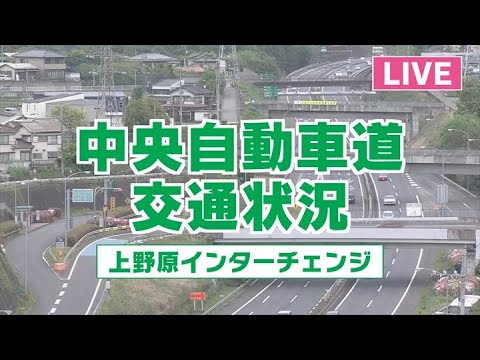
By train: JR Chuo Main Line to Kasugaichō or Isawa-Onsen — walk or taxi to crossing No.83 only if you respect private property and safety rules; level crossings are not tourist platforms. By car: Chuo Expressway connections via Kofu — the Uenohara Chuo Expressway cam watches a different Chuo grammar but pairs mentally. From Tokyo: Limited express services (names and schedules change by era) historically linked Shinjuku and Kofu — check current JR timetables.
Never trespass on tracks to replicate the camera angle; watch online precisely because rails are dangerous up close.
Interesting Facts
- Camera shows Tokujo crossing No.83 between Kasugaichō and Isawa-Onsen on the JR Chuo Main Line.
- Fuefuki is a major peach and grape producer and part of Koshu wine country.
- Isawa Onsen is one of Yamanashi’s classic hot-spring destinations — rail-accessed for over a century.
- The Kofu basin is an intermontane plain surrounded by mountains including the Southern Alps approaches.
- Express, local, and freight trains all use this corridor — rare triple mix on one crossing cam.
- JST time overlay sometimes appears on stream — helpful for trainspotting logs.
- Same prefecture as Fuji tourism, different economic face: agriculture and wine over postcards.
How to Watch a Level Crossing Like a Pro
Learn barrier cycle timing — how long between drop and rise tells you train speed class before you see nose paint. Note freight locomotive families versus passenger EMU silhouettes. Use the JST clock to mark repeats — regular freight slots become predictable within a week of casual watching.
Compare soundless video with official timetables online; you will start to recognize Azusa/Kaiji-class patterns versus pure locals. When mountains vanish into white summer haze, do not refresh aggressively — humidity is part of basin life.
Fruit Belt Rail Culture
Fuefuki’s identity is edible — peaches famously gifted in summer, grapes for tables and cellars, wine tourism that grows yearly. The crossing cam will not show orchards prominently, but harvest trucks waiting at barriers are seasonal proof. Isawa Onsen’s ryokan culture means evening train sets sometimes carry luggage-heavy passengers who walked from the station — human detail at the crossing edge if you watch long enough.
Chuo Line Name Confusion Worth Knowing
“Chuo” appears in Tokyo rapid services and in this Chuo Main Line interior mainline — related branding, different segments. Watching this cam alongside Chuo Line Hino clarifies how one name spans commuter misery and mountain freight poetry.
Nearby Live Cameras
Compare with Fujikawaguchiko Mount Fuji for Fuji-facing tourism, Chuo Line Hino, Tokyo for metropolitan Chuo rapid life, and Uenohara Chuo Expressway for highway grammar parallel to the same broad corridor.
One More Reason to Leave It Open
Level crossings are where Japan’s hidden majority lives — not Shibuya scramble energy, but bells, barriers, and a farmer waiting while an express bound for Kofu slides past. An hour here teaches Yamanashi better than a fruit brochure: rail still stitches the basin together.
Frequently Asked Questions
Is this the same Chuo Line as Tokyo’s Chuo-Sobu rapid?
Related network name, different segment. This cam is JR Chuo Main Line in Yamanashi between Kasugaichō and Isawa-Onsen — not the Tokyo urban rapid view.
Why was the city listed as Fujikawaguchiko before?
The camera is in Fuefuki city — corrected to match the crossing location, not the Fuji resort town.
Can I see Mount Fuji on this stream?
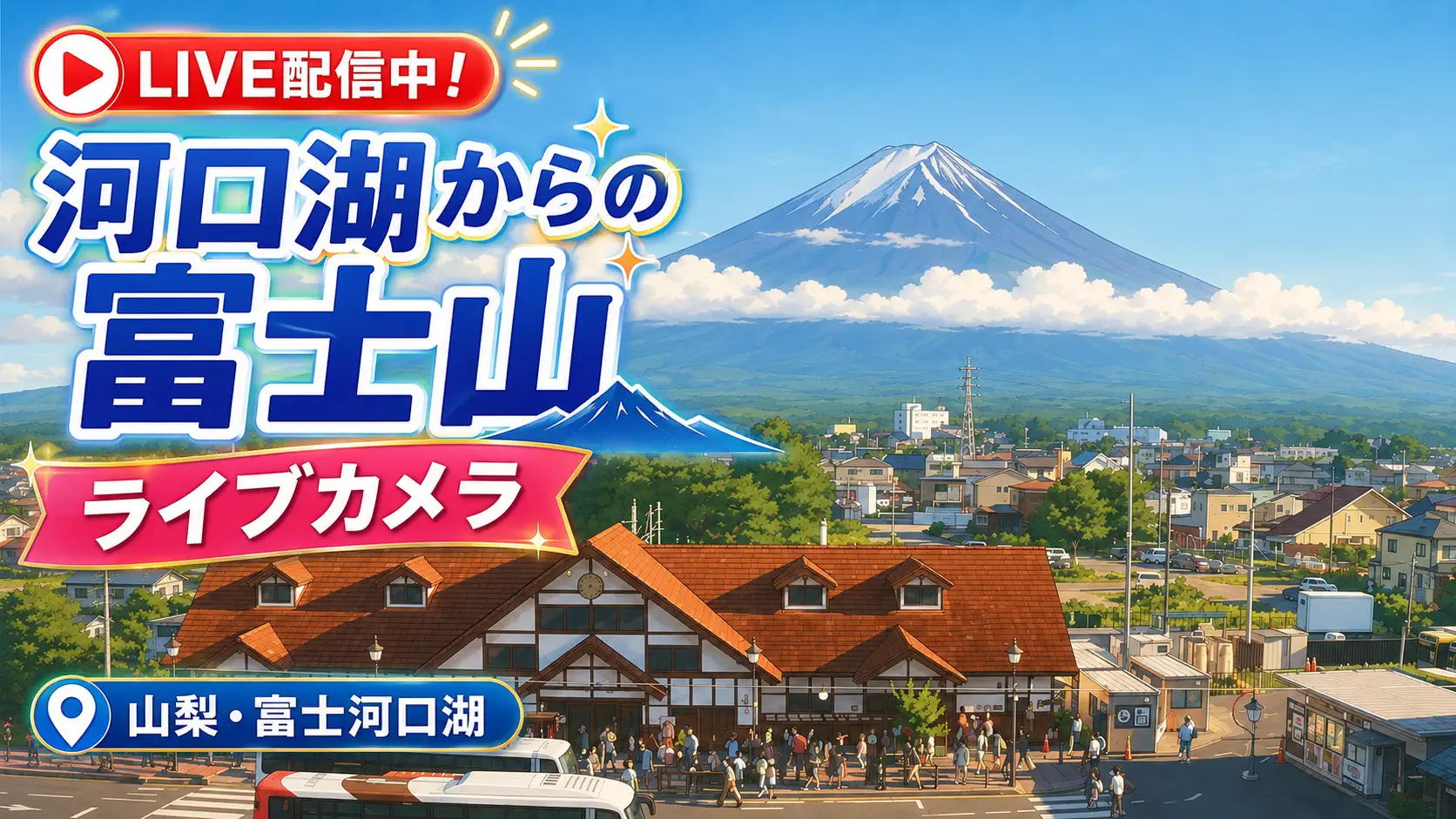
Unlikely as a hero subject. Distant peaks may appear on clear days; for Fuji-dedicated views use Fujikawaguchiko cams.
What trains should I expect?
Local stops, limited express passes, and freight — frequency varies by hour and season; use JST overlay and timetables to learn patterns.
Is Isawa Onsen walkable from this crossing?
The crossing is between stations — onsen hotels cluster near Isawa-Onsen Station to the west along the line. Do not walk tracks; use station paths.
Why watch freight in Yamanashi?
Interior Japan moves cargo by rail more than tourists assume — freight here is the supply chain behind wine, fruit, and basin industry you do not see in Tokyo cams.