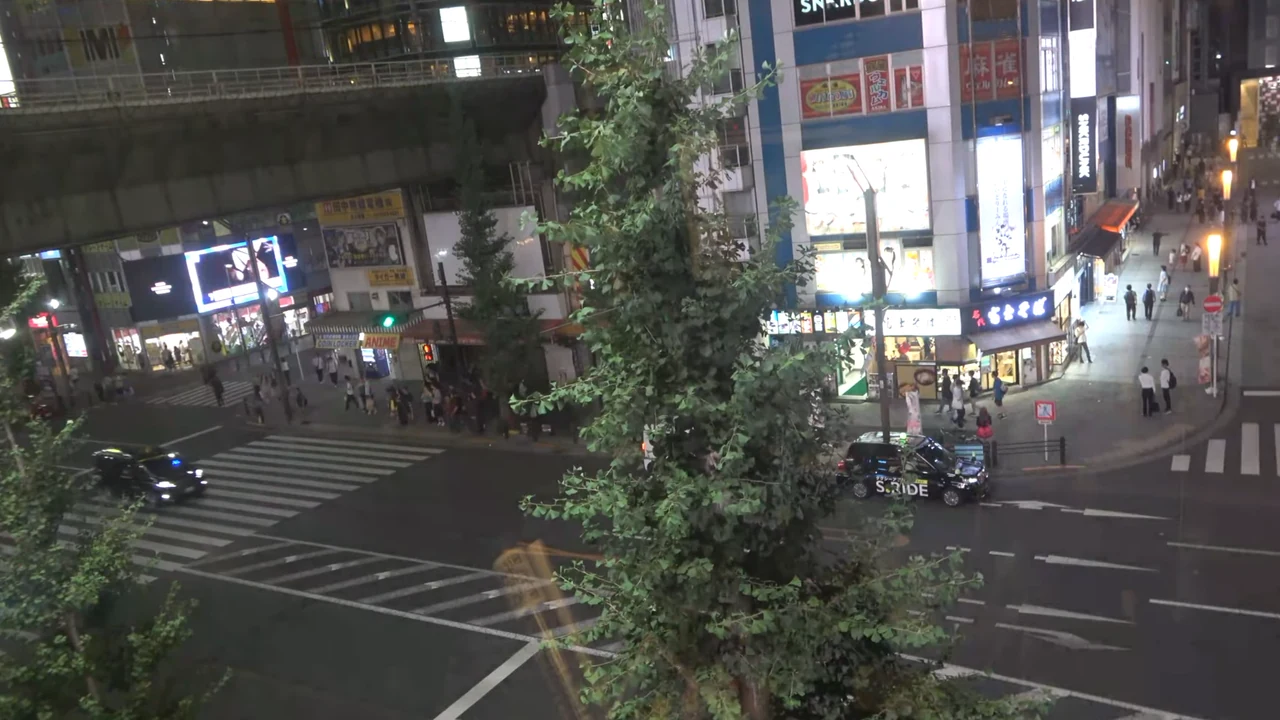

Tokyo’s business core softens at dusk — glass towers pinken, Sumida River mirrors neon, and Tsukiji-Ohashi Bridge carries the last rush-hour tide of taxis toward Ginza. This live camera from Chuo City (中央区), Tokyo’s historic commercial ward, frames sunset over one of the capital’s most layered waterfronts: Hamarikyu Gardens (浜離宮恩賜庭園) tucked against skyscrapers, Kachidoki (勝鬨) high-rises across the channel, Tsukiji (築地) street life beyond the frame edge, and the Tokyo Bay axis opening toward Rainbow Bridge country. Whether you watch for weather, architecture, or pure sky gradient, the feed delivers central Tokyo without Shinjuku’s chaos or Shibuya’s scramble.
About This Live Camera
The stream offers a fixed elevated view across Chuo Ward’s eastern edge — bridge deck, river traffic, and skyline silhouette. YouTube hosts the feed; source attribution links to GoodsSumo.com in the original catalog. Uptime follows broadcaster maintenance; treat overnight quiet as schedule-dependent rather than guaranteed silence.
The camera name promises sunset — and late afternoon through twilight (roughly 16:30–19:00 JST depending on season) is peak value. Midday shows harsh urban clarity; rainy hours show low clouds snagged on Toranomon towers. Audio may include traffic hum when enabled on source.
What You Can See
Tsukiji-Ohashi Bridge (築地大橋) — a 1970s urban link — spans the channel with steady car, bus, and bicycle flow. Below, Sumida River and Tokyo Bay tributary waters carry sightseeing boats, work barges, and occasional fireboats on drill days.
Hamarikyu Gardens appears as tree mass and pond geometry — a 300-year-old feudal garden later Imperial gift, now public oasis surrounded by Shiodome and Tsukiji development. Kachidoki apartment towers punctuate the opposite shore — Bubble-era scale residential walls.
Skyline fragments include Shiodome high-rises, Dentsu building profiles, and distant Bay structures. Sunset paints cumulus apricot; rain turns asphalt river-colored; winter clarity may reveal Fuji from some Tokyo angles though not always from this exact lens.
Location
The camera sits in Chuo City, Tokyo, at approximately 35.656°N, 139.771°E — the ward containing Ginza, Nihonbashi, Tsukiji, Tsukishima, and Hatchobori. Chuo means “central” — historically the merchant and finance heart of Edo and modern Tokyo.
Hamarikyu lies at the mouth of Kyū-Nakagawa channel where Shiodome reclaimed land meets old Tokyo Bay shoreline. Tsukiji Outer Market (築地場外) — post-2018 inner-market move to Toyosu — still draws sushi pilgrims blocks away. Ginza luxury strips sit northwest; Odaiba and Rainbow Bridge lie southeast across bay channels.
Do not confuse Chuo City (中央区) with Chiyoda City (千代田区) — Imperial Palace and Tokyo Station Marunouchi belong to Chiyoda; this sunset cam is Chuo waterfront.
History
Chuo grew from Edo-era canal commerce — Nihonbashi as Japan’s kilometre zero, Tsukiji as temple district turned fish market capital for 300 years. Hamarikyu began as Tokugawa shogunal duck-hunting grounds (Hama Palace), passed to Imperial Household, opened public 1946 after war damage and urban pressure.
Tsukiji-Ohashi Bridge (opened 1974) symbolized high-growth Tokyo — connecting Tsukiji with Harumi development zones as Bay land reclamation accelerated. Shiodome Sift towers replaced JR freight yards in 2000s — the camera’s modern backdrop.
Tsukiji Inner Market relocated to Toyosu October 2018 — ending wholesale tuna auctions at the historic site but leaving outer market restaurants and street culture. Sunset over the bridge now watches transition-era Tokyo: heritage street grid, Olympic-era bay infrastructure, Toyosu glow on horizon.
Why Watch
Because Tokyo sunset is a shared ritual — office workers pause, river buses schedule golden-hour departures, photographers chase mirror moments on water. This cam offers Chuo’s version: not Tokyo Tower icon, not Skytree spike — working waterfront elegance.
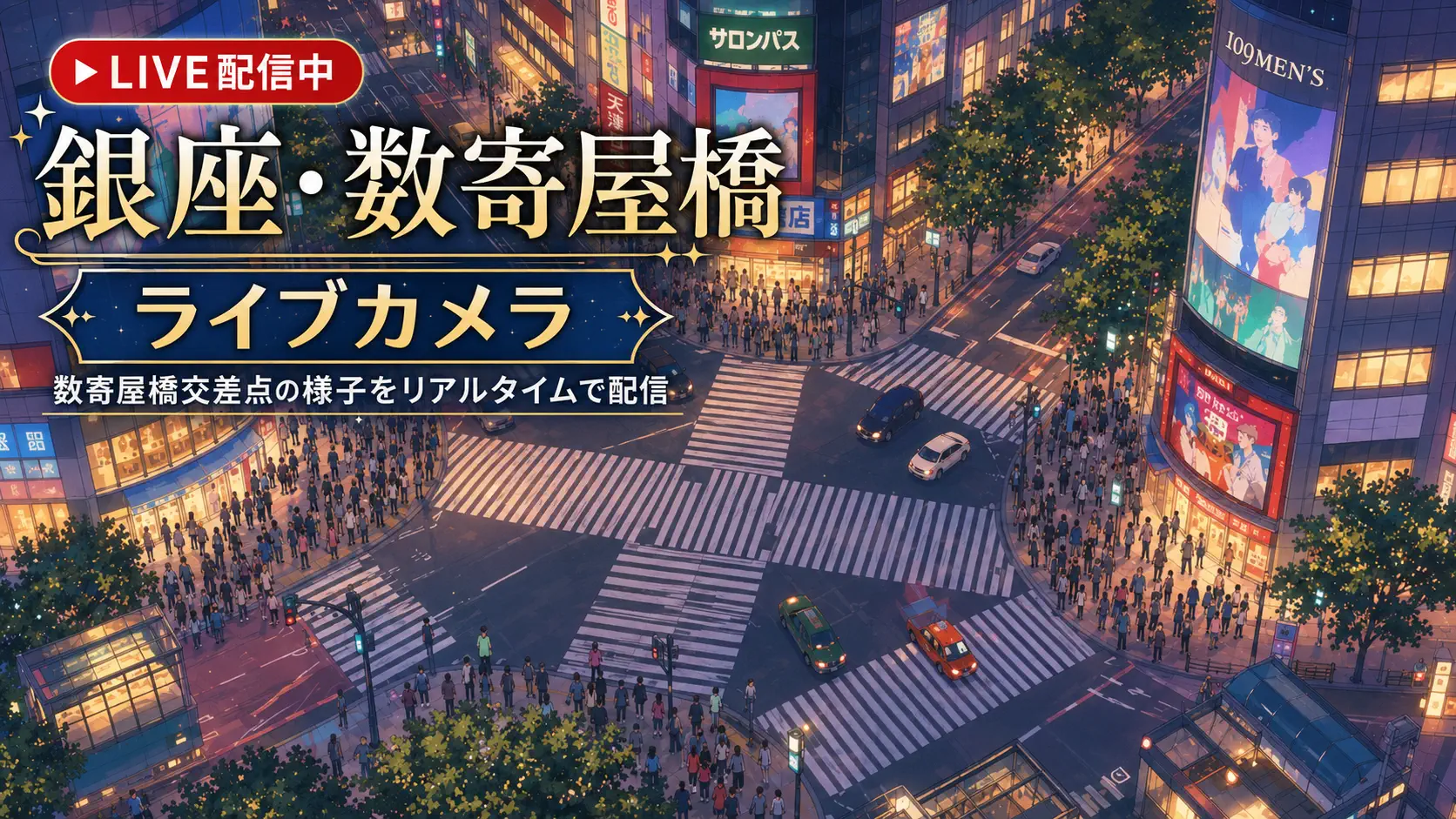
Weather check before Ginza dinners; travel nostalgia for ex-residents; architecture study of bridge-to-garden juxtaposition. Pair with Ginza Sukiyabashi Crossing five minutes north — commerce versus contemplation in two feeds.
Daily Life
Morning: commuter torrent on Tsukiji-Ohashi; joggers circling Hamarikyu (paid entry). Midday: tour buses at Shiodome; office lunch crowds. Afternoon: river cruise boarding; construction barges. Evening: sunset photographers; taxi streams toward Ginza nightlife; running clubs on Harumi paths.
Weekends: Hamarikyu tea-house visitors; Cruise ship season adds Bay traffic glimpses. Weekdays: Pure salaryman geometry — suits, buses, deadlines.
Best Time of Day
- Sunrise: Rare beauty if cam runs early — empty bridge, pale bay.
- Late afternoon: Shadow lengthening, Hamarikyu trees backlit.
- Sunset (17:00–19:00 JST seasonal): Primary — sky gradients, bridge silhouettes, river gold.
- Night: Tower lights, headlight rivers on deck, Bay reflections.
Calculate sunset with Tokyo coordinates — winter ~16:30, summer ~19:00.
Best Seasons
Winter: Crisp air, Fuji chance on strong cold fronts, early sunset convenient for Europe viewers. Spring: Cherry along Sumida banks elsewhere; Hamarikyu peonies and canola fields famous late March. Summer: Humid haze, dramatic thunderheads, Bon fireworks on Sumida River some years — not always in frame. Autumn: Clear October skies — photographer season.
Rainy season (June): Moody greys; July typhoon tails — watch cloud speed.
Events
Sumida River Fireworks (late July) — largest Tokyo display — may affect Bay traffic visible indirectly. Hamarikyu peony and flower festivals spring. Tsukiji matsuri and Bon dances in side streets — cultural noise beyond bridge sightline. New Year — quiet bridge mornings; first sunrise crowds at Bay.
Olympic and Paralympic legacy events occasionally use Harumi zones — traffic spikes on camera.
Getting There
Metro: Oedo Line Shiodome or Tsukijishijo; Hibiya Line Tsukiji; Yurikamome Shiodome to Odaiba.
JR: Shimbashi walk to Shiodome; Tokyo Station taxi ~15 min.
On foot: Ginza to Hamarikyu ~15 min; Tsukiji Outer Market to bridge ~10 min.
River: Tokyo Cruise boats from Hamarikyu pier — experience the view from water level after watching online.
Exact camera building not publicized in source — viewpoint aligns with Chuo eastern Bay edge near Tsukiji approach.
Interesting Facts
- Chuo City includes Ginza, Tsukiji, Nihonbashi, and Tsukishima — monja pancake heartland on Tsukishima.
- Hamarikyu is one of few Edo gardens with saltwater tidal ponds — shioiri engineering.
- Tsukiji-Ohashi is often confused with Tsukiji Market — market outer stalls remain culinary destination post-Toyosu move.
- Kachidoki towers were among Tokyo’s tallest residential blocks when built — Bubble-era ambition.
- GoodsSumo.com sourced the original stream — part of Japan’s grassroots live camera ecosystem.
Hamarikyu as Green Anchor
The garden’s black pine silhouettes against Shiodome glass teach Tokyo urbanism — preservation by Imperial gift and public park law, not accident. When sunset backlights trees, you see Edo horizon line inside 21st-century canyon. Nakajima no Ochaya tea house (in-garden, not on cam) hosts matcha with Bay breeze — visit in person after the feed convinces you.
Hamarikyu covers 250,000 m² — duck ponds, 300-year-old pine, peony fields, canola yellow in spring — surrounded by Shiodome Sift towers that did not exist when the garden was Imperial. The live camera catches only the canopy rim, but that rim is enough: it proves Tokyo did not pave everything. Shogun hunting boats once launched here; now water buses to Asakusa and Odaiba depart nearby piers you may glimpse as tiny wakes crossing the channel.
300 yen admission buys escape from Ginza price tags — the cam is the free preview. New Year falconry demonstrations and moon-viewing events continue Edo calendar traditions inside walls invisible to the lens but felt in the city’s seasonal marketing.
River Light Transitions
Watch 30 minutes spanning sunset: blue hour bridge LEDs, first star over Kachidoki, boat navigation lights blinking on channel. Tokyo’s soundscape — tires on expansion joints, distant helicopters — may accompany if audio enabled. The transition is daily and never identical — typhoon clearance vs PM2.5 haze vs winter diamond air.
Tsukiji district beyond the bridge still smells of dashi and grilled seafood from outer market stalls — Toyosu may have taken the tuna auctions, but nigiri breakfast culture remains Chuo identity. Ginza kabuki crowds spill toward Higashi-Ginza station after matinee ends right as the cam enters golden hour — timing overlap you can predict on calendar.
Metropolitan Expressway No. 1 Haneda Line viaducts thread Bay edges elsewhere; this frame stays human-scale — one bridge, one garden edge, one slice of Sumida drainage. 2020 Olympics Aquatics Centre in Tatsumi and Village blocks in Harumi reshaped eastern Bay silhouette; repeat watchers notice crane booms appearing and vanishing as legacy development continues — Tokyo as permanent construction site, softened only by sunset color.
Nearby Live Cameras
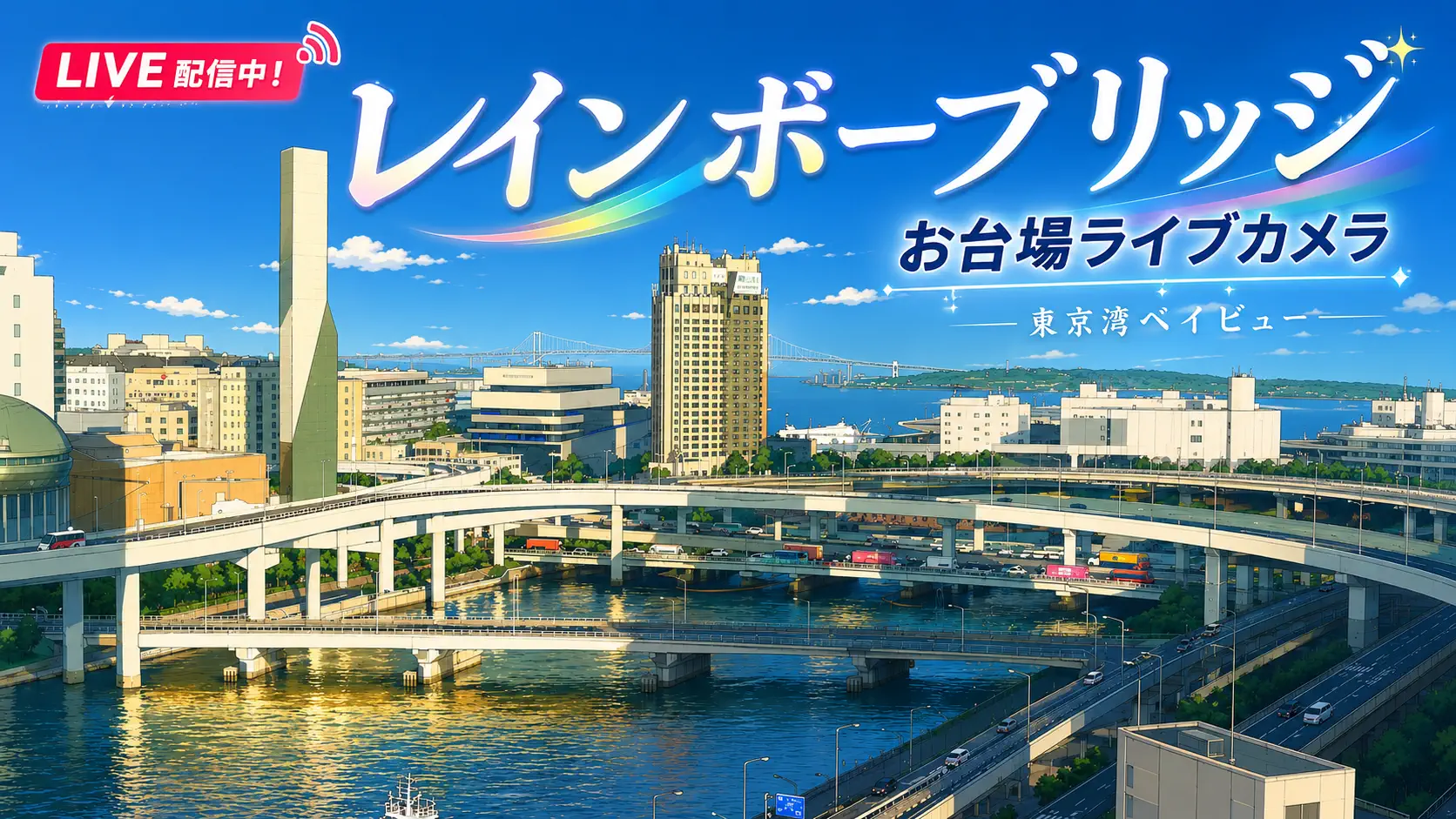
Stay in Tokyo: Ginza Sukiyabashi Crossing for luxury retail pulse, Haneda Airport for runway action south of the bay, Odaiba Rainbow Bridge for Rainbow Bridge and Minato waterfront night.
Frequently Asked Questions
Is this camera in Chiyoda or Chuo?
Chuo City (中央区) — Ginza, Tsukiji, Hamarikyu ward. Chiyoda (千代田区) is separate — Imperial Palace, Akihabara north edge.
What bridge is visible?
Tsukiji-Ohashi Bridge (築地大橋) connecting Tsukiji with Harumi / Bay zones.
Can I see Hamarikyu Gardens?
Tree canopy and pond edges yes; interior paths and tea house require admission on-site.
When is the best sunset time?
Depends on season — roughly 16:30–19:00 JST; use Tokyo sunset calculators for exact dates.
Did Tsukiji Market move?
Inner wholesale market moved to Toyosu 2018; Tsukiji Outer Market restaurants remain popular nearby.
Is the stream live 24/7?
Broadcaster-dependent; sunset hours deliver the experience the page name promises — midday still useful for weather and traffic.