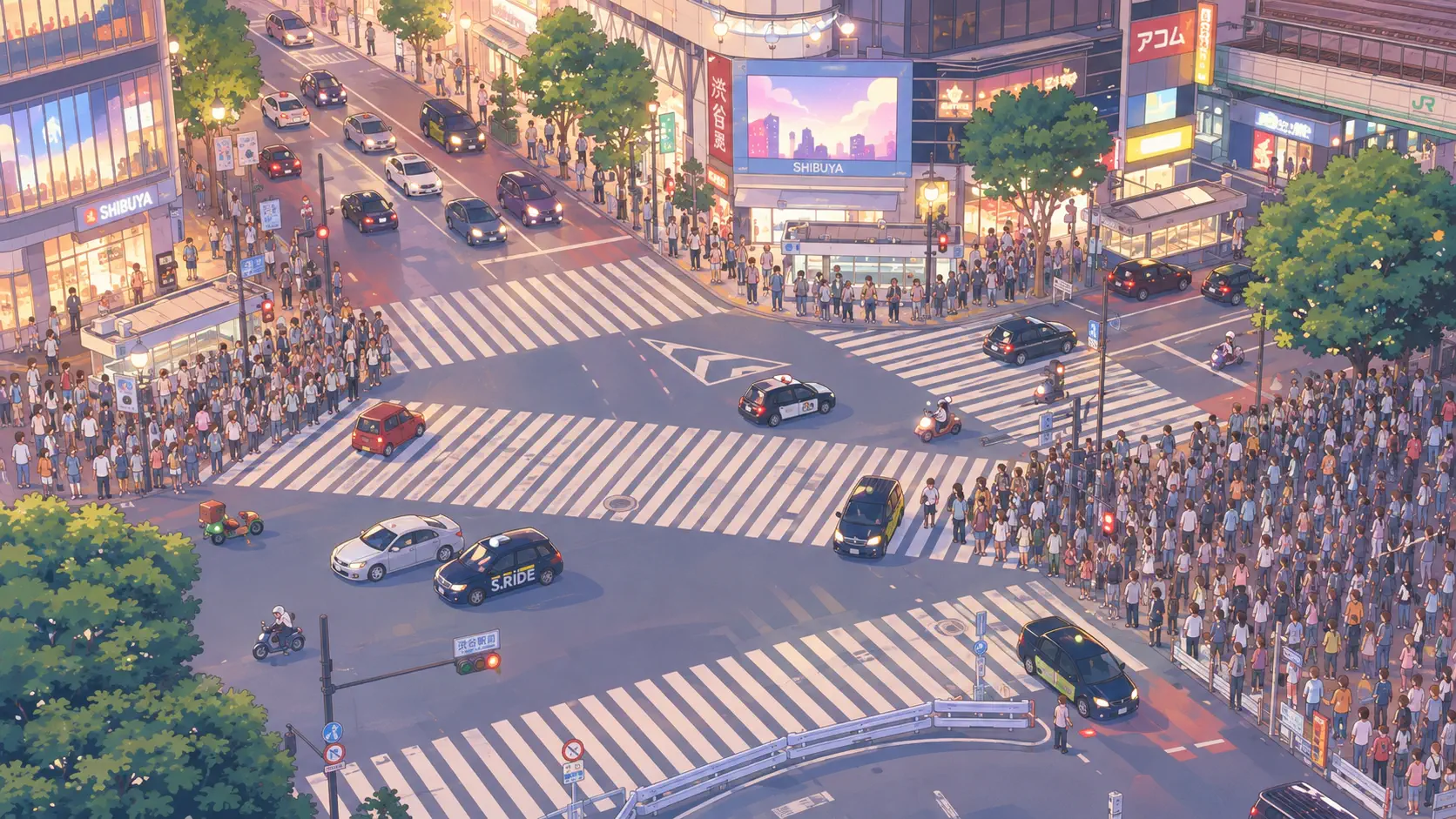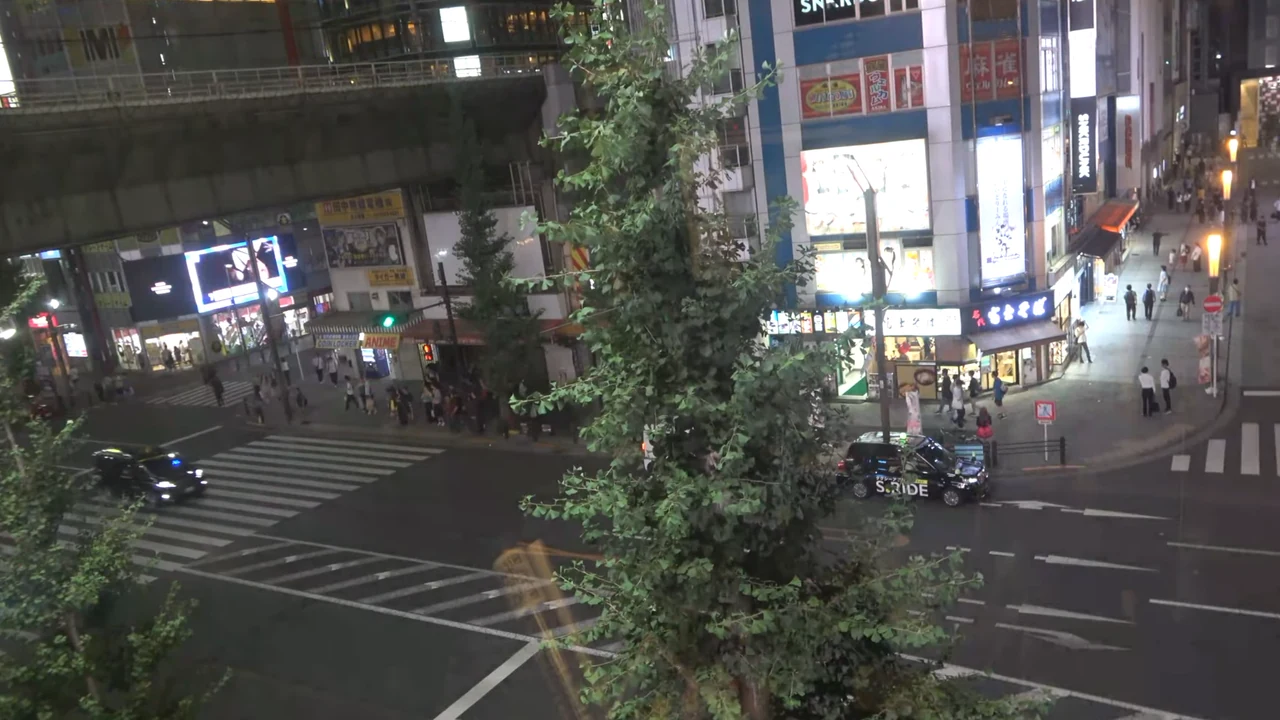

Ginza does not shout like Shibuya. It polishes. Sukiyabashi Crossing is where that polish becomes a scramble — a pedestrian tide at the edge of Japan’s most famous luxury district, with Yurakucho’s entertainment energy leaking in from one side and Chuo-dori’s shop windows gleaming from another. A live camera here, associated with the Yurakucho Mullion vantage, is a continuous sample of Tokyo wealth as street theater: taxis, tourists, office shoes, and the quiet competition of brand bags.
About This Live Camera
The stream looks across the Sukiyabashi pedestrian scramble in Ginza / Yurakucho borderland, Chuo City. Expect signal cycles, crosswalk floods, department-store gravity, and the vertical glass language of modern Ginza after decades of rebuilds. Nearby names that orient the frame mentally include Tokyu Plaza Ginza, the Kabukiza direction deeper in Ginza, and Yurakucho’s dining underpasses and elevated lines. Weekend pedestrian paradise hours on Chuo-dori change the whole district’s metabolism — cars retreat, walkers inherit the asphalt.
Uptime varies. Rain turns luxury façades into mirror theater. Night makes every window a second streetlight.
What You Can See in the Live View
Watch the scramble as choreography, not chaos. Ginza pedestrians often move with slightly more lateral caution than Shibuya’s tourist surge — still dense, somehow more curated. Luxury shopping days thicken foreign languages in the crowd. Salaryman mornings cut cleaner diagonals. Evening brings after-work Ginza: dinners, hostess-district adjacency rumors, last trains looming.
You may glimpse the broader Ginza skyline language — the district of Seiko/Wako clock-tower fame at Ginza 4-chome is a short walk deeper into the brand canyon, even if this particular cam is Sukiyabashi-focused rather than a fixed Wako postcard. Ginza is a network of corners; Sukiyabashi is one of the busiest hinges.
Where Is Sukiyabashi?
At the northwest edge of Ginza proper, where the district meets Yurakucho and the Imperial Palace / Marunouchi direction feels suddenly close. Subways and JR Yamanote / Keihin-Tohoku links make this one of Tokyo’s easiest luxury landings. Correct older copy that says Chiyoda: the Ginza commercial core is Chuo City.
History: Brick Ginza to Brand Ginza
Ginza’s modern myth begins with Meiji brick reconstruction after fire, then reinvention through earthquake, war, and postwar consumption. The wider Ginza 4-chome clock tower story — Hattori / Seiko roots from 1894, Neo-Renaissance Wako building completed 1932, later SEIKO HOUSE framing — taught the district that a corner can be a civic clock and a brand cathedral at once. Sukiyabashi’s scramble energy is newer traffic engineering layered onto that commercial DNA: cars and people negotiating the same prestige ground.
Sony’s long Sukiyabashi presence (the former Sony Building era, then Ginza Sony Park chapters) also branded this crossing as a tech-meets-luxury node. Even as buildings swap skins, the intersection keeps teaching Tokyo how desire looks in daylight.
Why This Crossing Is Famous
Because Ginza is a global synonym for expensive taste, and this scramble is where that taste becomes countable heads. Because weekend car-free Chuo-dori turns shopping into a promenade culture rare in Tokyo’s car-tolerant map. Because Kabuki, department stores, and Yurakucho’s denser food basements sit within a short walk — one camera implying three Tokyo moods.
Daily Life Around the Frame
Morning is purposeful. Midday is shopping and tourism. Golden Week and year-end sales rewrite density. Rain produces a forest of transparent umbrellas that somehow still looks expensive. Late night thins into taxis and the last polished stragglers.
Compare a Tuesday 10:00 with a Saturday 14:00 during pedestrian paradise: same geometry, different city.
Best Time of Day to Watch
- Weekend midday / afternoon: peak promenade Ginza
- Weekday evening: office-to-dinner metamorphosis
- Blue hour: glass and sign balance
- Rainy nights: reflection luxury
If you want sociology over spectacle, watch a weekday morning commute cut through tourist confusion.
Best Seasons and Weather
Spring and autumn are comfortable shopping weather. Summer heat shimmers off asphalt and makes shade valuable. Winter clear air sharpens façades and Christmas illuminations. Typhoon edges empty the scramble into eerie polish — still Ginza, suddenly quiet.
Events and Celebrations
Sales seasons, fashion weeks’ spillover energy, Kabuki performance nights, and year-end Ginza illuminations all alter crowd composition. When Chuo-dori closes to cars, the district becomes a temporary pedestrian republic. The cam will not label the calendar; suitcase shapes and shopping bags will.
Getting There
Ginza, Ginza-itchome, Higashi-ginza, Yurakucho, and Hibiya stations all feed the area depending on which line you ride. Follow exit signs toward Sukiyabashi / Ginza. For the classic Wako clock corner, continue along Chuo-dori; for this cam’s scramble energy, stay in the Sukiyabashi knot. Accessibility is generally strong; crowd density and heat are the real frictions.
Interesting Facts
- District core is Chuo City, not Chiyoda.
- Weekend pedestrian paradise on Chuo-dori is a defining Ginza ritual.
- Nearby Ginza 4-chome clock tower lineage ties to Hattori/Seiko and the 1932 Wako building.
- Sukiyabashi sits at Ginza–Yurakucho hinge — luxury meeting entertainment rails.
- Kabukiza Theater is a short walk into Ginza’s cultural counterweight to pure retail.
- Yurakucho Mullion association places the viewpoint in the elevated commercial complex world above the scramble.
How to Watch Polished Density
Do not only hunt celebrities or supercars. Watch posture: Ginza changes how people hold their shoulders. Watch shopping bags as class semiotics. Watch how quickly a thin crosswalk becomes a full rectangle of bodies when the light flips. Over a week you will learn the district’s pulse without buying anything.
Ginza Versus Scramble Mythology
Shibuya sells youthful surge. Shinjuku sells transfer panic and night neon. Ginza sells the fantasy that denseness can still look intentional. The Sukiyabashi cam is where that fantasy is tested every signal cycle. Sometimes it succeeds. Sometimes a delivery bike cuts the dream in half. Both outcomes are Tokyo.
Stay with the stream through a full pedestrian-paradise afternoon if you can. You will see fashion as weather — waves of color, then lulls, then another wave when a nearby department store exhales another tour group. That rhythm is the real product.
Ginza also rewards soundless guessing games. Is that cluster a tour pausing for Tokyu Plaza photos, or office workers waiting out a red light with shopping bags as alibis? Are taxis hunting theatre exits or hotel porte-cochères? When a single umbrella colour repeats across the scramble, you may be watching a company outing or just Japan’s retail season pushing the same transparent dome design. Tiny patterns like these turn a “traffic cam” into sociology.
Reading Ginza Without Being There
Treat the cam as a social thermometer. Count umbrellas on drizzle days — Ginza still dresses for weather as performance. Watch how long people linger mid-crossing for photos versus how briskly locals cut diagonals. Taxi queues thickening after 21:00 hint at expense-account nights and late Kabuki exits elsewhere in the district. Delivery cyclists are the plot twist: luxury façades do not pause logistics.
Department-store calendar seasons write themselves onto the street — Golden Week luggage, summer linen, year-end gift bags. If you already know Shibuya’s teenage surge or Shinjuku’s transfer panic, use this feed to calibrate a third Tokyo: commerce as etiquette. The scramble is still chaos, but it is chaos that believes in choreography.
Architecture rewards slow looking. Postwar rebuilds, 1980s gloss, and recent glass towers stack in one glance. Mullion-adjacent height lets the camera treat vertical signage as punctuation. Night reflections double every logo; wet asphalt after rain is when Ginza looks most like its own advertisement.
A Short Field Guide for Visitors Who Watched First
Arrive via Ginza or Yurakucho subway exits and orient to Chuo-dori before hunting sukiyaki nostalgia or misfired “best crossing” tips. Pedestrian paradise hours are the human payoff; weekday lunch is the local truth. Pair the street with a basement food floor or a gallery hour so the district becomes more than windows. Then reopen this cam from your hotel — recognition hits differently once your shoes have done the scramble.
Sukiyabashi is also a hinge toward Tokyo Station and Marunouchi brick on one mental axis and toward Tsukiji Outer Market appetite on another. The camera will not show tuna auctions, but the suitcase directions after noon often tell you which fantasy people bought that morning.
Nearby Live Cameras
Pair polished Ginza with ceremonial brick at Tokyo Station Marunouchi, skyline classic Tokyo Tower View, or jump to Shibuya Crossing for the louder cousin scramble.
Frequently Asked Questions
Is this the same as Ginza 4-chome / Wako crossing?
Related district, different famous corner. Sukiyabashi is the scramble hinge toward Yurakucho; Wako’s clock tower anchors Ginza 4-chome along Chuo-dori.
When is pedestrian paradise?
Typically weekend and holiday daytime hours on Chuo-dori — confirm current schedule locally as rules can adjust.
Is Ginza only luxury shopping?
Shopping is the brand, but Kabuki, galleries, and Yurakucho food culture sit beside it. The cam shows the street layer of that mix.
Why watch if I already know Shibuya scramble?
Because the social temperature differs. Ginza density has different clothes, different pace, different aftertaste.
Which ward is this?
Chuo City, Tokyo.
Any quick watching ritual?
Open the stream at noon on a pedestrian-paradise day, then again at 21:30 on a rainy weekday. The same crossing will teach two Ginzas: open-air catwalk and umbrella commerce. That pair of sessions is worth more than a dozen identical sunny lunch screenshots.