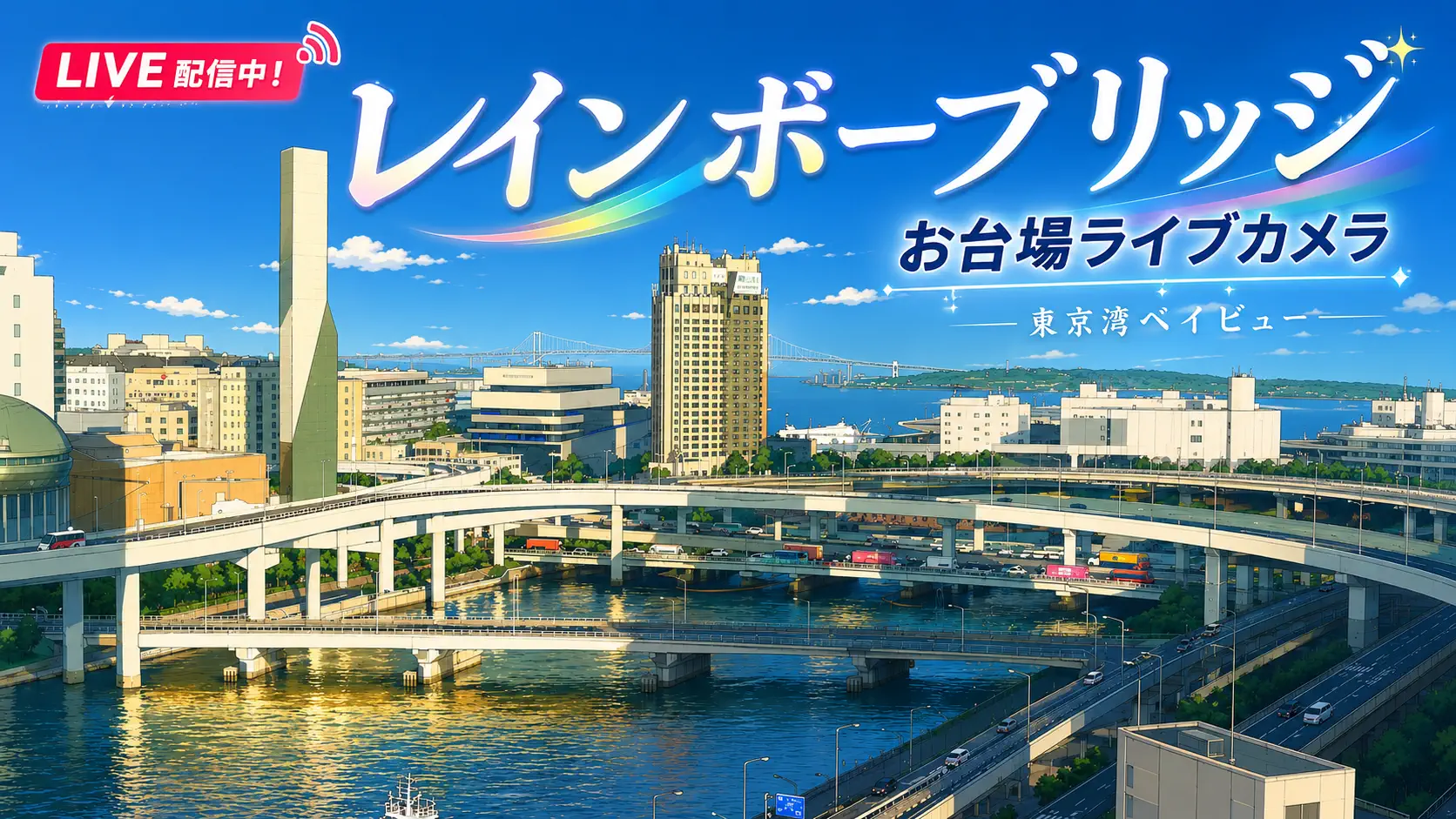

Tokyo does not touch the sea the way Yokohama or Kobe does—industry and port walls often hide the bay—yet Odaiba Marine Park is one of the rare places where sand, grass, and open water sit in front of a skyline that looks deliberately futuristic. This live camera from Minato Ward frames Tokyo Bay with the Rainbow Bridge as its jewel, the small Statue of Liberty replica on the promenade, and the glass towers of Odaiba rising behind a crescent of artificial beach. By day you watch sightseeing boats, water buses, and the slow choreography of bridge traffic; by night the bridge’s solar-powered illumination turns the bay into a postcard. It is leisure Tokyo at its most theatrical—and the same stretch of water that hosted Olympic triathlon and marathon swimming in 2021.
About This Live Camera
The stream is positioned within Odaiba Kaihin Kōen (お台場海浜公園), the seaside park at the northern edge of the Odaiba artificial island complex in Tokyo Bay. Expect a wide, slightly elevated view across the park’s sandy cove toward the bridge and the Shibaura side of the bay, with Minato’s high-rise waterfront filling the middle distance. Framing varies with operator presets, but the composition consistently sells three things at once: a family beach, a working harbour channel, and one of Japan’s most photographed bridges.
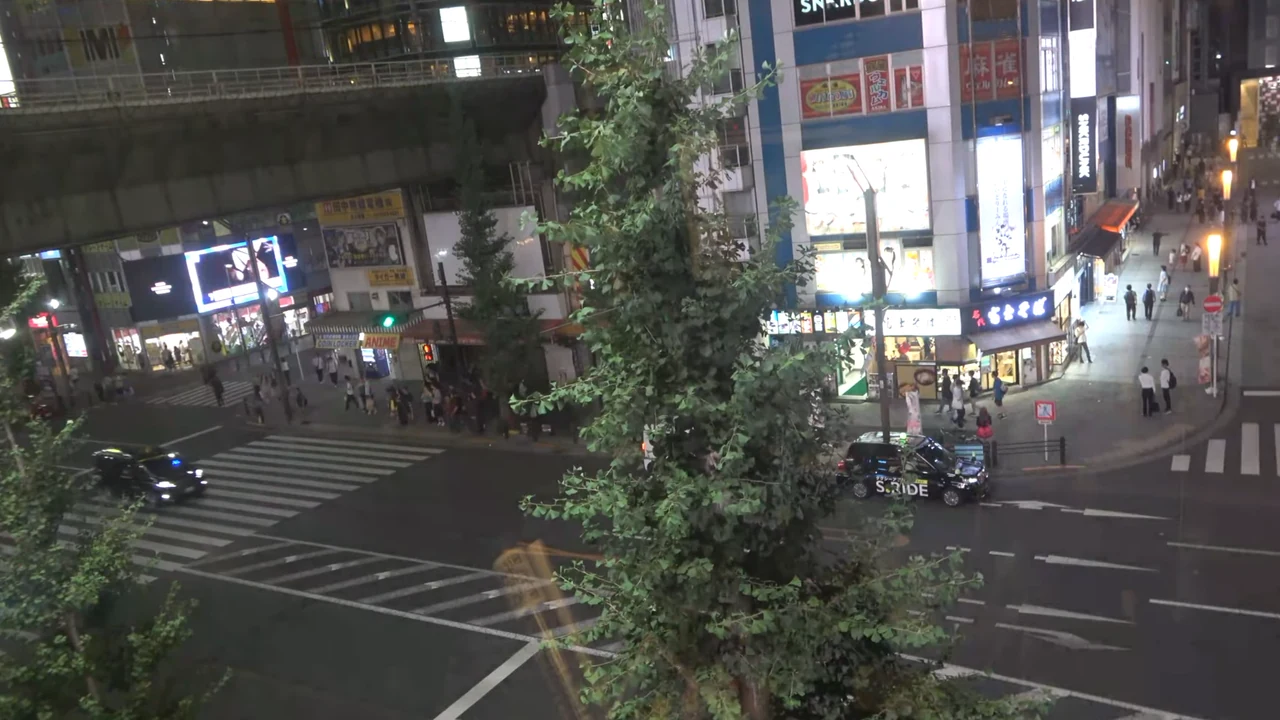
Because Odaiba is a destination rather than a commute corridor, the feed feels different from Shinjuku crossing cams or expressway feeds. Movement comes in pulses—yachts, Yakatabune party boats, Rinkai Line trains crossing the bridge approach, joggers on the promenade—rather than constant pedestrian flood. Weather reads clearly: summer haze softens Fuji-if-visible days; typhoon season brings dramatic cloud banks marching up the bay; winter air can scrub the skyline sharp enough to count individual tower lights.
Treat the stream as a mood barometer for Tokyo’s “waterfront future” district: calm cove mornings, busy golden hours when tour groups arrive, and neon-reflective evenings when the Rainbow Bridge becomes the main character.
What You Can See
Rainbow Bridge dominates the view—a white suspension bridge completed in 1993, officially part of Shuto Expressway Route 11, roughly 798 metres long, linking Odaiba with Shibaura Pier. Daytime shows vehicle flow on the upper deck; after dark, white lights trace the cables and towers (illumination powered partly by solar panels installed on the bridge). The bridge is the emotional anchor of almost every Odaiba photograph, and this camera puts it near centre stage.
In the foreground, Odaiba Beach—imported sand along a sheltered cove—often shows walkers, cyclists, and seasonal beach events (swimming is generally not permitted, but the sand remains a popular photo spot). The Statue of Liberty replica (about one-third the height of the New York original, installed in 1998 as a France-Japan friendship symbol) appears on the waterfront promenade, frequently surrounded by tourists lining up for bridge-backdrop selfies.
Look for Palette Town and Aqua City Odaiba silhouettes, the distinctive Fuji TV building with its spherical Hachitama observation deck, and passenger ships threading the bay. Aircraft on approach to Haneda Airport sometimes cross the upper frame—Odaiba sits under one of the world’s busiest domestic flight paths. On exceptionally clear days, Mount Fuji may appear far beyond the urban layer, though haze usually wins.
Historical note: the Daikanransha Ferris wheel (115 metres, once among Japan’s tallest) was a left-side landmark for decades but closed permanently in 2022 and has since been removed. Older footage and travel articles still mention it; the live view now shows the waterfront without the wheel, though the surrounding leisure zone remains active.
Location
Odaiba Marine Park sits at 1-chome Daiba, Minato-ku, Tokyo, on the north side of the Odaiba landfill island group in Tokyo Bay. Administratively you are in Minato, one of Tokyo’s central wards, yet psychologically you are on the bay’s artificial frontier—a district built from reclaimed land and expanded repeatedly since the 1960s port era and 1990s redevelopment boom.
The park adjoins Daiba Park (the preserved Third Battery, or Dai-San Daiba, from 1853 fortifications) and sits within walking distance of Odaiba-kaihinkōen and Daiba stations on the Yurikamome automated line, plus Tokyo Teleport on the Rinkai Line. Across the water, Shibaura and Shinagawa form the “mainland” Tokyo shoreline; to the east, bay channels lead toward Haneda and the Tokyo Gate Bridge direction.
Odaiba is one of only a few Tokyo Bay shorelines where the public can actually reach the water without fences of container terminals—a deliberate urban-planning choice that makes this camera a rarity for the capital.
History
The name Odaiba refers to daiba (台場)—gun batteries. In 1853, after Commodore Matthew Perry’s Black Ships pressured the Tokugawa shogunate, Egawa Hidetatsu oversaw construction of six island fortresses in Tokyo Bay to protect Edo from naval attack. Dai-San Daiba (Third Battery) survives as Daiba Park, a short walk from this camera’s park.
Modern Odaiba began as Tokyo Bay landfill for port and industrial use in the 1960s–70s, then stalled during economic shocks before a 1990s reinvention as a futuristic showcase: Rainbow Bridge construction (1987–1993), theme malls, waterfront museums, and televised “date spot” culture. The Statue of Liberty replica and beach landscaping cemented Odaiba’s role as symbolic international Tokyo.
Tokyo 2020 (held 2021) elevated the park from photo backdrop to global sports venue. Odaiba Marine Park hosted triathlon (including the debut of mixed relay) and 10 km marathon swimming; temporary stands seated about 5,500 spectators. Japan’s national triathlon championships had used the course for over 20 years before the Olympics chose it for the same reason viewers choose this cam—the swim leg in calm bay water with bridge and skyline scenery.
Why Watch
Because few live feeds combine beach, bridge, and skyline without industrial grit. Because Rainbow Bridge at night is one of Tokyo’s great free spectacles, and this angle catches reflection on the cove when wind cooperates. Because bay traffic—ferries, cruisers, tugboats—is slow television for anyone who likes maritime rhythm. Because Odaiba encodes a specific era of Japanese optimism: reclaimed land turned playground, batteries turned parks, expressway bridge turned solar-lit icon.
Sports fans can replay mental maps of Olympic swim courses. Aviation fans can play “guess the Haneda approach.” First-time Japan viewers get a single frame that explains why Tokyo feels both ocean-adjacent and utterly man-made.
Daily Life
Morning joggers and dog walkers claim the promenade before tour buses arrive. Midday brings school trips, TeamLab Borderless (relocated but still associated with the district) spillover crowds, and couples on Ferris-wheel-less dates shopping DiverCity or DECKS. Afternoon yacht clubs and rental cycles animate the paths. Evening shifts to illumination hunters, Yakatabune dinner boats with lanterns, and Rinkai Line commuters crossing from Shinkiba jobs.
Weekends amplify everything—fireworks seasons, outdoor markets, cosplay gatherings near Gundam statues at DiverCity, drone restrictions notwithstanding. Weekday afternoons can feel surprisingly calm, which is when the cam best shows water texture and bridge traffic without human foreground clutter.
Best Time of Day
- Sunrise to 9 a.m.: calm water, soft light on Rainbow Bridge, fewer crowds on the beach
- Late afternoon: warm sidelight on towers; tour boats increase
- Sunset: classic Tokyo Bay colour—pink-orange sky behind bridge silhouette
- After 7 p.m.: Rainbow Bridge illumination (schedule varies seasonally; special colour nights occur)
- Typhoon approach (daytime): dramatic clouds—watch safely from your screen
Best Seasons
Spring brings clearer air occasional enough for distant Fuji glimpses and comfortable promenade walking. Summer adds humidity haze but also fireworks over the bay and extended evening activity. Autumn often delivers the crispest skyline views. Winter cold fronts can scrub visibility spectacularly; fewer beach events but striking clear nights. Rainy season (June–July) mutes contrast yet shows moody bay colours photographers love.
Events
Tokyo 2020 triathlon and marathon swimming left a permanent story on this shoreline—even if temporary stands are gone. Annual Odaiba fireworks (when scheduled) draw huge crowds visible as evening promenade density. New Year sunrise gatherings and Marine Day beach-adjacent festivities mark the calendar. National triathlon championships continue to use the bay course culture established here. Nearby Shiokaze Park hosted Olympic beach volleyball—another 2020 legacy within walking distance.
Bridge special illuminations (pink for breast cancer awareness, rainbow nights) announce themselves on Tokyo tourism feeds.
Getting There
Yurikamome Line: Odaiba-kaihinkōen (U06) or Daiba (U07)—about 3 minutes walk to the park. Rinkai Line: Tokyo Teleport—about 7 minutes walk. Toei Bus from Monzen-nakachō to Odaibakaihinkōen-Eki-Mae, then 5 minutes walk.
From Shinjuku or Tokyo Station, combine JR or subway with Yurikamome—no direct single train, but the elevated Yurikamome ride itself is part of the experience. Rainbow Bridge has pedestrian walkways (separate north/south paths; hours and wind closures apply). Driving uses Shuto Expressway Route 11 across the bridge or the Bayshore Route via tunnel—parking exists but is costly on weekends.
For cam-only viewers, none of this travel is required—the feed is the destination.
Interesting Facts
- Odaiba’s 1853 batteries were built in direct response to Perry’s Black Ships—the same year as the American arrival.
- Rainbow Bridge is not named for LGBT symbolism; the name came from a public contest suggesting rainbow-like beauty, though it later became a beloved symbol in diverse Tokyo.
- The Statue of Liberty replica was a temporary 1998–1999 gift that proved so popular it returned permanently in 2000.
- Odaiba Marine Park sand is maintained as a symbolic beach—swimming is generally prohibited despite the tropical holiday look.
- Tokyo Bay’s Yakatabune houseboats trace lineage to Edo-period pleasure boating.
- Fuji TV’s spherical deck appears in countless dramas; on clear days it views Fuji—same lottery as this cam.
- A major fountain project in Odaiba Marine Park was announced for March 2026, which may change the waterfront silhouette over time.
Bay Light After Dark
Rainbow Bridge illumination is the headline, but the real show is reflection. When wind drops below a whisper, the cove holds doubled lights—bridge, tower, boat lantern—and the camera becomes an impressionist painting. Compare clear winter nights (sharp stars, cold air) with humid August evenings (soft bloom, slower ferries). Odaiba at night is why Tokyo residents still cross the bay for dates even after two decades of “futuristic” becoming normal.
Olympic Water, Ordinary Morning
Stand on this promenade today and the 2020 swim course is invisible—no buoys, no TV cranes—yet the geography is unchanged. The same calm cove that hosted 10 km marathon swimming now hosts paddleboard rentals and morning stretches. That contrast is the cam’s quiet story: world-stage venue reverting to neighbourhood park, overnight, while the bridge keeps carrying commuters who never watched the Olympics live.
Nearby Live Cameras
Shift angles across the bay: Rainbow Bridge traffic and suspension cables, Tokyo Bay shipping and Yakatabune, and Haneda Airport approaches when aircraft cross the southern sky.
Frequently Asked Questions
Is Odaiba Marine Park the same as Odaiba Beach?
The beach is the sandy cove within Odaiba Kaihin Kōen (Marine Park). Locals and signage use both names; the camera covers the broader park waterfront including the beach foreground.
Can you swim at Odaiba Beach?
Generally no—the sand is for recreation and events, not designated swimming. Olympic events used controlled course swimming; daily visitors should not expect lifeguarded bathing.
Is the Daikanransha Ferris wheel still visible?
No. Daikanransha closed in 2022 and the structure was removed. Historical photos show it on the left skyline; the live view no longer includes the wheel.
When is Rainbow Bridge lit up?
Evening illumination is standard, with timing varying by season. Special colour schemes occur for campaigns and holidays—check Tokyo port or tourism announcements for exact schedules.
How far is Odaiba from central Tokyo?
About 30–45 minutes from major hubs like Tokyo Station or Shinjuku depending on route—typically via Yurikamome or Rinkai Line connections.
Did the Tokyo Olympics really happen here?
Yes. Triathlon and marathon swimming were held at Odaiba Marine Park in 2021 (Tokyo 2020 Games), with temporary spectator facilities along the shore.