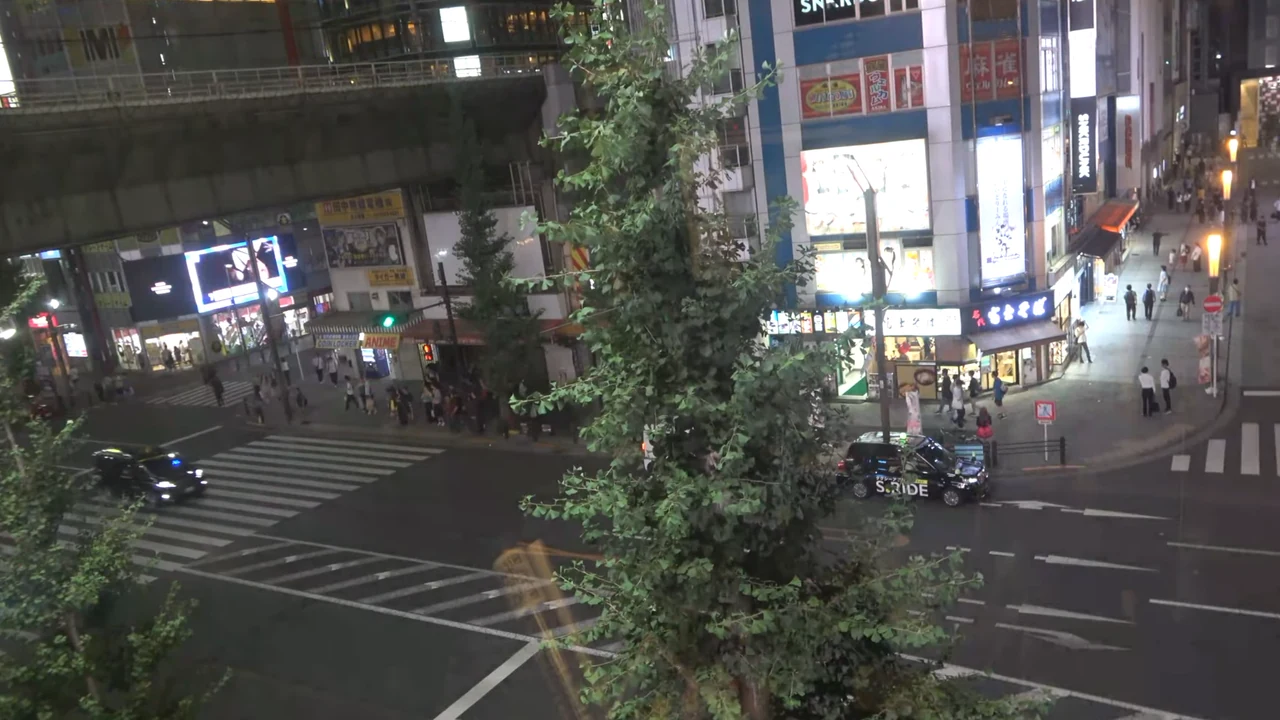

Tokyo’s railway story did not begin at Shinjuku glamour or Shibuya neon. It began, in part, at Akabane — a northern gate where the city exhales toward Saitama and inhales commuters back each morning. Opened in 1885 as the northern terminus of the early Shinagawa Line, Akabane Station predates the Yamanote loop and still functions as one of the capital’s busiest junctions. This live camera watches the elevated platforms from above street level: eight tracks, four island platforms, and the constant choreography of JR East services that keep northern Tokyo moving.
About This Live Camera
The feed comes from a railway enthusiast channel trained on Akabane’s elevated structure — platforms, track fan, arriving and departing trains, and the ambient motion of Japan’s commuter rail at full pulse. It is not an official JR East platform CCTV; angle and availability follow the broadcaster’s setup. When live, you get unfiltered platform life: doors, departures, occasional freight or special consists, and the visual rhythm of a station that never truly sleeps.
Because Akabane sits on multiple overlapping lines, the camera rewards patience. Services differ by livery, length, and frequency — local Keihin-Tohoku stops versus Saikyo Line expresses versus long-distance Takasaki/Tohoku Main Line trains continuing north.
What You Can See
Expect elevated platforms with yellow tactile paving, overhead wire, digital departure boards (when angle permits), and trains in JR East color schemes: green Keihin-Tohoku locals, Saikyo Line sets, E233/E235 series commuters, and occasionally longer formations heading toward Omiya and beyond. You may see Shinkansen-related infrastructure in the wider area — the Tohoku Shinkansen runs on a separate viaduct nearby — though Akabane itself is not a Shinkansen stop; bullet trains do not platform here.
Surrounding city fabric includes mid-rise apartments, commercial strips toward Akabane Ichibangai, and the LaLa Garden shopping complex near the east exit. At rush hour, platforms fill with briefcases and schoolbags; at midday, intervals widen and maintenance staff become more visible.
Location
Akabane Station (赤羽駅) stands in Kita Ward, Tokyo’s northern special ward, roughly 10 km north of Tokyo Station as the rail runs. The station straddles the boundary between dense Tokyo neighborhoods and the commuter cities of Saitama Prefecture just across the Arakawa River. Coordinates near 35.78°N, 139.72°E place it squarely in the “where Tokyo becomes Kanto commuter belt” zone.
Major exits connect to shopping streets, bus terminals, and residential blocks that mix Showa-era izakaya lanes with newer tower mansions. Akabane feels practical and lived-in — less tourist postcard, more Monday-morning reality.
History
Akabane opened on 1 March 1885 when the Nippon Railway Company’s Shinagawa Line ran between Shinagawa and Akabane — the seed of what became the Yamanote Line and related freight/passenger corridors. When the Yamanote loop completed in 1925, Akabane’s role shifted from terminus to interchange, but its importance only grew as Tokyo expanded northward and Saitama suburbanized.
The Saikyo Line opened through service in 1985, adding another layer of cross-city capacity parallel to the Yamanote between Ikebukuro and Osaki via Akabane. The station’s elevated rebuild modernized capacity to today’s eight-track layout. Historically, Akabane also carries freight lineage — the Yamanote Freight Line still influences Saikyo routing semantics.
For rail historians, Akabane is a living fossil of Meiji-era Tokyo expansion — a station that watched Edo become Tokyo, survived war and earthquake, and absorbed every subsequent capacity upgrade without losing its function as northern threshold.
Why Watch
Because multi-line junctions are where Japanese rail culture becomes visible. Akabane is not a single-line shuttle; it is stacking, precedence, and timed transfers compressed into one elevated deck. Trainspotters catalog consists types; urbanists study how a 140-year-old node still absorbs growth; remote viewers use the feed to feel Tokyo’s morning pulse without standing on a crowded platform.
The camera also illustrates a less-famous Tokyo: wards beyond the Yamanote souvenir circuit where salarymen, nurses, and students actually sleep and board. If Shibuya Crossing is Tokyo’s face, Akabane is part of its circulatory system.
Daily Life
Akabane’s rhythm is commuter-first. Weekday mornings (7:00–9:00) bring peak flows toward central Tokyo and Shinjuku/Shibuya via connecting lines. Evenings (17:00–19:30) reverse the tide toward Saitama bedroom communities. Midday sees shoppers near LaLa Garden, retirees on local Keihin-Tohoku hops, and students changing at Akabane because fares or routes beat a single-line ride.
The Akabane Ichibangai shotengai near the station maintains old-Tokyo drinking-alley character — tiny yakitori bars, standing soba, karaoke boxes — while tower developments add convenience stores and chain coffee on the fringes. Platform vendors and kiosk queues peak between train arrivals; cleaning crews work the narrow windows between departures with practiced speed.
Best Time of Day
- Weekday morning rush: maximum train frequency and platform energy
- Weekday evening rush: long trains, crowded platforms, dramatic departure sequences
- Late night: last trains and quieter intervals — good for studying consist details
- Weekend midday: lighter commuter load; more locals and leisure travelers
Rainy days add umbrella texture and reflective platform light; summer heat haze can soften distant skyline views.
Best Seasons
Rail watching here is year-round, but seasons change light and atmosphere. Winter brings crisp air and early darkness — illuminated platforms glow longer. Spring coincides with station-area cherry plantings and company transfer season spikes. Summer adds humid haze and occasional typhoon schedule disruptions worth monitoring on the feed. Autumn offers clear skies after typhoon passages — excellent visibility toward Saitama hills.
Golden Week and New Year holiday periods produce unusual travel patterns: fewer commuters, more luggage-heavy leisure riders.
Events
Akabane itself is not a festival ground, but Kita Ward events and Saitama-side fireworks occasionally swell off-peak travel. Major schedule changes hit on Golden Week, Obon, and New Year when JR publishes modified timetables — the camera becomes a quick visual check that services resumed normally.
Railfan events — special steam or heritage consists on JR lines — sometimes pass through multi-line nodes like Akabane; enthusiasts monitor channels for announcements. Local shopping street summer festivals (matsuri) ripple into evening station crowds without appearing on camera directly.
Getting There
Akabane Station is on the JR Keihin-Tohoku Line (quick connection from Ueno, Tokyo, Shinagawa, Yokohama directions), JR Saikyo Line, JR Takasaki Line, JR Tohoku Main Line (Utsunomiya Line), and JR Shonan-Shinjuku Line services. From Shinjuku, Saikyo/Shonan-Shinjuku routes reach Akabane in about 15–20 minutes. From Ueno, Keihin-Tohoku northbound is roughly 10 minutes.
The station is fully elevated; east and west exits lead to bus terminals and shopping. Suica/PASMO IC cards handle essentially all gates. Accessibility elevators exist, though the camera’s elevated perspective highlights how vertical Tokyo rail can be.
Interesting Facts
- Akabane opened 1885 — the same year as the Yamanote’s predecessor segment, making it among Tokyo’s oldest continuous rail sites.
- The station serves five JR lines with eight tracks and four island platforms.
- FY2013 JR East data cited roughly 90,000 daily passengers — substantial for a non-downtown ward station.
- Akabane lies near the Arakawa River, historically a boundary between Tokyo and Saitama commuter sprawl.
- The Saikyo Line uses track geometry related to the old Akabane Line naming — rail history embedded in timetables most riders never read.
- Shinkansen services use separate elevated infrastructure nearby; transfers for bullet trains typically happen at Omiya, Ueno, or Tokyo, not Akabane — despite the region’s high-speed presence.
How to Read a Junction on Live Video
Start by identifying train color and length: green banding often signals Keihin-Tohoku locals stopping frequently; longer eight- or ten-car sets may be Saikyo or through services. Watch dwell time — locals pause briefly; some through trains linger for crew change or schedule padding. Count departure bells and platform staff gestures, the body language of Japanese safety culture.
Notice directionality: one side may favor northbound Saitama traffic while the other carries southbound Tokyo cores. During rush, trains arrive before the previous fully clears — tight but orchestrated. When the feed goes quiet, check clock: midday lull or broadcaster maintenance, not necessarily a service outage.
Tokyo’s Northern Commute in One Frame
Akabane distills a policy story: Tokyo housing pushed north and west, rail capacity followed, and nineteenth-century infrastructure still carries twenty-first-century megacity load. Watching this camera is watching Kanto integration — Tokyo and Saitama linked by elevation, steel, and timetable.
Pair the view mentally with Saitama Shintoshin Station farther north, Tokyo Station Marunouchi at the imperial business core, or Ikebukuro Sunshine 60 Street on the Yamanote/Saikyo orbit — three different faces of the same commuter galaxy Akabane helps stitch together.
Nearby Live Cameras
Explore more Kanto rail and street energy at Saitama Shintoshin Train Station, Ikebukuro Sunshine 60 Street, and Tokyo Station Marunouchi.
Frequently Asked Questions
Does the Shinkansen stop at Akabane?
No. Akabane is a JR conventional commuter and regional hub. Tohoku Shinkansen tracks run nearby on separate infrastructure; bullet-train passengers typically board at Omiya, Ueno, or Tokyo.
Which JR lines serve Akabane Station?
Keihin-Tohoku, Saikyo, Takasaki, Tohoku Main (Utsunomiya), and Shonan-Shinjuku lines — five lines sharing eight elevated tracks.
When did Akabane Station open?
1 March 1885, as the northern end of the early Shinagawa Line — a predecessor of today’s Yamanote corridor.
Is Akabane in Tokyo or Saitama?
The station is in Kita Ward, Tokyo, though it sits close to the Arakawa River border with Saitama Prefecture commuter cities.
What is the best time to watch trains here?
Weekday morning and evening rush hours show peak frequency and platform activity; late-night periods suit consist spotting with fewer crowds.
Why is Akabane important if tourists skip it?
It moves enormous daily commuter volume between Tokyo cores and northern Kanto suburbs — essential infrastructure even if it lacks landmark tourism marketing.