
Every great Tokyo commute has a hinge station—the place where prefectures change but habits do not. Motoyawata Station (本八幡駅) in Ichikawa, Chiba Prefecture is exactly that kind of hinge: an elevated JR East platform for the Chūō-Sōbu Line, an underground Toei Shinjuku Line terminus, and a short walk from Keisei Yawata on the Keisei Main Line. This live camera watches the rhythm of arrivals, departures, and transfers that move roughly 85,000 passengers on a typical weekday when JR and Toei counts are combined. It is not a scenic volcano cam or a harbour panorama—it is Japan’s daily life in real time, expressed as yellow Sobu trains, subway headways, and the small commerce cloud of izakayas and convenience stores that orbit any busy station.
About This Live Camera
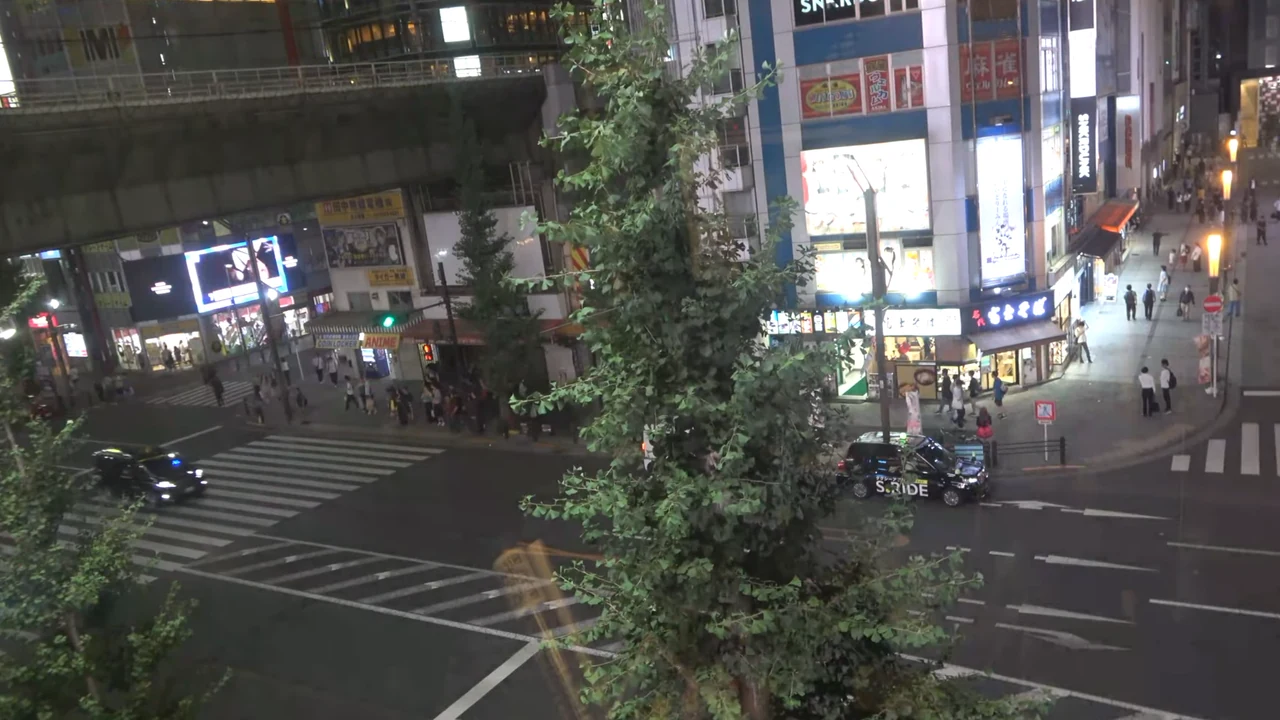
The feed focuses on Motoyawata’s rail environment—platform edges, passing E231/E235-series Sobu trains, passenger flow on stairs and concourses, and the visual signature of a suburban junction that also happens to be the only Toei Subway station outside Tokyo’s 23 wards. Exact framing depends on operator placement (often platform-adjacent or overlooking track areas), but the subject is consistently train movement and commuter density rather than landmark tourism.
Because Motoyawata is a transfer hub, the cam rewards patience. A single minute might show a westbound Sobu local slowing for platform stop, a burst of passengers changing for Keisei, or Shinjuku Line trains entering the underground terminus. Rush hours produce cinematic density; midday offers readable detail—car lengths, platform staff gestures, weather on open-air elevated sections.
Treat it as a Chiba–Tokyo boundary diagnostic: when Sobu delays ripple, they often show here first; when Shinjuku Line morning express patterns shift (schedule changes have reduced daytime express), platform crowds reorganize visibly.
What You Can See
JR Chūō-Sōbu Line trains dominate the elevated view—local services connecting Chiba through Ichikawa, Kinshichō, and into central Tokyo toward Shinjuku and Mitaka on the western Chūō branch. Watch for the characteristic yellow stripe of Sobu locals, door chimes, and the staggered arrival of connecting passengers from the underground side.
The Toei Shinjuku Line (station code S-21) terminates here—all trains reverse after alighting. Morning rush sometimes uses drop-off-only procedures before reopening doors for boarding, a Tokyo-area peculiarity visible as platform staff choreography. The Shinjuku Line’s underground platforms connect via passages to JR and, separately, toward Keisei Yawata (京成八幡駅, code KS16).
Surrounding streets show Ichikawa suburban texture: Colton Plaza shopping, Yawata neighbourhood signage, buses toward Myōden, Urayasu, and Disney-adjacent corridors, plus the ever-present konbini and chain restaurants. Ichikawa City Hall lies within walking distance—one reason locals treat Motoyawata as a practical city-centre station even though Ichikawa Station on the Keisei/JR Sobu axis also serves the municipality.
Location
Motoyawata sits in 2-chome Yawata, Ichikawa City, Chiba Prefecture (postal 272-0021), on the northwestern edge of Ichikawa where the Edogawa River approaches and Tokyo’s urban field begins. Coordinates place it 35.72°N, 139.93°E—about 20 km east of Tokyo Station as the crow flies, closer as the train rides.
Ichikawa is a dense bedroom municipality bridging Chiba and Tokyo, known for riverside parks, Nakayama temple neighbourhood heritage, and quick access to Tokyo Disney Resort via bus and rail connections. Motoyawata is not Disney’s front door, but it is part of the same commuter constellation that feeds eastern Tokyo jobs and entertainment.
The station’s uniqueness is administrative: Toei Subway operates almost entirely within Tokyo’s special wards—Motoyawata is the sole exception, putting a Tokyo municipal subway terminus inside Chiba Prefecture by roughly one station’s worth of geography and a lot of political history.
History
JR Motoyawata opened 1 September 1935 on what became the Chūō-Sōbu Line, serving growing suburban development along the Sobu corridor. For decades it was primarily a JR commuter stop linking Chiba beds to Tokyo desks.
The Toei Shinjuku Line extension arrived 19 March 1989, transforming Motoyawata into a dual-operator junction and creating the unusual situation of a Tokyo subway line terminating outside Tokyo. The line was designed to relieve Jōban and Sōbu pressure by giving eastern Chiba a direct subway tube toward Shinjuku, Ichigaya, and Jimbocho.
Keisei Yawata (separate station, distinct operator) predates the subway connection and retains its own express services—including Keisei limited express patterns that skip JR Sobu’s all-stops locals. Transfers between Keisei and JR happen on foot; Toei transfers use dedicated underground passages. The name Yawata / Motoyawata reflects historical place names—moto (本) indicating the “original” or primary Yawata settlement relative to nearby districts.
Passenger growth tracked 1980s–2000s bubble-era suburbanization, then stabilized into one of Chiba’s top ridership stations.
Why Watch
Because train otaku and casual viewers alike can read a city from platform behaviour—where people stand, how staff manage crush, which trains are late. Because Motoyawata encodes cross-operator Japan: JR yellow, Toei subway blue-green, Keisei elsewhere in the same breath. Because it is a terminus cam—watch trains arrive, empty, and turn back, a rhythm terminal stations share with airports.
Urbanists interested in bedroom community economics see Ichikawa’s story: affordable-ish relative to 23 wards, yet one express away from Shinjuku. Anyone learning Japanese rail geography gets a clean lesson in through-running vs terminus design.
Daily Life
Weekday mornings (7–9 a.m.) are peak theatre: Sobu trains pack, Shinjuku Line passengers surge toward underground gates, buses queue on adjacent roads. Midday calms—students, shoppers, elderly errands. Afternoon school release adds uniform waves. Evening return mirrors morning with slightly more stagger as overtime releases.
Weekends reduce commuter crush but increase leisure riders heading to Tokyo shopping or Edogawa river events. Colton Plaza and local izakayas fill on Friday nights; 24-hour manga cafés and family restaurants sustain late platforms.
Station-area taxi ranks (the cam operator link references Chiba Keiyo taxi culture) serve last-mile trips where bus connections are less convenient.
Best Time of Day
- Weekday morning rush (7:30–8:45 a.m.): maximum train frequency and passenger density
- Midday (11 a.m.–2 p.m.): readable train types and platform details
- Evening return (5:30–7:30 p.m.): second peak—good for comparing inbound vs outbound flow
- After 10 p.m.: last trains atmosphere—quieter platforms, fewer cars
- First train hour: subtle ritual—early commuters, station cleaning finishing
Best Seasons
Spring and autumn bring comfortable platform waiting and clear light on elevated sections. Summer humidity haze and bon festival travel increase leisure luggage. Winter mornings can show breath-cold platforms and occasional weather delays on Sobu coastal sections. Golden Week and Obon reshape crowding—fewer office commuters, more suitcases. Typhoon approaches may reduce service—watch for gap lengthening between trains.
Events
Ichikawa hosts local festivals—Nakayama area temple events, riverside fireworks seasons on the Edogawa, school sports days that spike midday passenger groups. Tokyo Disney holiday seasons indirectly pulse Motoyawata via bus/rail connections from eastern Chiba. Rail schedule revisions (major Shinjuku Line express reductions in 2023 changed morning patterns) are “events” for enthusiasts—compare cam behaviour before/after announcement dates.
Station anniversaries (1935 JR, 1989 Toei) occasionally draw commemorative posters visible on platforms.
Getting There
You are already “there” on the cam—but physically: JR Sobu local from Tokyo Station (~25–35 minutes depending on service), Toei Shinjuku Line from Shinjuku (~30 minutes on available express patterns), Keisei from Narita direction via Keisei Yawata transfer.
Buses connect Myōden, Urayasu, and local Ichikawa neighbourhoods. Driving is possible but parking near the station is limited—typical Tokyo suburb pattern.
From Narita Airport, rail routes often bypass Motoyawata in favour of Narita Express or Keisei Skyliner—yet the cam pairs logically with Narita Airport as Chiba transport bookends.
Interesting Facts
- Motoyawata is the only Toei Subway station located outside Tokyo’s 23 wards—the terminus sits in Chiba Prefecture.
- Combined JR + Toei ridership approaches ~85,000 daily in recent years (JR ~54,000 boarding FY2023 data; Toei ~31,800 in FY2021)—not the old “100,000” rounded figure but still massive.
- Keisei Yawata receives faster Keisei services than JR Sobu locals at Motoyawata—many long-distance commuters choose Keisei for Narita direction, JR/Toei for Tokyo west side.
- The Shinjuku Line is 23.5 km long—all trains terminate at Motoyawata and reverse.
- Ichikawa City Hall proximity makes Motoyawata a de facto civic centre station despite Ichikawa Station also serving the city name.
- Colton Plaza and Yawata shopping streets typify 1990s suburban retail architecture still thriving on foot traffic.
Terminus Psychology
Terminal stations feel different on camera. Motoyawata’s Shinjuku Line trains must end—passengers alight, cleaners sweep, drivers swap ends—before the return journey. That pause is visible as micro-calm between bursts. Compare with through-running Sobu trains that merely slow and go. Terminus psychology shapes platform design, signage, and the small shops that sell bento before the last express—details this cam catches when you watch long enough.
Chiba Starts Here (For One Subway Line)
Geography trivia becomes social fact: when a Tokyo municipal subway ends in Chiba, fares, staffing, and maintenance cross prefectural lines daily. Motoyawata proves Tokyo’s commuter shed ignores administrative borders—people live in Ichikawa, work in Shinjuku, and treat the station as theirs even if Tokyo Metro maps end at the ward edge psychologically. The cam is a border post without a gate.
Nearby Live Cameras
Follow rails toward the capital: Tokyo Station Marunouchi where Sobu lines meet the network core, Shinjuku at the Shinjuku Line’s logical city anchor, and Narita International Airport for Chiba’s aviation counterpart.
Frequently Asked Questions
Is Motoyawata Station in Tokyo or Chiba?
The station is in Ichikawa, Chiba Prefecture. However, the Toei Shinjuku Line is operated by Tokyo’s municipal subway bureau—making this a Chiba address with a Tokyo subway terminus.
How do transfers to Keisei work?
Exit JR/Toei ticket areas and walk to Keisei Yawata Station (KS16)—a separate station nearby, not an in-barrier unified transfer like some major hubs.
How many passengers use Motoyawata daily?
Recent data shows roughly 54,000 daily JR boardings and ~32,000 Toei boardings—together about 85,000, varying by year and post-pandemic recovery patterns.
Does the Shinjuku Line continue beyond Motoyawata?
No. Motoyawata is the terminus—all Shinjuku Line trains reverse here.
What trains run on the JR side?
Chūō-Sōbu Line local services—yellow-trimmed trains connecting Chiba through central Tokyo toward the Chūō branch west.
Why watch a suburban station cam?
Because it shows real Japan beyond temples and ski slopes—commutes, transfers, and the rail punctuality culture foreigners experience only when they live here.