From 30 August through 11 September 2013, Harajuku hosted a photo exhibition built around a photo book that had already become a media talking point: “Suichu Nee-So” — literally “Underwater Knee-High Socks.” The show translated a niche, internet-buzzed publication into a walk-in gallery experience at PATER’S Shop and Gallery, with printed work from the book on the walls and companion material from Manabu Koga’s long-running free-paper project on display alongside.
Dates, venue details, and side-program facts below are historical snapshots from 2013 coverage.
The photo book and its unlikely equation
The book grew out of designer and videographer Manabu Koga’s ongoing creative frame: a “project in love with girls in water.” That phrase names the emotional axis of the work. The images are not beach snapshots or poolside fashion spreads reframed as art. They are 100% underwater photographs — roughly one hundred images — capturing girls wearing competitive swimsuits in blue, white, red, yellow, orange, and other colors, paired with knee-high socks, suspended in water with natural smiles and a gentle sense of float.
The concept line is blunt and self-aware: “competitive swimsuit + knee-high socks = somehow cute.” Coverage even jokes that ordinary viewers may not fully grasp the equation. That honesty is part of the appeal. The book does not pretend the combination is universally legible; it treats the pairing as a discovered aesthetic law within a subcultural visual language — part fetish discourse, part fine-art portraiture, part Harajuku-adjacent play with costume logic.
For readers, the book sits in a familiar Tokyo pattern: a tightly authored visual world that starts online or in small-press publishing, accumulates press, and then earns a physical exhibition slot in Omotesando-adjacent retail culture.
What the Harajuku exhibition showed
The exhibition title matched the book: Manabu Koga “Suichu Nee-So” Exhibition. Rather than a museum retrospective, the format was gallery-scale and shop-adjacent — prints of photographs published in the book, hung for close viewing. Looking at the underwater frames — smiles, weightlessness, saturated swimwear color against water — produces a strange, hard-to-name sensation. The work is cute without being childish, fetish-adjacent without reading as straightforward gravure, and documentary in its underwater technique while clearly staged.
Admission was free, which lowered the barrier for curious passersby on Harajuku’s shopping corridors. That pricing choice fits a show designed to extend a book’s audience rather than gate it.
PEPPER SHOP at the venue — underwater motor special
The exhibition floor also distributed PEPPER SHOP, the free paper Koga edits and publishes. The issue tied to this run was an “underwater motor” special — a thematic sibling to the knee-high-socks underwater world rather than a duplicate of the book itself.
Contributors named in coverage included:
- Senmu Miyawaki (Kaiyodo) — gravure plus interview
- Illustrator Yutanpo Shirane
- Manga artist Daisuke Nishijima
- Design unit GraphersRock
- Additional visual work from other contributors listed collectively in the source
Works created for that PEPPER SHOP issue were also exhibited inside the gallery, so the visit was book prints plus magazine-origin art in one room. For readers tracing Koga’s ecosystem, the show was a hub linking the photo book, the free paper, and his broader underwater-girl media project.
Manabu Koga — artist profile as reported
Coverage appended a concise artist profile:
Koga (Manabu Koga / Koga Manabu) is described as a visual artist, designer, and video creator, born in Sasebo in 1972. He began activity as Pepper Shop after launching the free paper of the same name in 1993. In the years covered, he was also working as a videographer and VJ, and running the underwater-girls video project “Sprite.”
Historical web references from the piece:
- Pepper Shop: peppergear.com
- Sprite project: sprite-jp.tumblr.com
The exhibition should be read as one node in that network — not an isolated pop-up, but a physical extension of serial self-publishing and underwater-themed authorship.
Harajuku placement and the Shibuya map
PATER’S Shop and Gallery sat at 2-31-18 Jingumae, Shibuya — Harajuku/Omotesando side streets rather than scramble-front retail, but still within the same youth-fashion orbit Shibuya Channel tracked daily. Visitors moving between Takeshita-dori energy and quieter gallery blocks would have encountered the show as a free sidebar to shopping routes.
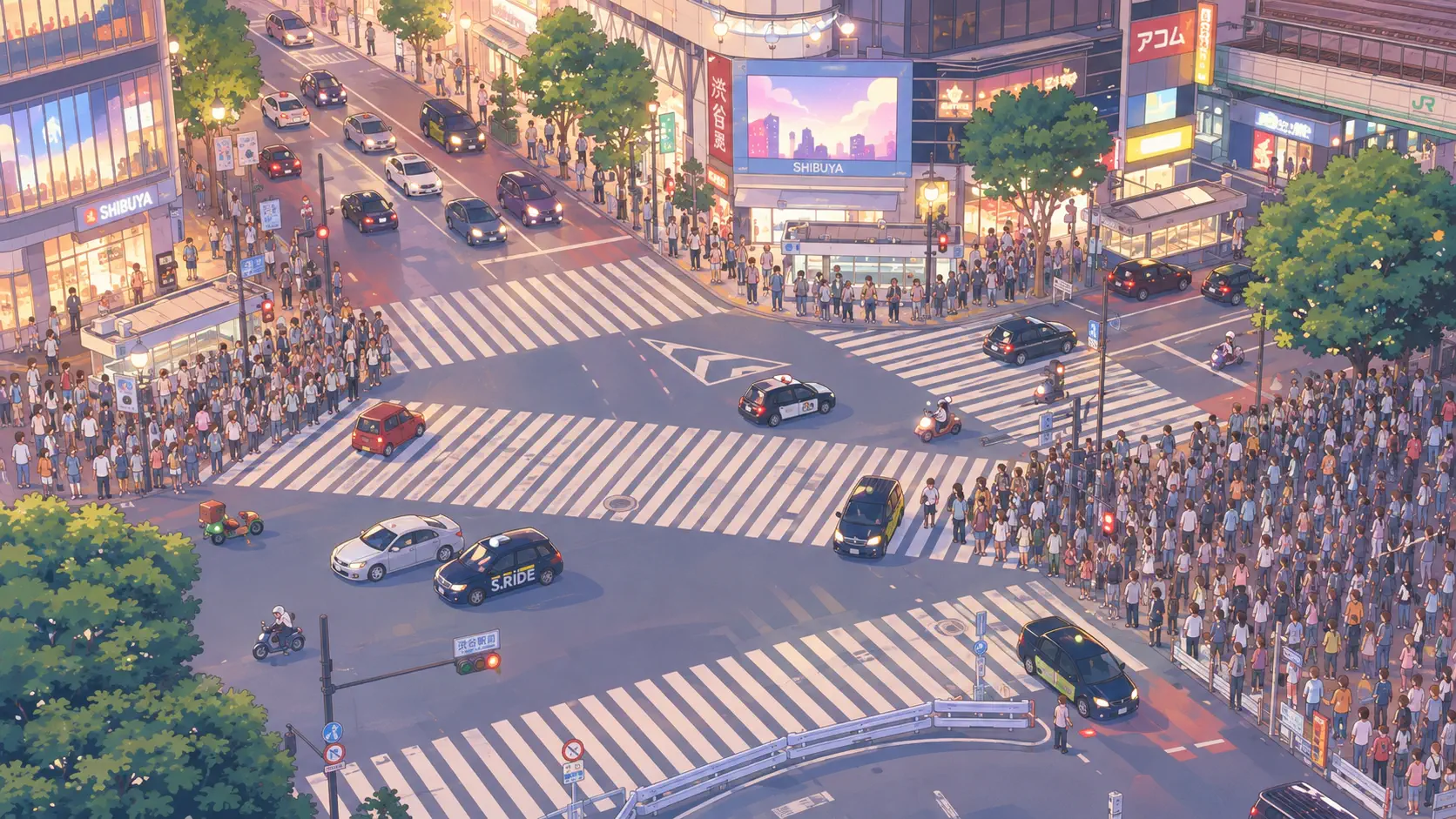
If you use the Shibuya Crossing live camera to read district crowd flow, Harajuku exhibitions like this one illustrate the spillover: not everything happens at the scramble — specialized visual culture often lands one train stop away in Jingumae, then feeds back into Tokyo-wide media chatter.
Harajuku gallery hops fit a city day; when you want out of the basin, try best day trip from Tokyo.
Exhibition facts
- Event: Manabu Koga “Suichu Nee-So” Photo Exhibition (古賀学「水中ニーソ」展)
- Dates: 30 August (Fri) – 11 September (Wed) 2013
- Closed: 5 September (Thu) — gallery rest day as listed
- Venue: PATER’S Shop and Gallery, 2-31-18 Jingumae, Shibuya, Tokyo
- Hours (historical): 12:00–19:00
- Phone (historical): 03-3475-4947
- Venue website (historical): paters.co.jp
- Event URL (historical): pot.co.jp news listing from August 2013 coverage
- Admission: free
Coverage also noted a promotional video for “Suichu Nee-So” linked from the piece. Confirm current availability of Koga’s projects and any successor venues before planning a visit.