7!! — stylized with two exclamation marks, read in Japanese as Seven Oops — sat for Shibuya Channel’s Artist File #021 while riding momentum from anime tie-ins, a manga collaboration single, and a nationwide event series called “7!! no Upup na Hi ~ Minna de Iyaa-saa-saa (Haa-ii-yaa) ~.” The four-piece from Okinawa (NANAE on vocals, MAIKO on drums, KEITA on bass, MICHIRU on guitar) had just released “ReRe Hello ~ Owaresou ni Nai Natsu ~” on 14 August 2013 for the Bessatsu Margaret manga ReRe Hello, and were deep into live dates including a Tokyo stop at Shibuya O-EAST on 22 September 2013.
Why 2013 felt like a crest
By interview time, 7!! were already known outside Okinawa. They had debuted in 2011 with “Fallin’ Love” on Epic Records Japan, supplied opening themes to Naruto Shippuden (“Lovers”) and Kimi to Boku. (“Bye Bye”), and toured abroad including Indonesia and the United States. August 2013 added the ReRe Hello collaboration — a song written specifically for Nanako Tsubaki’s serial — and September brought the Upup tour, with Osaka’s Umeda date reported sold out before Tokyo.
The band name itself is a pun on vocalist NANAE: split into “7 (nana)” and “e!!,” then rendered in English as “seven” plus “oops.” All four members wrote lyrics and music, which shows up in how differently each one describes favorite tracks and live memories.
Upup days as festival, not just concert
Asked for highlights of the current tour, NANAE anchored the title phrase “Iyaa-saa-saa (Haa-ii-yaa)” — an Okinawan festival shout — and said the goal was a room where everyone could party like a matsuri. MAIKO stressed that Upup events always paired 7!! with strong guest artists; she wanted as many people as possible to treat the bill as unmissable. KEITA wanted performers, audience, and staff to feel unified in one memorable night. MICHIRU pointed to a genre-spanning lineup that would stay entertaining from first act to last.
That framing matters. Upup was not marketed as a sober listening session. It was community heat — closer to a portable Okinawan celebration dropped into urban live houses.
Pre-show ritual: the circle and the high-five
Both NANAE and MAIKO described the same backstage routine: members and staff form a circle, link thumbs and pinkies, and shout “Sebun! Upps, upps!” before hitting the stage. MAIKO always finishes with a high-five to NANAE. Small as it sounds, the detail explains the band’s live reputation — formalized intimacy before a loud room.
Lives that still stick
Memorable shows split by member, but patterns repeat: overseas rooms where language differed but music did not, and Tokyo nights where heat peaked.
- NANAE highlighted Indonesia and America — audiences enjoying themselves without needing shared words
- MAIKO chose July’s Tokyo one-man tour date as the hottest mutual energy so far
- KEITA named New York’s Webster Hall, sharing a stage lineage with global acts he grew up revering
- MICHIRU echoed recent U.S. dates as proof music crosses borders
Those answers fit a band whose anime exposure brought young listeners while live craft kept older fans.
One favorite song each
Song picks mapped cleanly to roles:
- NANAE — “Lovers”: first major write-from-scratch session, built late nights with the whole band
- MAIKO — “Sayonara Memory”: simply fun to drum
- KEITA — “Ai no Kotoba”: composed to ignite crowds; fans exceeded expectations
- MICHIRU — “Fallin’ Love”: debut single, still the emotional anchor
None of the four tried to name a single “best” 7!! track for everyone — they argued by function: craft memory, physical joy, crowd lift, origin story.
Shibuya as problem-solver city
Shibuya O-EAST gave the interview its geographic spine. Asked what Shibuya means, answers ranged from poetic to blunt:
- NANAE called it the place you go when lost — clothes, cosmetics, food, anything — “a dream town” compared with Okinawa
- MAIKO joked it feels like a daily festival because of crowds
- KEITA said “young people’s city”
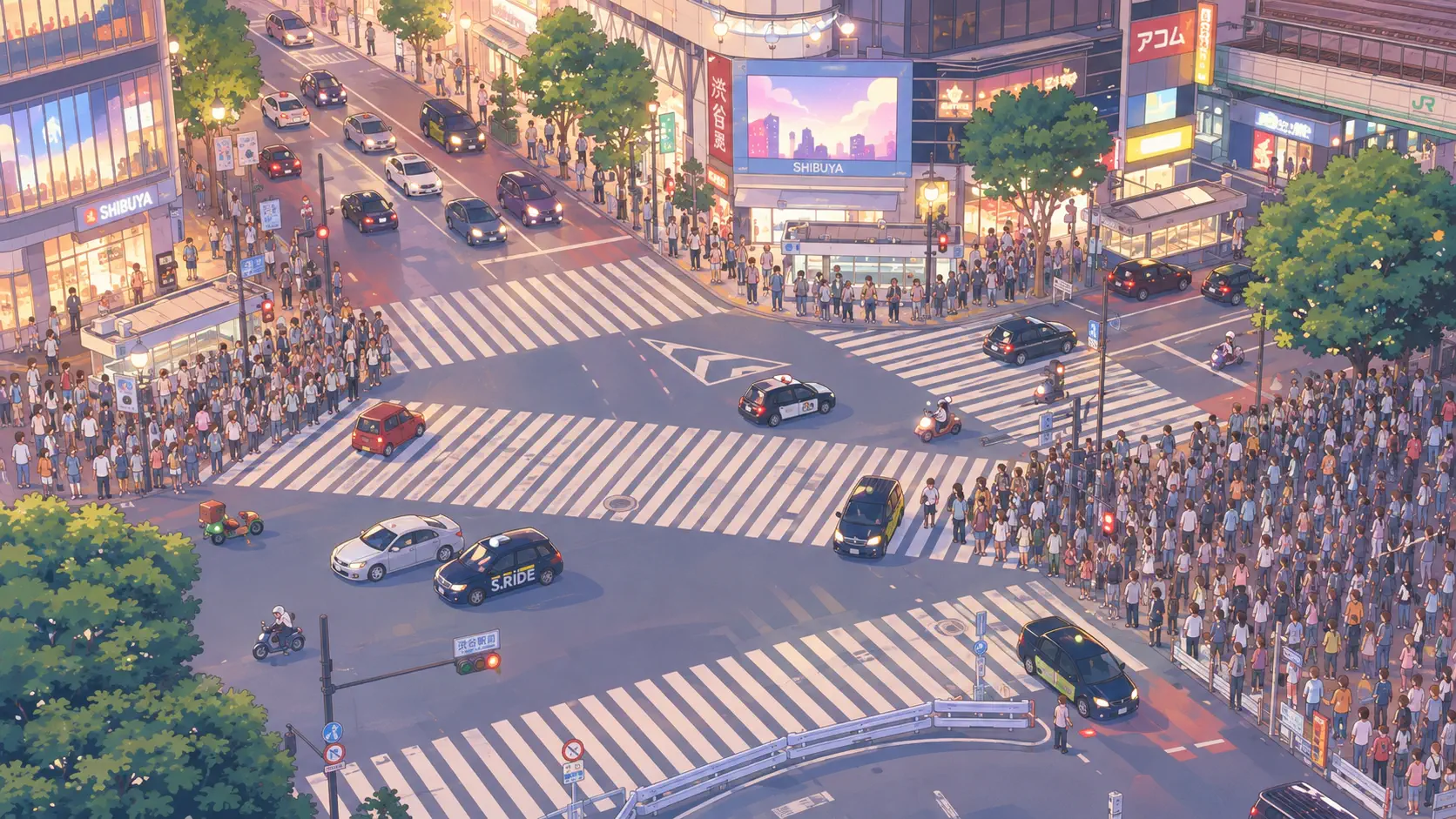
- MICHIRU went straight to the Scramble Crossing and sheer density
Recommendations were equally character-specific:
- NANAE: Mr. Bean, a soy-milk shop by Shibuya Station — especially soy-milk pancakes
- MAIKO: Zarigani Café apple pie
- KEITA & MICHIRU: internet cafés in Center-Gai with huge manga libraries and maze-like layouts
None of the picks were tourist monuments. They were workable stops between rehearsals, meetings, and O-EAST load-ins — the same practical Shibuya BiS and other Artist File subjects described from the worker side of the ward.
Fall 2013 plans: campus festivals and new songs
Looking ahead, all four pointed to school festival season. NANAE was excited about long-desired campus dates finally landing. MAIKO wanted to carry 7!! music to more regions and teased many autumn university appearances. KEITA promised better songs and better lives in sequence. MICHIRU confirmed a growing calendar of campus stages across the country.
Closing messages repeated one invitation: come hear music live, more than once if possible, and help build the room.
Event notes from the interview
Tokyo Upup show
- Title: 7!! no Upup na Hi ~ Minna de Iyaa-saa-saa (Haa-ii-yaa) ~
- Date: 22 September 2013 (Sun)
- Acts: 7!! / Kerakera / Kurikamaki / Tomita Shiori / Vanilla Beans
- Venue: Shibuya O-EAST
- Doors / start: 16:00 / 17:00
- Ticket: standing ¥3,200 (tax included; drink ¥500 separate)
- Sales: Pia P-code 204-434; Lawson L-code 73575; e+; inquiry DISK GARAGE 050-5533-0888 (weekdays 12:00–19:00)
Additional fall dates listed in the source included Inazuma Rock Fes 2013 (21 September, Shiga), Yamagata University Happon Festival (20 October), Fukui National College of Technology 49th Fes. (26 October), Tsukuba Women’s University Tsukusa Festival (27 October), and Doshisha Clover Festival (3 November). Full listings pointed to http://7oops.com/live/ at the time.
Band profile (historical snapshot)
Okinawa-based four-piece; all members compose. Major debut 2011; anime themes and film placement followed; ReRe Hello single August 2013; described in 2013 press as one of the bands most watched by teens. Official links then included http://7oops.com/, Ameba blog, Facebook, Twitter (@dr_maiko), and YouTube.
For the street layer above O-EAST’s basin, the Shibuya Crossing live camera still helps read the same weekend crowds 7!! expected their Tokyo fans to push through on the way to a Sunday night show. Readers connecting Artist File history to today’s street feeds can start with how to watch Japan live.