
Ryogoku (両国) — “both provinces” — is where Tokyo remembers that it was once Edo, and where the national sport still keeps court calendar like a seasonal religion. This live camera looks across one of the city’s most loaded intersections of past and present: JR Ryogoku Station’s west exit feeding commuters and sumo fans, the roofline of Ryogoku Kokugikan where three annual Grand Sumo tournaments unfold, Tokyo Skytree piercing the sky beyond, and the distinctive form of the Edo-Tokyo Museum documenting the metropolis this district helped build. Trains arrive and depart in the foreground; history stacks behind them.
About This Live Camera
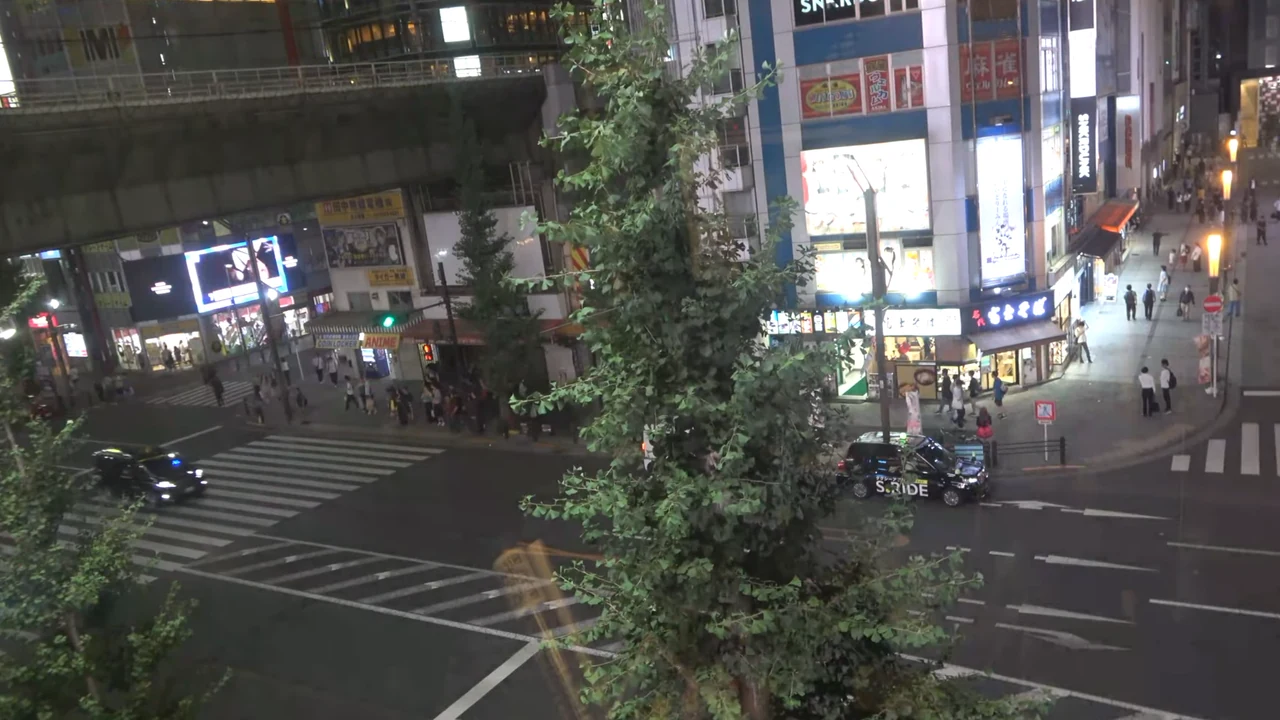
The feed is fixed on the Ryogoku district in Sumida Ward, east of the Sumida River from central Tokyo. The vantage captures street activity near Ryogoku Station’s west exit, railway movements on the Chūō-Sōbu Line and connecting services, and the landmark cluster — Kokugikan, Skytree, Edo-Tokyo Museum — that defines the skyline slice.
This is a traffic-and-trains camera with cultural depth: you watch real urban mobility against icons of Edo heritage and twenty-first-century broadcasting architecture. Quality and uptime depend on the broadcaster; night views reward patience when Skytree illumination and arena lighting activate.
What You Can See
In the foreground, Ryogoku Station activity — passengers, taxis, local buses — and JR East trains on elevated or at-grade track depending on angle. The Ryogoku Kokugikan roof appears beyond the station: the current arena, opened in 1985, seats over 10,000 and hosts January, May, and September honbasho (Grand Sumo tournaments). During tournament weeks, the frame may feel charged even when you cannot see the arena interior — extra police, food stalls, fans in yukata.
Tokyo Skytree (634 m), completed in 2012 in nearby Sumida, dominates the modern skyline — lit in evening programmes visible for kilometres. To the right, the Edo-Tokyo Museum building by Kiyonori Kikutake rises on stilts like a warehouse lifted from the Edo period — reopened in March 2026 after extensive renovation, it tells Tokyo’s story from 1590 onward through models and immersive exhibits.
Street traffic on Ryogoku-dōri and connecting roads fills the middle ground. On clear days, the Sumida River corridor may glint between buildings. You will not see the dohyō (sumo ring) itself, but you may infer tournament days from crowd density and banner presence.
Location
Ryogoku sits in Sumida Ward on the east bank of the Sumida River, bordered by Chūō, Taitō, and other Sumida districts. The name derives from Ryōgoku Bridge, first built in 1659, linking Edo (Musashi Province) with Shimōsa Province across the river — a literal “two countries” crossing that made the eastern bank an entertainment hub.
Ryogoku Station serves JR East’s Chūō-Sōbu Line (local and rapid services) and the Ōedo Subway Line (via separate underground access). Tokyo Skytree stands 1.5 km northeast; Asakusa and Sensō-ji lie north along the river. Kinshichō, Oshiage, and Kameido are short rides away — the camera sits in east Tokyo’s museum-and-arena belt rather than the Marunouchi finance core.
History
After the Meireki Fire of 1657, Ryōgoku Bridge connected rebuilding Edo to eastern settlement. Eko-in temple became the site of kanjin-zumo — sanctioned sumo tournaments raising funds for temple construction — from the late Edo period through 1909. Sumo’s rituals, rankings, and public culture matured with Ryogoku as backdrop; the district earned its reputation as sumo town (sumo no machi).
The first permanent Ryogoku Kokugikan opened in 1909 near Eko-in — Japan’s first dome-shaped steel-framed arena, nicknamed the “big iron umbrella.” It survived war and reuse until the 1985 current Kokugikan opened beside Ryogoku Station, adjacent to the Edo-Tokyo Museum (1993). Ryogoku Station itself opened in 1904, bringing rail access to a district already defined by river crossings and wrestling crowds.
Tokyo Skytree is the newest layer — broadcasting tower and observation deck replacing Tokyo Tower as height champion yet coexisting in the cultural imagination. Ryogoku remains where Japan’s oldest continuous sporting tradition meets its tallest urban structure — visible in one camera frame.
Why Watch
Because sumo tournaments are national events and this camera lets you feel the district’s pulse on ordinary days and tournament eves alike. Because Skytree from Ryogoku is the east-Tokyo postcard angle — better with trains in foreground. Because Edo-Tokyo Museum next to Kokugikan is one of the world’s great city-history pairings, and the live view contextualises both.
Rail fans log Chūō-Sōbu liveries. Sumo fans scout queue lengths remotely. Museum planners study pedestrian flow. It is heritage Tokyo without the Asakusa tourist crush — though Asakusa is close enough for a river walk after watching.
Daily Life
Weekday mornings bring office workers through Ryogoku Station toward Kinshichō and Tokyo; Chūō-Sōbu rapid services skip some stops but locals know the timetable. Midday tourists split between Edo-Tokyo Museum, Sumida Hokusai Museum, and Kokugikan shop visits on non-tournament days. Afternoon chanko-nabe restaurants — feeding sumo stables’ recipes to the public — prep for dinner service.
Evening river walks along the Sumida increase in mild seasons. Stable mornings (early training at nearby beya) happen off-camera but explain occasional rikishi sightings in street clothes. Tournament weeks rewrite everything: yukata, street vendors, international press, and last-train crowds after makuuchi bouts end.
Best Time of Day to Watch
- Morning rush (7:30–9:00): train frequency peak; good for rail enthusiasts.
- Midday (10:00–15:00): museum and arena foot traffic; clearer Skytree detail.
- Blue hour: Skytree and Kokugikan lighting against twilight — the frame’s drama peak.
- Tournament afternoons: even exterior views feel eventful; check sumo calendar for January, May, September.
- Late night: quieter streets; illuminated Skytree holds the frame.
Best Seasons and Weather
January — New Year Grand Sumo Tournament — is the coldest, most atmospheric honbasho week. May tournament overlaps Golden Week energy. September brings autumn light and Aki Basho crowds. Summer humidity softens Skytree visibility but extends evening illumination hours. Rainy season adds reflections on station plaza; typhoon approaches empty outdoor spaces. Cherry blossom season along the Sumida is better viewed riverside than on this cam, yet petal weekends still swell station traffic.
Events and Celebrations
Three Grand Sumo tournaments annually at Ryogoku Kokugikan (Hatsu Basho January, Natsu Basho May, Aki Basho September) transform the district — fifteen days each, television nationwide, exterior buzz visible here. Sumo jungyo (regional tours) leave Ryogoku quieter between basho. Edo-Tokyo Museum special exhibitions spike visitor numbers after its 2026 reopening. Sumida River Fireworks (last Saturday of July) flood nearby stations — extreme crowd nights on the cam. Ryogoku local festivals and Eko-in temple events echo Edo entertainment roots.
Getting There
JR Ryogoku Station — Chūō-Sōbu Line from Tokyo Station (~5 minutes by rapid), Shinjuku (~20 minutes), Akihabara (~3 minutes). Toei Ōedo Line Ryogoku Station (separate underground exit) connects Shinjuku, Roppongi, Tsukiji market area.
Walk 15 minutes west to Sumida River promenade; 25 minutes north to Asakusa. Tokyo Skytree is one Ōedo Line stop to Oshiage or a scenic river walk. Suijo Bus river cruises depart from nearby landings — seasonal.
Interesting Facts
- Ryogoku means “both countries” — the Edo/Shimōsa provincial boundary ran through the Sumida River.
- The 1909 Kokugikan was designed by Tatsuno Kingo (also Tokyo Station) — Western dome meets Japanese roof symbolism.
- Over 10,000 spectators fit in the current arena; tournament tickets sell out quickly via lottery.
- Chanko-nabe — sumo stew — originated in stable kitchens; Ryogoku hosts dozens of chanko restaurants.
- Tokyo Skytree’s height 634 m reads as mu-sa-shi (Musashi) in wordplay honouring the old province.
- Most sumo stables (beya) remain in Tokyo; a majority still train in the Ryogoku area.
Tournament Week From the Outside
You cannot see the dohyō, yet tournament energy leaks into the live frame. Watch for yukata clusters near the station, yatai food smoke (invisible but inferable from crowd pauses), and taxi queues stretching toward Ryogoku-dōri. Morning days 1–8 feel calmer; final weekend afternoons bring fans rushing for yokozuna bouts — pedestrian surges between train arrivals. If the camera looks unusually still during 15:00–18:00 in tournament fortnights, check whether a sell-out arena has pulled everyone indoors — then wait for the exit wave when bouts end.
Skytree and Sumo in One Glance
East Tokyo’s cognitive dissonance is pleasant: Skytree — futuristic broadcast spire — and Kokugikan — ritual sport in a building evoking Edo warehouses — share a skyline. Evening illumination programmes on Skytree (iki, miyabi, seasonal themes) play against the arena’s practical floodlights. The camera teaches that Tokyo does not replace its past; it stacks it. Edo-Tokyo Museum between them is the interpretive key — literally elevated on pillars so flood history remains visible underneath.
Nearby Live Cameras
Look closer at Tokyo Skytree, compare temple crowds at Asakusa Hōzōmon Gate, or shift to neighbourhood street life at Kameido Kitchen Dive.
Frequently Asked Questions
Can I see sumo matches on this camera?
No — the feed shows the exterior district and Kokugikan roofline, not the arena interior or dohyō.
When are Grand Sumo tournaments in Ryogoku?
Three times yearly: January, May, and September — each lasting 15 days at Ryogoku Kokugikan.
Is Tokyo Skytree visible?
Yes — it appears prominently in the skyline beyond the arena, especially striking when illuminated at night.
What train lines serve Ryogoku Station?
JR Chūō-Sōbu Line and Toei Ōedo Subway Line (separate station exits).
What is the Edo-Tokyo Museum?
A major history museum beside Kokugikan documenting Edo and Tokyo from 1590 — the building reopened in 2026 after renovation.
Is Ryogoku near Asakusa?
About 15–20 minutes walk north along the Sumida River, or a short train ride.
Does the stream run 24/7?
Broadcasting may follow operator schedules; uptime is not guaranteed continuously despite live status.