
Most Tokyo live cameras sell neon and crowds. This one sells thrust. From the Asahi Shimbun hangar at Haneda Airport — Tokyo International Airport (HND) in Ōta — the stream looks toward runway activity with the blunt honesty of an industrial window. You are not in a terminal café photographing glass. You are beside the working machine that keeps Japan’s capital breathing air routes: domestic banks of ANA and JAL metal, international movements, and the weather that decides whether the evening rush looks crisp or soft.
About This Live Camera
The camera is associated with Asahi Shimbun’s aviation presence at Haneda, including news-helicopter operations from hangar space inside the airport world. Public descriptions commonly place the view toward runway A and B directions — a wide plane-spotting angle rather than a single gate close-up. When the feed is up, expect nearly continuous daylight traffic and quieter but still meaningful night movements. Streams pause for maintenance and line issues; that is normal for long-running airport cams.
Treat the page as both aviation entertainment and a practical weather instrument. Typhoon edges, summer haze, and winter clarity rewrite the same geometry in hours.
What You Can See in the Live View
Watch the choreography, not only the takeoffs. Aircraft line up, hold, roll, rotate. Ground vehicles thread between. Heat shimmer on hot days turns distant fuselages into soft mirages. On wet days, runway lights bloom and spray becomes part of the picture. Sound is missing from many browser contexts, but your brain will invent it: the delayed roar after a jet clears the frame is almost a Tokyo tradition for anyone who has lived under a flight path.
Because Haneda is dense, the “empty minute” is rare compared with regional fields. That density is the aesthetic. This is aviation as urban infrastructure, not island solitude.
Where Is Haneda — and Why the Hangar Matters
Haneda sits in Ōta Ward on Tokyo Bay, roughly fourteen to fifteen kilometers from Tokyo Station and far closer to the city core than Narita. That proximity made Haneda Japan’s domestic champion for decades and, after international expansion, a dual-role gateway. Today the field operates four runways (A/B/C/D in common local speech — including pairs such as 16R/34L and 16L/34R among the parallel set) and three passenger terminals, with domestic and international roles that have evolved as slots and buildings shifted. In peak modern years Haneda ranks among the world’s busiest airports by passengers — on the order of eighty million-plus annual travelers in recent strong years — which is why a hangar-side cam rarely looks idle for long.
A newspaper hangar camera is a culturally specific Japanese detail. Major media organizations maintain aviation assets for news gathering, including helicopters that turn breaking stories into aerial pictures. Putting a public lens on that perimeter turns private operational space into civic spectacle — plane spotting with a press-bay accent.
History: The Airport Tokyo Grew Around
Haneda’s modern identity is inseparable from postwar recovery and the rise of mass domestic air travel. After wartime and occupation chapters, the field re-emerged as Tokyo International Airport and kept expanding — runway lengthenings, offshore development phases, monorail and Keikyu links, new terminals, and eventually the D-runway era that helped unlock fuller international return. As Japan’s economy accelerated, flying between Tokyo and regional cities stopped being exotic and became scheduled habit. Haneda absorbed that habit. Later decades brought the constant negotiation between noise, neighbors, and capacity that every close-in mega-airport knows.
What the camera cannot show — but the story needs — is political geography: Narita took long-haul pressure for a generation; Haneda remained the intimate airport, the one you could almost treat like a station. Watching HND live is watching that intimacy at industrial scale.
Why This View Is Famous Among Spotters
Plane spotters love angles that reveal rotation and climb without terminal clutter. Hangar-side views often deliver that. You see attitude, gear, and the moment wings take weight. You also see fleet variety: narrowbodies on domestic trunks, widebodies on thicker routes, the occasional surprise livery that makes chat overlays explode on other platforms.
For non-spotters, the appeal is hypnotic repetition. Cities rarely show their logistics this clearly. Haneda does, every few minutes.
Daily Life Around the Frame
Morning banks feel purposeful — business Japan launching into the day. Midday can look like continuous competence. Evening peaks glow: navigation lights, long exposures of the mind if not the sensor, and the sense that the whole country is still moving while office towers empty. Overnight, the field does not fully sleep; Japan’s capital rarely does.
Weather days become communal events. When snow threatens Tokyo, people open Haneda cams the way other cities open traffic cams — to see whether the rumor is real.
Best Time of Day to Watch
- Morning rush: dense, documentary, excellent for spotting frequency
- Golden hour: metal turns warm; climb-outs look cinematic
- Night: lights and silhouettes; best when cloud bases cooperate
- Storm approach: drama, with the caveat that operations and streams both get complicated
If you want teaching moments for kids or newcomers, watch a clear evening and narrate each phase of a takeoff out loud. The airport becomes a classroom.
Best Seasons and Weather
Spring and autumn often give the cleanest long views across the bay-side airfield. Summer humidity can flatten contrast but intensifies heat shimmer. Winter can be razor-sharp after cold fronts. Typhoon season is the ethical watch: fascinating, sometimes frightening, never a toy. If authorities and airlines are scrambling, respect that the pretty radar spiral has human stakes.
Events and Calendar Pulses
Golden Week, Obon, and New Year travel thicken movements and change aircraft mix. Major international events in Tokyo ripple into arrival banks. Spotters also track airline schedule seasons — summer leisure routes, winter ski-country domestic links — as invisible calendars written in liveries.
Getting There (For Humans, Not Cameras)
Travelers reach Haneda by Tokyo Monorail, Keikyu, buses, and road links. The hangar camera location itself is not a public terrace you casually stroll into; it is an airside-adjacent operational world. Use the stream as the visit. For ground-level human tourism, the terminals’ observation decks and museum spaces are the proper public faces of the airport.
Interesting Facts
- Haneda’s closeness to central Tokyo is its superpower and its eternal planning puzzle.
- Media hangars at major airports are part of Japan’s news infrastructure, not just plane-spotting folklore.
- Runway lettering (A/B/C/D in common speech) helps locals describe which “stage” of the airport they mean.
- Continuous daytime movement makes HND one of the best “leave it on while you work” aviation cams in the country.
- Comparing this feed with a quiet regional airport cam is an instant lesson in scale.
How to Watch Like a Spotter
Keep a second tab with a live flight map if you enjoy matching silhouettes to callsigns. Note wind: which way aircraft face tells you more about the day’s meteorology than a generic “cloudy” label. Over a week, you will start recognizing airline paint and body lengths without trying.
Train your eye on rotation attitude and climb gradient. A heavy widebody leaving in humid air looks different from a short-haul narrowbody leaping into winter clarity. Ground equipment tells stories too: follow-me cars, pushbacks at the edge of frame, the brief ballet before a runway becomes a runway again. If cloud base drops, watch how operations compress into a narrower vertical world — still busy, just flatter.
Haneda Versus the Idea of “Tokyo Airport”
International visitors often arrive with Narita in their heads and leave surprised by Haneda’s intimacy. The hangar cam explains the surprise without a brochure. You see why residents treat flying as something closer to rail than pilgrimage: frequency, proximity, and a bay-side field that feels embedded in the metropolis rather than exiled to the prefectural edge. When people argue about airport policy in Tokyo, they are arguing about frames like this one — who gets the convenient runway, who gets the long train, who hears the night noise.
A Quiet Note on Safety and Respect
Airport livestreams are entertainment until weather or incident days make them something else. If you notice unusual patterns — long gaps, circling, emergency vehicles — resist turning speculation into confident commentary. Controllers and crews are solving problems you cannot see. Enjoy the ordinary miracle of scheduled flight; leave the extraordinary to people paid to handle it.
Nearby Live Cameras
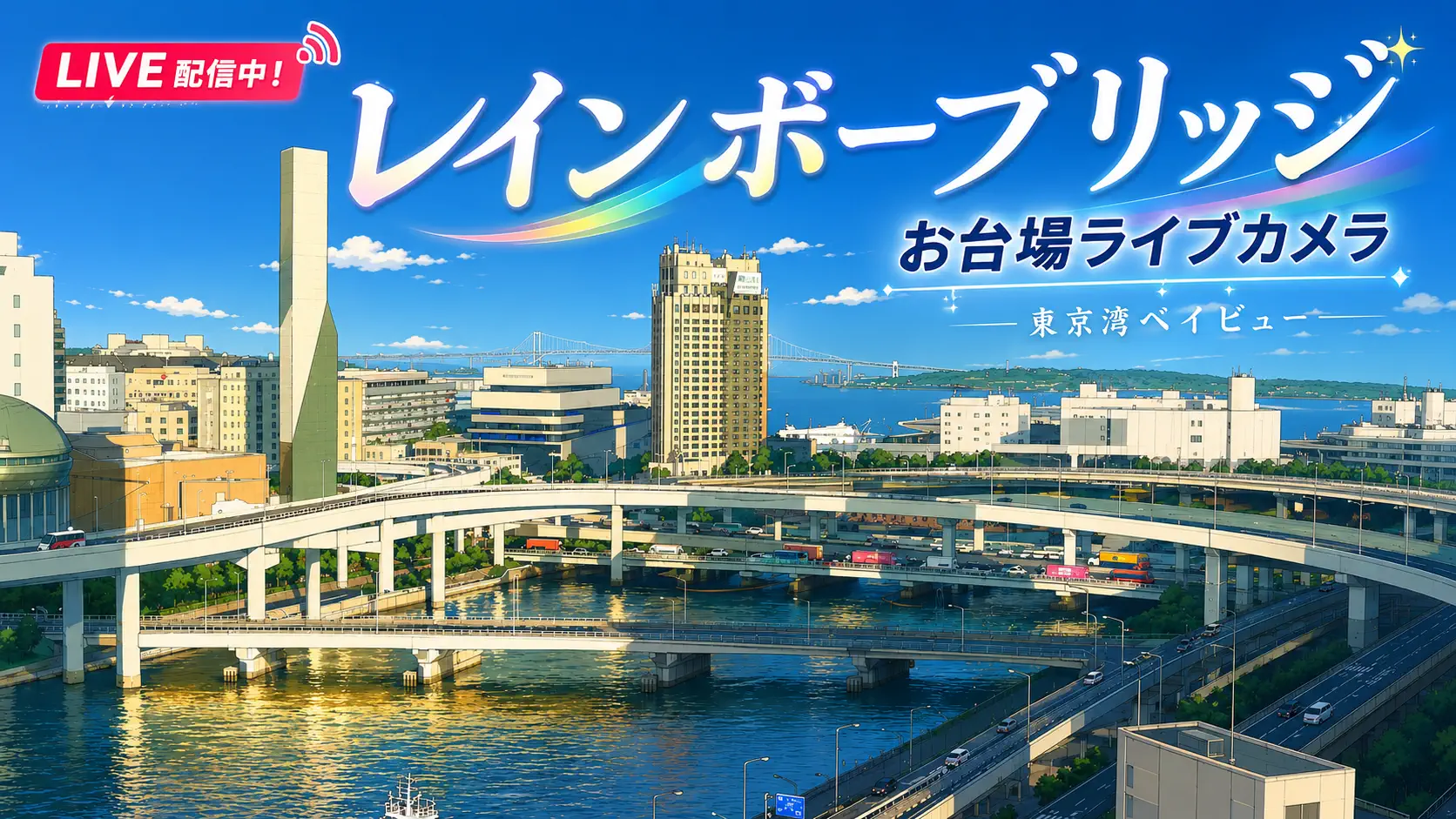
Pair with other Tokyo aviation and skyline pages such as Haneda Airport, then switch to human-city spectacle at Odaiba Rainbow Bridge or Tokyo Tower View to remember what all those flights are for.
Frequently Asked Questions
Is this the same as “Tokyo International Airport”?
Yes. Haneda’s official English name is Tokyo International Airport (HND).
Can I visit the exact camera hangar?
Not as a casual tourist stop. Enjoy the public stream; use terminal observation areas for in-person viewing.
Why do planes sometimes seem to vanish into haze?
Bay moisture and summer humidity reduce contrast. The airport is still busy — the air is just thicker.
Is the stream 24/7?
It is often long-running, but maintenance and outages happen. Do not treat uptime as a guarantee.
What makes this better than a terminal cam?
Hangar-side angles often show runway operations more clearly than retail-side windows aimed at aprons and taxis.