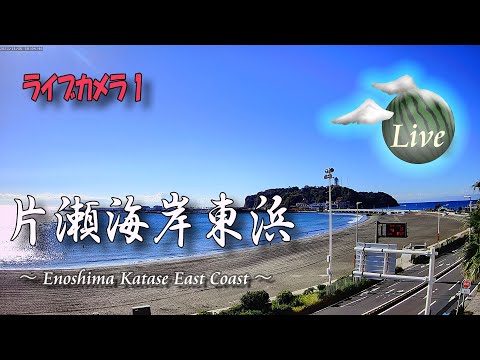

The Shonan coast has a sound — surf on black sand, Enoden trains clicking along the embankment, and on summer weekends the steady hum of Route 134 carrying day-trippers from Tokyo toward Enoshima and back. This live camera from the rooftop of Shonan Ocean House, a holiday home in Shichirigahama, Kamakura, puts you above that soundtrack with a panorama that has seduced painters, musicians, and surfers for generations. Sagami Bay opens to the Pacific; Inamuragasaki and Enoshima Island anchor the horizon; and on the clearest winter mornings, Mount Fuji may appear as a distant cone — the same view Hokusai and Hiroshige chased in their Thirty-six Views series.
About This Live Camera
The stream broadcasts from Shonan Ocean House on the rooftop terrace, overlooking Shichirigahama (七里ヶ浜) in Kamakura City, Kanagawa Prefecture. The property sits on the Shonan stretch of coast between Kamakura and Fujisawa, a region locals call simply Shonan — shorthand for sun, surf culture, and the romance of the Enoshima Electric Railway (Enoden) line running beside the sea.
Expect a wide landscape composition: ocean, sky, coastal road, railway, and beach activity. The camera serves holiday guests and remote viewers alike — useful for checking surf conditions, weather, sunset colour, and the eternal question of whether Route 134 is already jammed. Stream uptime follows the operator’s schedule; availability may vary seasonally.
What You Can See
Read the frame from sea to land. Sagami Bay fills the middle distance, its colour shifting from deep blue on clear days to silver-green under cloud. Enoshima Island often appears as a low silhouette to the east; Inamuragasaki, the rocky cape west of Shichirigahama, may frame the left edge depending on lens angle. Mount Fuji, roughly 70 km away on the best visibility days, rises beyond the water — most reliably in winter mornings when dry north winds scrub the air.
On the left, watch for Enoden trains — small green-and-cream carriages that have run this coast since 1902, now beloved as a moving scenic railway. National Route 134 (国道134号) parallels the beach: a two-lane coastal artery famous for weekend congestion, cyclists, and classic-car cruising. Below the road, Shichirigahama Beach stretches about 2.9 km along the shore — a Top 100 Shores of Japan designation. Surfers paddle out year-round; swimmers are officially discouraged because of strong currents and a steep seabed drop-off.
Pedestrians, beach walkers, and the occasional paraglider from nearby Inamuragasaki launch sites add human scale. Cloud fronts moving in from the ocean rewrite the scene hourly — the camera’s great virtue is showing weather approach before it hits Tokyo.
Location
Shichirigahama lies on Kamakura’s southwestern edge, facing Sagami Bay on the Pacific side of the Miura Peninsula hook. Administratively it belongs to Kamakura City in Kanagawa Prefecture, not Yokohama — though many visitors arrive via Yokohama or Tokyo on the JR Yokosuka Line or Shonan-Shinjuku Line to Kamakura Station, then transfer to Enoden.
The camera sits near Shichirigahama Station on the Enoden — about 10 minutes from Kamakura or 5 minutes from Enoshima Station. Route 134 continues west toward Zushi and east toward Fujisawa, forming the backbone of Shonan coastal driving. Kamakura Kokomae Station, two stops east, overlooks the famous railroad crossing featured in anime and photography guides — visible Enoden territory from this same coastline.
History
The name Shichirigahama — “seven-ri beach” — reflects old distance measurement between Inamuragasaki and Koyurugi Cape; the actual shoreline is closer to 2.9 km than seven ri, but the poetic exaggeration stuck. The beach’s iron-rich black sand once supported local steel-making traditions; steep cliffs and powerful waves made it unsuitable for swimming resorts yet ideal for surf culture, which took root firmly by the late twentieth century.
Enoden opened as Japan’s first section of what became the coastal line in 1902, connecting Kamakura to the sea for Meiji-era tourists. Route 134 was designated a national highway in the 1950s, cementing automobile access and weekend traffic patterns that the camera still documents daily. Ukiyo-e masters Katsushika Hokusai and Utagawa Hiroshige included this coastline in Thirty-six Views of Mount Fuji — proof that the composition you see is not Instagram novelty but centuries-old aesthetic territory.
Modern pop culture reinforced the myth: Southern All Stars sang Shonan into Japan’s collective memory; Slam Dunk fans pilgrimage to Kamakura Kokomae for the crossing shot. Shonan Ocean House represents the latest layer — private lodging with a public-facing camera sharing the view that sold generations on the coast.
Why Watch
Because this is Japan’s most cinematic commuter railway running beside an actual surf break — and the camera catches both in one frame. Because Fuji at sunset over Enoshima is a bucket-list sight you can scout for free before booking train tickets. Because Route 134 traffic tells you whether your Saturday drive from Tokyo is doomed — valuable intelligence from a rooftop in Kamakura.
Surfers check wave size and wind chop. Photographers study cloud direction. Homesick Kanagawa residents listen to invisible gulls and remember shirasu lunches in Enoshima. It is slower television than Shibuya — and that is the point.
Daily Life
Dawn belongs to surfers and photographers — first light on Fuji, Enoden nearly empty, Route 134 whisper-quiet. Morning brings school commuters on Enoden and dog walkers on the sand. Midday on weekdays feels almost private; weekends explode with beach towels, rental boards, and café queues along the coastal road. Afternoon cyclists and Route 134 classic-car clubs appear in warmer months. Sunset draws couples to the western horizon — the camera’s golden hour — while Enoden evening services shuttle workers toward Fujisawa and Kamakura.
Year-round, wet-suited regulars treat Shichirigahama as a serious break, not a resort photo prop. Cafés and seaside restaurants along Route 134 fill between surf sessions. The Enoden conductor’s pace — unhurried, almost ceremonial — sets the neighbourhood tempo.
Best Time of Day to Watch
- Sunrise (6:00–7:30 in winter): best Mount Fuji visibility; surfers already in water.
- Morning (9:00–11:00): soft light, lighter traffic, Enoden visible without rush-hour crush.
- Sunset (16:00–18:00 year-round, later in summer): iconic orange-pink skies over Sagami Bay.
- Weekday afternoons: calmer Route 134 — good baseline for traffic comparison.
- Weekend midday: maximum beach and road activity — people-watching peak.
Best Seasons and Weather
Winter (December–February): clearest Fuji views, cold but rewarding for photographers; surf still active. Spring: mild haze, cherry blossoms inland in Kamakura temples — coastal cam shows fresh green cliffs. Rainy season (June): dramatic clouds, sudden showers, empty beaches between squalls. Summer: humid haze hides Fuji more often, but beach life peaks — surf, fireworks distant on bay nights, heavy Route 134 congestion. Typhoon season (August–October): watch for high surf, road closures, and empty frames before storms — do not romanticise dangerous seas. Autumn: crisp evenings, returning clarity after summer haze.
Events and Celebrations
Enoshima hosts fireworks and festival nights that swell Route 134 traffic — visible as brake-light rivers on the cam. Kamakura temple seasons (Hydrangea at Meigetsuin, Autumn at Engakuji) indirect affect Enoden ridership past Shichirigahama. Surf competitions and triathlon events occasionally use Shonan beaches — extra wetsuits in frame. Golden Week and Obon produce the year’s worst coastal jams. New Year sunrise crowds gather for hatsuhinode (first sunrise) — the camera may show packed sand at dawn.
Getting There
From Tokyo: JR Yokosuka Line or Shonan-Shinjuku Line to Kamakura Station (~55–60 minutes from Tokyo Station), then Enoden to Shichirigahama Station (~10 minutes). The beach and Route 134 are steps from the station — pass under the road via pedestrian tunnel to reach the sand.
From Fujisawa: Enoden westbound to Shichirigahama (~5 minutes from Enoshima). Enoshima-Kamakura Free Pass covers Enoden and local JR hops — excellent value for day trippers.
By car: Route 134 from Yokohama or Zushi — expect weekend congestion and limited parking near the beach; use station-area lots in Kamakura when possible. Shonan Ocean House itself is private accommodation — the camera shares the view guests receive on the rooftop.
Interesting Facts
- Shichirigahama is one of Japan’s Top 100 Shores despite swimming being prohibited — surf and scenery carry the reputation.
- Enoden is only 10.0 km long yet ranks among Japan’s most scenic railways — speed limited for coastal charm.
- Mount Fuji visibility from here inspired Hokusai and Hiroshige — your live feed continues an art-historical sightline.
- Southern All Stars, formed in Fujisawa, embedded Shonan in J-pop — the coast you see is literally soundtracked.
- Kamakura Kokomae crossing, two Enoden stops east, appears in Slam Dunk — fans worldwide recognise this shoreline.
- Route 134 is nicknamed the Shonan coast road — weekend traffic jams are a local tradition as durable as surfing.
Surf and Sea From Above
Learning to read this camera makes you a better beach visitor. Whitecaps across the bay mean wind stress on the break — fine for experienced surfers, rough for paddleboards. Glassy morning water with surfers sitting far outside signals a swell worth watching. Empty ocean, heavy onshore wind — stay on the café terrace. Enoden frequency increases on holiday timetables; spotting double-carriage trains hints at festival discharge from Enoshima. The camera cannot replace local shop advice, but it prevents the classic mistake of driving two hours into a blown-out shore.
Enoden as Moving Postcard
Fix your eyes on the left margin whenever a train approaches. Enoden’s slow speed — often compared to a bicycle — lets passengers absorb exactly what you see: sea, cliff, Fuji tease, Enoshima approach. Freight of daily life rides those carriages: students in uniform, surfers with boards, elderly couples who remember pre-war Kamakura. When two trains pass at Shichirigahama Station off-frame, the camera sometimes catches the tail carriage rounding the embankment — a moment railway fans replay for hours. It is Route 134’s antidote: where the road rushes, the Enoden strolls.
Planning the coast day in person? Use the Kamakura day trip guide for Enoden timing and when rain should cancel the island add-on.
Nearby Live Cameras
Extend the coast at Enoshima Island, compare harbour calm at Hayama Port, or shift to urban waterfront at Kishamichi Promenade, Yokohama.
Frequently Asked Questions
Is Shichirigahama in Kamakura or Yokohama?
Kamakura City, Kanagawa Prefecture — part of the Shonan coast south of Yokohama and Fujisawa.
Can you swim at Shichirigahama Beach?
Officially no — strong currents and a steep seabed make swimming dangerous; surfing and walking are the main activities.
When is Mount Fuji visible?
Most often on clear winter mornings; summer haze frequently hides the mountain.
What is Route 134?
National Route 134 — the scenic coastal highway running parallel to the beach through Shonan.
How do I reach Shichirigahama by train?
Enoden to Shichirigahama Station from Kamakura or Enoshima — the station is beside the beach and road.
Is the live stream always on?
Broadcasting follows Shonan Ocean House operator schedules; treat availability as seasonal rather than guaranteed 24/7.
Why is Enoden famous?
A 1902 coastal railway with vintage carriages, anime pilgrimage sites, and views that rank among Japan’s best from a train window.