On 6 August 2013, Shibuya O-nest hosted Happy ja Night (tentative) ~ laugh & music ~ — a Yoshimoto Creative Agency production that tried to fuse stand-up comedy and live music inside one of the ward’s most familiar standing rooms. Shibuya Channel ran a short pre-event interview series with the comedians on the bill; installment seven featured New York, the young duo of Kazuya Shimasa and Hiromasa Yashiki, who by then had already pulled off a successful first solo live and were being framed as rising circuit regulars.
What follows captures their split personalities, odd memory songs, and very Shibuya-specific recommendations ahead of that O-nest bill.
What the event was trying to do
Happy ja Night sat in a small but durable Tokyo format: comedy bills that borrow music’s stage energy without pretending comedians are bands. O-nest — on the sixth floor of the O-WEST building in Maruyama-cho — was a natural host. Standing room, late doors, and a crowd that already understood both live houses and Yoshimoto’s talent pipeline.
Advance tickets ran ¥2,500; door ¥3,000, plus the usual ¥500 drink charge. The show opened at 18:00 with a 19:00 start. For performers like New York, the prompt was simple and slightly unfair: explain what music means to you on a mixed bill where music is half the premise.
Two answers to “what is music?”
Shimasa and Yashiki did not coordinate their philosophies, which was the point.
Shimasa treated music as at least as important as comedy — maybe more. Yashiki admitted the opposite: music was something he was “not especially good at,” with trauma attached. He recalled a fusion show where a band began tuning mid-manzai, collapsing the room into an unbearable atmosphere. That single memory became his entire framework for music-comedy crossover.
The contrast is useful archive context. Happy ja Night was not selling seamless integration. It was betting that friction between formats could be funny on purpose.
Memory songs with bad geography
Asked for personal anthem tracks, each member chose a song that explained where they came from rather than what they currently liked.
Shimasa, fresh from the countryside to Tokyo, had looped Kururi’s “Tokyo” nightly in his early capital days — less nostalgia than orientation, a headphone map for a city he was still learning to inhabit.
Yashiki picked Yuzu’s “Natsuiro,” but the story was not sweet. In junior high he and friends had performed it as a street live, got hassled by local troublemakers, and filed the song under “youthful overconfidence punished.” Comedy duos often mythologize origin pain; here the pain was literally a summer-color ballad.
Current picks: deliberate and accidental
For present-tense recommendations, the answers diverged again.
Shimasa named Denki Groove — “deliberately right now,” as if timing mattered as much as taste. Yashiki chose Paspi, partly because the group sang the theme for a Fuji TV program he was appearing on at the time, and partly because he had recently seen them live and approved.
Neither answer was a generic J-pop safe choice. Both tied music to work schedules and television footprints, which is how working comedians actually consume artists.
Shibuya as a scoreboard, not a skyline
The interview’s Shibuya section was performance geography, not tourism.
Shimasa’s strongest memory was a live at Shibuya Mugendai Hall — one of the small rooms that train young acts before they graduate to larger towers. Yashiki pointed to Shibuya-AX and a Yoshimoto annual event where New York posted a good result — a memory framed as professional validation rather than fan experience.
For recommendations, Shimasa doubled down on live infrastructure: Mugendai Hall again, plus Shibuya Golden GUY, the long-running musician bar associated with the ward’s after-show ecosystem. Yashiki answered “none,” which reads less as indifference than as comedy’s habit of refusing earnest city-guide questions.
Show-night energy
Closing prompts were short and loud.
Shimasa promised the best night possible. Yashiki vowed to “wake the sleeping music soul” inside himself — a line that only works if you already know he distrusts music stages. Their messages to sibch.tv readers were pure ward boosterism: “Shibuya strongest” and “Shibuya best — thanks in advance.”
That tone matched the event’s positioning: young, local, slightly provisional title and all.
Event facts from the post
- Event: Happy ja Night (tentative) ~ laugh & music ~
- Date: 6 August 2013 (Tuesday)
- Venue: Shibuya O-nest (O-WEST building 6F, 2-3 Maruyama-cho)
- Times: doors 18:00 / start 19:00
- Tickets: advance ¥2,500 / door ¥3,000 (+ ¥500 drink)
- Organizer: Yoshimoto Creative Agency
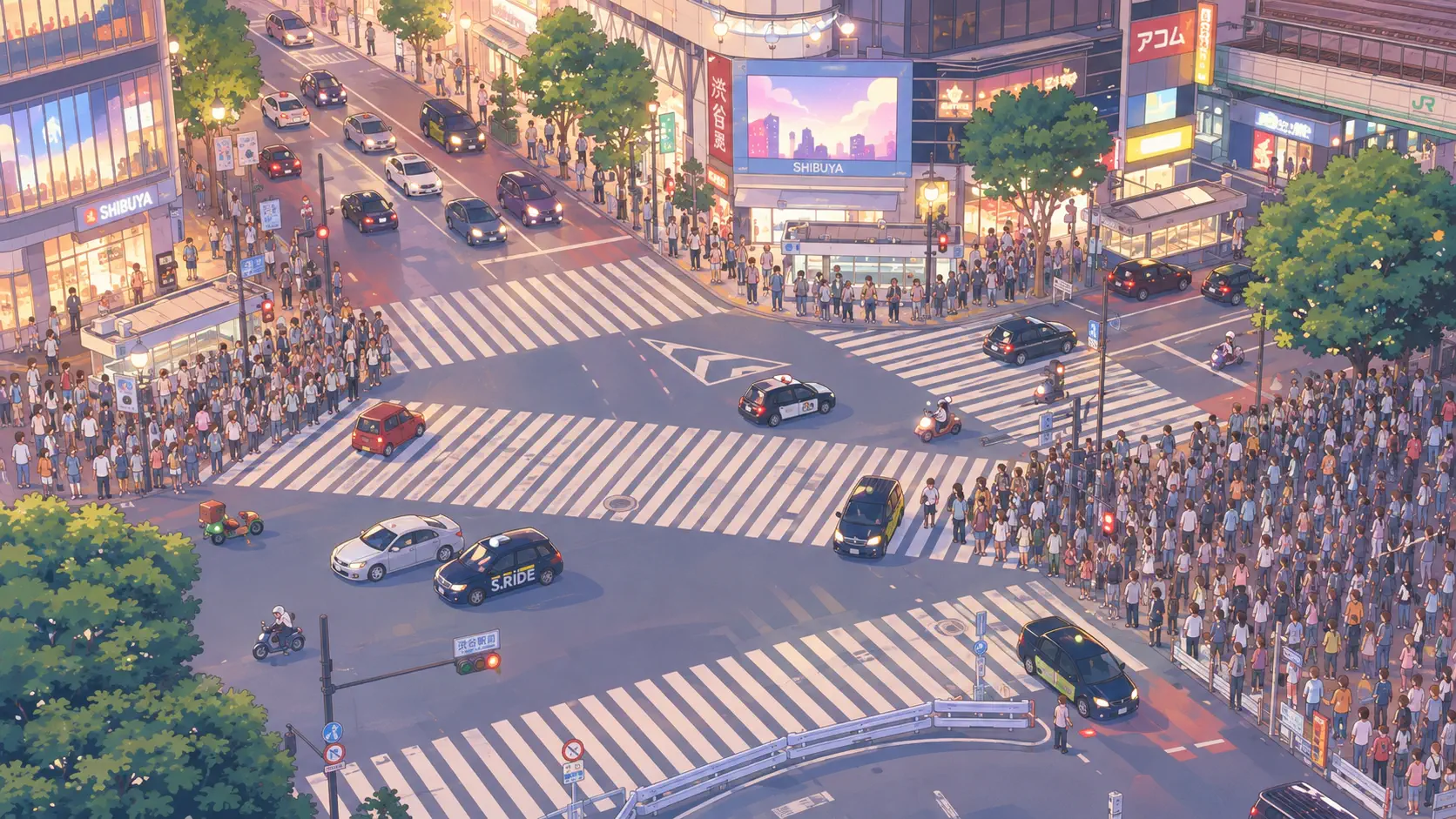
For the pedestrian energy around the same live-house district, see the Shibuya Crossing live camera. O-nest sits one slope away from the scramble basin — close enough that comedy-night crowds and street-camera nights share the same evening weather. Comedy-and-music nights were one Shibuya layer; how to watch Japan live shows the street layer still streaming.