At nineteen, Hanae already carried the profile of a “next-generation girl pop singer” without sounding like she was rushing adulthood. Born in Fukuoka in February 1994, she had sent a demo to EMI Music Japan’s new-artist division at thirteen, debuted in June 2011 with “Hane,” and by mid-2013 was preparing a third single — “Koi wa Shinsei Roma” — that pushed her whisper-voice image toward something slightly sharper and more knowingly playful.
Shibuya Channel’s Artist File #14 caught her in that transition: still transparent and soft in conversation, but increasingly specific about fashion references, recording habits, and the kind of Japanese pop culture she wanted to export beyond the cute-default export lane.
Who Hanae was in 2013
The through-line in her self-description was that singing felt less like a career choice than a fact. Fashion and art had “awakening” moments; music, she said, had simply always been at her center. She remembered childhood confidence that she would become a singer someday — not as performance bravado, but as internal certainty.
Parents who told her she only had to do what she wanted shaped the rest. Hanae framed her early major-label life as genuinely fun, with normal inner conflict, and insisted she was still near the start line even as ambitions grew. Near-term goals were concrete: an album and a one-man live within the year. Long-term, she wanted international reach — not only the already-exported “kawaii” pop layer, but older Japanese aesthetics she felt the world had underseen.
That aesthetic anchor was explicit. She loved Taisho and Showa atmosphere and cited Junichi Nakahara’s retro shōjo illustration as a major influence. The ambition was to transmit that refined, slightly melancholic femininity through contemporary pop rather than museum cosplay.
Live work and the festival room
Coverage referenced her YATSUI FES appearance on 22 June 2013 at Shibuya O-EAST, where the “7th floor” stage drew a crowd large enough to surprise her. Circuit festivals let audiences choose rooms, and sharing a bill with bigger names had made her brace for emptiness — she had mentally prepared to perform for two or three people if necessary. A full room felt like permission to keep going.
On stage she tried to meet eyes individually, admitting she had a habit of staring a little too intently. That detail matched how she talked about fans elsewhere: repeat attendees who showed up reliably, and first-timers who tweeted praise after a debut visit — each reaction stacking into confidence.
She also named a persistent dream: playing alongside a rock band. A recent favorite was Contemporary na Seikatsu, the three-piece where Vocaloid producer Ishifuro performs guitar and vocals as “Asahi.” She had DM’d drummer Shunsuke on Twitter asking to share a bill and received an enthusiastic yes — a collaboration she clearly intended to pursue.
Idols, art, and keeping hobbies unstrategic
Hanae did not separate pop fandom from professional identity. Hello! Project had been a lifelong love; she had learned Morning Musume and Minimoni choreography as a kid until idol culture felt ordinary. Denpa.inc had become real-world friends through joint shows and talk events — people she once watched from the audience and now shared stages with.
Art and broader culture, by contrast, she kept deliberately off the résumé. She enjoyed them as rest, not research, believing neutral pleasure absorbed better than forced “artist development.” At the time she was interested in manga artist and “DJ Mahotsukai” musician Nishijima Daisuke and wanted to visit his exhibitions.
“Koi wa Shinsei Roma” and imperfect recording
The A-side marked a slight maturation from earlier singles. Hanae described its subject as a girl who cannot fully become an adult yet — a mood she wanted listeners to feel rather than decode. She laughed that the hook repeats “Roma” enough to become its own puzzle, and asked people to enjoy the atmosphere first.
Coupling track “Henkan Jesus” was brighter and dance-oriented. Her sessions with producer Shinbe often happened with little warning — spontaneity over pre-planned perfection. Stumbles, tongue slips, and audible breath were treated as character, not errors to erase. She deliberately avoided polishing away what made a take feel like her.
The limited-edition DVD included a “Hanae tries dancing” clip; one sailor-uniform segment was filmed in Shibuya and drew a crowd. Playback volume on set was low enough that passersby may have thought she was lip-syncing to silence — a mismatch the finished video would finally explain.
Style as stretched girlhood
Fashion attention was part of her public image, but she described the process collaboratively with stylists: dolly, refined, never costume-for-costume’s sake. “Koi wa Shinsei Roma” used pin-up girl as a reference — extreme heels, near-sheer skirts — while still reading as a girl playing dress-up with a mother’s cosmetics and clothes rather than a finished woman.
Shibuya habits beyond the Harajuku label
Interviewers often tagged her “Harajuku-side,” yet she said she shopped more in Shibuya. She frequented 109 for the brand one spo, assembling affordable cute accessories there. She also practiced a loose macrobiotic habit — avoiding processed foods when possible — and visited BiO cafe alone or with friends.
Release notes from the interview
- Single: “Koi wa Shinsei Roma” / “Henkan Jesus” — released 24 July 2013
- Release event: “If you have complaints, go to Rome” — 24 July 2013, 2.5D (Shibuya PARCO Part 1, 6F); doors 19:30, show 20:00
- Limited edition: CD+DVD with MV, making-of, and dance tutorial footage
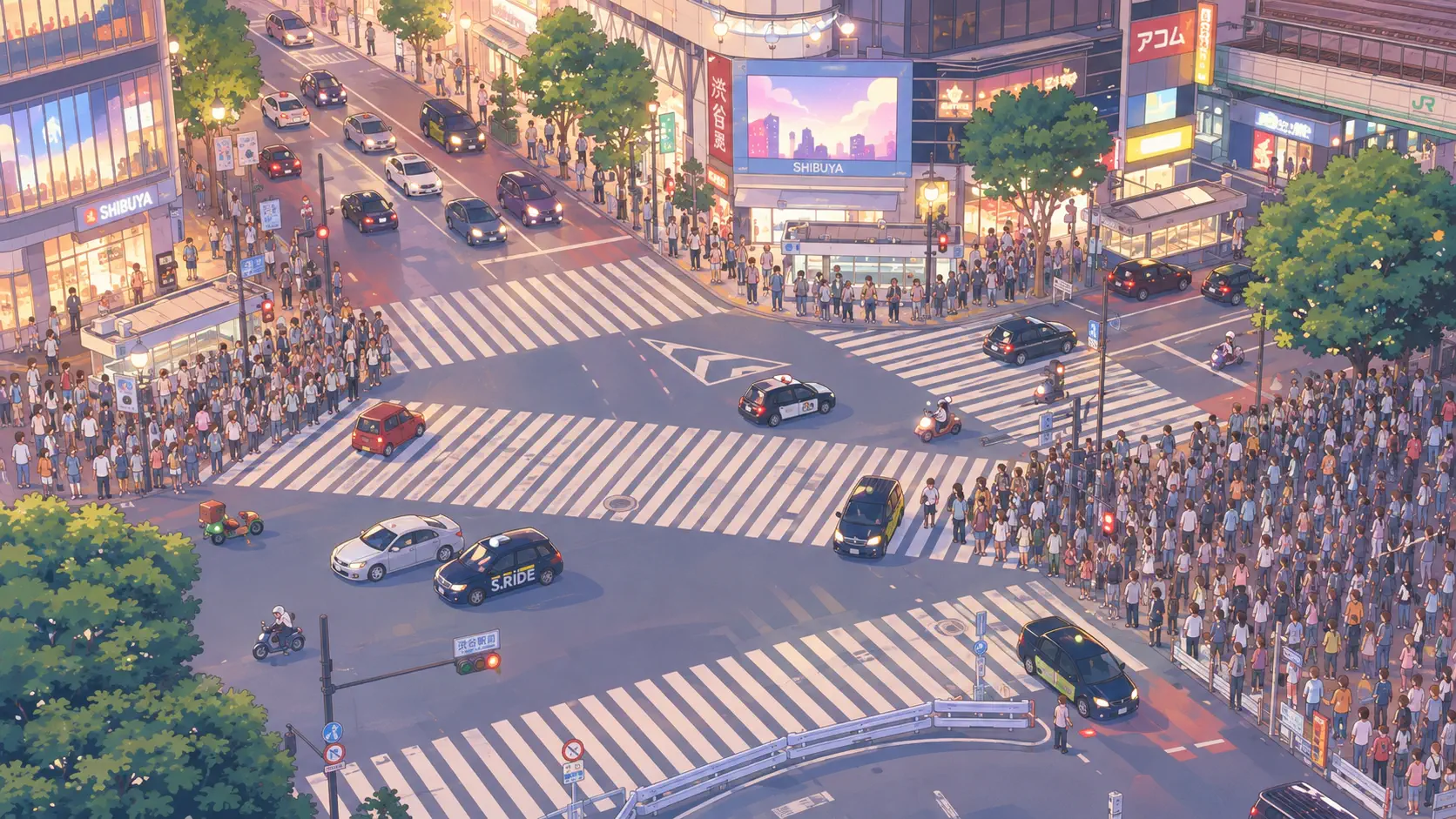
For the street layer of the ward Hanae treated as a shopping base, open the Shibuya Crossing live camera, then return here for the live-house and release-event layer underneath it. Readers connecting Artist File history to today’s street feeds can start with how to watch Japan live.