On 26 September 2013, Shibuya Channel published Artist File #023 with singer-songwriter Emiri Ohta (おおたえみり) — the same day she opened Who Was In My Mirror? at Shibuya O-EAST for Chara and delofamilia. The Kansai-based “music artist” had just released her first mini-album Renaissance (Renaissance / ルネッサンス) on 28 August 2013, and the interview leans into her reputation for exotic presence, out-of-frame performance, and answers that refuse the usual promotional script.
What follows preserves that deadpan register rather than forcing a conventional artist narrative onto it.
Why she was on the O-EAST bill
Asked how she felt when the co-bill with Chara / delofamilia locked, Ohta gave one word of affect and stopped: she was happy. Images of the headliners were equally brief. Chara felt like someone she wanted to be hugged by. delofamilia felt like someone she wanted to exchange a single line with. No tour mythology, no “dream come true” paragraph — just contact wishes stated as contact wishes.
Writing method since elementary school
Interviewers flagged that she had been writing songs since fourth grade. Her piano process, as she described it, was theme-first: expand words along a theme, then cling to the keyboard’s twelve tones to attach intonation. The answer is almost a workshop instruction — and it matches the bio claim of a library already past 150 original songs by 2013.
Grand Prix at fifteen, vision at none
In 2007 she won the grand prize at The 1st Music Revolution JAPAN FINAL with an early composition, “Jo no Nae” (情の苗). Asked whether that victory gave her a future vision, she ran a joke that eats the timeline: she imagined nothing at fifteen; she still imagined nothing at twenty-one; she imagined nothing at eighty. Career forecasting is treated as a category error.
Renaissance and “Ude no Ke”
Congratulations on the mini-album quickly zoomed to “Ude no Ke” (うでの毛 / “Arm Hair”) — a title and lyric set that had startled the interviewer. Ohta’s origin story for it was dry craft: it was an assignment piece built around major-seventh harmony. The album’s title track “Renaissance,” by contrast, was where she admitted fussiness — finishing a deliberate psychedelic texture by turning analog knobs by hand.
Voice, backstage, dream bill
Her falsetto and recording habits got one rule: cultivate a cold laugh / sneer in the delivery. Live non-negotiables were not rituals of gratitude — she said the essential practice was becoming bad-tempered backstage. Dream future co-performer: actor Shota Matsuda. The Artist File format usually harvests soft recommendations; Ohta kept handing back hard edges and punchlines.
Shibuya answers that barely answer
Because sibch.tv was a Shibuya site, the closer questions asked for hotspots, colors, and wishes for the ward.
- Hottest Shibuya spot: “Café Human Relations” (カフェ人間関係) — a phrase that reads like a venue name and a social diagnosis at once
- Shibuya as a color: MUJI colors, for “some reason”
- Wish for Shibuya’s future: she wants it to become more stylish
Closing message for the O-EAST night and beyond: she would do her best, and she had monthly lives coming. End of pep talk.
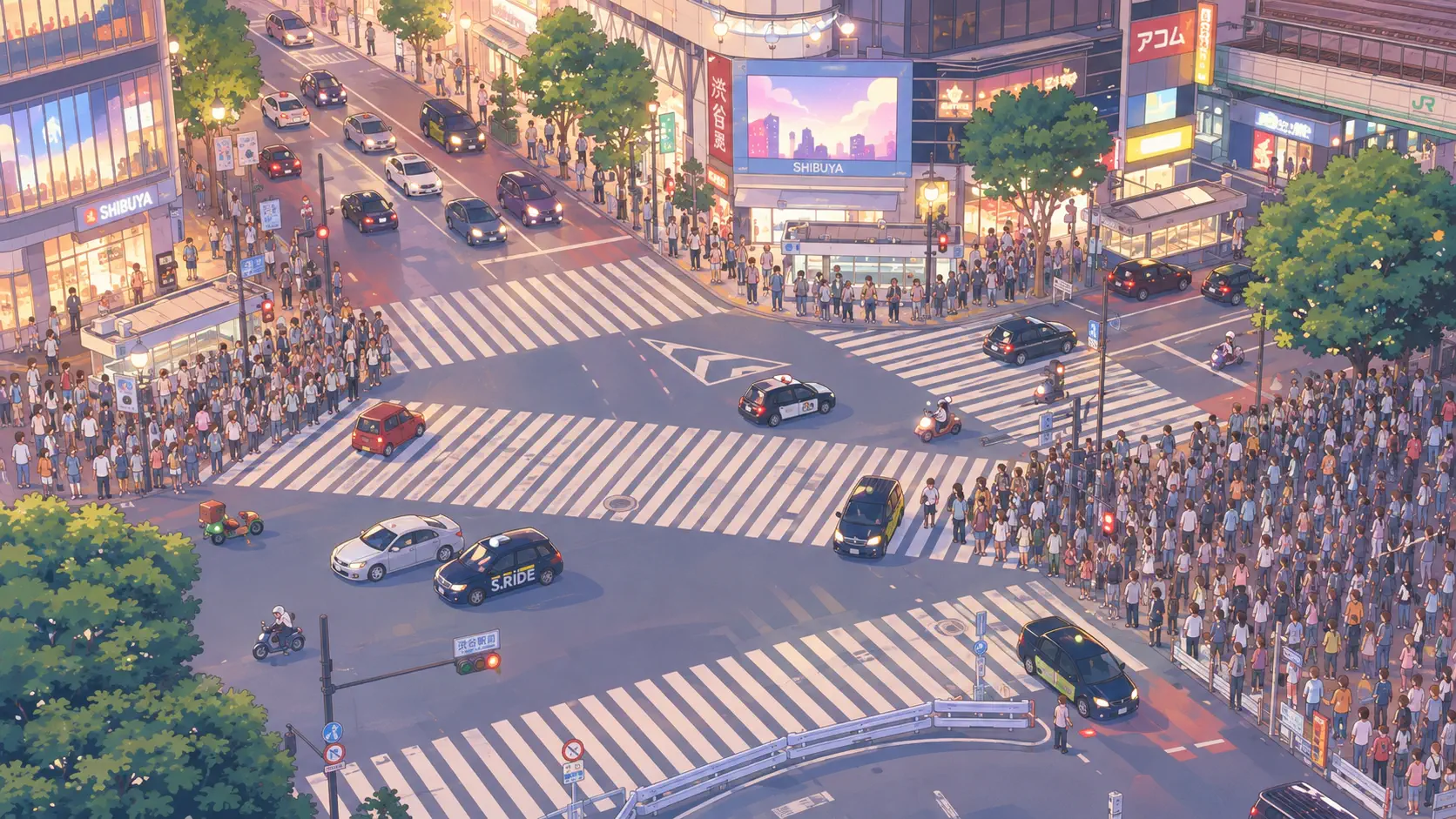
For the street layer outside O-EAST the same evening crowds still feed, the Shibuya Crossing live camera reads the basin those ticket lines emptied into. Readers connecting Artist File history to today’s feeds can start with how to watch Japan live.
Event notes preserved from the page
Who Was In My Mirror?
26 September 2013 (Thu) · Shibuya O-EAST
Doors / start: 18:00 / 19:00
Bill: Chara / delofamilia / Emiri Ohta
Standing ¥4,000 (tax in, drink separate) · reserved 1F/2F seats ¥4,500 (tax in, drink separate)
Box office inquiry (historical): O-EAST counter · 03-5458-4681
Artist File bio (2013)
Born 14 September 1992, Hyogo Prefecture. Piano from early childhood; songwriting from fourth grade. 2007 Music Revolution Japan Final grand prize with “Jo no Nae.” From the following year she ran monthly piano-and-vocal lives in local houses, then built a Kansai-centered circuit while recording originals — more than 150 tracks and climbing. Framed as a concept-resistant “music artist,” she made a major debut on 1 August 2012 with the DVD & CD “To Everyone in the World / Aggregate” (セカイの皆さんへ/集合体), then released Renaissance on 28 August 2013. Contemporary coverage sold her as out-of-spec across song sense, performance, and visuals.