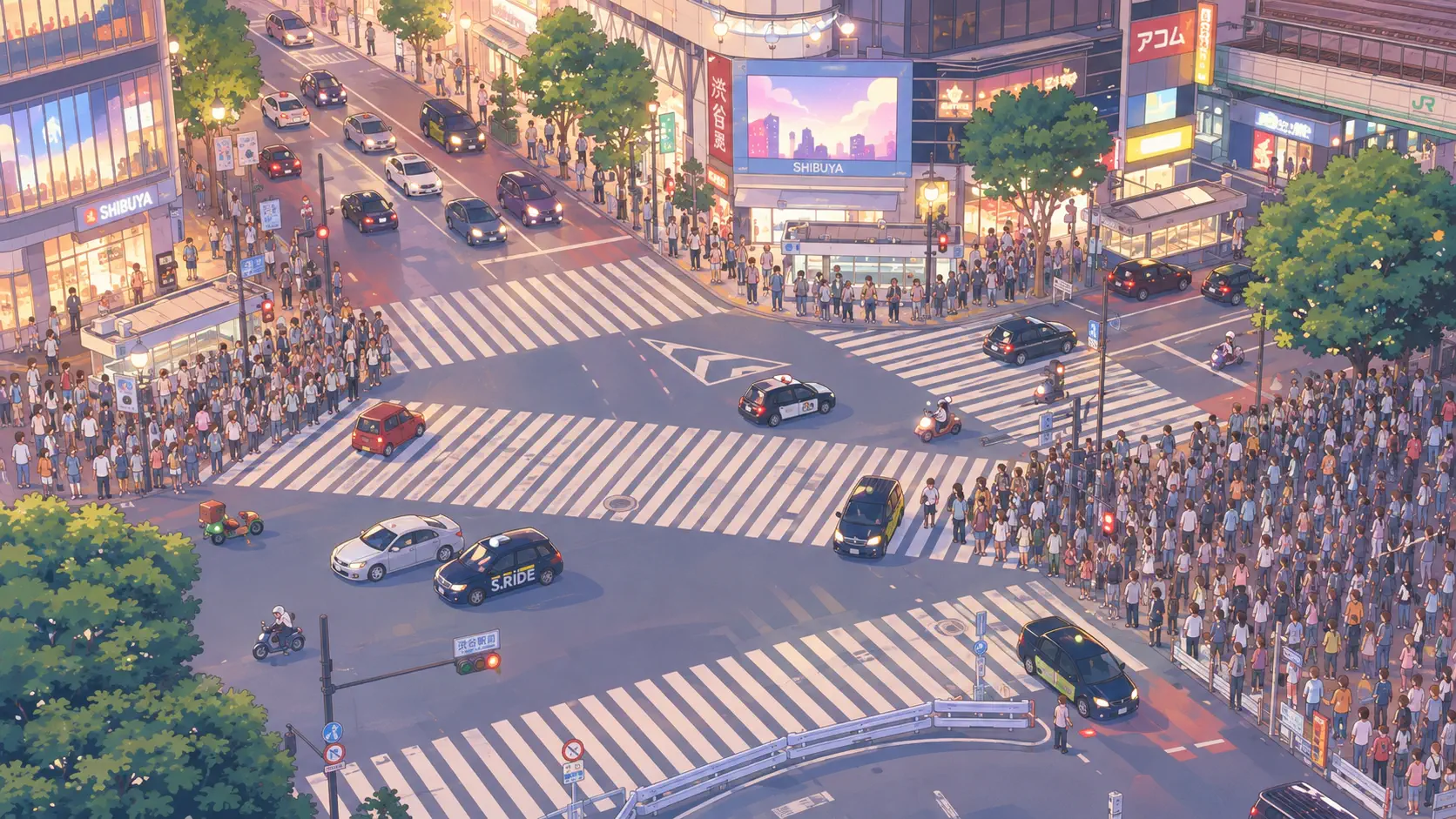
For a long stretch before spring 2013, the road linking Tokyu Department Store Main Building toward Yamate-dori ran under construction and one-way traffic control. Drivers and pedestrians learned alternate habits. Then the widening finished — and before cars flowed both ways again, Shibuya tried a street market in the gap.
The Bunkamura Street Marche occupied three days in early April 2013, closing one vehicle lane from the Tokyu Bunkamura entrance near the Shoto Post Office intersection up to Yamate-dori. European-style tents lined roughly 600 meters of what locals call “Okushibuya,” the quieter stretch beyond Bunkamura where small shops outnumber flagship billboards.
The marche itself is long over; treat hours and closures as historical.
Why the timing mattered
Two-way car traffic was scheduled to resume on 7 April 2013 (Sunday). The marche ran 4–6 April (Thursday through Saturday), ending each day at 18:00, deliberately using the last days of single-lane operation as pedestrian space. That is a classic city gesture: celebrate infrastructure completion by temporarily giving the road back to people who walk.
The organizer listed in the source is the Tokyu Hondori Shopping Street Association (東急本店通り商店街). The event name plays on Bunkamura Street — the cultural/commercial spine anchored by Bunkamura itself.
What “Okushibuya” meant in the pitch
Tokyu Bunkamura marks a psychological border. Past it, Shibuya loosens into side streets with cafes, sundries shops, and small boutiques that never wanted scramble-level volume. Coverage at the time described the area as a place to step away from central Shibuya noise without leaving the ward.
The marche leaned into that identity. Participating vendors came largely from Okushibuya’s own shop layer — not a traveling fair imported from elsewhere. The promise was discovery: secondhand finds, niche gourmet stalls, and tables run by businesses that usually rely on repeat neighborhood customers rather than tourist maps.
What visitors were supposed to see
Along the tent row, the program included street performance and “surprise” activations — the source does not list individual acts, but the framing is clearly festival-lite rather than a single-stage concert. Think buskers, pop-up demos, and booth browsing in early April weather when Tokyo starts inviting longer walks outdoors.
The promotional map traced the closed lane segment from Bunkamura’s front door zone toward Yamate-dori. Even without the image, the geography is straightforward: start near Bunkamura / Shoto Post Office corner, walk uphill along the connector, finish where Yamate-dori meets the slope.
Event facts
- Name: Bunkamura Street Marche (文化村通りマルシェ)
- Dates: 4–6 April 2013, until 18:00 daily
- Route: Tokyu Bunkamura entrance (Shoto Post Office intersection) to Yamate-dori — one lane closed to vehicles
- Length: about 600 meters of tent stalls
- Organizer: Tokyu Hondori Shopping Street Association
- Related infrastructure: two-way traffic restoration from 7 April 2013
Connection to the wider Shibuya map
Okushibuya is not Harajuku and not the scramble, but it shares the same ward-level movement patterns. People leave the dense core, drift toward Bunkamura for culture or coffee, then keep climbing into residential-quiet blocks. A temporary marche on that connector is exactly the kind of event that reshapes foot traffic for a weekend without changing the permanent street grid.
You can still read today’s central Shibuya flow on the Shibuya Crossing live camera. This 2013 market is a small counterpoint: a few blocks west, the city briefly traded one car lane for tents to introduce a slower Shibuya face.
Travelers stacking Shibuya culture stops with a longer outing can compare options in best day trip from Tokyo.
Do not expect the marche to recur on the same schedule. If Bunkamura Street or adjacent lanes are under construction again, check current city notices rather than this page.