Chopstick etiquette japan is a short list, not a personality test. Locals notice two funeral gestures, a few messy habits, and whether you can pick up a piece of fish without turning it into a spear. They do not grade your grip. They do not care if you are slow. The point is not looking “authentic.” It is not staging a memorial over the rice.
If you came for a ranked shame list, start with the two taboos, then the rest as courtesy. Walking-and-eating, trains, and tipping live in things not to do in Japan and do you tip tour guides in Japan. This page is sticks and bowls.
Chopsticks etiquette that actually gets noticed
In a busy lunch shop this is quieter than travel blogs imply. Staff want the table turned. Other diners want their space. Your job is to move food from a shared plate to your own, then to your mouth, without turning the sticks into pointers, drumsticks, or a fence in the rice.
A working kitchen lunch rush on the Kitchen DIVE live camera in Koto is the speed chopsticks are built for: rice already decided, pick, eat, go. Fancy kaiseki is a different clock. Same two funeral rules.
Hold them however you were taught as long as the tips meet. A fist grip looks like a toddler. A perfect tea-ceremony grip that still spears the tofu is worse.
Chopstick etiquette in japan: the funeral pair
Chopstick etiquette in japan gets memorable because two moves copy funeral rites. That is not a metaphor tourists invented. It is why the room goes quiet if you do them at a chain gyudon shop.
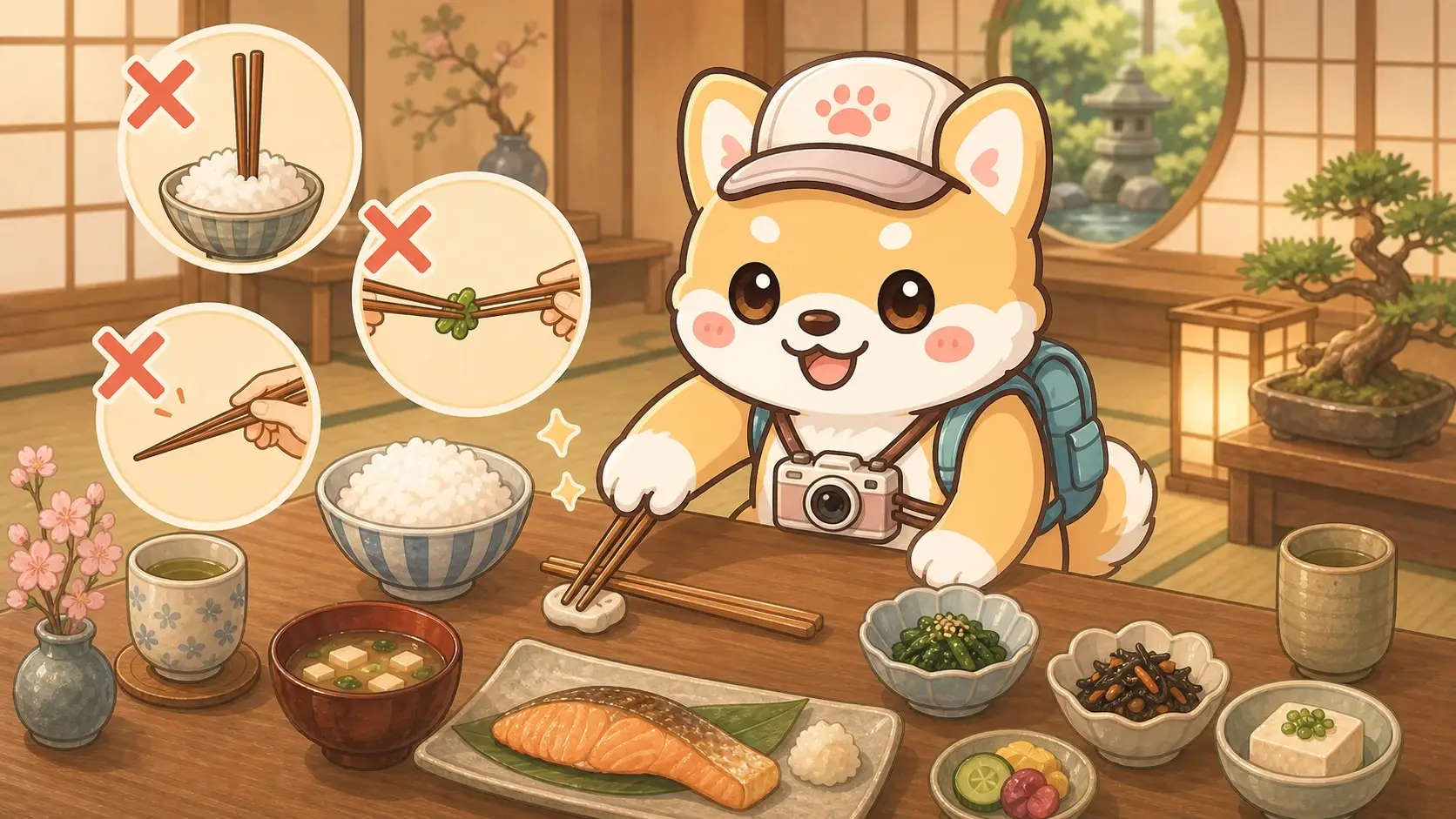
Standing sticks in rice (tate-bashi): rice with chopsticks planted upright is an offering to the dead. Do not park them in the bowl while you talk. Rest them on the hashioki, the wrapper, or across the dish.
Passing food chopstick-to-chopstick (hashi-watashi): at a funeral, relatives pass bone fragments that way. At a table, put the piece on a small plate and let the other person pick it up. If you are sharing karaage, use the opposite ends of your sticks if the shop has no serving pair — or just ask for a plate.
Those two are the only “never.” Everything else is “please don’t.”
Table manners chopstick etiquette
Table manners chopstick etiquette is mostly about not turning the tools into comedy.
Do not:
- Spear food (sashi-bashi) unless it is a last resort on a slippery cube and you are already embarrassed.
- Hover and poke every dish (mayoi-bashi) as if the menu is a minefield. Choose, pick, eat.
- Pull a shared dish toward you with the sticks. Hands on the plate.
- Point at people or staff with the tips. The stick is not a laser pointer.
- Lick them clean in public. Napkin.
- Rub disposable waribashi together as a default. It used to signal “this shop’s wood is splintery.” In 2026 it mostly signals you watched a 2009 vlog. If they splinter, pick the sliver out quietly.
Do:
- Pick up the rice bowl. Japan is not a “bowl stays on the table” culture for rice and soup.
- Return shared food to a plate, not to the communal platter, if it already touched your mouth.
- Use the clean back ends only if you are sure that is the house rule. Many cheap shops would rather you just take a piece.
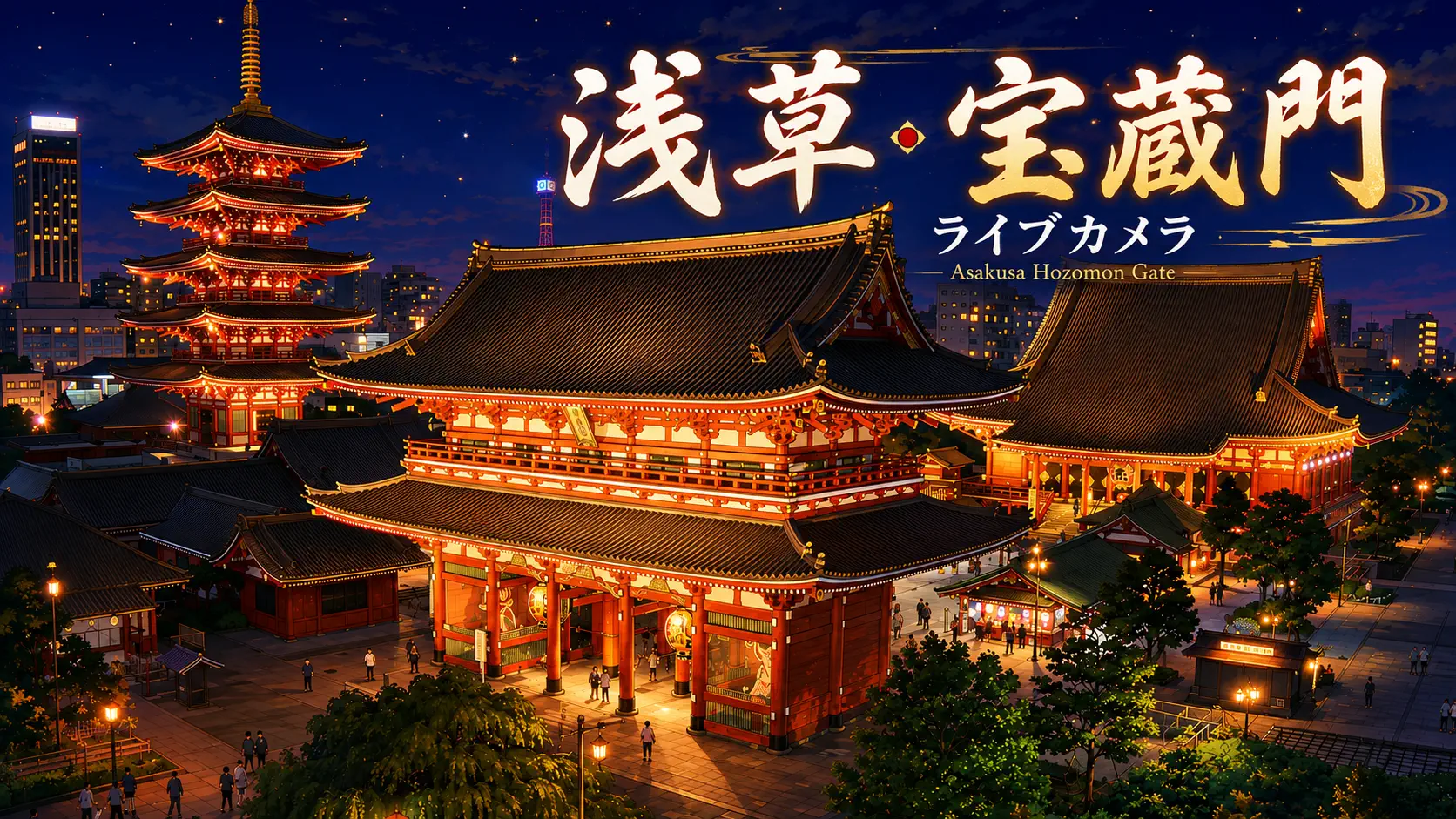
Street snacks around Sensō-ji are fingers and napkins more than lacquerware. The Hozomon Gate live camera is that standing crowd: the sticks rules on this page apply when you sit down with a bowl. Walking-and-eating is a street rule, not a hashi rule — it lives in things not to do in Japan.
Chopstick etiquette when finished — and chopstick etiquette after meal
Chopstick etiquette when finished is rest, not sculpture. Lay them parallel on the rest or across the bowl. Do not leave them crossed in the rice. Do not build a teepee.
Chopstick etiquette after meal is the same rest plus not playing with them while you wait for the check. In a ticket-machine ramen shop there is no check theater. In an izakaya, the bill comes when you ask. Sticks stay parked.
If the shop gave you a paper sleeve, the sleeve is a rest. If they gave you a ceramic hashioki, use it. If they gave you nothing, the tray edge is fine. If you drop one, pick it up, ask for a replacement if it hit the floor.
You do not need a speech. Pay, leave, do not rearrange other people’s dishes “to help.”
Japan chopsticks etiquette at counters and convenience rice
Japan chopsticks etiquette at a standing soba counter is: take the pair, eat, put them on the rest, leave. Nobody is scoring your angle. Convenience-store onigiri is usually fingers plus nori; if you bought a pasta pack with a fork, use the fork. The onigiri fillings catalog is not a chopsticks exam.
Hotel breakfasts sometimes set Western cutlery next to chopsticks. Pick one tool per plate. Mixing a fork and a stick on the same bite looks like you are assembling IKEA.
Children’s training sticks with rings are for children. Adults using them in a restaurant look like a bit. If you physically cannot close the tips, a fork is kinder than a twenty-minute struggle over tofu.
Vegetarian temple meals are where people over-perform. The food rules are in what to eat in Japan as a vegetarian. The stick rules do not change because the broth is kombu.
Bad chopstick etiquette versus being new
Bad chopstick etiquette is the funeral pair, spearing as a lifestyle, and pointing at a server. Being new is slow picking, dropping a bean, asking which dish is spicy. Those are not the same category.
Locals who grew up with sticks still drop things. The difference is they do not plant a shrine in the rice and they do not conduct an orchestra with the tips.
If someone offers you a fork, take the fork. Pride is not a side dish. If someone shows you a grip, say thanks and try it once. Do not film them demonstrating unless they clearly want that.
FAQ
Is rubbing wooden chopsticks rude?
It is dated more than deadly. Skip it unless they actually splinter.
What do I do with chopsticks when finished?
Rest them. That is the whole chopstick etiquette when finished rule.
Can I ask for a fork?
Yes. Especially at hotel breakfasts and tourist-heavy chains.
Why is sticking chopsticks in rice so serious?
It copies a funeral offering. People flinch because the picture is death, not because they hate tourists.
Do I pick up the bowl?
Rice and soup, yes. Large shared platters, no.
Is it rude to be slow?
No. It is rude to make the sticks into a toy while other people are eating.