The fifth installment of Shibuya Channel’s winter nabe series moved upscale: Bishoku “Maimon” Shibuya on Parco Part 1’s eighth floor, framed not as a single-soup specialist but as a “gourmet social theater” where meat, fish, vegetables, rice, and water from across Japan share one stage.
Prices, course tiers, and seasonal fairs describe the early-2010s winter push — verify before booking.
Name, concept, and the winter fair
The kanji name 米門 (Maimon) carries a founding story: Japan’s first food venture opening a gate (門) to America (米) — ambition spelled literally. In practice the restaurant marketed a symphony of domestic ingredients cooked with classical Japanese technique, meant to be experienced with all senses rather than read as quiet kaiseki.
That winter, Maimon ran a warm seasonal nabe fair alongside its standing iron-pot hits. Three new pots joined the lineup; staff singled out soybean-collagen shabu-shabu with “edible ponzu” — pork and vegetables swished through a collagen-rich soy milk broth, then dipped into a ponzu built from daikon, shiso, carrot, and similar components you eat rather than discard.
Coverage pitched that pot for girls’ nights and diners who like hands-on shabu. It also noted availability inside the ¥4,800 Maimon course for banquets and New Year gatherings.
Diamond Dining miles for organizers
Maimon belonged to the Diamond Dining Group (150+ locations in the promo copy). Organizers earned DD Miles per guest booked, redeemable for meal vouchers or prizes such as Hawaii trips and large TVs — a chain-wide hook repeated across Shibuya Channel banquet features, but still part of why the restaurant pushed group business.
Details lived on diamond-dining.com/ddmile/ at the time.
The Parco room and seating types
Enter from Shibuya Parco Part 1, 8F (address listed as 15-1 Udagawacho). Walls collaged fishing-port and producer photography, making ingredient provenance part of the decor.
Seating modes mentioned:
- partitioned table areas off the entrance for flexible small groups
- banquet tables up to 16 guests
- a goldfish tank deep in the dining room — unexpected visual calm
- sofa seats for private-feeling pairs or trios
- fully enclosed rooms with garden views
- a terrace reconfigured from the popular summer beer-garden setup into winter seating; interior sightlines showed lit outdoor space
The mix supported everything from lunch iron-pot sets to labeled “gourmet entertainment” dinners.
Seasonal nabe menu (historical prices per person)
| Dish | Price | Notes |
|---|---|---|
| Whole chicken medicinal hot pot | ¥1,500 | One bird, goji berry and star anise broth, hearty vegetables |
| Plump tomato-collagen seafood jjigae pot | ¥1,500 | Shrimp, scallop, clam stock with tomato collagen; spicy-savory balance |
| Soybean-collagen shabu with edible ponzu | (featured; also in ¥4,800 course) | Staff pick of the fair |
These sat beside iron-skillet signatures rather than replacing them.
Iron-pot signatures beyond nabe
The feature also cataloged skillet dishes that defined day-to-day Maimon:
- Wakasa beef iron-salt sukiyaki — ¥1,300; rare salt-dressed sukiyaki treatment
- Noto pork with piled lettuce steam-grill — ¥1,000; broth-steamed pork under lettuce blanket
- Clear-stream young chicken and chunky vegetable ginger grill — ¥1,100; oven-finished juicy chicken
- Miso beef hormone and lamb bold grill — ¥1,200; mix after enjoying each flavor separately
- Scallop, shrimp, salmon iron chan chan yaki — ¥1,100; Hokkaido fisher style, Maimon interpretation
- Fresh fish and scorched-rice iron ankake rice — ¥800; seafood rice sauced tableside for sound and aroma
Together they reinforced the “theater” branding — food finished or sauced in front of you.
Hours and contact (historical)
- Address: 15-1 Udagawacho, Shibuya Parco Part 1 8F, Tokyo
- Phones: 03-3464-6644; 03-4588-4269 (reservations from 8:00)
- Lunch: Mon–Fri 11:00–15:30 (L.O. 15:00); Sat/Sun/holidays 11:00–15:00 (L.O. 14:30)
- Dinner: 17:30–23:30 (L.O. 22:00)
- Closed: irregular; follows building closure days
- Directory link (historical): Gurunavi g398516
Parco’s restaurant floor rotates tenants. Maimon’s eighth-floor presence tied the brand to shopping-day traffic — a different rhythm from basement izakaya nabe rooms elsewhere in the ward.
Reading Maimon against Shibuya street energy
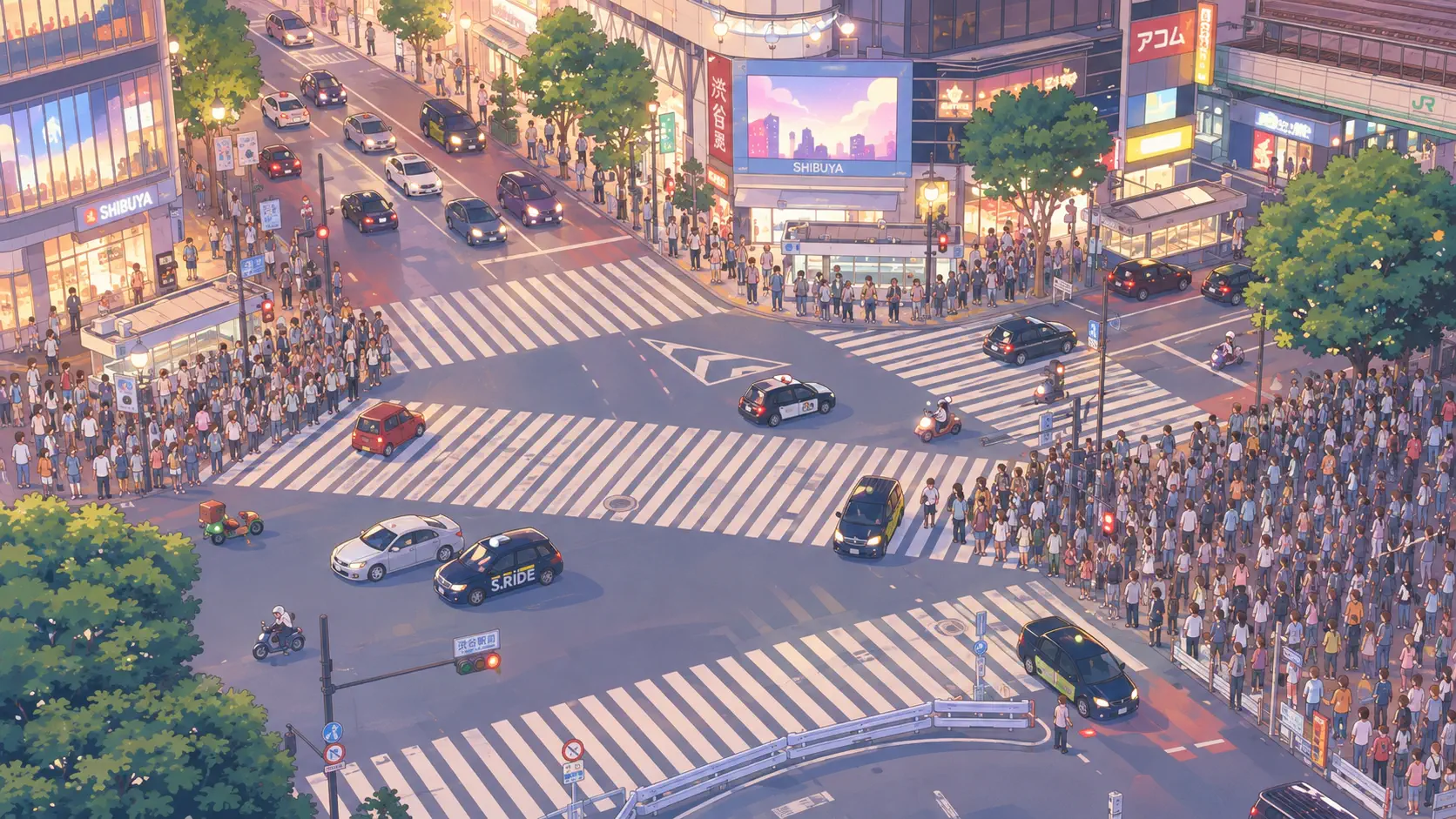
Udagawacho feeds directly into scramble-side foot traffic. If you monitor weekend density on the Shibuya Crossing live camera, Maimon represents the indoor counterweight: long lunches, iron-plate sizzle, and winter pots aimed at groups who already came to Parco for fashion or events. Winter hot-pot evenings pair well with a practical Japan winter packing list.