Flying Books occupied the second floor of Shibuya Koshu Center near Mark City — one floor above Koshu San-A, another used bookstore on the ground level. Shibuya Channel featured it in the same “places to enjoy books” series as other non-chain rooms around the basin. The shop’s identity was narrow and strong: owner-selected used volumes from Japan and abroad, many of them eccentric enough that you would not find them in a mass-market chain.
Hours, stock, and ownership can shift over time; treat the details below as historical unless reconfirmed.
What was on the shelves
Every book in Flying Books was chosen individually by staff. The inventory skewed toward slightly obsessive foreign material: overseas magazines, picture books, photo volumes, literature, music, religion, poetry, and other categories that do not fit a single tidy label. Buyers sometimes traveled to the U.S. West Coast or Paris specifically to source stock.
The entrance opened onto a large glass display holding especially rare titles one by one. Inside, the central area focused on visually driven books — photo collections and magazines that rewarded flipping through pages. Along the walls, American books from the 1950s began near the front; walking deeper took you through the 1960s and 1970s in sequence. That chronological layout turned browsing into a informal timeline of print culture.
Customers at the time ranged from older collectors to students and visitors who traveled from outside Tokyo. The common thread, according to coverage, was hunting for books they could only expect to meet in this room.
Coffee, wine, and how to handle the stock
Flying Books was also a place to drink while you chose. Coffee and wine were served at approachable prices so the café layer would not compete with the books. Owner Yamaji-san told interviewers that making “a beautiful space to spend time with books” came first — the drinks existed to support slow selection, not to turn the shop into a generic café with shelves in the background.
Each volume was wrapped in plastic for protection. If something caught your eye, you brought it to the counter to unwrap and inspect before buying. That ritual matched the inventory: once a used title leaves the market, it may not return. Staff wanted buyers to verify condition in hand rather than guessing through shrink wrap.
The owner’s pitch and a shelf example
Yamaji-san’s enthusiasm for books showed up in small stories. During the original visit, a first-issue copy of anan from the 1970s sat on the floor. Yamaji described it as still visually sharp decades later and hoped younger visitors might treat such objects as creative reference points — proof that print layout and photography could stay relevant long after publication.
The shop’s broader promise was simpler: spend rich time with books, not only money on them. That tone — warm, slightly protective of the stock — defined the room more than any single category label.
Location within Shibuya’s book geography
Dogenzaka’s Koshu Center sits in the Mark City orbit, a few minutes from the scramble basin but visually quieter once you climb the stairs. Flying Books shared a building with another used dealer downstairs, which made the address easy to find even if the upstairs room was easy to miss.
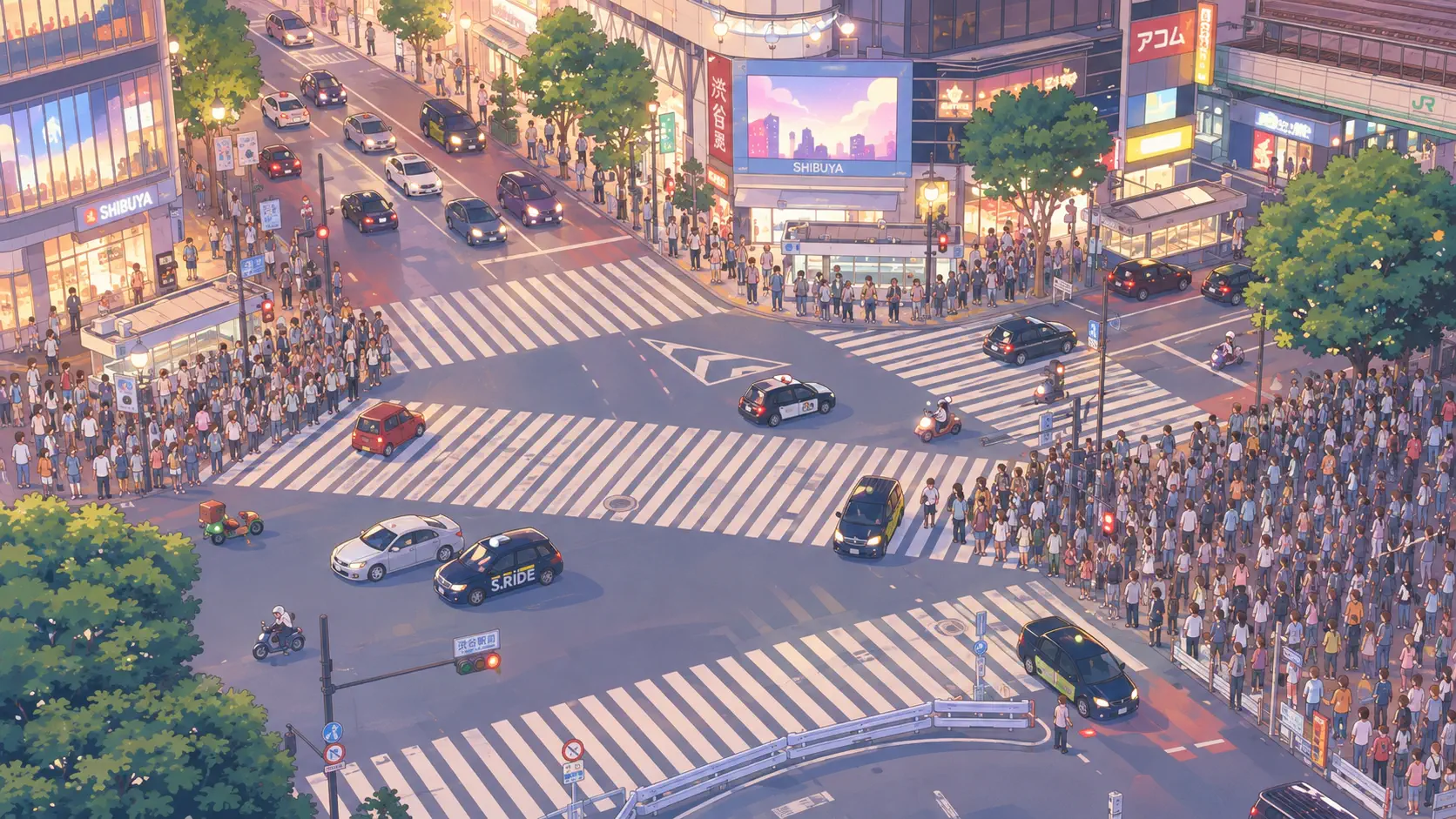
For live-camera context, Dogenzaka back streets and the scramble plaza belong to the same pedestrian system. Watching the Shibuya Crossing live camera helps you read how foot traffic pulses toward Mark City and the slope behind it — the same basin where a second-floor book room could survive on repeat hunters rather than impulse volume.
Flagship retail days add up fast — set expectations with our average trip to Japan cost breakdown.
Historical fact sheet
- Name: Flying Books
- Address (as listed): 1-6-3 Dogenzaka, Shibuya Koshu Center 2F, Shibuya, Tokyo
- Building note: 1F operated as Koshu San-A used bookstore
- Phone (historical): 03-3463-8151
- Hours (historical): 12:00–20:00; closed Sundays
- Website (historical): http://www.flying-books.com
- Owner (as named in coverage): Yamaji-san
- Notable features: owner-sourced foreign used books, decade-organized American section, coffee and wine, plastic-wrapped volumes inspected at counter
Always verify current hours and whether the shop still occupies the same floor before visiting. This archive page preserves the early-2010s editorial record.