On 15 September 2011, free-paper specialty shop Only Free Paper relocated into Shibuya Parco Part 1, 6F — the high-visibility “comeback” after its intimate Cat Street glass box near Miyashita Park. Phone listed at opening: 03-6416-4422. Hours: 10:00–21:00. Floor area: about 10 tsubo.
What the Parco room changed
The Cat Street original (2010) proved the joke could work: a shop that only stocked free papers and free magazines, with rules about how many you could take. Parco kept the free core and added mall traffic, reused fixtures from the old shop, and built:
- A fripe library of archive titles for in-store browsing only
- A rear shelf lent to people and groups chosen by founder Kota Ishizaki for sales or shows
- Paid side goods — eco bags (
¥700), dialect karuta (¥500), regional CDs such as Mitaka’s Ongaku no Jikan, and gradually more local crafts
Stock talk at the time: roughly 3,000 titles in the wider collection, about 150 on the floor at once — from cat photo zine Nekomentary and moe paper MOET to JR Kyushu Tokyo’s handwritten Tetsu-bun and Nagasaki’s Nikori.
Why “comeback” fit
Leaving Cat Street for Parco was not a quiet address change. It was a second opening inside Shibuya’s culture mall — the same 6F layer that later hosted anime event shops and media experiments. Ishizaki’s line at launch: footfall might feel similar, but new discoverers would grow; free paper lived in the gap between paid magazines and fully private zines, sometimes carrying information that never hit the web.
The Parco shop itself later closed (11 August 2013 per contemporary bookstore notes). Later chapters continued under the Only Free Paper name in other Tokyo and regional rooms; the Shibuya Channel URL remembers the Parco return beat.
Camera context
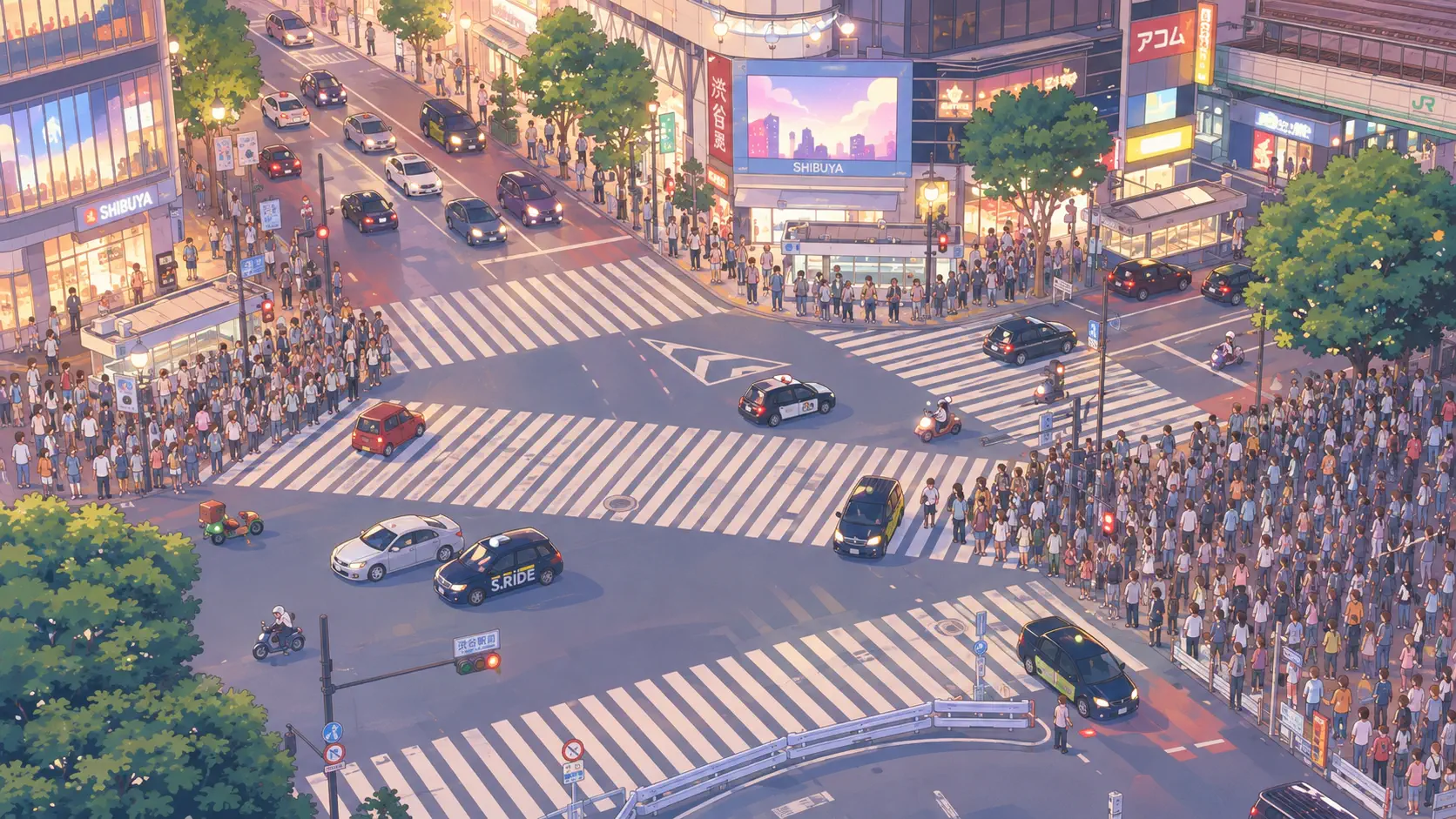
Parco Part 1 sits on the Spain-zaka / Udagawa circuit a short walk from the scramble. A free-paper counter upstairs still depended on the same sidewalk density you can check on the Shibuya Crossing live camera.
Mall days add up — see our average trip to Japan cost guide.